EvoX Agent Tested: How 100 AI Agents Collaborating in a Swarm Pushed Accuracy from 26% to 71%

EvoX Agent's swarm of 100 AI agents pushes coding accuracy from 26% to 71% through isolated contexts and code-based result merging.
EvoX Agent is EvoMap's coding and productivity agent differentiated by three features: swarm collaboration, self-evolving skills, and automatic model switching. Its swarm mechanism assigns each sub-task an independent context window and merges results with code rather than a model, solving the information-loss problem of traditional sub-agent approaches and raising accuracy from 26% to 71% on the same model and task set. The self-evolution system saves successful execution paths as reusable genes and capsules, reportedly cutting token usage by ~31%. Live demos covered PDF generation, API development with Vercel deployment, and a 100-agent parallel survival game simulation completed in 20 minutes versus hours sequentially.
Same AI model, same 563 problems — a single agent working alone got 26% correct, while a swarm of agents working together hit 71%. The model itself didn't change at all; only the way the work was divided did. This striking contrast is the core selling point of EvoX Agent, a new AI coding assistant.
This article is based on a full hands-on test by a YouTube creator, breaking down this coding and productivity agent from EvoMap — covering installation from scratch, key settings, multi-channel connections, and the most compelling feature: the Swarm demonstration. The goal is to help you decide whether this tool replaces or complements what you already use.
What Is EvoX Agent?
EvoX Agent is EvoMap's coding and productivity agent, currently available for Mac and Windows. At the base level, it's not radically different from tools like Claude Code or Codex: it can read codebases, write code, run commands, and fix tests — all standard features that work as expected.
What truly sets it apart are three capabilities:
- Swarm Collaboration: The source of that 26% vs. 71% comparison;
- Self-Evolving Skills: After completing a task, it saves effective approaches as reusable skills, making similar tasks faster and cheaper next time;
- Automatic Model Switching: Uses cheaper models for simple tasks and more powerful ones for hard tasks — no manual selection required.
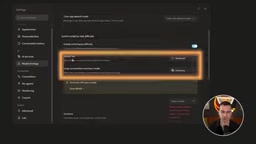
Installation is straightforward. Download the installer for your OS from the official site, run it, and log in. Notably, it supports importing settings from Codex and Claude Code, so you don't have to start from scratch — skills and connectors can all be carried over. New accounts receive 1,500 credits upon registration, no credit card required.
The Swarm Mechanism: Why It Outperforms Sub-Agents
The swarm is the most interesting part of this tool, and understanding it requires first recognizing the pain points of traditional approaches.
When a single agent handles a large task, it drags the entire context along with it. By the time it reaches the fourth sub-task, it's still carrying all the content from the first three, and information starts getting lost — accuracy starts to drop.
A common improvement is using sub-agents: one orchestrator agent dispatches tasks and collects answers. This helps, but has a critical flaw — the orchestrator responsible for merging results is itself a large language model. In EvoMap's benchmark, sub-agents actually found 373 correct answers, but only 217 made it into the final output. The reason: the orchestrator dropped correct answers during the merging and summarization step.
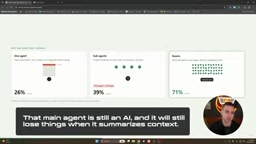
The swarm approach differs by isolating each task into its own independent agent, each with a clean context window, and then merging results with code rather than a model. Nothing gets summarized away during aggregation, and the output is more consistent and reliable. This is the fundamental reason the swarm raises accuracy from 26% to 71%.
A note on the mechanics: The "context window" is one of the core constraints of large language models. Each model can only process a limited amount of text in a single inference pass. When a single agent completes multiple sub-tasks in sequence, the inputs and outputs of earlier tasks continuously occupy context space, reducing the proportion of later content the model can truly "attend to" — a phenomenon known academically as "lost in the middle," where models show significantly weaker recall for information in the middle of their context compared to the beginning or end. The swarm approach fundamentally sidesteps this constraint by assigning each sub-task a fresh, clean context window. "Merging with code rather than a model" means the final aggregation step is deterministic program logic (e.g., array merging, vote counting), eliminating the risk of a language model randomly discarding information during summarization. This is the structural reason for the swarm's substantially higher accuracy — not simply "more compute."
Three Modes Tested
EvoX Agent offers three modes: Chat, Cowork, and Code.
Chat mode is suited for quick consultations — the creator asked directly, "I run a flashcard app; should I switch to the SM2 algorithm?" and got a useful recommendation in seconds.
Cowork mode is more oriented toward actual building. You can choose templates to generate dashboards, visualizations, pitch decks, and more, or specify a project to work on. The creator used a flashcard app he'd built for learning Indonesian as a demo, asking the agent to generate a PDF report with the number of cards per box and accuracy rates by category — completed in about a minute.

Code mode covers a full development workflow. The creator asked it to add a GET endpoint returning total card count, cards per box, and overall accuracy, then display a stats bar at the top of the study page — and then deploy directly via the Vercel CLI. The whole process went smoothly; refreshing the page showed the newly added analytics.
In the model strategy settings, users can enable "switch models by difficulty": economy tier uses cheaper models like DeepSeekAd, while balanced tier uses GPT-4.5 or Kimi K3. Even more flexible is support for local models — the creator ran Nemotron and Qwen via his own DGX Spark device URL, with LM Studio and Ollama also supported, meaning you don't have to spend cloud credits.
Self-Evolution: Accumulating Capability Like the Scientific Method
Opening the "Self Evolution" dashboard in the lower left shows everything the agent has learned. The entire application is built around this self-evolution concept.
The evolution mechanism works in five steps: Observe, Discover, Reuse/Improve, Validate, and Solidify. The system logs task requirements and what actually happened, determines whether a new "gene" was generated or existing genes/capsules need adjustment, scores the outcome, and saves it.
Some key concepts:
- Gene: The smallest, validated strategy unit — for example, "read a specific file" or "run a SQL query and handle the result." Genes only exist after the agent has successfully executed the action, and are stored in a local gene library;
- Capsule: A packaged solution for a complete task. Once a complex task is solved, the entire solution path is saved and can be replayed directly next time, rather than figured out from scratch;
- Event: An uneditable log that records every change to genes or capsules, enabling auditing.
EvoMap claims that once common patterns in a codebase or conversation are learned, approximately 31% of tokens can be saved — since the same content doesn't need to be re-derived repeatedly. The creator admits this couldn't be fully verified on the spot, but from previous testing it does appear effective, and the mechanism feels more like the scientific method than random skill file generation.
There's also an optional Global module: once an agent solidifies a high-scoring gene or capsule, it can be published for other agents on the network to reuse. You can also directly import solutions others have already worked out — and even earn extra credits by contributing assets. The creator noted this is a feature he hasn't seen in other software.
A note on the design philosophy: The "gene" and "capsule" design aligns closely with the research direction of Memory-Augmented Agents. Traditional LLMs are stateless — they retain no memory outside a session once a conversation ends, and must reason from scratch when faced with the same problem again. The gene library is essentially an External Long-term Memory that serializes successful experiences to disk, allowing the agent to retrieve and directly reuse them during inference rather than spending tokens re-deriving already-known effective steps. This shares the core motivation with OpenAI's "Memory" feature or research like MemGPT, but EvoX's implementation is more structured and auditable — the event log ensures every gene change is traceable rather than being a black-box vector embedding memory. The theoretical basis for the 31% token savings claim lies precisely here: known-effective paths are loaded directly, eliminating the cost of exploration and re-derivation.
Swarm in Action: 100 Agents Playing a Survival Game
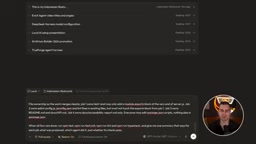
The swarm can be invoked in any mode, and "continuous swarm" can be enabled so new conversations automatically join the running swarm. The creator first ran a comparison test with the Indonesian flashcard app: swarm mode took about 7–8 minutes and consumed roughly 84,000 tokens; running the same tasks sequentially without the swarm took about 2.5× longer and used approximately 129,000 tokens. Even for relatively simple operations, the swarm showed clear advantages in both token efficiency and speed.
The more advanced demo was a survival game experiment. The creator built a small game called Arena, asking roughly 100 agents to each design a species for the game — each agent responsible for one file, one main task. The swarm split this into 100 independent parallel tasks, with each agent writing, testing, and refining its species in its own context window, with no visibility into each other's work. All tasks finished in about 20 minutes, whereas sequential execution would have taken hours.
The experiment also included an "evolution" phase: first-generation agents randomly produced strategies; the creator selected the best performers and asked the model to design new strategies based on those successes without copying them directly. The result: second-generation agents discovered the superior strategy of "staying still and avoiding initiating attacks" — the first generation had 64 species surviving, while the second generation had 99.
This is exactly the value of the swarm: 100 genuinely isolated tasks can be run in true parallel, enabling this kind of complex simulation.
A note on the methodology: This survival game experiment borrows from the framework of Evolutionary Computation. First-generation agents randomly explore the strategy space; fitness evaluation (survival count) filters out high-quality individuals; those individuals then serve as references for generating the second generation — this is the basic loop of a Genetic Algorithm. The difference is that "mutation and crossover" here aren't random bit flips, but directed strategy improvements made by the language model after understanding why certain approaches succeeded. The jump from 64 survivors to 99 shows the model can genuinely extract transferable principles from concrete success cases ("reduce active aggression" corresponds to the dove strategy in Hawk-Dove game theory, which tends to dominate in high-population-density environments). The significance of this kind of experiment is that it provides a quantifiable, reproducible sandbox for systematically evaluating the real-world acceleration benefits of multi-agent parallel collaboration in an explore-evaluate-iterate loop.
Connections and Extensions
In the "Connections" section of settings, you can connect the agent to channels like Discord, LINE, Messenger, and Slack, or scan a QR code to connect your phone — triggering tasks from almost any integration. Like other frameworks, it also supports adding plugins, skills, apps, sub-agents, and hooks, and can import from existing agents.
Overall Assessment
EvoX Agent's baseline coding capabilities are on par with mainstream tools. The real differentiation comes from three design choices: swarm collaboration, the self-evolving skill library, and automatic model switching. The swarm addresses the classic problem of sub-agent merging dropping information — through "isolated contexts + code-based aggregation" — delivering meaningful improvements in accuracy, speed, and token efficiency. Self-evolution makes the tool smarter and more cost-efficient the more you use it.
It's worth noting that the data in this article comes primarily from vendor-provided benchmarks and limited hands-on testing. Numbers like 71% and 31% still await more independent verification. But from the mechanism design to the live demonstrations, this tool offers some genuinely uncommon ideas worth developers exploring firsthand — especially since the free credits are sufficient to run through several complete test cycles.
Related articles

"Black October": Did AI Uncover 3% of All Critical Vulnerabilities Ever?
A Reddit post claims 3% of all critical software vulnerabilities ever were found in the past month, dubbed 'Black October.' We break down the statistical issues, how AI-assisted code auditing accelerates discovery, and how developers should respond.

Microsoft Project Gecko: Using AI to Bridge Language Gaps for African Farmers
Microsoft's Project Gecko launches PharmaChat, letting African farmers ask questions in their native language and get precise video clips and farming book chapters via AI. The project also releases three interactive manuals to advance inclusive AI.

Musk's Space Dominance: How Starlink Throttling Undermines Ukraine's Defense
SpaceX's Starshield throttling disabled Ukraine's high-speed interceptor drones, exposing how Musk's private control over low Earth orbit communications affects battlefield dynamics and national security, and highlighting the risks of commercial space militarization and space governance dilemmas.