FAA Invests $875 Million to Upgrade Air Traffic Control with AI
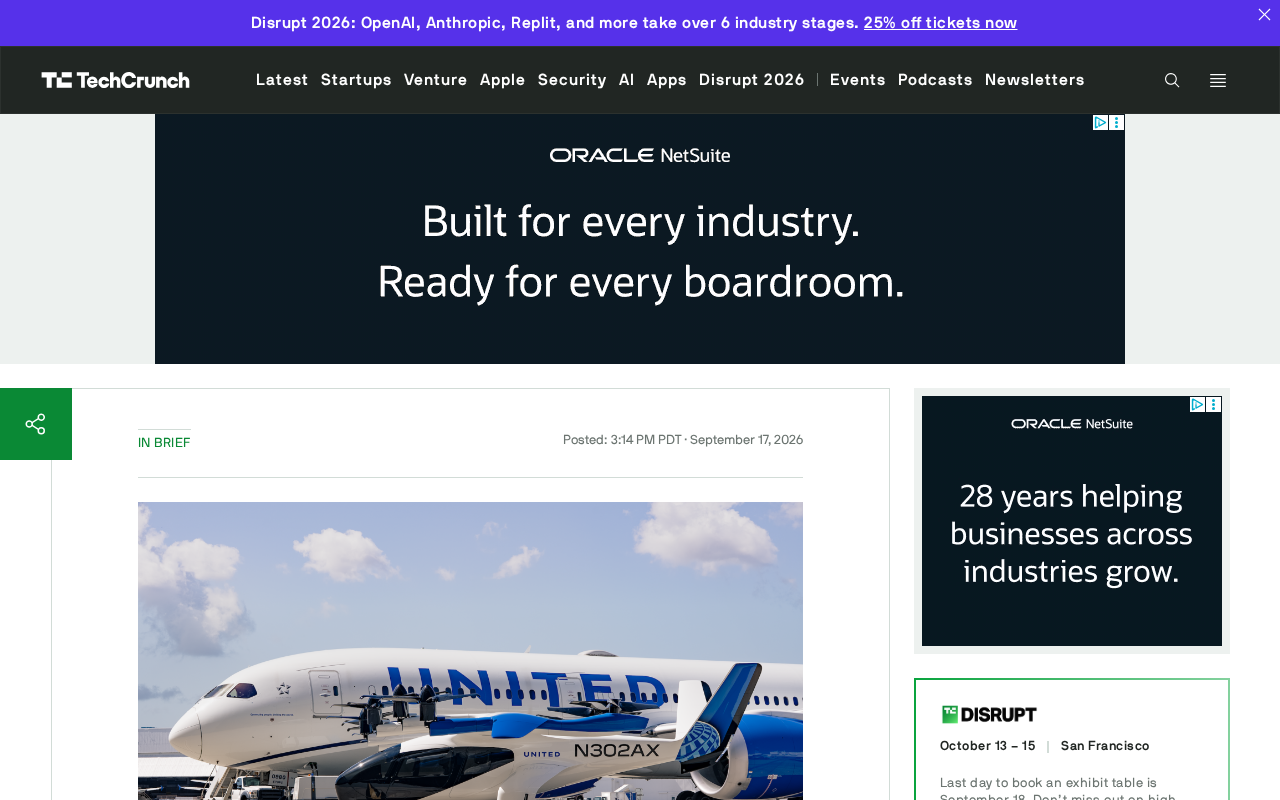
FAA invests $875M in AI-assisted air traffic control to address aging infrastructure and staffing shortfalls.
The FAA has announced an $875 million investment in AI-driven air traffic control assistance software, aimed at giving frontline controllers enhanced situational awareness and decision support. Applications are expected to focus on traffic flow prediction, conflict detection, and route optimization — with AI positioned as an augmentation tool rather than a human replacement, leaving all critical decisions with licensed controllers. The move responds to structural pressures from aging equipment, understaffing, and chronic delays. However, deploying AI in safety-critical airspace management raises serious challenges: system reliability, explainability, robustness under extreme conditions, and compatibility with existing airworthiness certification frameworks will all determine whether this investment yields real gains in safety and efficiency.
FAA Bets on AI to Tackle Air Traffic Control Challenges
The Federal Aviation Administration (FAA) is rolling out a new AI-powered software system designed to help air traffic controllers better manage their role as stewards of America's skies. The initiative reportedly carries a price tag of $875 million, underscoring regulators' urgency to modernize an aging air traffic control infrastructure using artificial intelligence.
Air traffic control has long been regarded as one of the most high-pressure, high-stakes occupations. Controllers must coordinate hundreds of flights in real time across a constantly shifting airspace, where even a minor misjudgment can have serious consequences. The FAA hopes AI software will give frontline controllers sharper situational awareness and stronger decision support.
Where the $875 Million Is Going
Based on publicly available information, the core focus of this investment is deploying a suite of AI-driven software tools to help controllers optimize airspace navigation and traffic management. While the original materials don't disclose the system's specific technical architecture, the air traffic management context suggests likely applications in traffic flow prediction, conflict detection and alerting, and route optimization.
For a system that has long relied on conventional radar and human expertise, introducing AI represents a shift from "reactive response" to "proactive anticipation." With AI assistance, controllers can identify potential flight separation risks earlier, reducing the likelihood of human error and improving overall airspace efficiency.
Conflict Detection & Resolution (CD&R) is one of the most technically demanding applications in air traffic management AI. Existing systems like TCAS (Traffic Collision Avoidance System) primarily provide close-range alerts at the aircraft level, while ground-based AI conflict detection requires continuous computation of predicted flight paths for dozens or even hundreds of aircraft across three-dimensional airspace — typically within a 5-to-20-minute lookahead window — to flag potential separation violations before they occur. The core challenge: trajectory prediction errors accumulate over time, and weather disturbances along with ad-hoc pilot requests introduce significant uncertainty. Algorithms must therefore strike a careful balance between recall (catching every real conflict) and precision (avoiding excessive false alarms) — too many false alerts cause "alarm fatigue" among controllers, which can actually degrade safety.
Why Now
The U.S. air traffic control system has been plagued in recent years by aging infrastructure, staffing shortages, and chronic flight delays. A nearly $900 million AI investment reflects regulators' desire to use technology to relieve these structural pressures. The goal is not to replace controllers but to serve as an "augmentation tool" — keeping humans in the lead on critical decisions while offloading repetitive, high-intensity monitoring tasks to algorithms.
This "human-machine teaming" model has become the dominant approach for deploying AI in safety-critical industries. In aviation, where the margin for error is razor-thin, any automated system must pass rigorous validation, and AI software is positioned to assist rather than take over.
Challenges Worth Watching
Introducing AI into frontline air traffic control also raises concerns that cannot be dismissed. Chief among them is reliability and explainability: whether controllers trust and understand the recommendations AI provides will directly determine whether the system delivers real value. Beyond that, data quality for training, robustness under extreme weather and unexpected scenarios, and contingency plans for system failures are all areas that will require sustained refinement.
Whether $875 million ultimately translates into meaningful gains in safety and efficiency depends on the pace of deployment, controller training, and regulatory validation. For the broader aviation industry, this may prove to be an important case study in how AI can be safely integrated into critical infrastructure.
Explainability carries a particular meaning in the context of aviation safety. U.S. Federal Aviation Regulations (FAR) require that any system used in air traffic management pass through DO-178C (airborne software) or equivalent airworthiness certification processes — a framework that sits in fundamental tension with the "black box" nature of deep learning models. The industry's prevailing responses include: substituting gradient-boosted trees or hybrid rule-based models (which offer greater interpretability) for pure neural networks; attaching confidence intervals and salient feature annotations to neural network outputs; and adopting a two-layer "AI recommendation + human confirmation" architecture that ensures final decision authority always rests with a licensed controller. For the FAA to bring this system into live operations, it will need to work with standards bodies such as MITRE and RTCA to develop AI-specific certification criteria — a process that itself typically takes several years.
Conclusion
The FAA's massive investment in AI-assisted air traffic control software is another landmark example of government agencies using artificial intelligence to modernize traditional critical systems. It demonstrates AI's potential to enhance public safety and operational efficiency — while also serving as a reminder that in high-risk domains like aviation, the value of technology must ultimately be proven through rigorous validation and genuine human-machine collaboration.
Related articles
NVIDIA cuML Accelerates Spectral Clustering: 100x+ Speedup Over Scikit-Learn Benchmarked
NVIDIA cuML lets Scikit-Learn spectral clustering run on GPU without code changes, delivering 200x+ speedups on large datasets. Learn how it works and how to use it.

Google DeepMind Launches New Institute to Bring the AGI Debate into the Open
Google DeepMind has launched a new institute to bring AGI debate into the public sphere. We analyze what this signals about the shift from technical competition to AI governance.

How Cooley Is Reinventing IPO Legal Workflows with ChatGPT: A Look at the GO Public Tool
Cooley built GO Public on ChatGPT Work to accelerate IPO legal workflows, helping lawyers catch issues earlier and focus judgment where it matters most.