Fable 5 Opens to All Paid Users: How AI Storytelling Tools Are Reshaping Content Production

Fable 5's open beta reveals how AI storytelling tools are shifting from experimental to practical.
AI storytelling platform Fable 5 has opened to all paid users, sparking discussion on Hacker News. This article analyzes the practicalization trend of AI creation tools through product positioning, competitive dynamics, technical paths (fine-tuning vs. RAG), cost logic, copyright issues, and how creators should adapt.
AI Storytelling Tools Reach a New Turning Point
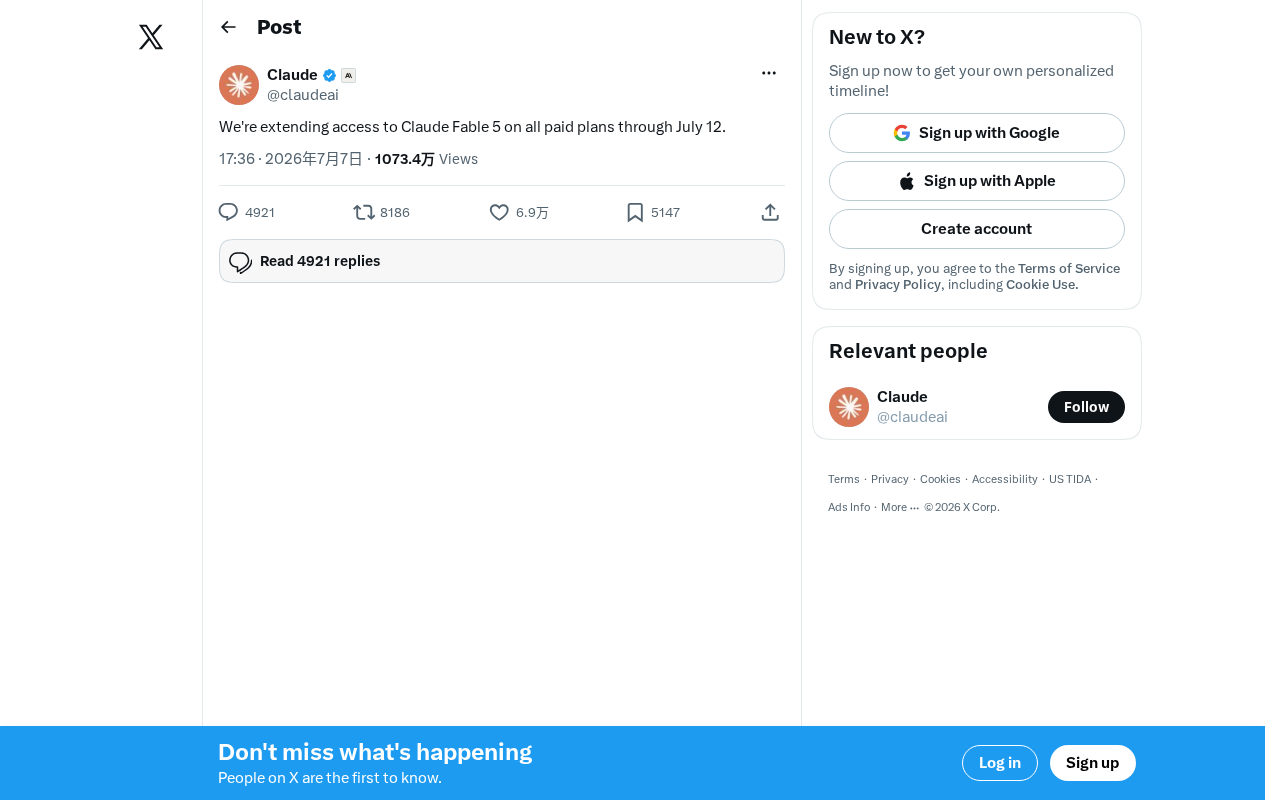
Recently, an AI creation platform announced that it would extend access to Fable 5 through July 12, opening it up fully to all paid users. The news quickly gained traction on Hacker News, garnering 62 upvotes and 49 comments—a reflection of the sustained interest that developer and creator communities have in AI storytelling generation tools.
For practitioners who have long tracked the AI content generation space, Fable 5's open beta marks a pivotal moment in the transition of such tools from experimental to practical. This article breaks down the deeper logic behind this development across three dimensions: product positioning, industry context, and community feedback.
Fable 5: An AI Creation Tool Built for Narrative Scenarios
Product Positioning and Access Strategy
The Fable series is essentially an AI storytelling generation tool aimed at content creators. Unlike general-purpose large language models, these narrative-focused tools are specifically optimized for story structure, character development, and plot coherence.
It's worth first understanding the boundaries of what such optimization can achieve from the standpoint of underlying architecture. Contemporary AI storytelling tools are almost without exception built on the Transformer architecture—a revolutionary design proposed by the Google Brain team in the 2017 paper "Attention Is All You Need." Its core innovation, the self-attention mechanism (Self-Attention), enables the model to simultaneously "attend to" all other tokens in the input sequence and dynamically weight them when processing each token—a fundamental departure from the word-by-word sequential processing of earlier RNN/LSTM architectures. This is especially significant for narrative generation scenarios: the model can "look back" at the character setup from Chapter 1 while generating content for Chapter 10, maintaining character consistency across long distances. But this also introduces the physical limitation of the context window—early models supported only 4K tokens, while today's mainstream models have expanded to 128K or even 1M tokens, which constitutes a decisive capability boundary for ultra-long narrative scenarios such as full-length novels.
Vertical narrative optimization of large language models typically involves two core technical paths. The first is fine-tuning, which involves secondary training of a general pre-trained model using domain-specific data to improve performance on dimensions like story pacing and character consistency. The second is retrieval-augmented generation (RAG), which reduces the risk of model "hallucination" by attaching an external narrative knowledge base for real-time retrieval of relevant structural patterns.
These two paths differ significantly in cost structure and applicable scenarios. Fine-tuning requires high-quality domain-annotated datasets (typically thousands to tens of thousands of samples) and consumes substantial GPU compute for parameter updates; its advantage is that the model internalizes domain knowledge into its parameters, eliminating the need for an additional retrieval step at inference time and thus reducing latency. RAG, on the other hand, converts an external knowledge base into high-dimensional embedding vectors stored in a vector database (such as Pinecone, Weaviate, or Milvus), and at inference time uses approximate nearest neighbor (ANN) algorithms to retrieve semantically relevant fragments in real time and inject them into the context. Its workflow is as follows: an embedding model first encodes worldbuilding settings, character profiles, and plot outlines into vectors and stores them in the database; at inference time, the creative intent is likewise encoded into a query vector, and the semantically closest fragments are rapidly retrieved and injected into the prompt. Its advantage is that the knowledge base can be updated at any time without retraining, and its sources are traceable for auditing. In vertical narrative scenarios, the two paths are often used in combination: fine-tuning imparts a narrative style tendency to the model, while RAG injects specific worldbuilding settings or character databases, achieving cross-chapter character consistency and plot coherence.
In addition, narrative tools typically introduce dedicated prompt engineering frameworks that force the model to follow classic narrative paradigms such as the three-act structure or the hero's journey, thereby striking a balance between generative freedom and structural coherence. The Three-Act Structure originates from ancient Greek dramatic theory and was systematized through Hollywood screenwriting practice: the first act establishes the world and conflict, the second act develops the conflict to its lowest point, and the third act builds to a climax and reaches resolution, with the three acts typically proportioned at 25%/50%/25%. The Hero's Journey was outlined by mythologist Joseph Campbell in his 1949 work "The Hero with a Thousand Faces," comprising 17 stages such as departure, trials, transformation, and return, and was later simplified by George Lucas and others into a 12-step framework for commercial creation. Encoding these structural paradigms into prompt templates essentially translates human narrative wisdom into constraints injected into the model, improving narrative coherence and alignment with reader expectations while preserving generative flexibility.
Technical Frontier: Multimodal Narrative Generation
AI storytelling tools are currently expanding from pure text generation toward multimodal directions. The fusion of video generation models like Sora and Runway with text-based narrative tools heralds the possibility of end-to-end automation from "script → storyboard → video." The collaborative architecture of diffusion models and large language models has made maintaining cross-modal consistency between a character's visual image and its textual description a hot research topic. Meanwhile, AI Agent frameworks represented by AutoGPT and LangChain are reshaping the interaction paradigm of narrative tools. Through tool use and multi-step planning, Agent-based narrative tools can autonomously complete a full creative pipeline of "research background → build worldview → draft outline → generate chapter by chapter → verify internal consistency," freeing human creators from repetitive structural tasks. This trend means that future narrative tools will not merely be "writing assistants" but genuine "autonomous creative collaborators."
Extending access to all paid plans this time indicates that the platform hopes to leverage broader user testing to collect real feedback and validate product-market fit (PMF). The concept of PMF was introduced by Silicon Valley investor Marc Andreessen in 2007, referring to the state in which a product satisfies the strong needs of a particular market segment. For AI creation tools, PMF validation is particularly complex—users' expectations of AI capabilities are often shaped by media hype, resulting in a considerable gap in actual usage satisfaction.
At the quantitative evaluation level, the "40% rule" proposed by Sean Ellis in 2010 is widely adopted in the industry: if more than 40% of active users say they would be "very disappointed if they could no longer use this product," the product can be preliminarily judged to have achieved PMF. More actionable quantitative metrics also include Net Promoter Score (NPS), the daily-to-monthly active user ratio (DAU/MAU, which for a healthy AI tool should generally exceed 20%), and whether the user retention curve flattens out. For AI creation tools, another key metric is "depth of workflow integration"—that is, whether users integrate the tool with creative software such as Notion, Scrivener, and Final Draft. Such systematic integration is often strong evidence of PMF and significantly raises the product's switching costs. The industry generally agrees that the core criterion for AI tool PMF is whether users spontaneously and frequently incorporate the tool into their daily workflow without prompting, rather than occasionally trying it out of novelty.
Extending the trial period is a common growth strategy for SaaS products: by lowering the barrier to experiencing flagship features, it boosts user stickiness and subsequent conversion rates. The "limited-time full access" approach both creates a moderate sense of urgency and allows the market's willingness to pay to be thoroughly probed before official pricing is set.
Why Prioritize Access for Paid Users
The access this time is opened to "all paid plan" users rather than free users, a choice that follows clear commercial logic—among which compute cost control is especially critical.
The high compute consumption of AI narrative generation stems primarily from the autoregressive generation mechanism—the core inference method of modern large language models based on the Transformer architecture. The model generates only one token at a time, appends it to the context, and feeds it back into the model to predict the next token, looping until the complete content is generated. This mechanism dictates that inference latency and cost grow linearly with output length. To alleviate this bottleneck, engineers have developed KV Cache technology, which reduces redundant computation by caching already-computed intermediate attention results; speculative decoding uses a small model to pre-generate candidate tokens that the large model then verifies in batches, which can increase throughput by 2–3x. Long-form narrative content easily runs into thousands of tokens, and professional narrative scenarios often require multiple rounds of iteration, so the actual cost of a single creation session may be several times that of a general Q&A.
From the macro compute market perspective, NVIDIA currently holds roughly 80% of the AI training GPU market, and the H100 once sold for over $40,000 per card, directly driving up the operating costs of all AI products. However, with intensifying competition from the AMD MI300X, the emergence of inference-optimized chips (such as Groq's LPU), and continued progress in model quantization (compressing parameters from FP32 to INT8/INT4) and model distillation, the per-session generation cost of AI narrative tools is expected to fall by 50–80% over the next two years. Using current mainstream large model API pricing as a reference, generating one million tokens with a GPT-4-class model costs roughly $5 to $30. At a stage where the business model is not yet fully mature, restricting high-cost features to paying users is a necessary means of controlling losses.
The Structural Impact of Open-Source Models
It is worth being cautious about the rise of open-source foundation models such as LLaMA 3, Mistral, and Qwen, which is reshaping the competitive landscape for vertical AI tools. Creator communities can fine-tune their own dedicated narrative models based on open-source models at only 1/10 to 1/100 the cost of commercial APIs. Several open-source models fine-tuned for creative writing scenarios (such as Mistral-story and Creative-Writer-7B) have already appeared on the Hugging Face platform, posing long-term structural pressure on closed-source commercial platforms like Fable. This trend is also pushing commercial products to accelerate their differentiation along dimensions that are hard to replace with open source—such as depth of workflow integration, polished user experience, and community operations—shifting from merely "outputting AI capabilities" to "building a complete creative ecosystem."
Taken together, the logic behind prioritizing access for paid users includes:
- Controllable costs: AI narrative generation consumes considerable compute, so opening access to paid users allows the platform to control costs while obtaining high-quality feedback.
- Precise user profiling: Paid users are often the core group with genuine creative needs, so their feedback data carries greater reference value.
- Paving the upgrade path: Letting paid users experience advanced features early lays the groundwork for subsequent plan upgrades and feature tiering conversions.
Industry Context: The Verticalization Wave in AI Creation Tools
From General Assistants to Vertical Scenarios
Over the past two years, as the capabilities of large language models have leapt forward, AI content generation tools have evolved from "general chat" to "vertical scenarios." General assistants like ChatGPT and Claude are certainly powerful, but in specific creative scenarios, specially optimized vertical tools often deliver an experience that fits the workflow far better.
AI storytelling tools like Fable are precisely a product of this verticalization trend. Their value lies not in "whether they can write" but in "whether they write well and truly integrate into the creator's workflow." This also explains why product iterations are so frequent—as underlying AI capabilities evolve rapidly, products must continuously adapt to stay competitive.
Notably, evaluating the generation quality of AI storytelling tools is itself a technical challenge. Common benchmarks for general language models (such as MMLU and HellaSwag) are essentially blind spots for creative writing ability; automated metrics based on n-gram overlap, such as BLEU and ROUGE, are of questionable validity in creative scenarios; BERTScore, based on semantic similarity, performs better but still cannot effectively capture a narrative's emotional tension and dramatic quality. This evaluation challenge objectively makes quality validation of AI storytelling tools extremely costly—narrative generation quality still relies heavily on human scoring across four dimensions: fluency, coherence, creativity, and character consistency. This is the deeper reason why large-scale real-user testing holds irreplaceable value for the platform.
Latest Advances in Evaluation Methodology
Academia has in recent years proposed several evaluation frameworks specifically targeting narrative quality to compensate for the shortcomings of traditional metrics. The Story Coherence Score quantifies narrative coherence by tracking the internal consistency of character states, timelines, and causal relationships; the Narrative Surprise Index attempts to measure the degree of expectation violation in plot twists in order to quantify "dramatic tension." The LLM-as-Judge paradigm using large models like GPT-4 as "judges" (such as the MT-Bench framework) is being increasingly used for creative writing evaluation, though its inherent issues of position bias and self-preference remain to be resolved. Progress in these evaluation methodologies will reduce the quality-validation cost of narrative AI tools over the medium to long term, thereby accelerating the product iteration cycle.
The Business Model Landscape of AI Creation Tools
Understanding the business model landscape of the AI creation tools space helps in judging the deeper strategic intent behind Fable's access strategy. Subscription-based SaaS is the most mainstream form, typically charging monthly/annually and tiering by feature level; usage-based pricing directly passes underlying API costs on to users, which is friendly to low-frequency users but uncontrollable in cost for heavy users; hybrid models combine a base subscription with overage-based billing and are the current compromise mainstream choice.
In addition, enterprise-oriented on-premises deployment is becoming a new growth engine—enterprises, out of data security concerns, are willing to pay a significant premium to ensure that created content does not leave the enterprise boundary. For narrative tools, the average revenue per customer in the B2B market (game companies, film and TV companies, publishers) is often 10–50x that of the B2C market, making it a potential growth direction worth focusing on—which partly explains why some platforms choose to prioritize consolidating their paid user base.
The Segmented Landscape of the Vertical Narrative Market
The degree of segmentation within the B2B narrative AI market far exceeds outside perceptions. Game companies (especially RPG and interactive-narrative game developers) use AI narrative tools for dynamic dialogue trees and procedural worldbuilding generation, with representative cases including Inworld AI's commercialization efforts in game NPC dialogue. Film and TV companies focus more on creative divergence and scene expansion during the script development phase; one of the core demands of the 2023 Writers Guild of America (WGA) strike was precisely the regulation of AI's boundaries in script creation. Publishers use AI narrative tools to accelerate rapid-publishing pipelines for genre fiction (such as romance and suspense). Different segments differ significantly in their functional emphasis for narrative tools, compliance requirements, and workflow integration methods, which means vertical narrative AI platforms cannot "take on the world with one product" but must deeply customize for specific market segments.
Market Signals Revealed by Community Feedback
Hacker News (HN), founded by Y Combinator in 2007, is one of the world's most influential tech-startup communities, with over 500,000 daily active users whose core audience consists of engineers, product managers, and tech entrepreneurs. The HN community has distinct cultural preferences: it values transparency in technical implementation, remains highly wary of marketing rhetoric, and pays particular attention to ethical issues such as privacy and data ownership. Therefore, when an AI tool receives positive discussion on HN, it is often far more persuasive than praise in a consumer community—it means the product has passed initial scrutiny before the most demanding technical audience.
The intensity of discussion, with 49 comments this time, is itself meaningful. The developer community generally holds an attitude of "anticipation coupled with prudence" toward such AI writing-assistance tools, and the core topics typically center on the following points:
- Generation quality: Whether AI storytelling truly reaches a usable level, or remains at the "looks good" demo stage.
- Pricing reasonableness: Whether the paid barrier matches the actual creative value.
- Copyright and data ownership: The ownership of AI-generated content and the sources of training data.
Regarding copyright ownership, this is a legal gray area currently faced by all major jurisdictions worldwide, and the relevant rules are evolving rapidly. Since 2023, the U.S. Copyright Office has successively issued guidance establishing the core principle that copyright protection requires creative intellectual labor by a human author—pure AI output is not protected, but the portions in which a human makes substantial selections, arrangements, or modifications to AI output can be protected. The EU's Artificial Intelligence Act (AI Act) officially took effect in 2024, requiring AI systems to disclose the copyrighted materials used in their training data and granting copyright holders the right to opt out of training datasets. On the litigation front, landmark cases such as The New York Times v. OpenAI (2023) and Getty Images v. Stability AI will directly influence the direction of industry rules. In China, the Beijing Internet Court's 2023 "AI painting copyright case" was the first to recognize a user's copyright in an AI-generated image, though academia remains significantly divided over the ruling. More pressing is the issue of training data sources—several mainstream AI companies currently face class-action lawsuits from writers and artists accusing them of using copyrighted works to train their models without authorization. This legal uncertainty has prompted some companies to begin offering "copyright indemnification insurance" services, which is gradually becoming a new dimension of commercial competition among AI creation tools.
The Rise of the "Creator Data Rights" Movement
Alongside the wave of copyright litigation, a broader "creator data rights" movement is taking shape. Industry organizations such as the UK Society of Authors and the Authors Guild have begun establishing "opt-in" licensed datasets, such as Adobe's Content Authenticity Initiative (CAI) and the Authors Guild's licensed training data programs, providing compliant training data sources for AI companies and returning licensing fees directly to creators. Some AI companies (such as the commercial version of Stability AI and Adobe Firefly) have taken the lead in adopting a "copyright-clean data" training strategy as a differentiation selling point to avoid potential litigation risk. For AI storytelling tool platforms, the ability to clearly demonstrate the compliance of their training data sources will become one of the key thresholds for winning the trust of professional creators.
In-Depth Analysis: The Pros and Cons of a Limited-Time Access Strategy
Dual Considerations at the Growth Level
From a product growth perspective, limited-time full access is a double-edged sword.
The advantage is that it can concentrate user attention in the short term, generate buzz, and quickly validate feature value through real usage data. For a product still in its iteration phase, such a real-scenario stress test carries irreplaceable reference significance.
The potential risk is that if the product experience falls short of expectations, large-scale access may instead amplify negative word of mouth. Moreover, the wording "extend" itself hints that the original plan was adjusted, which some users may interpret as a signal that the product is not yet fully mature—requiring the platform to manage expectations well at the communication level.
Practical Advice for Content Creators
For content creators, the value of AI storytelling tools needs to be viewed rationally. They are better suited as creative assistants rather than a complete replacement for human creation:
- Suitable for breaking through creative blocks, quickly generating drafts, or offering diverse ideas.
- Capable of efficiently handling structural, repetitive narrative tasks, freeing up creators' energy.
- But in terms of emotional depth, original style, and narrative uniqueness, human creators still hold an irreplaceable advantage.
Interested creators are advised to use this trial window (through July 12) for practical testing, focusing on whether the tool can truly integrate into their personal workflow, rather than letting marketing rhetoric dominate their judgment. When evaluating, consider the core metric of "depth of workflow integration"—if the tool can naturally link up with the writing software you already use (Notion, Scrivener, Final Draft, etc.), it often means its practical value has withstood the test of real scenarios.
A Practical Framework for Creators Using AI Tools
The industry has gradually formed a practical framework known as "Human-AI Co-authorship," which breaks the creative process down into three phases: In the Divergent Phase, AI takes the lead, rapidly generating multiple plot lines, character settings, and worldview drafts, while the human creator plays the role of "curator" to select among them. In the Convergent Phase, the human leads, deeply rewriting the AI drafts and injecting personal style and emotional detail, with AI assisting in coherence checks. In the Refinement Phase, humans and AI collaborate, with AI handling language polishing and formatting standards while humans focus on the final tuning of narrative pacing and thematic depth. The core insight of this framework is that AI is best at handling the Structure Layer of narrative, while the irreplaceable value of humans lies in the Meaning Layer of narrative—that is, imbuing the story with emotional weight, moral tension, and a unique worldview.
Conclusion: The Next Step in the Practicalization of AI Creation Tools
Fable 5's open beta is a representative slice of the ongoing evolution of the AI content generation space. As the capabilities of underlying models continue to improve, vertical and specialized AI creation tools will keep emerging, and market competition will grow ever more heated.
For users, this is a positive signal—more choices, lower barriers, and faster iteration. But it is equally important to stay clear-headed: the long-term value of a tool ultimately depends on whether it can genuinely solve concrete problems in creative practice, rather than remaining at the level of a technical showcase. Against the backdrop of a gradually improving copyright legal framework (relevant legislation in the U.S. and EU has been rolled out one after another, and domestic judicial practice continues to accumulate), continuously falling compute costs (technologies such as KV Cache optimization and speculative decoding are rapidly improving inference efficiency, while model quantization and distillation will further push down marginal costs), and a continuously growing open-source model ecosystem (posing differentiated competitive pressure on commercial platforms), the platforms that can strike a balance among compliance, depth of workflow integration, and creative experience will occupy a more favorable position in the next round of competition.
The July 12 deadline offers a window for potential users to try the product. Regardless of the final verdict, this opening provides a rather valuable real-world sample for observing AI storytelling tools moving toward practicalization.
Key Takeaways
- Technical paths: Vertical narrative optimization typically combines two paths—fine-tuning (internalizing domain style) and RAG (real-time injection of a knowledge base)—built on the Transformer's self-attention mechanism and supplemented by prompt frameworks constrained by paradigms like the three-act structure; multimodal and AI Agent directions represent the frontier of the next stage of technical evolution.
- Cost logic: The autoregressive generation mechanism dictates that long-form narrative inference costs grow linearly with length; intensifying competition in the GPU compute market plus quantization/distillation technologies will continue to push down costs, making prioritized access for paid users a necessary means of controlling losses at the current stage; the rise of open-source models poses medium-to-long-term structural pressure.
- PMF validation: The core criterion for AI tool PMF is spontaneous, high-frequency depth of workflow integration by users, rather than novelty-driven occasional use; quality evaluation of narrative tools still relies heavily on human judgment, and new paradigms like LLM-as-Judge are expected to reduce evaluation costs, making large-scale user testing carry currently irreplaceable data value.
- Copyright landscape: Copyright rules in major jurisdictions worldwide are evolving rapidly, with clear legislative movements already in the U.S. and EU; lawsuits over training data sources will profoundly influence industry rules; "copyright indemnification insurance" and "copyright-clean data" are becoming new dimensions of commercial competition, and the rise of the "creator data rights" movement will reshape the industry's data ecosystem.
- Business models: Subscription-based SaaS is mainstream, and B2B on-premises deployment carries significantly higher revenue per customer than B2C; segmented markets such as gaming, film and TV, and publishing have significantly different needs for narrative tools, making them important potential growth directions for narrative tools.
- Human-AI collaboration framework: The three-phase "Human-AI Co-authorship" framework (divergent → convergent → refinement) is becoming the practical paradigm for professional creators using AI tools; AI excels at the narrative structure layer, while human value is irreplaceably embodied in the meaning layer.
- Community signals: Receiving positive discussion on Hacker News means the product has withstood the dual scrutiny of transparency and practicality among a technical audience, and its reference value is higher than praise from a general consumer community.
Related articles

Amphibious Transforming Drone: Beyond 100x Power Savings, What Are the Real Needs?
Is the amphibious transforming drone just a gimmick? Starting from the 100x power difference of the M4 Morphobot, explore real application scenarios and thesis topic ideas, analyzing boundary conditions where pure drones and pure ground robots both fail.

Warhound Raises $200 Million: Genetically Engineered "War Dogs" Paired with Anduril Gear
Warhound raises $200M, backed by Ben Lamm and Palmer Luckey, to genetically engineer dogs for military and law enforcement use and equip them with Anduril gear. This article analyzes its technology direction, funding logic, and ethical controversy.

Claude API Comes to Google Cloud: IAM Integration and SDK Access Guide
Anthropic hosts the full Claude API on Google Cloud with IAM-controlled permissions and unified billing. This guide covers the Vertex AI and Anthropic-hosted entry points, IAM role configuration, and SDK access.