Factory vs Devin: Who Should Check an AI Agent's Work?

Factory vs Devin: self-verification or repo verification decides which teams they suit.
Factory and Devin are highly similar in pricing and deployment, but differ on who is responsible for an agent's delivered work. Devin lets the agent self-verify by recording operation videos and reading Slack context, suiting small teams that need quick demos; Factory gives acceptance authority to the code repository, scoring across five tiers and auto-adding tests and hooks, suiting teams with solid testing. Each has a weakness: Devin's self-verification is least reliable on hard tasks, while Factory's strictness depends entirely on team test quality. Factory isn't tied to a specific model but caps at 10 seats; Devin costs slightly more but has no seat cap. Choosing is essentially a reflection of a team's quality culture.
AI coding agents are moving from experimentation to engineering, but a key question has surfaced: who should check the work an agent delivers? Factory and Devin have similar pricing and deployment environments, yet they give completely different answers to this question. According to an analysis by the YouTube channel Reason Machines, this seemingly simple divergence actually determines what kinds of teams each platform suits.
Same shell, different core
On the surface, Factory and Devin are almost indistinguishable. Both can run on the desktop, in the terminal, and in the cloud, and both can automatically kick off tasks on a schedule. This overlap in deployment means the key to choosing between them isn't "can it run" but "who signs off after it runs."
The core of the divergence is where responsibility lies. Devin chooses to let the agent verify itself—it has its own computer, its own browser, and even records a video of clicks showing whether what it built actually works. When you @-mention Devin in Slack, it reads the entire discussion thread to understand context. According to the channel, a good rule of thumb is: a three-hour task you have on hand is something Devin can probably take over.
Factory instead hands the checking power back to the code repository. It scores code across five tiers, then automatically fills in missing tests and hooks. In other words, Factory doesn't trust the agent's self-reporting—it makes the repo's testing system the judge.

Agent self-verification means that after executing a task, an AI coding agent doesn't rely on external tests or human review, but instead proves the deliverable works by running the code itself, operating a browser, recording demo videos, and so on. The advantage of this model is a fast feedback loop and intuitive demos, but its credibility depends heavily on how much the demo path covers. If the agent only shows successful cases and avoids edge conditions, self-verification easily degenerates into "a performance." Devin's approach is a typical example: it has an independent compute environment and browser, can simulate user clicks, and generates video evidence—but this also means the quality of verification depends on the agent's own judgment and honesty.
What self-verification and repo verification each cost
Devin's self-verification model sounds elegant: the agent runs through it itself, records it, and shows it to you. But the credibility of this approach depends on how much the recording and demo cover—it can prove "the demo path works," but not necessarily that "edge conditions are safe." If the tests themselves are thin, self-verification easily turns into a performance.
Factory's repo verification model is closer to traditional engineering practice: tests as contract. The problem is that how strict Factory is depends entirely on how strict your tests are. If the tests in the repo are written perfunctorily, Factory's scoring system loses its meaning. Its ability to add tests and hooks is a bonus, but it can't replace a team's investment in test quality.
Each model has one clear weakness. Devin's documentation reportedly mentions that it skips the hardest tasks, which means self-verification is least reliable precisely in difficult scenarios. Factory, meanwhile, is limited by the quality of the testing infrastructure—teams with weak tests can't extract its value.

Repo verification is a model that hands acceptance authority to the code repository's inherent quality system. Its core logic is: tests as contract—the code an agent delivers must pass the test suites, static checks, hooks, and other gates already in the repo. Factory's five-tier scoring is exactly the engineering realization of this idea: it doesn't trust the agent's self-reporting, but makes automated tests the judge. This model is in line with traditional CI/CD practice, but its effect depends entirely on test coverage and strictness. A repo with weak tests makes repo verification a mere formality and can even create a false sense of security.
Hidden thresholds in model freedom and team size
At the underlying model layer, Devin runs its own models while also using frontier models side by side; Factory isn't tied to any specific model, giving teams more room to choose. For teams with compliance requirements or that want to keep pace with model iteration, this difference in freedom is worth factoring in.
On pricing, a five-person team pays $2.80 per month on Devin and $2.60 on Factory—a nearly negligible gap. But Factory has an obvious cap: it supports at most 10 seats. This means teams larger than ten either split into multiple workspaces or can only turn to Devin.

Seat in SaaS pricing usually refers to the licensing unit for an individual user account. Factory supports at most 10 seats, meaning a workspace can hold at most 10 members using it at the same time. For teams larger than 10, they must either buy multiple workspaces and manually sync context, or give up Factory and turn to Devin, which has no such limit. This limit becomes a hidden cost as a team grows: splitting workspaces not only adds management burden but may also fragment the agent's understanding of the whole project. Therefore, when choosing, you need to factor in both your team's current size and headcount growth over the next six months.
How to choose: look at your testing culture
Putting these differences together, the selection logic becomes clear. If your team has a sound testing system and the repo itself is the quality gatekeeper, Factory's repo verification model can seamlessly connect with existing processes and reduce maintenance costs by automatically adding tests. If your team is small with weak tests but needs an agent on standby in Slack at all times to quickly deliver demonstrable results, Devin's self-verification and context-reading capabilities are more practical.
Watch out for two extremes: thin tests while expecting Factory to cover for you, or handing the hardest tasks to Devin and relying on its self-reporting. Checking an agent's work is fundamentally not a tooling problem but a matter of a team's quality culture—tools only amplify that culture.
According to Reason Machines' summary, the answer to this question depends on which verification mechanism you trust more: a repo that should be able to check itself, or an agent that records a video of itself to show you.
One-line Summary
Factory and Devin's core divergence is verification responsibility: self-verification versus repo verification determines which teams they suit.
Paragraph Summary
Factory and Devin are highly similar in pricing and deployment environments, but their core divergence is who is responsible for the work an agent delivers. Devin lets the agent verify itself, recording operation videos via its own browser and reading Slack context, suiting small teams that need quick demos; Factory hands acceptance authority to the code repository, scoring across five tiers and automatically adding tests and hooks, suiting teams with a sound testing system. Each has a weakness: Devin's self-verification is least reliable on hard tasks, and Factory's strictness depends entirely on team test quality. On model freedom, Factory isn't tied to a specific model but supports at most 10 seats; Devin costs slightly more per month but has no seat cap. Choosing is essentially a reflection of a team's quality culture.
Related articles
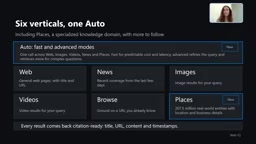
Microsoft WebIQ: Verifiable Real-Time Web Grounding for AI Agents
Microsoft WebIQ gives AI Agents real-time, citable web grounding across web, news, images, videos, and Places—164ms P95 latency, 50% fewer tokens, Scopes source control, and MCP integration.
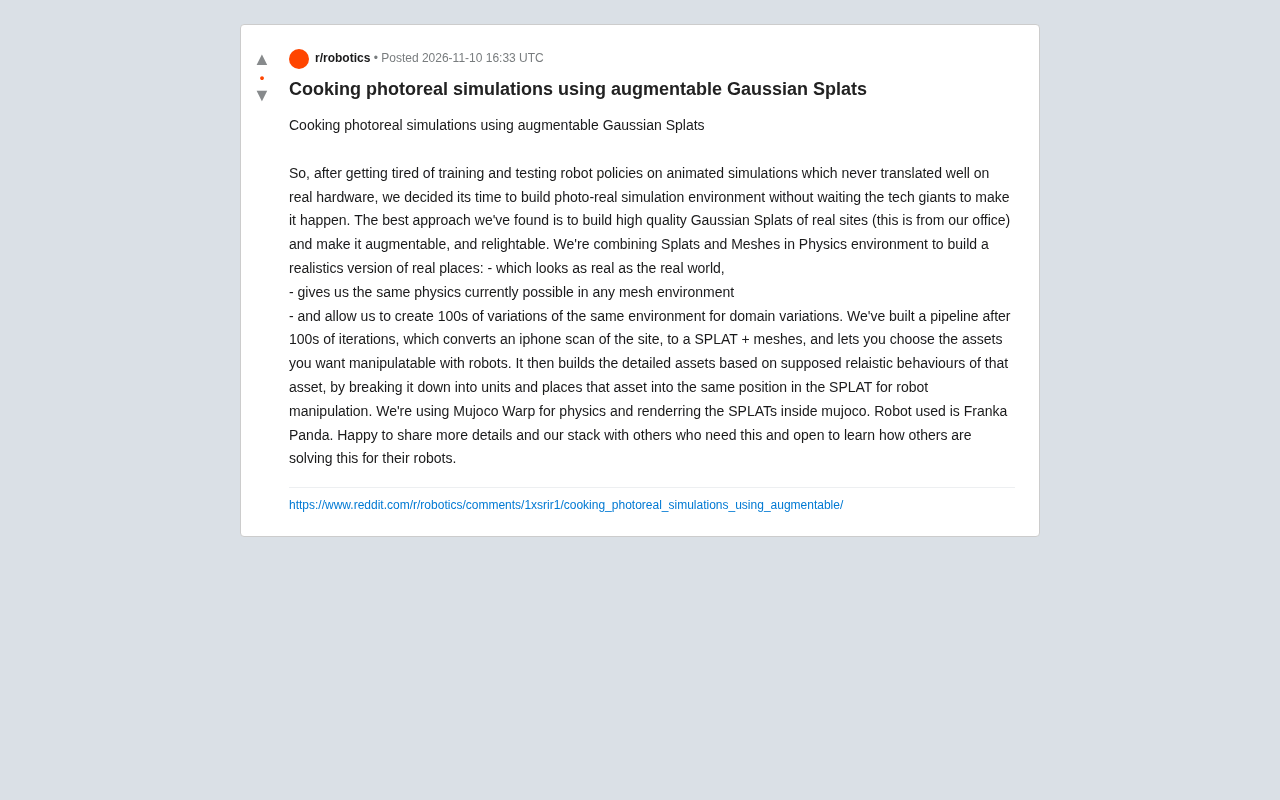
Augmentable Gaussian Splatting: Building Photorealistic Simulation Environments for Robot Training
Team combines Gaussian Splatting with meshes to build photorealistic robot simulation environments, integrating MuJoCo Warp physics and Franka Panda for augmentable, relightable real-site simulation.

Gemini 4 Carbon Released: The Leap from Gemini 3 to Gemini 4 in Under a Year
Google releases Gemini 4 Carbon, less than a year after Gemini 3. In the official demo, Carbon reverse-engineered the Theme Park binary, added a new DeepMind-themed ride, and ported it to the web in one shot.