fal H3 Max Video Generation Model: 3-Second Output, 35x Throughput Improvement
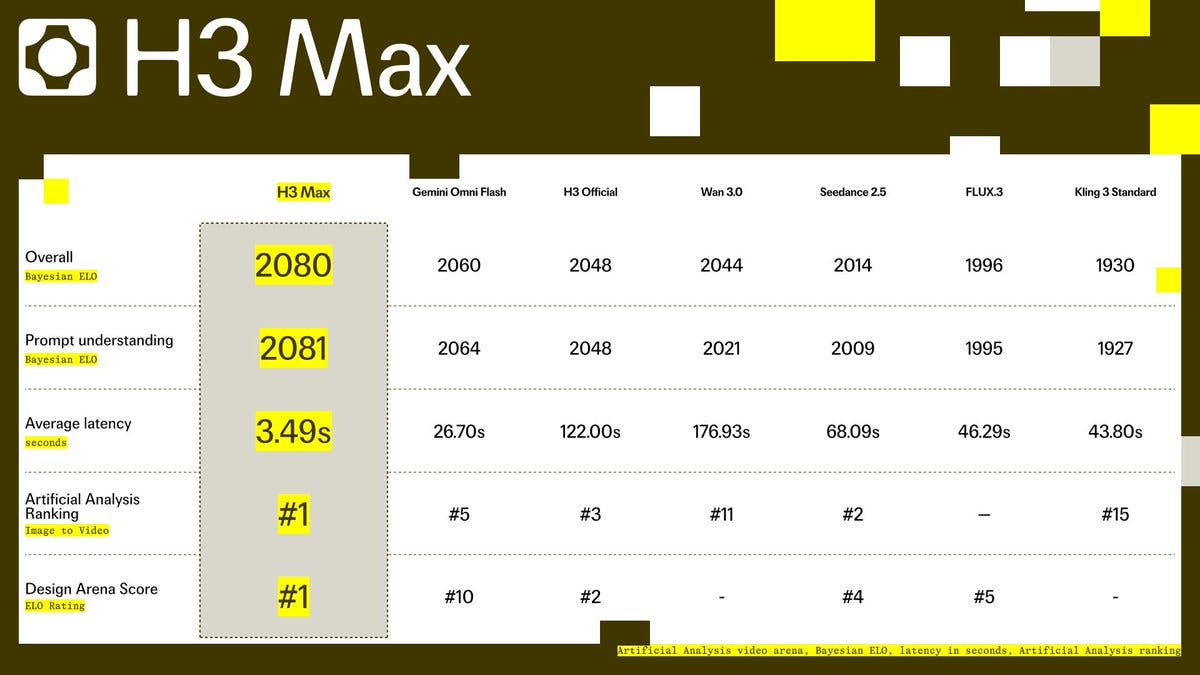
fal's H3 Max video model achieves 35x throughput and beats 12 competitors through post-training and inference optimization.
fal has released H3 Max, a video generation model post-trained on MiniMax H3 that ranks first against 12 mainstream models across quality, prompt understanding, and aesthetics. Running on NVIDIA's GB200 NVL72 platform, it generates 5-second videos in just 3 seconds with 35x the throughput of the original H3 model. The product highlights a growing industry trend: post-training optimization and software-hardware co-design are overtaking raw parameter scaling as the key competitive differentiators in AI video generation.
fal Launches the H3 Max Video Generation Model
fal recently released H3 Max, a video generation model built through post-training optimization on MiniMax H3. MiniMax H3 is a foundational video generation model developed by MiniMax, a Chinese AI company founded in 2021 and one of China's leading large model technology companies. The H3 model uses a Diffusion Model architecture, which is the mainstream technical approach in today's video generation field. Diffusion models generate content by gradually adding noise to data and then learning the reverse denoising process. Compared to earlier GANs (Generative Adversarial Networks), they offer more stable training and higher generation quality. In benchmark tests against 12 mainstream video models, H3 Max ranked first across all three dimensions — quality, prompt understanding, and aesthetics — while achieving remarkable generation speed: a 5-second video can be produced in just about 3 seconds, with throughput 35 times that of the official H3 model.
Post-Training and Infrastructure Synergy: The Core Technical Optimizations Behind H3 Max
H3 Max's performance gains stem from deep optimization on two fronts.
First, fal post-trained the model using a new dataset, with a focus on strengthening prompt-following capability and visual quality. Post-training refers to the technique of performing additional training on a pre-trained model using specific datasets to optimize particular capabilities. This process typically involves methods such as Supervised Fine-tuning (SFT) and Reinforcement Learning from Human Feedback (RLHF). Compared to training a large model from scratch — which requires millions of GPU hours and tens of millions of dollars — post-training costs only 1–5% of the original training budget while delivering 20–50% performance improvements on target tasks. This targeted training enables the model to more accurately understand user intent and generate video content that matches expectations.
Second, fal co-designed model optimization with the inference infrastructure. H3 Max runs on the NVIDIA GB200 NVL72 hardware platform, a supercomputing platform released by NVIDIA in 2024, specifically optimized for AI inference. The system combines 72 Blackwell-architecture GPUs through NVLink high-speed interconnect technology, delivering up to 1.4 exaFLOPS of AI inference performance. Compared to the previous-generation H100, the GB200 achieves a 30x improvement in energy efficiency and a 25x reduction in latency for AI inference tasks. fal's inference stack was deeply tuned specifically for this platform. Software-hardware co-optimization refers to the engineering practice of deeply adapting algorithm design to hardware characteristics, spanning multiple levels including operator fusion, mixed-precision inference, tensor parallelism, and KV cache optimization. This strategy enables H3 Max to achieve inference speeds far exceeding comparable products while maintaining high-quality output.
H3 Max vs. Competitors: Comprehensive Victory Over Mainstream Video Generation Models
In head-to-head comparisons, H3 Max outperformed several well-known video generation models, including:
- Google Gemini Omni Flash: Google's latest multimodal video generation solution, using a unified Transformer architecture to handle text, images, and video
- Wan 3.0: A mainstream Chinese video generation model based on diffusion model architecture
- Kling 3: A video generation tool from Kuaishou, also using the diffusion model technical approach
- Veo 3.1: A dedicated video generation product from Google DeepMind, using the Diffusion Transformer (DiT) architecture
These competitors represent different technical approaches in current video generation, with parameter counts mostly ranging from 5 to 20 billion. The comparison results show that H3 Max doesn't just excel on a single metric — it achieves comprehensive leadership across quality, speed, comprehension, and more. Video generation model evaluation typically focuses on three key dimensions: quality (image clarity, absence of artifacts, motion fluidity), prompt understanding (accurate interpretation of user text descriptions), and aesthetics (composition, color, lighting, and other artistic qualities). H3 Max's across-the-board leadership in all three dimensions means it's not just fast at generation — it has reached professional-grade standards in practical usability.
For creators and enterprises that need to generate high-quality videos at scale, a 35x throughput improvement translates to significant cost reduction and efficiency gains. The industry implications of this throughput improvement are substantial: cloud service providers can reduce hardware costs by 70–80%, creators can achieve a real-time "what you imagine is what you get" creative experience, and enterprises can shift video generation from "boutique small-scale production" to "industrial mass production." This kind of tipping point — where quantitative change triggers qualitative change — is often the hallmark of a new technology transitioning from a niche tool to foundational infrastructure.
Typical Use Cases for H3 Max
With its combination of high quality and high speed, H3 Max is particularly well-suited for the following scenarios:
Short-form Video & Content Creation: Creators can rapidly generate large volumes of material, dramatically shortening the creative cycle. The ability to generate a 5-second video in 3 seconds means real-time previewing of multiple creative directions and rapid content iteration.
Advertising & Creative Testing: Brands can quickly produce different versions of video ad creatives and use A/B testing to identify the best-performing version, significantly reducing trial-and-error costs. A/B testing is especially important in video advertising. In the traditional workflow, producing a single ad spot can cost tens of thousands to hundreds of thousands of dollars and take weeks, making large-scale testing of different creatives impractical. H3 Max's high-speed generation capability allows brands to create 50 different versions in a single day, deploy them to small-scale audiences to test performance, and quickly identify the optimal approach. Case studies from e-commerce platforms show this method can improve ad ROI by 40–60%.
Film Pre-visualization & Storyboard Visualization: Quickly generating scene previews before actual filming helps directors and producers visualize creative concepts, improving communication efficiency.
From an industry perspective, H3 Max represents an important trend in AI video generation: equal emphasis on post-training optimization and inference optimization. The era of simply pursuing larger model parameter counts is fading. How to improve real-world application performance through targeted training and infrastructure optimization is becoming the new competitive focal point.
Lessons from H3 Max: The Engineering Path for AI Models
H3 Max's success offers several noteworthy technical insights:
The value of post-training is becoming increasingly clear. Building on a foundation model with fine-grained training for specific tasks can often leverage modest costs into significant performance gains — far more economically efficient than training a large model from scratch. In the video generation domain, post-training can target improvements in prompt understanding accuracy, visual coherence, motion naturalness, and other key metrics. This "standing on the shoulders of giants" optimization strategy is becoming the mainstream approach for rapid AI product iteration.
Software-hardware co-optimization is a critical variable. fal deeply integrated model training with inference optimization on the NVIDIA GB200 NVL72 platform, fully unlocking the hardware's potential. This optimization likely includes leveraging NVLink's 900GB/s bandwidth advantage to optimize inter-GPU communication, as well as utilizing the Grace CPU's large memory capacity (480GB) for model parameter caching. The competitiveness of AI applications depends not only on the algorithms themselves but on the integration capability of the entire technology stack.
Practical metrics matter more than parameter scale. H3 Max didn't blindly pursue larger model size. Instead, it focused on quality, speed, and comprehension — metrics that directly impact user experience. H3 Max's ability to comprehensively outperform competitor models with 5–20 billion parameters proves the effectiveness of the "post-training + inference optimization" strategy over simply stacking parameters. This pragmatic product strategy holds important reference value for resource-constrained AI startups.
H3 Max is currently live on Product Hunt, where it has received 147 upvotes and ranks 6th. Product Hunt is the world's largest new product discovery community, attracting large numbers of early adopters, investors, and tech media. Considering that video generation is a niche vertical, H3 Max's performance indicates strong resonance within its core user base and validates the product's market fit. The emergence of this product signals that video generation AI is moving from the lab to real-world applications — shifting from chasing technical benchmarks to focusing on user value.
Related articles
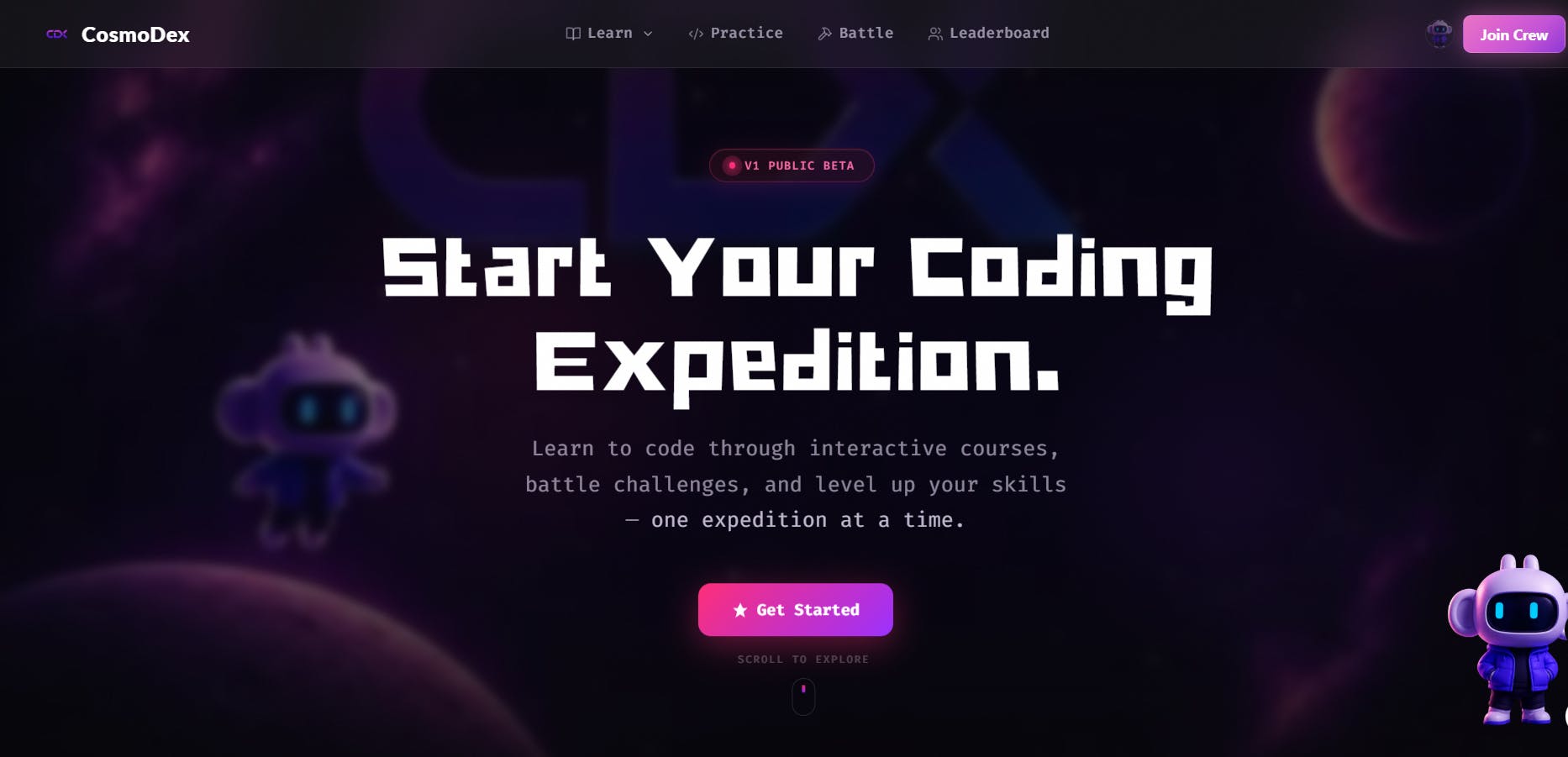
CosmoDex: In-Depth Experience with the AI-Powered Gamified Programming Learning Platform
In-depth analysis of the CosmoDex gamified programming platform, covering AI personalized learning paths, real-time 1v1 coding battles, XP leaderboards, and its competitive differentiation from LeetCode and Codecademy.

Singdu: An Innovative App for Learning Languages Through Music
Singdu combines music with language learning, offering synchronized lyric translations, tap-to-lookup words, gamified motivation, and KTV big screen experience. Supporting 7 languages, it makes learning fun and effective.

Landify V4 Review: AI & SaaS Website UI Kit with 350+ Components
Landify V4 is a website UI Kit spanning Figma and Framer, offering 350+ responsive sections and 20+ page templates designed specifically for AI and SaaS product websites. Detailed analysis of core features, dual-platform advantages, and use cases.