Farewell: Heretic's Final Issue Sparks Community Discussion
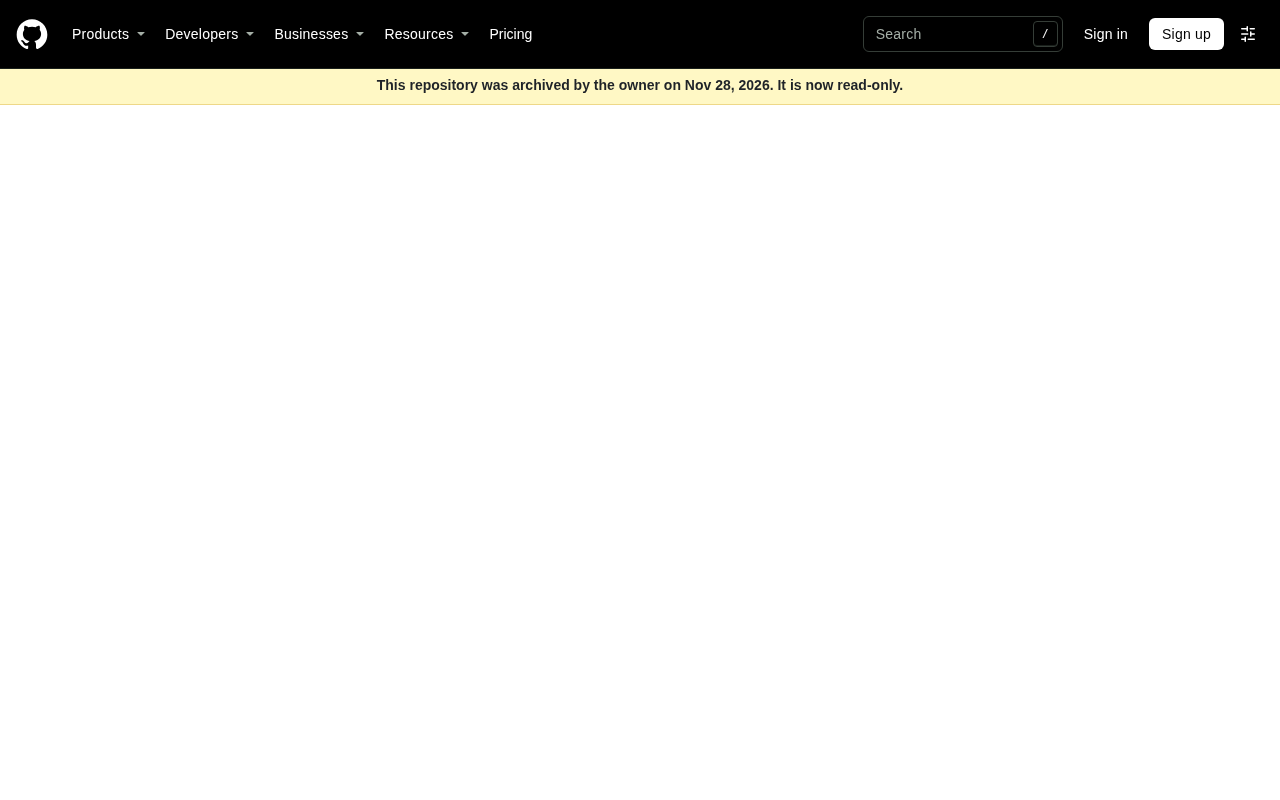
Heretic's Farewell Issue hits HN's front page, sparking discussion on open source maintenance and dependency sustainability.
The Heretic project posted a 'Farewell' Issue on GitHub, which after being submitted to Hacker News gained 338 points and 125 comments, becoming a community focal point. The article analyzes that such minimalist titles signal a project phase ending, and HN readers are particularly sensitive to open source project closures, archiving, or maintainer departures. Farewells often involve real reasons like maintainer burnout, unsustainable funding, directional shifts, or community forks, with maintainer burnout being prominent. Community discussion presents two voices: one thanking maintainers and respecting decisions, the other focusing on project takeover, code continuation, and migration paths. The article reminds users not to take project existence as default and to include maintenance activity, maintainer count, license, and forkability in dependency evaluation.
In the open source world, a project's "farewell" is often more intriguing than its launch. Recently, an Issue from the Heretic project on GitHub was submitted to Hacker News, quickly garnering 338 points and 125 comments, making it a focal point of community attention.
Why an Issue Made It to HN's Front Page
The title of Heretic's Issue is just one word: Farewell. No lengthy technical details, no product updates. This minimalist title is itself a signal—it means a certain phase has come to an end. Hacker News readers are particularly sensitive to such posts, because the closure, archiving, or maintainer departure of open source projects often reflects the unspoken realities of the developer ecosystem.
From the structure of this link, the original post points to a GitHub Issue, while the discussion unfolds on HN. A score of 338 indicates it reached a sufficiently broad audience, and 125 comments show that the community isn't just spectating—there's genuine disagreement and a desire to express opinions.
Hacker News (HN) is a tech community under Y Combinator. Its content ranking isn't simply based on time or upvotes, but is determined by an algorithm combining votes, time decay, and user weight. 338 points means the post received a considerable number of votes from high-quality accounts in a short period, and 125 comments further indicate the topic is controversial or resonant. On HN, posts about open source project shutdowns, maintainer farewells, or "Farewell"-type messages often gain high visibility, because community members are themselves deep participants in the open source ecosystem and have firsthand experience with such events. Understanding HN's ranking mechanism helps determine whether a post makes the front page due to technical value, emotional resonance, or a combination of both.
What an Open Source Project's "Farewell" Means
An open source project announcing its farewell can be due to various reasons: maintainer exhaustion, unsustainable funding, directional shifts, or community forks. Heretic's specific motivations are only fully explained in the original Issue, but judging from community reactions, the discussion often focuses on more than just the project itself.
Open source maintainer burnout is a frequently mentioned topic. The more people use a project, the greater the hidden pressure on maintainers—accumulating Issues, rising expectations, blurred boundaries of responsibility. When a maintainer chooses to send a "Farewell," it's usually not a whim but the result of long-term deliberation.
Maintainer burnout is a common concept in open source governance research, referring to the state where project maintainers, due to long-term unpaid or low-reward maintenance work, experience emotional exhaustion, decreased motivation, or complete withdrawal. It is closely related to the "tragedy of the commons" and "free rider" problems: projects are depended upon by many downstream users, but very few people actually contribute, while Issue reports, feature requests, and security advisories continue to flood toward a small number of maintainers. Many well-known projects have been archived or sought successors due to maintainer burnout. This concept helps explain why "Farewell" is often not a sudden event but a rational choice after long-term accumulated pressure, and also explains why the community generally sympathizes with maintainer decisions.
Two Voices in the Community Discussion
In the Hacker News comment thread, two types of responses typically appear. One is understanding and gratitude for the maintainer's decision, acknowledging the value the project once brought; the other focuses more on what comes next: whether someone will take over the project, whether the code will continue in another form, and whether the migration path for users is clear.
These two voices are not contradictory but reflect the tension in open source collaboration: one side values respect for people and decisions, the other values system continuity. What 125 comments carry is precisely this multi-angle examination.
A Practical Reminder for Users
For anyone relying on any open source project, this discussion can lead to a pragmatic conclusion: don't take a project's existence as a default state. When evaluating dependencies, in addition to functionality and performance, maintenance activity, number of maintainers, license, and forkability are equally important.
What makes Heretic's farewell post worth attention isn't how much technical information it provides, but that it once again reminds the community: software lifecycles are often determined by people, and people leave. Understanding this allows for more rational construction of your own tech stack.
This article is based on the discussion of the GitHub Issue on Hacker News. For specific project details, please refer to the original Issue and repository status.
In dependency evaluation, SBOM (Software Bill of Materials) and software supply chain security practices provide actionable tools. SBOM can list all components and their versions that a project depends on, helping teams identify which dependencies are in low-maintenance states. Additionally, license types directly affect the possibility of forking and continuation: permissive licenses (such as MIT, Apache-2.0) allow others to continue maintenance or fork after the original project stops, while copyleft licenses impose additional requirements on derivative distribution. By combining metrics such as number of maintainers, recent commit frequency, and Issue response time, a more complete dependency health profile can be constructed, rather than making adoption decisions solely based on whether functionality meets needs.
One-line Summary
Heretic's Farewell Issue hits HN's front page, sparking discussion on open source maintenance and dependency sustainability.
Paragraph Summary
The Heretic project posted an Issue titled "Farewell" on GitHub, which after being submitted to Hacker News gained 338 points and 125 comments, becoming a community focal point. The article analyzes that such minimalist titles are themselves signals of a project phase ending, and HN readers are particularly sensitive to open source project closures, archiving, or maintainer departures. Farewells often involve real reasons such as maintainer burnout, unsustainable funding, directional shifts, or community forks, with maintainer burnout being particularly prominent. Community discussion presents two types of voices: one thanking maintainers and respecting their decisions, the other focusing on whether the project can be taken over, whether the code can continue, and users' migration paths. The article concludes by reminding users not to take a project's existence as a default state, and to include maintenance activity, number of maintainers, license, and forkability when evaluating dependencies.
Related articles

Turn Your Phone Into a Thermal Camera: Thermal Master 8mm Macro Thermal Imager Review
Thermal Master is a phone-attached thermal camera with 8mm macro focus, compatible with iPhone and Android. Ideal for home inspection, circuit repair, and spotting overheating components—portable and easy to use.
In the Age of AI Programming, Should You Still Write Code by Hand?
Do you still need to write code by hand now that AI programming tools are widespread? A YouTube creator gives a conditional answer: during learning you must type it yourself—friction forces real understanding.
A New App Built Exclusively for Women's Sports, With No Real-Money Gambling
A new app focused exclusively on women's sports launches, aiming to change how fans engage with women's sports and explicitly avoiding real-money gambling. This article analyzes its product logic, compliance considerations, and commercial prospects.