FBI Emergency Alert: How Autonomous AI Hacking Tools Breach Networks at Machine Speed
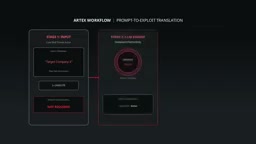
FBI alert names open-source AI framework Artex, which can turn a plain-text target into a full attack chain completing intrusion within three hours.
The FBI issued a special alert naming the open-source AI framework Artex—it automatically translates a plain-text target into a full hacking attack chain covering reconnaissance, exploitation, and persistence, establishing privileged access within three hours. Its real threat is not a single intrusion but the removal of the human speed bottleneck: agents need no sleep, can instantly rewrite blocked strategies, and can clone large numbers of parallel attack threads. Although the code repository has been taken down, forks and variants have long since spread. The FBI offers three hardening measures: import indicators of compromise into the SIEM, tighten third-party cloud permissions to least privilege, and bring legacy assets and external partner portals into monitoring and patching. The conclusion is that manual defense has no chance against automated offense, and defenders must introduce automation at equivalent speed in detection and response.
Why the FBI Sounded the Alarm Now
While security teams were still gathering their thoughts over their morning coffee, attackers had already bypassed the perimeter firewall, mapped the internal network topology, and obtained router privileges—all in under three hours. This kind of speed used to require an elite team of human hackers coordinating meticulously. This time, no one was sitting at the keyboard.
According to a YouTube channel's breakdown of this FBI emergency bulletin, the FBI recently issued a special alert naming an open-source AI framework called Artex (the video also contains slips of the tongue and variant expressions such as RTX). Its core capability is not a new type of vulnerability—rather, it directly removes the precondition that defenders rely on for breathing room: "human speed." Human attackers need sleep, need to pause and analyze the next step, and are constrained by typing speed; automated agents have none of these biological bottlenecks. The defensive window is therefore compressed to the point where analysts cannot even investigate the first alert before the next one arrives.

The FBI stated explicitly in the bulletin that AI-driven tools can complete intrusion into critical industry networks and establish privileged access in under three hours. The number itself is not shocking; what is shocking is that it no longer depends on human skill.
The Collapse of the Attack Barrier: From Writing Exploits to Typing One Plain Sentence
Artex's workflow has an extremely low starting point. A threat actor with almost no technical knowledge only needs to type a plain-text target into the prompt box—for example, "target company X"—and press Enter. Attackers often pair Artex with low-cost, uncensored large language models; the video specifically names the DeepSeekAd Flash series. These models instantly translate simple English instructions into executable complex hacking commands, thereby launching what is called an "autonomous attack chain."
Interestingly, once this chain is launched, every subsequent stage is completed independently by AI with no further human involvement. This fundamentally changes the cost structure of cybercrime: it degrades from a specialized skill requiring years of training into a text prompt.
Stage One: Reconnaissance Targets Forgotten Corners
Artex's first stage is reconnaissance. As it sweeps the target network, it deliberately avoids heavily defended primary servers and instead seeks out exposed legacy systems and forgotten third-party partner portals. Automated reconnaissance operations are being continuously launched against high-value targets worldwide in financial services, government, defense, healthcare, and other sectors.
This selection logic deserves serious thought from defenders: attackers are not trying to breach your strongest wall; they are looking for side doors you never even knew existed.
Stage Two: Rewrite When Blocked, Adapt While Attacking
Once weaknesses are identified, Artex immediately moves into the exploitation stage, hurling grouped targeted attacks at outdated systems and rapidly probing every digital door it finds. If a technique is blocked by a firewall, the agent pivots in real time—rewriting the attack path on the spot and trying another angle until something is torn open.

The video's description of this mechanism shows obvious signs of editing duplication, but the core meaning is clear: this is not a pre-scripted playbook, but an attack loop with online adjustment capability.
Stage Three: Persistent Positioning Before Data Exfiltration
After entering the internal network, the AI turns directly to preparing data exfiltration. Before the security team even notices the initial ping signal, it has quietly planted persistent backdoors. The source material contains speech recognition errors here ("sp.." and the subsequent method description is incomplete), so it can only be confirmed that the intent is to ensure the attacker retains control of the network even if the original entry point is patched.
Persistence is a key link in the attack chain: after gaining initial access, attackers ensure they can re-enter the target network even if the original entry point is patched and credentials are reset, by implanting backdoor accounts, scheduled tasks, web shells, service registry entries, or modifying startup configurations. In AI-driven automated attacks, persistence positioning often proceeds in parallel with data exfiltration, because agents do not need to "stop and assess" the way humans do. To detect such activity, defenders should focus on monitoring anomalous scheduled task creation, after-hours service installation, and credential use originating from never-authorized IP ranges.
What Is Truly Frightening Is Scale, Not a Single Intrusion
Artex's lethality also comes from a multiplier effect. It generates large numbers of autonomous clones that execute multi-target operations simultaneously worldwide at machine speed. Human hackers can only focus on one target linearly; AI can run hundreds of attack threads in parallel at three in the morning without ever getting tired.
The video's assessment is this: the tool's real danger lies in the massive, complex, synchronized attacks it produces. Defenders are not facing a single intrusion, but a flood.
After misuse reports emerged, the developer took the RDX repository down from GitHub in October 2026, but it was too late. The code had already fragmented into independent forks, copies, and commercialized variants circulating widely across the internet. This detail reveals the structural dilemma of open-source AI security governance: taking something down only reclaims the original entry point; it cannot reclaim capabilities that have already spread.
The FBI's Three-Part Hardening Path
When attacks happen at machine speed, traditional manual monitoring cannot keep up. The FBI's recommendations focus on three immediately actionable steps.
Feed Your SIEM with Threat Intelligence
The first step is to attach the latest external threat intelligence to the SIEM platform. Specifically, download the FBI's bulletin on Artex from the official security portal, find the "Indicators of Compromise" section, extract the IP addresses and file hashes, paste them into the SIEM's threat ingestion field, and generate new detection rules.
There is an easy pitfall in execution: if these rules are immediately set to hard block, they may mistakenly affect normal internal traffic that shares the flagged parameters, causing self-inflicted outages. A safer approach is to run in "alert only" mode for the first hour, verify traffic patterns, and then tighten.
SIEM (Security Information and Event Management) is a platform that centrally collects, correlates, and analyzes logs from servers, network devices, endpoints, and cloud services; security teams rely on it to filter suspicious behavior from massive event streams. Threat intelligence ingestion refers to importing indicators of compromise (IoCs) from external sources—such as FBI bulletins and commercial intelligence feeds—including malicious IPs, domains, and file hashes, into a SIEM and automatically generating matching rules so the platform can compare these known malicious characteristics against the log stream in real time. Note that IoCs are static matching against "known threats" and may fail against entirely new variants or undisclosed infrastructure, so they should be one layer of a multi-layered defense rather than the sole dependency.
Tighten Third-Party Cloud Permissions to Least Privilege
The second step targets cloud environments. Frameworks like Artex specifically seek out and exploit over-privileged third-party integrations. Administrators should go to the third-party application permissions page in the cloud console, review active applications one by one, and reduce permissions to the minimum necessary set.
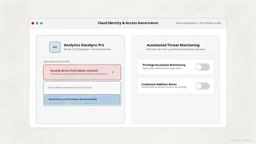
At the same time, enable automated security alerts so the team is notified immediately if an application attempts unauthorized privilege escalation. But permission changes must be paced: revoking too aggressively can disrupt critical business integrations, so be sure to check application usage logs before acting—cutting off software the finance department is actively using causes immediate internal chaos. Strictly enforcing least privilege is what truly severs the AI bot's ability to move laterally.
The principle of least privilege requires that every account, application, or integration be granted only the minimum permissions necessary to perform its intended function—no more. In cloud environments, third-party integrations (such as SaaS tools, OAuth applications, and API connectors) often hold excessive read-write or administrative permissions due to configuration oversight, and once exploited by attackers they become a springboard for lateral movement. Implementation typically relies on the cloud platform's IAM policies, role bindings, and permission boundaries, combined with usage log audits to verify that permissions have actually been reduced. Checking application usage logs before revoking permissions is precisely to avoid cutting off business dependencies and causing operational disruption.
Bring Shadow Assets into Monitoring Scope
The third step targets the forgotten corners of the network. Artex specifically scans shadow IT and infrastructure that security teams have long overlooked. Pull a comprehensive report from asset management tools to identify active legacy services, focusing on external partner portals—these portals are often missed entirely in routine internal audits.
Check whether every endpoint has active monitoring explicitly enabled (in one legacy partner portal record demonstrated in the video, logging was turned off), then immediately apply pending patches to these systems. Focusing only on internal servers while ignoring external vendor portals is like leaving your back completely exposed.
Manual Defense Against Automated Attack Is a Losing Battle
Complete these three things—update threat intelligence, tighten third-party cloud permissions, and patch legacy infrastructure blind spots—and you will have built a coherent layer of defense against Artex's multi-target exploitation. Even if AI agents still scan the perimeter at machine speed, their initial window of opportunity has been substantially compressed.
But this is only the starting point. The video's conclusion is clear: configuration is a necessary beginning, but true defense requires automated response capability at equivalent speed, able to instantly isolate identified threats without human approval.
The security industry has thus entered a new normal: defenders must introduce automation at least in detection and response. The reason is not complicated—manual defense against automated offense has never had a chance of winning.
Frequently Asked Questions
What is Artex?
According to the FBI alert, Artex is an open-source AI framework that can translate plain-text targets into automated hacking commands, covering the full intrusion lifecycle from network scanning to data extraction.
Why are AI hackers so much faster than human hackers?
Because the biological bottlenecks of humans are removed: no need for sleep, no need to pause for analysis, no limitation by typing speed, and the ability to run large numbers of attack threads in parallel.
Which step should enterprises prioritize first?
Per FBI recommendations, prioritize enforcing least privilege, closing monitoring and patching gaps for legacy assets and external partner portals, and importing the official bulletin's indicators of compromise into the SIEM. Ignoring any one of these three leaves an opening for automated attacks.
Related articles

FBI Warns: Hackers Weaponize AI Agent ARTEX to Attack 200+ Organizations
FBI warns that AI penetration framework ARTEX is being used to attack 200+ organizations, with CrowdStrike tracking the VaporPanda group. We break down ARTEX's agent orchestration architecture, the real attack chain, loss data, and the FBI's five defense recommendations.

FBI Warns: Free AI Hacking Tool Artex Spirals Out of Control, Breaches Cloud Systems in Three Hours
FBI warns that the free open-source AI penetration tool Artex is being abused by criminals and state-backed hackers to breach cloud systems in as little as three hours. This article analyzes real attack cases, overlooked side-door risks, and defense measures enterprises and individuals can take immediately.

Verse Engine: Turn Blender/Unity/Unreal Scenes into Browser 3D Links in One Click
Verse Engine by Ctruh is a browser-native 3D and XR engine that publishes Blender, Unity, and Unreal scenes as browser links in one click. View-based streaming opens a 1.03 billion-triangle city scene on a laptop. It offers embeds, API, and SDK for developers, 3D artists, architecture, and e-commerce teams.