FBI Reportedly Hacked: Agents' Personal Data and Social Security Numbers Exposed

FBI alerts agents to cybersecurity incident involving potential theft of SSNs, sparking debate over disclosure language and transparency.
The FBI recently issued internal notifications to its agents regarding a cybersecurity incident in which hackers allegedly stole personal information and Social Security Numbers (SSNs). The bureau has deliberately avoided the term "data breach," opting instead for "cybersecurity incident" — a distinction with significant legal and regulatory implications. For law enforcement agencies, the exposure of personnel identity data poses risks far beyond a typical corporate breach, potentially threatening undercover operations, informant safety, and agents' families. The case highlights the urgent need for sensitive data minimization, encryption, and defense in depth, while raising broader questions about government transparency in crisis communications.
Overview
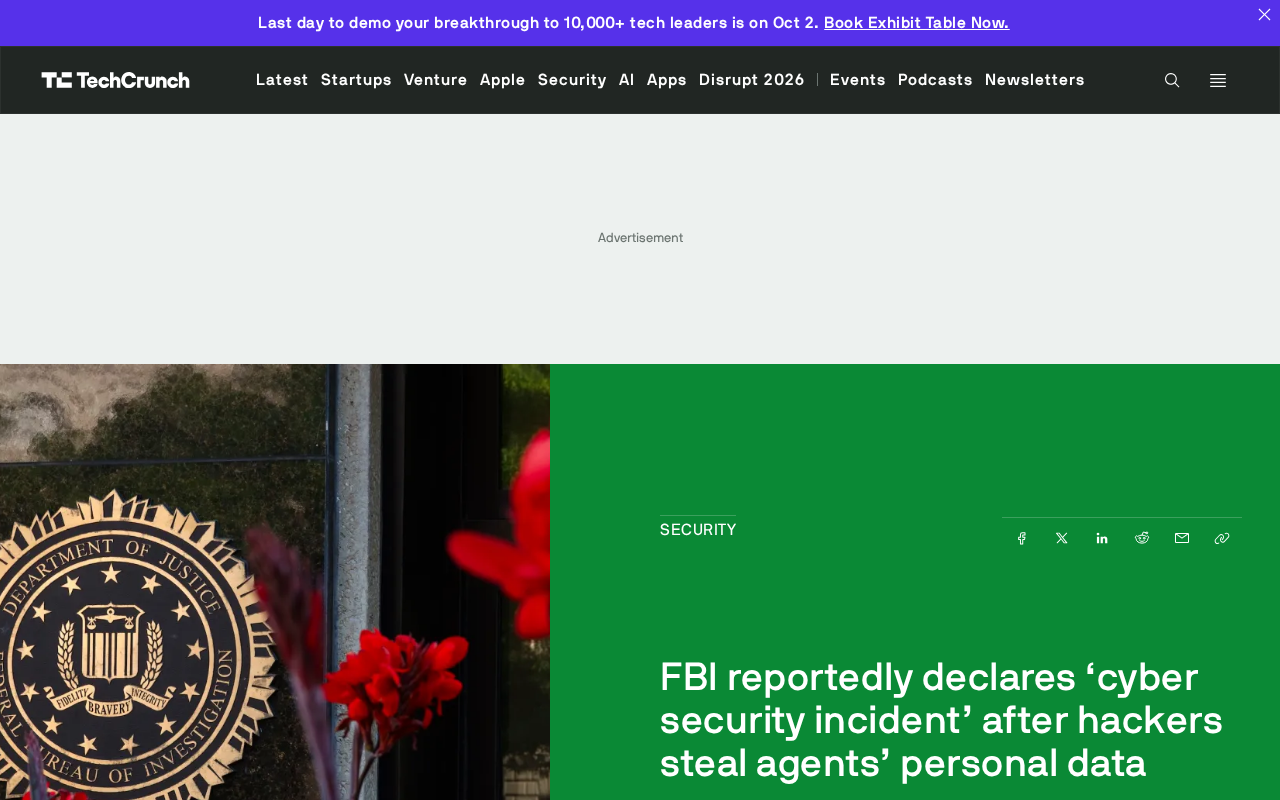
According to multiple media reports, the Federal Bureau of Investigation (FBI) recently notified its agents internally of a "cyber security incident." Hackers are alleged to have stolen agents' personal information, including highly sensitive Social Security Numbers (SSNs).
Notably, the FBI has not publicly confirmed this as a "breach" — it has only informed agents internally that their personal information and SSNs have been exposed. This careful choice of language typically reflects an organization's balancing act between legal liability, ongoing investigation, and public communication.
Why Data Breaches at Law Enforcement Agencies Are Especially Sensitive
For ordinary companies, a data breach primarily threatens users' financial assets and privacy. But for law enforcement agencies like the FBI, the risks multiply exponentially when agents' personal identity information falls into the wrong hands.
In the United States, a Social Security Number functions as a near-universal key to one's identity — it can be exploited for identity theft, fraudulent account creation, tax fraud, and a range of other crimes. Even more critically, if agents' true identities, home addresses, or other details are exposed, undercover operations, informant protection, and the physical safety of agents and their families could all be directly compromised.
This is precisely why law enforcement and intelligence agencies typically enforce strict controls over internal data — including tiered compartmentalization and least-privilege access. Once these defenses are breached, the consequences far exceed those of an ordinary privacy incident.
The Social Security Number (SSN) is a nine-digit identifier issued by the U.S. federal government beginning in 1936. Originally created solely to track Social Security benefit records, it has evolved over decades into America's de facto national identity number. Because SSNs are widely used to open bank accounts, apply for credit, file taxes, claim government benefits, and verify employment, a leaked SSN typically creates long-lasting, difficult-to-reverse identity theft risks — victims may not discover fraudulent loans or criminal records in their name until years after the fact. Unlike passwords or credit card numbers that can be revoked and reset, SSNs are in principle permanent (replaceable only under rare, specific circumstances), making their exposure uniquely persistent in its harm. For law enforcement personnel, this risk is especially pronounced.
The Calculations Behind an Agency's "No Confirmation"
The FBI's use of "cyber security incident" rather than "data breach" is a telling detail. In information security, "incident" and "breach" carry different legal and regulatory meanings: the former refers broadly to any security anomaly, while the latter typically implies confirmed unauthorized access to or theft of data — and may trigger mandatory disclosure obligations.
An agency's restrained language in the early stages of an investigation serves two purposes: it avoids triggering unnecessary panic before all the facts are established, and it protects ongoing forensic and attribution work — disclosing details prematurely could tip off attackers and hinder efforts to track them down.
That said, this approach often draws external criticism over transparency. When the affected parties are law enforcement officers themselves, public scrutiny and media pressure on the incident intensify considerably.
Lessons for Organizational Security
This incident reinforces a well-established industry truth: no organization is completely immune to cyberattacks — not even law enforcement agencies with top-tier security capabilities.
For enterprises and institutions, several areas are worth reflecting on:
- Sensitive data minimization and encryption: High-value data like SSNs should be stored as sparingly as possible, anonymized where feasible, and subject to mandatory encryption.
- Defense in depth and access auditing: Single-point defenses are insufficient against sophisticated attacks. Organizations need multiple layers of protection and continuous auditing of access to sensitive data.
- Incident response and disclosure processes: Clear emergency response plans and compliant disclosure procedures reduce chaos and secondary risks when an incident occurs.
Closing Thoughts
As of now, the FBI has not publicly confirmed the full scope and impact of this incident. Key details — including the attack method and the number of individuals affected — remain pending official or subsequent investigation disclosures. For cybersecurity-minded readers, the value of this event lies not merely in the fact that "yet another agency was breached," but in what it reveals about the critical importance of protecting sensitive identity data — and how organizations navigate the trade-off between transparency and caution in crisis communications.
(Note: This article is based on publicly available media reports. Details are subject to official follow-up statements.)
Background
Under the current U.S. legal framework, the word "breach" carries consequences far beyond a mere difference in terminology. Under state-level Data Breach Notification Laws and federal sector-specific regulations such as HIPAA and GLBA, once an organization officially confirms a "breach," it is generally required to notify affected individuals, regulatory bodies, and in some cases the public within a prescribed timeframe — with fines and litigation risks for non-compliance. This is why many organizations prefer the terms "incident" or "security event" before an investigation reaches a definitive conclusion, preserving legal flexibility in the interim.
For a federal law enforcement agency like the FBI, the situation is even more complex. Its unique national security functions mean that some of its disclosure obligations differ from those of ordinary government agencies. Striking the right balance between regulatory transparency and protecting investigative confidentiality is itself a formidable institutional design challenge.
Related articles

Amphibious Transforming Drone: Beyond 100x Power Savings, What Are the Real Needs?
Is the amphibious transforming drone just a gimmick? Starting from the 100x power difference of the M4 Morphobot, explore real application scenarios and thesis topic ideas, analyzing boundary conditions where pure drones and pure ground robots both fail.

Warhound Raises $200 Million: Genetically Engineered "War Dogs" Paired with Anduril Gear
Warhound raises $200M, backed by Ben Lamm and Palmer Luckey, to genetically engineer dogs for military and law enforcement use and equip them with Anduril gear. This article analyzes its technology direction, funding logic, and ethical controversy.

Claude API Comes to Google Cloud: IAM Integration and SDK Access Guide
Anthropic hosts the full Claude API on Google Cloud with IAM-controlled permissions and unified billing. This guide covers the Vertex AI and Anthropic-hosted entry points, IAM role configuration, and SDK access.