FBI Warns: Open-Source AI Pentesting Framework ARTEX Weaponized — From Competition Winner to Threat Dossier in Three Weeks

Open-source AI pentesting framework ARTEX was weaponized three weeks after release and hit with an FBI bulletin 110 days later.
Open-source autonomous pentesting framework ARTEX, released July 26 by a Baidu Workshop Challenge champion author, was weaponized within three weeks thanks to roughly 150,000 lines of code and a multi-agent architecture. The attacks leaked data on about 67,000 people at seven South Korean financial institutions, and a supply chain attack hit over 2,250 downstream tenants. After the author took down the repository on October 8, 102 forks still appeared, spawning backdoored images and a commercial version. The FBI issued its threat bulletin on November 13, and defenders are turning to honeypots and false success signals to deceive agents.
From Competition Winner to FBI Alert: ARTEX's 110 Days
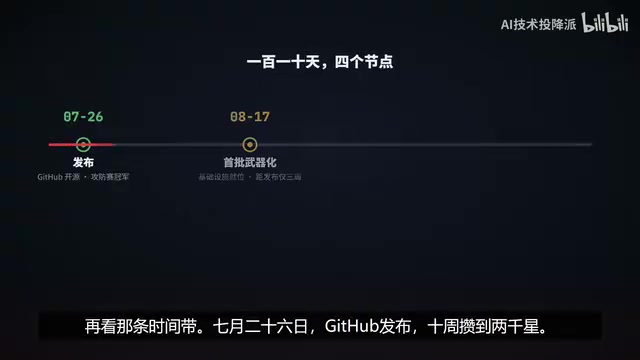
An open-source project published on GitHub just over three months ago has ended up in a 13-page threat bulletin from the U.S. Federal Bureau of Investigation (FBI). The project is called ARTEX (also written as ARTX in the video), an autonomous penetration testing framework whose author is from China; the project won the Baidu Workshop Challenge championship. According to the timeline compiled by a Bilibili creator, the project was released on GitHub on July 26, the author voluntarily took down the repository on October 8, and the FBI issued its threat bulletin on November 13 — just 110 days between these three dates. In the FBI's own words, attackers weaponized it to automatically execute multiple stages of network intrusion at "machine speed," from reconnaissance all the way through to data exfiltration.
What Is ARTEX: A 150,000-Line Agentic Pentesting Platform
ARTEX's architecture is no mystery. It organizes the penetration process as a "graph": a planning agent breaks down tasks, each task is handled by three execution agents that invoke real tools, and results are written back to an asset graph — whenever the graph changes, the next planning round is triggered. The entire codebase is roughly 150,000 lines. It does not ship with its own LLM; instead it connects externally to six model services, running everything from Claude to DeepSeekAd. The console runs on a local port and even includes a built-in human approval gate — on design alone, it looks like a well-behaved red-team tool.
What really alarmed security firms was whether its "AI content" is genuine. A security company dissected the full logs of a real intrusion and presented four pieces of evidence: real-time debugging — after an error, it reads the error itself, rewrites the script itself, and retries within minutes, with retry filenames carrying version suffixes; context routing — once a path is found to work, all subsequent operations automatically reroute, and new evidence triggers automatic retesting against all known targets; the generated attack code updates as evidence changes; and descriptive comments deliberately use the term "penetration testing," apparently to disguise the activity as authorized testing and bypass LLM safety guardrails. Most striking of all: the security company forensically recovered ten operator databases exposed on the public internet, and the most frequent line in the operator-system conversations was — "What's the progress?" All that was left for the human was nagging about progress.
Red Team Tools and Penetration Testing Frameworks
Red team refers to a team that simulates real attackers to test an organization's defenses adversarially, and red-team tools are the software that supports such exercises. Penetration testing frameworks (such as Metasploit and Cobalt Strike) standardize and modularize stages like reconnaissance, exploitation, privilege escalation, lateral movement, and data exfiltration, enabling testers to orchestrate a complete attack chain. Such tools are inherently dual-use: within authorized scope they are powerful security assessment instruments, but once authorization is removed they become attack infrastructure. ARTEX introduces LLM agents into this process, allowing steps that previously depended on human judgment (path selection, error retry, script rewriting) to be completed in a closed loop by the model — which is why its "AI content" is the key to judging its real capability and risk level.
Timeline: Weaponized in Three Weeks, Takedown Couldn't Stop the Spread
According to the Bilibili creator's account, after the July 26 GitHub release the project quickly climbed to 2,000 stars; by mid-August, the first weaponized infrastructure was already in place — just three weeks after release. From September to early October, seven South Korean financial institutions were breached and their databases stolen. On October 7 a security company published its report; on October 8 the author took down the repository and issued a statement, three sentences in total: the incident has nothing to do with the tool's author, malicious use is strongly condemned, and the project will no longer be updated and will go closed-source.
But going closed-source can't close the copies that already spread. In the week of the takedown, 102 forked repositories appeared. Today the largest fork already has more stars than the original. There is a comparison worth remembering: the famous tool of the previous generation that went from red-team staple to criminal staple took about 8 years from release to ubiquity; ARTEX took only three weeks from release to first weaponization. The reason isn't hard to understand — last time that road took eight years because a human had to pull the trigger; this time it took only three weeks because once the driver gets in, no human is needed anymore.
Forks and the Open-Source Diffusion Mechanism
On GitHub, a fork is a complete copy of a repository into another user's account, forming an independent duplicate. Forks share commit history with the original repository but can be modified and developed independently, and they are unaffected if the original is deleted. Therefore, taking down the original repository only prevents new visitors from obtaining the code; it cannot reclaim existing forks. The 102 forks that appeared in the week of ARTEX's takedown are a direct consequence of this mechanism: once code is public, deleting the original actually makes forks the primary distribution vehicle — the largest fork even surpassing the original in stars, creating a diffusion pattern where "the more it's taken down, the more dispersed it becomes."
Three Bills: Data Breach, Supply Chain, and Scale
After ARTEX was weaponized, it left three "bills." The first is South Korea: the personal information of about 67,000 people at seven financial institutions was stolen, and about 200 other companies were affected. The attackers' server retained Claude session history, while the primary model used was DeepSeek's Flash series. The security company's assessment was "no observable guardrails under the pentesting framework." The server also retained a question posed to Claude: "Where is the Korean data sold?"

The second is the supply chain: attackers stole application credentials from a cloud backup vendor and, using this legitimate identity, launched login attempts against more than 2,250 downstream tenants — 150,000 failed logins, peaking at 2,900 per minute. Most targets were not breached, but privileged persistence was achieved in multiple environments. The heaviest line in the FBI bulletin concerns speed — some intrusions went from target identification to privileged access in under three hours, with another observation from the same cluster at a fastest of 15 minutes.
The third is scale: an operation codenamed "Zhengqi Panda" covered 14 countries and more than 200 organizations in 11 days. At the time, a single intrusion's planning agent consumed about 1.4 billion input tokens, and even "target machines without a certain endpoint protection installed" was written into the agent's workflow.
Supply Chain Attacks and Multi-Tenant Credential Abuse
A supply chain attack means the attacker does not directly breach the target but first compromises a third-party service provider the target relies on (such as cloud backup, SaaS platforms, or software vendors), then uses that provider's legitimate identity and trust relationships to spread downstream. Under a multi-tenant architecture, the same provider shares infrastructure among many customers; once application credentials leak, attackers can impersonate the legitimate service to launch login attempts against a large number of tenants. In the ARTEX-related operation, after stealing a cloud backup vendor's application credentials, the attackers launched 150,000 failed logins against more than 2,250 downstream tenants, peaking at 2,900 per minute — a textbook credential-abuse supply chain attack, whose danger lies in the trust chain being masked by a legitimate identity, making it hard for traditional perimeter defenses to distinguish.
After the Takedown: Three Layers of Nesting Dolls and the Guardrail Shift
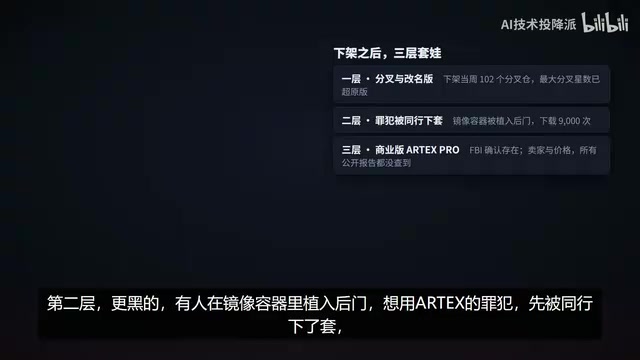
After the repository was taken down, the ecosystem grew three layers of "nesting dolls." The first layer: forks and renamed versions continue to circulate. The second layer is darker: someone planted a backdoor in a mirrored container — criminals who wanted to use ARTEX were first set up by their own peers; that backdoored image was downloaded 9,000 times. The third layer: a commercial version called ARTEX-PRO is circulating; the FBI confirms it exists, but the seller and price cannot be found in any public report.
There is also a figure that needs to be stated clearly: for ARTEX consoles exposed on the public internet worldwide, scanning results vary from over 1,400 to over 1,600; the FBI cites more than 1,600, and 10 of those instances had their entire databases wide open — which is exactly where the security company obtained the operator records. One intriguing detail in those records: of all exposed instances, the only one that ever triggered model guardrails was the one configured with Anthropic, and the operator's response was to switch to a Chinese model and keep running. The tool's author took down the tool, but the chain of responsibility quietly shifted to the model vendors' guardrails.
Defense Side: From Shrinking Exposure to "Deceiving the Agent"
The FBI offered four sets of recommendations: inventory your exposure surface, keep cloud management interfaces off the public internet, apply least privilege to multi-tenant applications, and rate-limit high-impact interfaces.
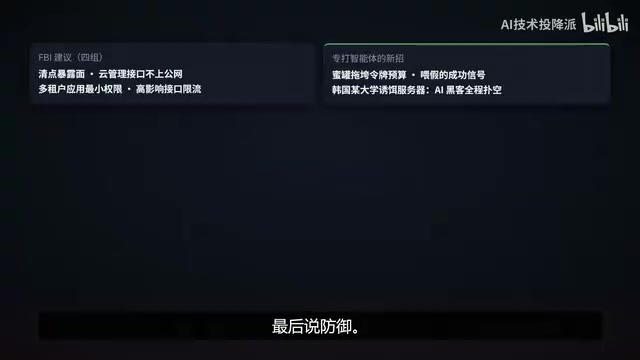
Security vendors, meanwhile, are starting to devise tactics specifically against agents — for example, using honeypots to drain their token budgets, or feeding them a false success signal so they think they've succeeded and stop. A South Korean university built a set of decoy servers that, in testing, left the AI hacker empty-handed throughout. The common thread in these approaches: traditional defenses target human patience and cost, whereas the bottleneck for agent attacks is token budget and contextual judgment — deceiving it is more cost-effective than blocking it.
In the ARTEX story, the tool is still the same tool; only one thing changed: the startup cost of an attack. When planning, execution, and retry can all be closed-loop by an agent, defenders need to recalculate not just the exposure surface but also the opponent's "unit of time."
Token Budgets and Context Windows: The Natural Bottleneck of Agent Attacks
Every time an LLM agent plans, invokes a tool, or reads a result, it must feed context into the model, which is billed by input tokens and limited by context window length. A single intrusion consuming about 1.4 billion input tokens means the agent's "thinking" cost rises sharply with task complexity and retry count. Unlike traditional attackers who can retry endlessly with infinite patience, an agent's actions are constrained by token budget: once the context is filled with irrelevant information or the budget is exhausted, it must truncate, forget, or stop. This gives defenders a new point of leverage — through honeypots, decoy servers, and false success signals, they can induce the agent to burn budget on ineffective paths or misjudge the task as complete, thereby causing its attack chain to break down on its own without direct interception.
One-line Summary
Open-source AI pentesting framework ARTEX was weaponized three weeks after release and hit with an FBI bulletin 110 days later.
Paragraph Summary
Open-source autonomous pentesting framework ARTEX, released July 26 by a Baidu Workshop Challenge champion author, was weaponized within three weeks thanks to roughly 150,000 lines of code and a planning-plus-execution multi-agent architecture — far faster than the previous generation's roughly 8-year spread cycle. Security firms confirmed through log forensics that it has real AI capabilities such as real-time debugging and context routing, leaving operators with only the role of nagging about progress. The attacks leaked the information of about 67,000 people at seven South Korean financial institutions, and the supply chain attack affected more than 2,250 downstream tenants. After the author took down the repository on October 8, 102 forks still appeared, spawning a three-layer ecosystem of backdoored images and a commercial version. The FBI issued its threat bulletin on November 13, and defenders are turning to honeypots and false success signals to deceive agents.
Related articles

No OBD2? How Claude Reverse-Engineered a '94 Jeep
A 1994 Jeep failed emissions. With Claude and Codex, the owner bypassed the missing OBD2 port using a $3 chip to read ECU data, control the fuel pump, and write Flash code—passing inspection. Full wiring and AI reverse engineering details.

Claude Meets a 32-Year-Old Jeep: An AI Reverse-Engineering Journey from Reading Codes to Controlling the Car
A 1994 Jeep Cherokee failed California's smog test due to high NOx. Using Claude Code to reverse-engineer the SCI protocol and a $3 Arduino to read the ECU, plus Codex injecting code into EEPROM, it passed.

GTA 6: How Rockstar Is Building Its Most Detailed — and Most Romantic — Open World
GTA 6 is billed by Rockstar as its most detailed and most romantic entry yet, starring a pair of thieves who fall in love while stealing a car. This analysis explores what that premise could mean for open-world narrative and gameplay design — and the risks Rockstar is taking.