Fervo Geothermal Technology Reaches $12 Billion in Orders, Targeting the Natural Gas Market
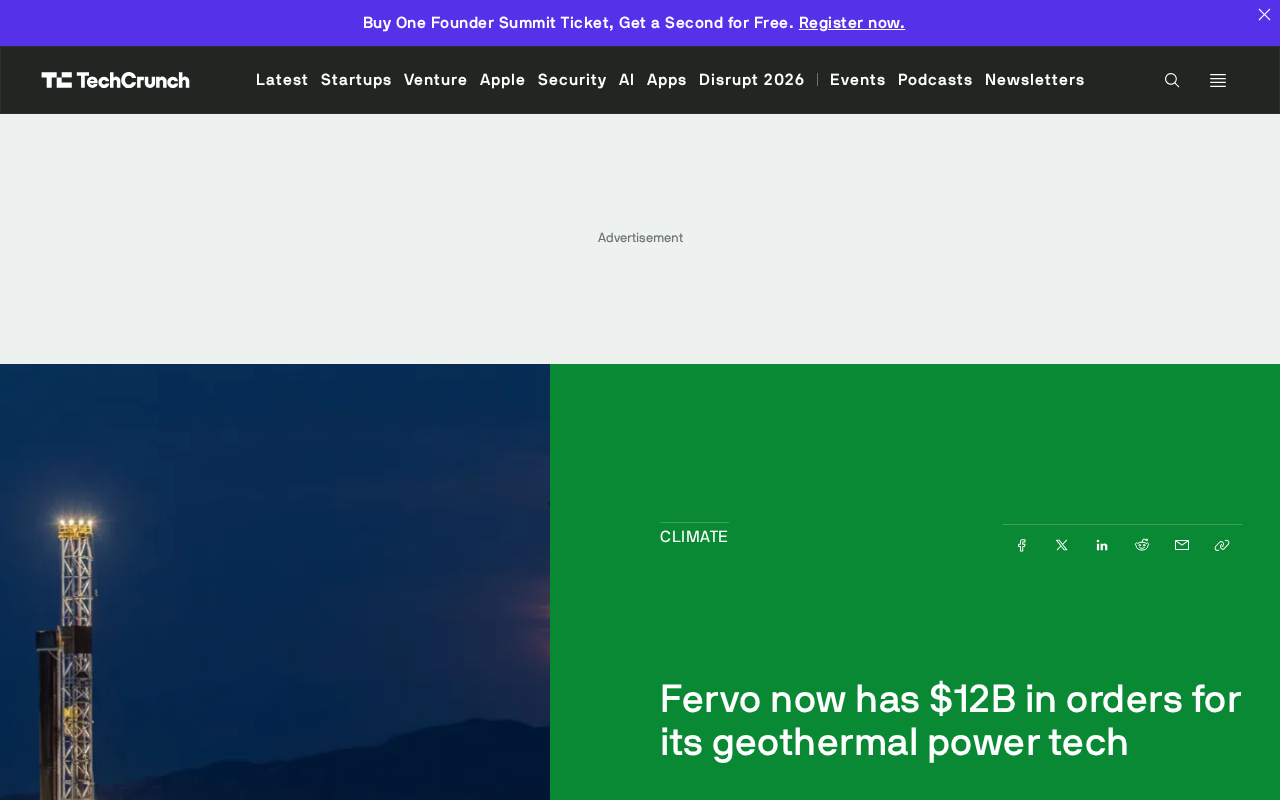
Fervo's geothermal orders hit $12 billion, benchmarking natural gas via drilling cost cuts.
Geothermal technology company Fervo has announced cumulative orders of $12 billion for its geothermal power technology, seen as a sign of geothermal's move from pilots to large-scale commercialization. Its core strategy is to lower drilling costs by borrowing oil and gas drilling techniques and standardized operations, enabling geothermal LCOE to compete head-on with natural gas. Its 8.4 GW Utah resource project is the core scale asset. Geothermal's advantages include zero fuel cost and stable output as clean baseload power. Whether orders can be delivered on time and on cost remains the key test.
Geothermal Commercialization Speeds Up: Fervo's Order Book Tops $12 Billion
Geothermal energy company Fervo is setting its sights on an unexpected competitor — natural gas. According to foreign media reports, this U.S.-based geothermal technology firm has announced that its cumulative order value for geothermal power technology has reached $12 billion. This figure marks geothermal energy's formal transition from laboratories and small-scale pilots into a new phase of large-scale commercialization.
Fervo's core strategy is not complicated: by continuously driving down geothermal drilling costs, it aims to make geothermal power cost-competitive with natural gas generation head-on. The company is currently developing a geothermal resource project with an installed capacity of 8.4 GW in Utah, USA. A resource base of this scale is quite rare in the geothermal industry, and it explains why Fervo dares to name natural gas as its direct benchmark.
Drilling Costs: The Decisive Factor in Geothermal Commercialization
Geothermal power generation has long been constrained by high upfront exploration and drilling costs. Compared with traditional fossil fuels, geothermal projects require deep-well drilling under unknown geological conditions, with high failure risk and long capital recovery cycles. Fervo's approach draws on drilling technology and project management experience from the oil and gas industry, spreading per-well costs through standardized processes and large-scale operations.
When drilling costs fall below a certain threshold, the levelized cost of electricity (LCOE) for geothermal power can compete with natural gas generation. This cost curve is the business logic behind Fervo's $12 billion order book — customers are willing to pay for a clean, stable baseload power source that is not subject to fuel price fluctuations.
Levelized cost of electricity (LCOE) is a common metric for measuring the economics of various power generation technologies. It refers to the total cost incurred by a power plant over its full lifecycle (including initial investment, fuel, operations and maintenance, financing, etc.) divided by total power generation, expressed as "cost per megawatt-hour." Its value lies in putting projects with long construction cycles and large upfront investments on the same yardstick as projects dominated by fuel costs. For geothermal, the largest share of LCOE is the capital expenditure on drilling and exploration, with zero fuel cost, so reductions in per-well costs are amplified across the full lifecycle, significantly lowering LCOE. This also explains why Fervo treats drilling costs as the core lever for competing with natural gas: the LCOE of natural gas plants is directly driven by fuel prices, whereas once geothermal's LCOE is locked in by capital expenditure, it is almost immune to external price fluctuations.
Utah's 8.4 GW Resource: From Demonstration to Scale
Utah's 8.4 GW geothermal resource is Fervo's most important asset at present. What does this number mean? For reference, it equals the combined installed capacity of several large natural gas power plants. Of course, there is a gap between resource volume and actual development, but a large-scale resource base gives Fervo the confidence to attract large orders.
Utah itself has favorable geothermal geological conditions, and Fervo's choice to concentrate development there also helps create economies of scale in supply chains and construction teams. This "concentrated development, rolling expansion" model has been repeatedly proven in the oil and gas industry and is now being transplanted to the geothermal sector.
Geothermal vs. Natural Gas: A Cost-Driven Substitution Battle
Fervo explicitly targets natural gas as its competitor, which is rare in the geothermal industry. Traditionally, geothermal companies have emphasized their environmental attributes as renewable energy rather than directly competing with fossil fuels on economics. Fervo's choice reflects a pragmatic market judgment: against the backdrop of continuously growing electricity demand, decarbonization pressure, and the simultaneous need for supply reliability, a clean power source that can provide stable baseload at controllable cost is what utilities and large electricity consumers truly need.
Natural gas generation's advantages lie in short construction cycles, controllable output, and relatively transparent fuel costs. Geothermal's weaknesses are large upfront investment and long development cycles. But once drilling costs are pushed down, a key advantage of geothermal comes to the fore: zero fuel cost. The operational risk brought by natural gas price volatility no longer exists in geothermal projects. For buyers signing long-term power purchase agreements (PPAs), this certainty itself has value.
What the $12 Billion Order Book Signals
Order scale is the most direct signal of market demand. The $12 billion in geothermal technology orders shows that Fervo's customer base — likely utilities, data center operators, or large industrial enterprises — is incorporating geothermal into their long-term energy planning. Given the tech industry's strong demand for stable clean power, geothermal's appeal as an "around-the-clock" renewable energy source is rising.
However, there remains a gap between order value and actual delivery. Geothermal projects have long construction cycles, and converting orders into revenue and installed capacity takes time. Whether Fervo can complete these projects on time and on cost will determine whether this $12 billion is a milestone or a bubble.
Baseload power refers to generation types that can continuously and stably output power as needed, typically represented by natural gas, coal, and nuclear power, whose output is unaffected by weather or day-night cycles. Wind and solar are "variable renewable energy," with output fluctuating with natural resources and requiring energy storage or flexible power sources as backup. Geothermal possesses both renewable energy attributes and baseload capability, earning it the name "around-the-clock" clean power source. This dual identity is precisely its core selling point for high-load, continuous-demand customers such as data centers and industrial enterprises. In PPA negotiations, buyers pay not only for electricity volume but also for output predictability, giving geothermal a reliability premium beyond pure cost comparisons.
A power purchase agreement (PPA) is a long-term power supply contract between a generator and a purchaser, typically with a term of 10 to 25 years, specifying electricity volume, pricing mechanisms, and delivery schedules. PPAs are crucial for geothermal projects: because upfront capital expenditure is enormous, developers need long-term contracts to lock in cash flow to obtain project financing, and banks and investors often regard PPAs as a prerequisite for bankability. For purchasers, PPAs provide a tool to hedge against fuel price volatility, with fixed or inflation-linked electricity prices making long-term energy budgets more predictable. If Fervo's order scale materializes in the form of PPAs, it means its customers have already incorporated geothermal into multi-year energy planning, not just short-term procurement.
Industry Implications: Can Geothermal Replicate the Shale Revolution?
Fervo's technology path carries a clear oil and gas industry heritage. Its drilling methods draw on technical concepts such as horizontal wells and hydraulic fracturing, applying the drilling efficiency accumulated in the oil and gas industry to geothermal development. This reminds some observers of the shale revolution — likewise leveraging advances in drilling technology to turn a previously uneconomic resource into large-scale recoverable reserves.
If geothermal can follow a similar cost-decline curve, its role in the global energy mix will undergo fundamental change. Geothermal is unaffected by weather, does not depend on energy storage, and has relatively concentrated land use — these characteristics give it a unique position among clean baseload power sources. But geothermal also faces problems the shale revolution did not encounter: uneven distribution of underground heat reservoirs, higher exploration uncertainty, and stronger reliance on long-term contracts for project financing.
Fervo's $12 billion order book and Utah's 8.4 GW resource are the most powerful footnotes to this geothermal commercialization experiment so far. Whether it can truly shake natural gas's position will be answered in the drilling costs and delivery progress of each project that follows.
The shale revolution refers to the large-scale economic extraction of shale oil and gas in the United States in the late 2000s, enabled by the maturation of horizontal drilling and hydraulic fracturing (fracking) technologies, which transformed the U.S. from an energy importer into a major global oil and gas producer. Its key was that improved drilling efficiency and lower per-well costs turned previously uneconomic resources into recoverable reserves. Geothermal faces fundamental differences when borrowing this path: shale extraction targets hydrocarbons, and fracking is used to increase rock permeability to release oil and gas; enhanced geothermal systems (EGS), by contrast, fracture hot dry rock to create artificial heat reservoirs and inject fluids to extract heat, with different requirements for underground fracture conductivity and reservoir lifespan. In addition, shale wells decline quickly and can be compensated by rapidly drilling new wells, whereas geothermal wells need long-term stable operation, making geothermal's cost-decline curve harder to replicate the steep slope of shale.
One-line Summary
Fervo's geothermal orders reach $12 billion, benchmarking against natural gas through drilling cost reductions and advancing geothermal commercialization.
Paragraph Summary
Geothermal technology company Fervo has announced that its cumulative order value for geothermal power technology has reached $12 billion, seen as a sign of geothermal's transition from pilot projects to large-scale commercialization. The company's core strategy is to continuously lower drilling costs by borrowing drilling technology and standardized operations from the oil and gas industry, enabling geothermal's levelized cost of electricity to compete head-on with natural gas. Its 8.4 GW geothermal resource project in Utah is the core asset base for scale. Compared with natural gas, geothermal's advantages are zero fuel cost and stable output, allowing it to serve as clean baseload power for the long-term needs of large electricity consumers such as data centers. However, whether orders can be delivered on time and on cost remains the key test of its business model.
Related articles

Microsoft WebIQ: Verifiable Real-Time Web Grounding for AI Agents
Microsoft WebIQ gives AI Agents real-time, citable web grounding across web, news, images, videos, and Places—164ms P95 latency, 50% fewer tokens, Scopes source control, and MCP integration.
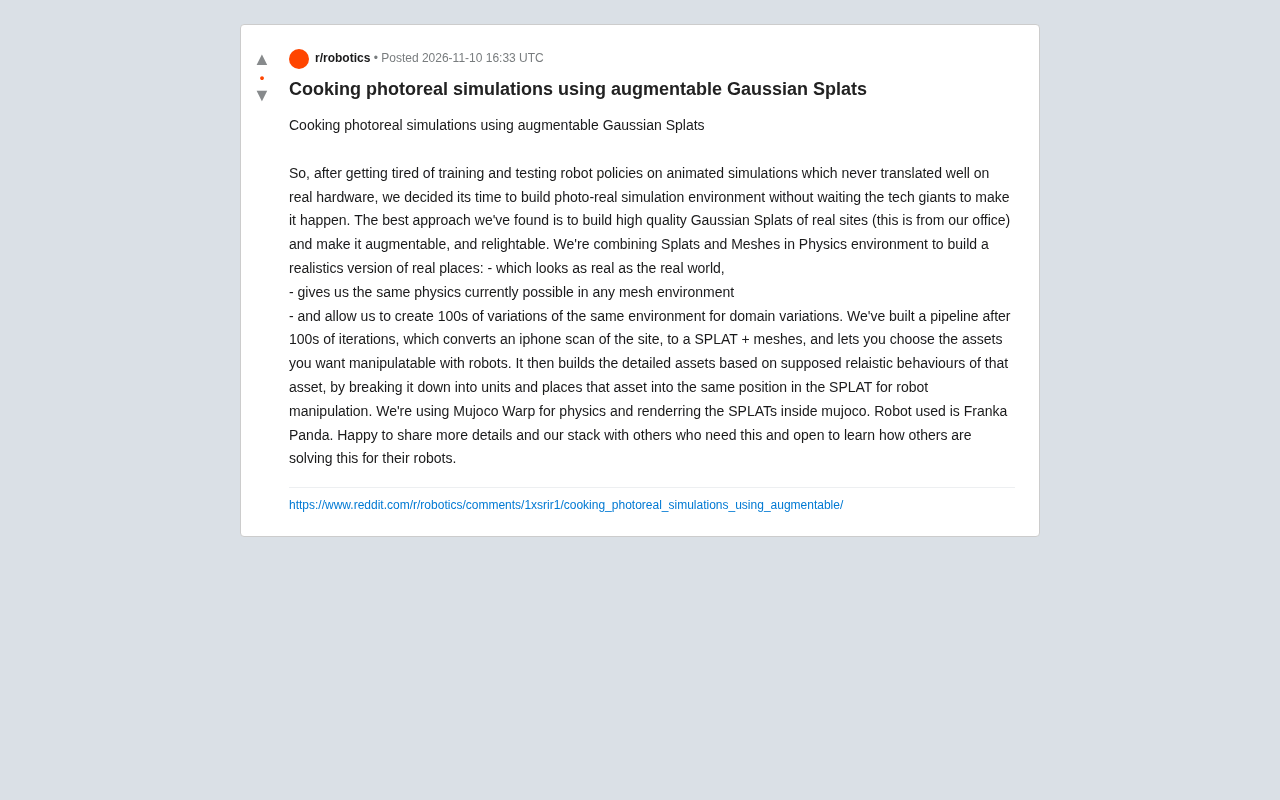
Augmentable Gaussian Splatting: Building Photorealistic Simulation Environments for Robot Training
Team combines Gaussian Splatting with meshes to build photorealistic robot simulation environments, integrating MuJoCo Warp physics and Franka Panda for augmentable, relightable real-site simulation.

Gemini 4 Carbon Released: The Leap from Gemini 3 to Gemini 4 in Under a Year
Google releases Gemini 4 Carbon, less than a year after Gemini 3. In the official demo, Carbon reverse-engineered the Theme Park binary, added a new DeepMind-themed ride, and ported it to the web in one shot.