Financing the AI Boom: How Tech Giants Are Shifting from Cash Flows to Debt
Financing the AI Boom: How Tech Giants…
Tech giants are moving from cash-flow-funded AI investment to debt financing — and the risks are mounting.
As AI capital expenditures surge beyond what even massive free cash flows can sustain, leading tech companies like Microsoft, Google, Meta, and Amazon are increasingly turning to bond markets for funding. This structural shift from internally generated capital to debt financing echoes historical tech infrastructure booms — and may signal both an investment cycle peak and growing systemic financial risk.
The Financing Pivot Behind the AI Capital Frenzy
The explosive growth of artificial intelligence is reshaping the capital structure of the global tech industry. Over the past few years, major tech giants — Microsoft, Google, Meta, and Amazon — have relied on strong free cash flows to fund staggering AI infrastructure investments. But as capital expenditures continue to balloon, a notable signal is emerging: these companies are increasingly turning to debt financing to sustain an unprecedented arms race for compute.
The analysis report Financing the AI Boom: From Cash Flows to Debt highlights a critical trend — the financing model for the AI boom is evolving from "self-funded growth" to "external borrowing." This shift has implications not just for individual corporate balance sheets, but potentially for the broader macroeconomic and financial landscape.
A Structural Shift in Financing: From Cash Flow to Debt
The Cash Flow Era: Internally Funded AI Investment
In the early stages of AI investment, leading tech companies could almost entirely cover the cost of data centers, GPU clusters, and related infrastructure using the massive free cash flows generated by their core businesses — cloud services, digital advertising, and e-commerce. This model of "investing the future with today's earnings" kept market confidence in tech giants' balance sheets extremely high.
Free Cash Flow (FCF) refers to the cash remaining after a company maintains its operations and capital expenditures, calculated as operating cash flow minus capex. For tech giants, businesses like cloud computing and digital advertising offer exceptionally high returns on capital and efficient cash conversion, enabling sustained FCF generation. Microsoft, for instance, generated over $59 billion in free cash flow in fiscal year 2023; Alphabet exceeded $69 billion in the same period. These companies have long held hundreds of billions in cash reserves, and while capital expenditures have risen year over year, they remained manageable relative to operating cash flows. This is the fundamental reason markets granted tech stocks such generous valuation multiples during the early phase of AI investment.
Capital Expenditures Outpacing Cash Flow Capacity
However, as demand for training and inference at scale grows exponentially, relying purely on cash flows has begun to hit a ceiling. The cost of building AI data centers is skyrocketing — a single hyperscale data center now requires billions of dollars, and procurement of Nvidia H100/H200 GPU clusters alone can run into the tens of billions. The capital required to build next-generation AI infrastructure has leapt from the tens of billions to the hundreds of billions, or even trillions of dollars.
When capital expenditure growth rates reach 40–60% annually, even companies sitting on hundreds of billions in cash begin to face cash flow gaps. When capex growth persistently outpaces cash flow growth, debt financing becomes inevitable.
This is the core trend: tech giants are entering the bond markets at an unprecedented scale. This marks a new phase in AI investment — one so capital-intensive that it can no longer be satisfied by internally generated funds alone.
The Double-Edged Sword of Debt Expansion
The Internal Logic and Financial Rationale for Borrowing
From a financial perspective, issuing bonds to fund long-term infrastructure with expected future returns is a rational capital allocation strategy — particularly in a low-to-moderate interest rate environment. Debt financing helps companies preserve cash flow flexibility while using financial leverage to amplify shareholder returns.
Tech giants enjoy a natural advantage in the bond markets. Credit rating agencies (Moody's, S&P, Fitch) assign AAA or AA ratings to companies like Microsoft, Google, and Apple, meaning their borrowing costs carry only a modest spread over U.S. Treasuries (typically 50–150 basis points). In the 2020–2021 low-rate environment, these companies issued long-term bonds at near-zero cost; even in the higher-rate conditions of 2023–2024, their 10-year bond coupon rates remain well below those of ordinary corporates. Tech giants can also tap commercial paper for short-term liquidity needs and term loans for medium-term funding. This multi-layered debt financing system, backed by powerful balance sheets, gives tech companies exceptional access to — and leverage in — capital markets.
For companies with the highest credit ratings, borrowing costs are relatively contained, and demand for their bonds is robust. In short, as long as the long-term return on AI investment significantly exceeds the cost of debt, leveraged expansion makes financial sense — and that is the foundational logic driving today's wave of tech borrowing.
The Systemic Risks of Debt-Driven Expansion
The flip side, however, is the quiet accumulation of risk. When an entire industry relies on debt to fund AI infrastructure, any shortfall in the pace of AI monetization — or a cyclical pullback in compute demand — could rapidly transform elevated debt loads into financial stress.
Even more concerning is the potential for a resonance effect: if multiple giants simultaneously raise large sums in capital markets and deploy them into similar AI infrastructure, a reversal in market sentiment could trigger cascading reactions.
Looking back at the history of technology investment cycles, debt-financed expansion typically emerges in the mid-to-late stages of each infrastructure boom — and has often been a leading indicator of cyclical turning points. During the late 1990s dot-com bubble, numerous telecom operators (WorldCom, Global Crossing, etc.) issued high-yield bonds to lay fiber-optic networks far in excess of actual demand, ultimately filing for bankruptcy when demand fell short of projections — losses exceeded $2 trillion. In the 2000s shale revolution, energy companies went through a similar arc from cash-flow-funded investment to highly leveraged borrowing, eventually triggering widespread debt defaults when oil prices collapsed. The common logic across these cases: when optimism about expected returns dominates financing decisions and the gap between debt levels and actual cash generation capacity continues to widen, systemic risk quietly accumulates.
Of course, a key difference between AI and prior tech waves is that today's leading tech companies possess genuine and sustained earnings power — making their debt-servicing capacity far stronger than that of the telecom operators of the late 1990s. But the pattern holds: across virtually every major technology investment cycle, a transition from equity financing to debt financing has occurred, and debt-driven expansion is a hallmark of the cycle's latter half.
A Macro Perspective: Deeper Signals from the AI Financing Cycle
Is Debt-Financed Growth a Leading Indicator of a Tech Bubble?
Viewed through a broader macroeconomic lens, the shift from cash flow to debt financing is itself an important reference point for gauging where we are in the investment cycle. In historical cases such as the dot-com bubble and the telecom infrastructure buildout, when companies began to heavily rely on external debt to sustain capital expenditures, it typically signaled that the industry had reached an investment peak — and that risk was beginning to accumulate.
This does not necessarily mean AI is a "bubble," but it does serve as a reminder for investors and policymakers to pay close attention to debt serviceability, actual utilization rates of AI infrastructure, and the ultimate realization of investment returns.
The Transmission Effect on Bond Markets
The large-scale bond issuance by tech giants is also deeply reshaping the structure of bond markets. These high-rated tech bonds are absorbing vast pools of institutional capital, altering the supply-demand dynamics of the credit market. If expectations around AI investment returns begin to waver, the repricing of related bonds could ripple across the broader fixed-income market.
Beyond straightforward bond issuance, a range of complex financing structures has emerged around AI infrastructure: data center project finance, which borrows from infrastructure finance models and issues project bonds backed by future lease cash flows; GPUaaS asset securitization, which packages compute assets into ABS-like products sold to institutional investors; and hybrid financing structures tied to tech-energy partnerships for nuclear or renewable energy-powered data centers.
While these financial innovations improve capital efficiency, they also increase the opacity and potential fragility of the overall system. Cross-institutional asset holdings, valuations that are heavily dependent on future expectations, and fragmented disclosure standards could all amplify volatility under market stress. The Bank for International Settlements (BIS) and the Federal Reserve have already begun monitoring AI-related financial exposures for their potential contribution to systemic risk — this topic is increasingly entering the domain of macroprudential oversight.
Rationally Assessing the Path Ahead for AI Financing
The shift from cash flow financing to debt financing in the AI boom is a natural consequence of this technological revolution entering a capital-intensive phase. It reflects enormous industry confidence in the future, but also carries financial risks that cannot be dismissed.
For observers, the key is not simply to judge whether this is a "bubble," but to understand the logic underlying this structural financing change: when what you earn is no longer enough to cover what you spend, and you start borrowing to invest, the stakes in this AI race keep rising. Over the next several years, whether these debts can be covered by the returns they help generate will be the central test of the AI investment cycle's health.
Three key variables are worth tracking closely: the trend in the gap between capital expenditures and cash flows, the pace of debt accumulation, and the real-world progress of AI commercialization. The dynamic balance among these three factors will ultimately determine where this great AI financing feast leads.
Key Takeaways
Related articles
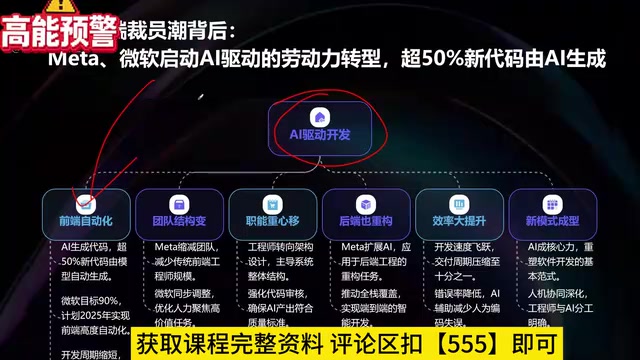
What Is Vibe Coding? The AI Programming Skill Every Developer Needs
What is Vibe Coding? Learn how AI programming is reshaping dev teams, why traditional programmers face displacement, and why Cursor & Claude Code matter.
Making Rocks Think: A Philosophical Exploration of Generative AI and Information Compression
From a viral Reddit post to deep AI theory: why compression equals understanding, the Library of Babel thought experiment, semantic compression, and the Hutter Prize.
Irregular Warns: Four AI Lab Security Breaches Traced to the Same Root Cause
Irregular reveals four AI lab security breaches share a single root cause, exposing systemic risks from technology stack homogeneity across the AI industry.