Finch Health Data Management App: A Deep Dive into Its Three Core Features — Aggregation, Transcription, and Translation
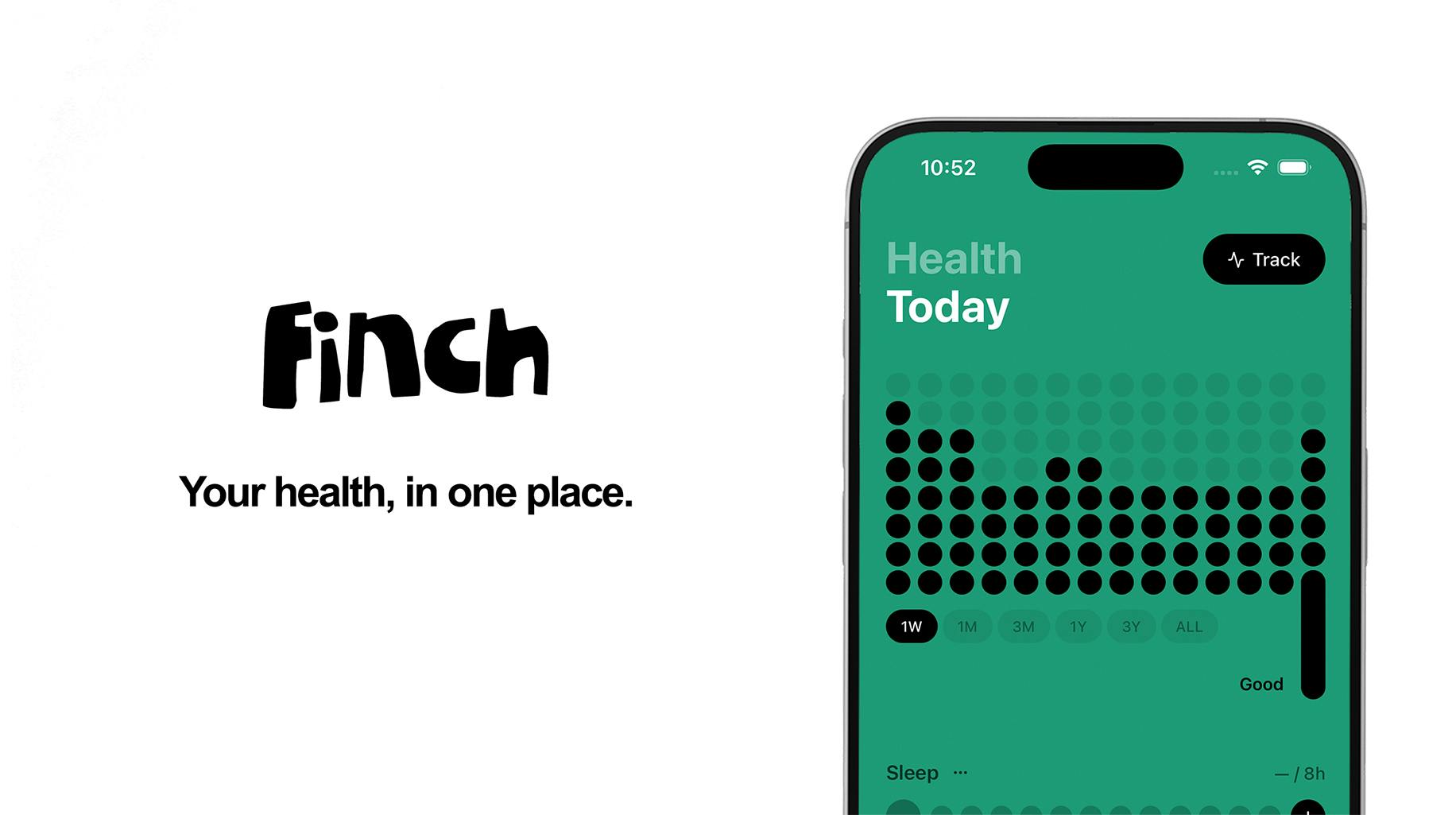
Finch uses AI to aggregate, transcribe, and translate your fragmented health data into one clear view.
Finch is an AI-powered iOS app that tackles the universal problem of fragmented health data. It offers three core features: aggregating scattered lab reports and medical records into a single hub, transcribing doctor visit conversations in real time, and translating complex medical terminology into plain language. Priced at $99/year with a free tier, Finch bets on long-term data stickiness. Its success hinges on data access breadth, privacy compliance, and AI accuracy.
When Health Data Becomes a Tangled Mess
Everyone who deals with the healthcare system runs into the same problem: information is fragmented. A single pregnancy means at least 12 prenatal checkups, dozens of lab reports, and a whole set of unfamiliar medical terminology — coming from different healthcare facilities, in different formats, scattered across paper forms, PDF attachments, and verbal instructions. And that's just one scenario among many. Whether it's chronic disease management, follow-up exams, or caring for a family member, patients are often forced into a role they're not trained for: data organizer and medical translator.
This fragmentation isn't the result of poor personal management — it's a structural problem within the healthcare system. In most countries, the healthcare ecosystem consists of multiple independent entities — public hospitals, private clinics, testing centers, pharmacies — each running different electronic medical record (EMR) systems that often lack interoperability. In the United States, although the 21st Century Cures Act requires healthcare institutions to open data interfaces (primarily through the FHIR standard), actual implementation has been slow and uneven. In China and many other countries, data silos between hospitals are even more severe, with patients frequently needing to carry paper reports by hand when transferring between facilities. This fragmentation not only increases patients' cognitive burden but can also lead to real medical risks such as redundant tests and drug interactions.
Finch, which recently launched on Product Hunt, targets precisely this pain point. It positions itself as a "patient-side health companion," with a straightforward core proposition — bring all your health data and test results into one clear view. It currently ranks #14 on the daily leaderboard with 79 upvotes.
Finch's Three Core Features: Aggregation, Transcription, and Translation
Based on its official description, Finch does three things, each addressing a real challenge patients face during their healthcare journey.
Health Data Aggregation: A Unified Information Hub
It consolidates health data from different healthcare providers and formats into one place. This sounds simple, but in reality, your blood test results might be in Hospital A's system, imaging results at Clinic B, and medication records at a third-party pharmacy — Finch aims to be that single, unified data entry point.
The key to achieving this goal lies in healthcare data interoperability standards. The most widely recognized is FHIR (Fast Healthcare Interoperability Resources), developed by the international standards organization HL7. Drawing on RESTful API design principles, it breaks health data into "resources" (such as patients, prescriptions, lab results, etc.), enabling different systems to exchange information through standardized interfaces. In the U.S., Apple Health already uses FHIR interfaces to let users import medical records from hundreds of healthcare institutions, providing a degree of infrastructure for third-party apps like Finch. However, FHIR coverage remains limited globally. Many healthcare facilities — especially small and mid-sized clinics and hospitals in developing countries — have not yet deployed FHIR-compatible systems. This means that in delivering on its promise of "comprehensive aggregation," Finch may need to rely on manual user uploads (such as photos or PDF imports) as unstructured supplementary methods.
Visit Transcription: Capturing Every Word Your Doctor Says
Finch can automatically record what the doctor says during an appointment. Anyone who's been to a doctor knows that the information density in a consultation room is extremely high — what the doctor explains in a few minutes, the patient has already forgotten half of by the time they walk out the door. Automatic transcription means this spoken information no longer vanishes into thin air.
This feature relies on automatic speech recognition (ASR) technology. In recent years, OpenAI's Whisper model has pushed general speech-to-text accuracy to near-human levels. However, medical settings present unique challenges: doctors typically speak quickly, use heavy professional terminology, drug names, and abbreviations, and the consultation room environment may involve multiple speakers and background noise. This means general-purpose ASR models often need specialized fine-tuning or post-processing to reach usable levels in medical scenarios.
Medical Terminology Translation: Turning Reports into Plain Language
It converts clinical terminology into language ordinary people can understand. The Latin roots and abbreviations on medical reports are practically a foreign language for most people. Finch uses AI to explain them in readable terms — which is also why it's categorized under Artificial Intelligence.
What Role Does AI Play in Health Data Management?
Finch is tagged under three categories simultaneously — iOS, Health & Fitness, and Artificial Intelligence — and this combination itself reveals its product logic.
The transcription and translation features almost certainly rely on large language model capabilities. Speech-to-text handles structuring consultation room conversations, while terminology translation tests the model's understanding of medical context — it needs to be accurate without oversimplifying to the point of being misleading. On the LLM side, general-purpose models like GPT-4 and Claude already possess strong medical knowledge, and Google's Med-PaLM 2 has even achieved expert-level performance on the United States Medical Licensing Examination (USMLE). But there's still a gap between "knowing medical knowledge" and "accurately translating a specific report" — models may generate plausible but factually incorrect explanations when lacking complete context (the "hallucination" problem), and this risk is particularly high in medical settings. This type of "AI for medical interpretation" application has been noticeably growing, essentially shifting the interpretive capability that was previously available only from doctors or specialists directly into patients' hands.
Interestingly, these tools take the "assistive understanding" route rather than the "diagnostic recommendation" route. Finch emphasizes helping you understand your own data, not making medical judgments on behalf of your doctor. This boundary is crucial and represents the dividing line between whether a health AI product can be compliant and trusted by users.
Finch Pricing and Business Model Analysis
Finch uses the freemium model common among mobile apps: it offers a free tier, with the paid version Finch+ priced at $99/year.
For a health data management tool, this pricing isn't aggressive. The free tier lowers the barrier to trying the product, letting users import their data and experience the value of aggregation first. The annual subscription bets on long-term stickiness — health management is inherently an ongoing activity, and once you've accumulated years of test records in Finch, migration costs become high. This is also how "personal data hub" products build their moat.
The freemium model has mature precedents in the health management space. Fitbit (now owned by Google) attracts users with free basic health tracking and then offers Fitbit Premium subscriptions (around $80/year) for in-depth analysis and health reports. Meditation apps Calm and Headspace similarly lower the barrier with free content and unlock core value through subscriptions. Finch's $99/year pricing sits in the mid-to-high range among comparable products, but considering the essential nature of health data management and the high migration costs created by data accumulation, this pricing strategy is reasonable. The key question is whether the free tier delivers enough of an "aha moment" — letting users feel the tangible value of data aggregation before paying — otherwise conversion rates will face challenges.
Opportunities and Challenges Coexist
The need Finch addresses is real. Take pregnancy as an example: the "12 prenatal visits, dozens of reports, and brand-new vocabulary" it cites isn't an exaggeration — it's information overload that nearly every expectant parent has experienced. Being able to organize these fragments has clear value.
But health data management tools also face unavoidable challenges:
- Breadth of Data Access: Healthcare institutions vary widely in how closed their systems are. Whether Finch can smoothly aggregate data largely determines its practical usefulness.
- Privacy and Data Security: Health information is among the most sensitive personal data. Users will want to know how it's stored, whether it's encrypted, and where their data goes when processed by AI. For any application that hosts medical data, these questions must be clearly answered. In the U.S., HIPAA (Health Insurance Portability and Accountability Act) has explicit regulations regarding "protected health information" (PHI), but it's worth noting that HIPAA primarily governs "covered entities" such as healthcare providers and insurance companies. Consumer health apps like Finch may not be directly subject to HIPAA in certain cases, falling instead under FTC oversight and state privacy laws (such as California's CCPA/CPRA). In Europe, GDPR classifies health data as "special category personal data," requiring explicit user consent for processing. For apps that use AI to process health data, an additional concern is: will users' medical information be used for model training? Is data end-to-end encrypted when transmitted to cloud-based LLMs? The answers to these questions will directly impact Finch's compliance and user acceptance in different markets.
- AI Translation Accuracy: When medical interpretations are wrong, the result isn't convenience but misunderstanding. This places very high demands on product reliability.
Conclusion: Is Finch Worth Watching?
Finch represents an emerging product direction: patient-centered, using AI to make complex medical information readable and manageable. Its three core features — aggregation, transcription, and translation — each precisely correspond to real pain points in the healthcare journey. As an iOS application, its product thinking is clear and its entry angle is sharp. Whether it can truly gain a foothold will depend on its actual performance across three fronts: breadth of data access, privacy protection, and AI interpretation reliability. For those drowning in scattered health data, Finch is at the very least an attempt worth watching.
Related articles

Amphibious Transforming Drone: Beyond 100x Power Savings, What Are the Real Needs?
Is the amphibious transforming drone just a gimmick? Starting from the 100x power difference of the M4 Morphobot, explore real application scenarios and thesis topic ideas, analyzing boundary conditions where pure drones and pure ground robots both fail.

Warhound Raises $200 Million: Genetically Engineered "War Dogs" Paired with Anduril Gear
Warhound raises $200M, backed by Ben Lamm and Palmer Luckey, to genetically engineer dogs for military and law enforcement use and equip them with Anduril gear. This article analyzes its technology direction, funding logic, and ethical controversy.

Claude API Comes to Google Cloud: IAM Integration and SDK Access Guide
Anthropic hosts the full Claude API on Google Cloud with IAM-controlled permissions and unified billing. This guide covers the Vertex AI and Anthropic-hosted entry points, IAM role configuration, and SDK access.