Finding Amelia: Bob Ballard's Deep-Sea Quest to Solve a Century-Old Mystery

Bob Ballard searched Pacific waters for Earhart's lost plane, finding compelling clues but no wreckage.
This National Geographic documentary follows oceanographer Bob Ballard as he leads an expedition to Nikumaroro Atoll in pursuit of Amelia Earhart's Lockheed Electra, missing since 1937. Drawing on TIGHAR's 30-year forced-landing hypothesis, the team deploys multibeam sonar and ROVs alongside land evidence — reanalyzed bones matching Earhart's height, a U.S.-made zipper pull, mercury-based freckle cream, and Pan Am radio direction-finding data. Two weeks of searching yielded no aircraft wreckage and inconclusive DNA, but the mystery endures. The film ultimately celebrates Earhart's life as a trailblazing pioneer who defied society's limits for women.
The legendary oceanographer who discovered the Titanic, Bob Ballard, has turned his sights toward one of the 20th century's greatest unsolved mysteries — the disappearance of aviator Amelia Earhart. This National Geographic documentary follows Ballard and his team to Nikumaroro, a remote coral atoll in the Pacific, as they search for the Lockheed Electra 10E that vanished more than eighty years ago. Woven throughout is the extraordinary story of Earhart's life itself.
The Starting Point of a Century-Old Mystery
On the morning of July 2, 1937, the Coast Guard cutter Itasca sat anchored near Howland Island in the Pacific, waiting for the world's most beloved aviator to land. Earhart never arrived. Her voice crackled over the radio — "We must be on you, but cannot see you. Gas is running low" — yet she could not hear the replies from the ground.
At 8:43 a.m., Itasca received Earhart's last confirmed transmission: "We are on the line 157-337." Then came permanent silence. For more than eighty years, speculation about her fate and that of navigator Fred Noonan has spawned countless theories and dozens of expeditions.
As one researcher in the documentary puts it: "There's so much discussion about her disappearance, about where the plane went. But to me, the bigger mystery is — who was she?" This is both a deep-sea archaeological mission and a rediscovery of a historical figure.
The Nikumaroro Hypothesis and Ballard's Search
The U.S. Navy's official 1937 explanation was that the plane went down at sea. But Ballard chose to follow a different set of evidence, built over thirty years by The International Group for Historic Aircraft Recovery (TIGHAR): that Earhart may have made a forced landing on Nikumaroro, a 4.7-mile-long atoll whose exposed reef flat at low tide is, as one team member put it, "not a bad place to land a plane."
Ballard arrived with impressive equipment: multibeam sonar to map deep-water terrain in 3D, an autonomous surface vessel (ASV) to scan the shallows, drones to photograph the reef from above, and a pair of state-of-the-art ROVs — Hercules and Argus — capable of diving to 13,000 feet. His logic was straightforward: "That airplane exists. It's not the Loch Ness Monster. It's not Bigfoot. It exists, which means it can be found."
A striking coincidence: as the expedition ship Nautilus approached the search area, it happened to be sailing on a heading of 337 degrees — the exact bearing Earhart reported in her final transmission.
TIGHAR (The International Group for Historic Aircraft Recovery) was founded by Ric Gillespie in 1985 and is dedicated to the scientific investigation of historic aviation accidents. Since 1989, TIGHAR has conducted more than a dozen field expeditions to Nikumaroro, gradually building a systematic body of evidence to support the "forced landing hypothesis" — the theory that Earhart and Noonan, running out of fuel, flew south along the 157-337 line and landed on what was then called Gardner Island. Nikumaroro belongs to the Phoenix Islands, located roughly 350 nautical miles southeast of Howland Island. The northwestern side of the atoll features a broad reef flat exposed at low tide, theoretically wide enough for an emergency landing by the Electra 10E. The key distinction between this hypothesis and the official "crashed at sea" conclusion is that it provides a unified framework for explaining the physical artifacts found on the island, the radio signals, and serves as the central theoretical basis for Ballard's expedition.
Bones, Coconut Crabs, and Island Evidence
The land-based investigation is equally gripping. In 1940, British colonists discovered 13 bones and a woman's shoe beneath a "wren tree" on the island. The official in charge, Gallagher, suspected these might be Earhart's remains, but after they were sent to Fiji, a doctor named Hoodless classified them as male — and they subsequently disappeared.
A modern research team re-examined Hoodless's measurements and found he had made an error: he had not measured the femur, the bone best suited for estimating height. When the original data were entered into modern forensic databases, the new analysis suggested the "castaway" was not male at all, but a woman standing approximately 5 feet 6 inches tall — close to Earhart's own height.
The team then traveled to Tarawa, the capital of Kiribati, to search colonial archives, sorting through more than 600 bone fragments and 7 skulls — until, in the very last box on the very last day, they found a female skull. Forensic anthropologist Erin Kimmerly brought it back to her Florida laboratory for 3D reconstruction and DNA extraction.

Thirty years of excavations on the island have also yielded a range of personal effects: a zipper pull manufactured in the United States between 1933 and 1936; a jar of "Dr. Berry's Freckle Cream" containing 11% mercury (Earhart was famously freckled and disliked them); flat glass fragments and traces of early 20th-century rouge consistent with a compact; and repeated alerts from Berkley, a cadaver dog trained to detect human remains, at the center of that same wren tree. Researchers theorize that the bones may have been dragged into underground burrows by the island's enormous coconut crabs, which can weigh up to nine pounds and have extraordinarily powerful claws.
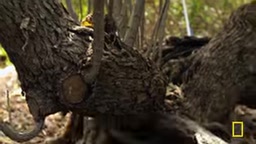
The coconut crab (Birgus latro) is the world's largest land-dwelling arthropod, with adults weighing up to 4 kilograms (about 9 lbs) and claws capable of exerting a force of 3,300 newtons — enough to crush human bone. They are critical scavengers in atoll ecosystems, powerfully attracted to animal carcasses and capable of dragging remains into burrows or tree roots within hours. A 2007 study published in the Journal of Forensic Anthropology placed pig carcasses on Nikumaroro and confirmed that coconut crabs can disperse skeletal remains across tens of meters in a short time. This finding goes a long way toward explaining why only 13 bones were found in 1940 and why subsequent excavations at the wren tree site have not turned up more — they were most likely relocated deep into underground burrows.
Radio Signals and the Bevington Photograph
Two additional pieces of indirect evidence lend further weight to the Nikumaroro hypothesis.
The first is radio signals. In the hours after Earhart's disappearance, Pan American Airways direction-finding stations picked up transmissions on her dedicated frequencies (6210 kHz during the day, 3105 kHz at night). The Navy plotted bearing lines from stations at Wake Island, Midway, Howland, and elsewhere — and the lines converged near Gardner Island (Nikumaroro). Even more compelling, TIGHAR identified 57 credible distress calls reported to police or newspapers, and found they all occurred during low tide — the only time the plane could have rested on the reef flat with its engines running to power the radio. This temporal correlation is highly persuasive.
The second is a photograph taken in October 1937 by colonial officer Bevington. Years later, image analysts noticed an object protruding about 36 inches above the waterline on the reef — shaped, they argued, like a landing gear component from a Lockheed Electra. Experts at the U.S. State Department also assessed it as a possible match.
Pan American Airways established its transpacific "China Clipper" routes in the 1930s, deploying radio direction-finding networks at Wake Island, Midway, Guam, and elsewhere to triangulate the source of signals on specific frequencies. Radio Direction Finding (RDF) works by having multiple stations simultaneously receive the same signal and measure the bearing from which it arrives; plotting these lines on a map reveals their intersection point — the signal's origin. The method's accuracy depends on the number of stations, signal strength, and atmospheric conditions. The bearing lines recorded from July 2–5, 1937 carry some margin of error, but their overall intersection zone points toward the Gardner Island area rather than Earhart's intended destination of Howland Island. TIGHAR combined these original records with the 57 civilian reports and concluded that the signal pattern is highly consistent with a plane engine running intermittently on the Nikumaroro reef flat.
No Wreckage Found — But the Legend Lives On
After two full weeks of searching — five circuits around the island, with the ROVs and ASV traveling nearly 150 miles — Ballard found no debris on the seafloor that could be attributed to Earhart's aircraft. The DNA from the Tarawa skull was too degraded to yield a conclusion, and excavations at the wren tree site turned up no bones.
But no one is ready to give up. Ballard delivered a characteristically memorable line: "It took four expeditions to find the Titanic. Two for the Bismarck. That airplane is somewhere. Stay tuned." Meanwhile, TIGHAR obtained new footage to examine whether rivet holes on an aluminum panel match a patch on the Electra's fuselage.
The documentary's true focus, in the end, is not where the plane went, but how Earhart lived. From the girl in Kansas who climbed fences and rejected the "ladylike" code, to the record-breaking pilot who became the first woman to fly solo across the Atlantic, to the mentor who inspired female students at Purdue University — she spent her life challenging the constraints society placed on women. In a letter to her husband written before their marriage, she refused to accept "medieval codes of faithfulness"; in a letter to her sister, she confessed: "If I don't make it, I'm happy to go in such an adventure."
As the film's closing words put it: "What matters is not how she died, but how she lived." Perhaps that is the real reason this century-old mystery continues to draw explorers back, again and again.
Related articles

AI Can Read Neural Network Weights Directly: Do Models Already Exceed Expectations?
A Reddit developer experiment shows language models can directly read neural network weights and infer their function. Astra, Opus 5.5, and Muse Spark 1.3 all passed the test, sparking discussion on model generalization and training sources.

India's Microdrama Market Explodes: EloElo Secures $80M Investment from NBCUniversal
EloElo secures $80M from NBCUniversal to boost StoryTV, its microdrama platform with over 33M monthly active users, as India's microdrama market draws global capital.

Acoustic Detection of Multi-Rotor UAVs: Fusing Handcrafted Features with Pre-Trained Embeddings
Study reveals data leakage from random splits in UAV acoustic detection, proposes source-disjoint protocol with stacked ensemble of handcrafted features and YAMNet embeddings, achieving 95.29% accuracy for low-cost drone detection.