First Day Abroad, My Demon Professor Is Actually My Landlord

A Bilibili voice drama uses the contrasting personas of a cold professor and flirtatious landlord to enact a study-abroad romance fantasy.
A recent radio-drama-style work on Bilibili titled "First Day Abroad, My Demon Professor Is Actually My Landlord" tells a dramatic story of overlapping identities between an international student and strict professor "Miyamoto-sensei." Ice-cold in class, the professor privately initiates invitations as "Yuuko-neesan" and demands secrecy about their relationship. Through interwoven scenes—classroom authority, office rendezvous, restaurant encounters—the work uses the secret relationship to create suspense and exposure risk. With Japanese voice acting, Chinese subtitles, and dialogue-driven narrative, it is a typical voice drama whose core appeal lies in character contrast, romantic atmosphere, and immersion, precisely targeting ACG audiences interested in "contrast moe" and "shipping."
A radio-drama-style story set against a study-abroad backdrop recently appeared on Bilibili, with a strikingly provocative title—"First Day Abroad, the Legendary Cold and Ascetic Demon Professor! Is Actually My Flirtatious Landlord!" The work is primarily voiced in Japanese and tells a dramatic story of overlapping identities between an international student, a strict professor, and a gentle landlord. Such content is not uncommon on Bilibili, but this work has sparked some discussion within its niche thanks to its strong character contrast and romantic tension.
Character Contrast: The Dual Identity of Cold Professor and Flirtatious Landlord
The core premise of the story is not complicated: a university professor known for strictness, "Miyamoto-sensei," is a fearsome figure to students in class, but privately is the protagonist's landlord "Yuuko-neesan," interacting with the protagonist in an intimate and casual manner. The work creates tension through two faces of the same character—ice-cold in the classroom, yet privately initiating invitations, speaking ambiguously, and even asking the protagonist to call her "Yuuko-neesan" when the two are alone.
This sharp turn from "ascetic" to "flirtatious" is precisely the key to attracting audiences for this type of content. From a dissemination perspective, the title has already done most of the hook work, while the body maintains audience curiosity through dialogue and scene progression.
Plot Progression: The Interweaving of Classroom Authority and Private Invitations
The work establishes conflict right from the opening: the protagonist spaces out in class and is called out by the professor to visit her office after class. Classmate "Rin" worries the protagonist will fail, but the protagonist appears calm, believing that punishment for mistakes is only natural. The scene then switches to the office, where the professor drops her classroom sternness and converses with the protagonist as "Yuuko-neesan," instructing the protagonist to come to her home that evening to fix the kitchen pipes.
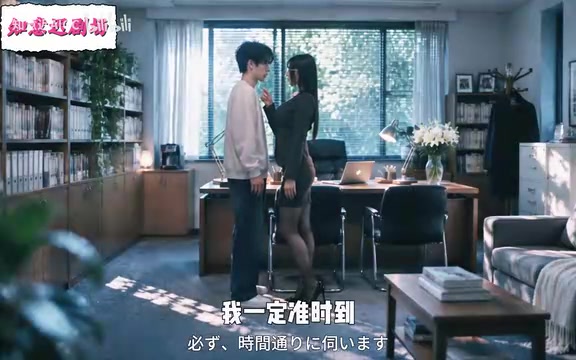
The key information here is that some private arrangement already exists between the protagonist and the professor, and the professor explicitly demands "let's keep our relationship a secret, okay." This "secret relationship" setup provides sustained suspense for the subsequent plot.
"Ascetic type" is a character attribute term originating from Japanese ACG culture, referring to characters who appear calm and restrained on the surface, not easily revealing emotions, often used alongside labels like "cold" and "iceberg." In romance genres, once an ascetic character reveals private tenderness or initiative, it creates a strong contrast moe that stimulates the audience's sense of "conquest" and curiosity. In this work, the professor is ice-cold in class but uses nicknames privately and initiates invitations—precisely utilizing this attribute to create dramatic tension and emotional suspense.
Multi-Scenario Narrative: Restaurant Encounter and Public Revelation of the Landlord Identity
The middle section shifts to a restaurant scene. The protagonist and classmates dine at a Chinese restaurant, where the owner is an enthusiastic, joking middle-aged man who mistakenly assumes the protagonist and classmate are a couple, causing awkwardness. Then Professor "Miyamoto-sensei" also appears at the same restaurant and publicly interacts with the protagonist as "Yuuko," asking the protagonist not to forget their appointment that evening.

The function of this scene is to place the "secret relationship" in a public space, creating potential exposure risk. Classmate "Mihe"'s reaction—"Those two just now, are they your students? They looked so good together"—further reinforces others' misunderstanding, planting seeds for possible future misunderstandings or conflicts.
Audience Positioning and Content Characteristics
From a content format perspective, this is a typical "voice drama" style work, with dialogue-driven narrative accompanied by screenshot images to enhance immersion. The format of Japanese original voice with Chinese subtitles has a certain foundation among Bilibili's ACG and study-abroad themed audiences. Keywords in the title such as "flirtatious," "demon professor," and "landlord" precisely target viewers interested in "contrast moe" and "ambiguous relationships."

That said, the core selling point of this type of content lies in character design and atmosphere rather than rigorous plot logic. The overlap of professor and landlord identities and the rapid progression of the private relationship all serve dramatic effect rather than realistic plausibility. Audiences' expectations for such works also focus more on "shipping" and "immersion" rather than plot authenticity.
"Voice drama" is short for the Japanese term "ボイスドラマ" (Voice Drama), referring to audio works centered on voice actor performances and sound effects that typically do not rely on animated visuals to advance the plot. On Bilibili, voice dramas are often presented as static illustrations or screenshot slideshows with subtitles, with viewers filling in scenes through imagination. This format has low production costs, suits individual or small-team creation, and can fully leverage voice actors' expressiveness, enjoying stable acceptance among ACG audiences. Study-abroad themed voice dramas often borrow Japanese-language contexts and campus settings to enhance the exotic atmosphere and character charm.
Conclusion
"First Day Abroad, My Demon Professor Is Actually My Landlord" is a radio-drama-style work whose selling points are character contrast and romantic tension. Through scene switches between classroom and private settings and the interweaving of public and secret identities, it constructs a dramatic study-abroad romance fantasy. For viewers who prefer this type of题材, the work provides sufficient hooks and sustained suspense; for content creators, its title design and scene pacing also offer a reference sample.
Related articles
GLM-5.4 Loop Transformer: 75B Parameters Deliver Trillion-Scale Reasoning
GLM-5.4 turns a 750B pretrained model into a Loop Transformer—28 layers looped twice, zero new parameters, AIME 25 up 11.3, outputs 14% shorter, reasoning moves into implicit depth.

Landlord's Comeback: Terminal Liver Cancer Survivor Relies on Tenant Wish System to Stay Alive
A Bilibili short drama follows Wu Youfu, who after transmigrating is diagnosed with terminal liver cancer and binds a Wish System, fulfilling three female tenants' wishes to earn lifespan rewards and unlock mind-reading, invisibility, and other skills as his condition improves from terminal to mid-stage.

Viral Griddle-Cake Stand Sparks Rent Doubling: Who Really Owns the Traffic?
In a viral Bilibili video, griddle-cake vendor Lao Bai makes a whole street famous, then the landlord doubles rent to 200,000. This article examines the dispute over offline traffic ownership: where is the boundary between property rights and individual creativity?