Landlord's Comeback: Terminal Liver Cancer Survivor Relies on Tenant Wish System to Stay Alive
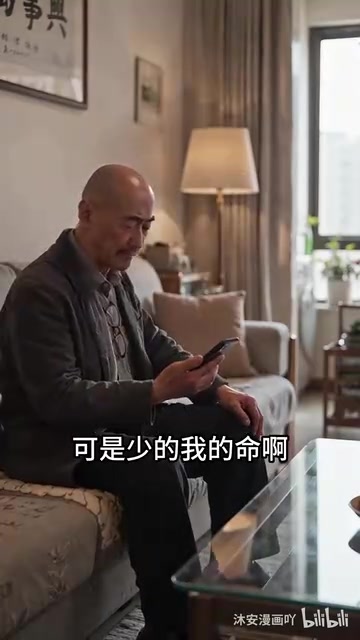
Bilibili short drama "Wish System": a landlord earns lifespan by fulfilling tenants' wishes and regains vitality through mutual help.
In the Bilibili short drama "Wish System," Wu Youfu, terminally ill with liver cancer, binds a wish system and must fulfill three female tenants' wishes to earn lifespan. He unlocks mind-reading, tracking, and invisibility, and his condition improves. The tenants face workplace, skill, and family struggles, and his help shifts from task-driven to proactive. The series wraps mutual help and kindness in a system-flow shell.
A short drama on Bilibili has recently drawn attention: the protagonist Wu Youfu, after transmigrating, is diagnosed with terminal liver cancer—but unexpectedly binds a "Wish System" that lets him exchange lifespan rewards for fulfilling the wishes of his three female tenants. As the tasks progress, not only does his condition improve from terminal to mid-stage, but he also unlocks special abilities such as mind-reading, long-distance tracking, and invisibility. The work wraps a simple truth in an exaggerated premise—kindness and mutual help often bring unexpected returns.
System Setup: Lifespan as Task Reward
The core mechanism of the story isn't complicated: Wu Youfu must fulfill his tenants' wishes, and after each round of wish-granting, the system rewards him with days of lifespan. The three tenants—Su Man, Liang Jing, and Chen Keke—each have wishes covering workplace competition, skill practice, and escaping family. This "tenant-binding" setup has an obvious gamified flavor and gives the plot a natural episodic rhythm.
You might not have noticed that the system doesn't give unconditionally. Wu Youfu has to personally intervene in his tenants' life problems—from helping Su Man negotiate a real estate deal, to practicing nursing procedures with Liang Jing, to investigating the real reason behind Chen Keke's move. Driven by tasks, a landlord who initially just wants to "stay alive" gradually becomes the tenants' actual pillar of support.
"System flow" is a common narrative mode in web fiction and short dramas, usually referring to the protagonist obtaining a game-interface-like auxiliary system and earning rewards and upgrading abilities by completing tasks. The core appeal of such works lies in a clear growth path and instant feedback. The wish system in this drama is a typical example: it quantifies "lifespan" into accumulable task rewards, directly linking the protagonist's survival motive to the tenants' wishes, thereby driving the plot forward in an episodic manner.
Ability Unlocks: From Mind-Reading to Invisibility
As task completion increases, the abilities Wu Youfu gains become more varied. The early mind-reading lets him hear what the target is thinking, and the limit of five uses per day creates plenty of comedic conflict—for example, he almost lets something slip in front of a tenant, or he uses the skill to see through a competitor's hidden cards.
The later unlocked long-distance tracking and invisibility further amplify the drama's theatricality. Invisibility can be used three times a day for up to three minutes each time, and the clothes he wears vanish with him, but sound and physical contact are unaffected—this setup directly leads to the awkward scene of "scaring someone before he can even eat." The skills the system offers seem "improper," yet they always play a role in key plot moments.
"Mind-reading" belongs to the super-perception category of cheat abilities, often appearing in web fiction as a variant of telepathy. This drama uses the five-times-a-day limit to avoid plot imbalance caused by ability abuse, while also exploiting the information gap of "hearing but not being able to say it" to create comedy. This kind of restrictive setup is a common balancing device in system-flow works: it preserves the freshness of the ability while forcing the protagonist to rely on his own wits to solve problems.
Multi-Thread Narrative: The Wishes and Predicaments of Three Tenants
The three tenant storylines are independent yet intertwined. Su Man faces workplace pressure: a major client order at her company is disrupted when the landlord suddenly raises the price by 200,000 yuan, and Wu Youfu, posing as a "fellow landlord," plays along and uses another property as a bargaining chip to force the other side to back down. This arc showcases Wu Youfu's street-smart wisdom and also builds stronger trust between him and Su Man.
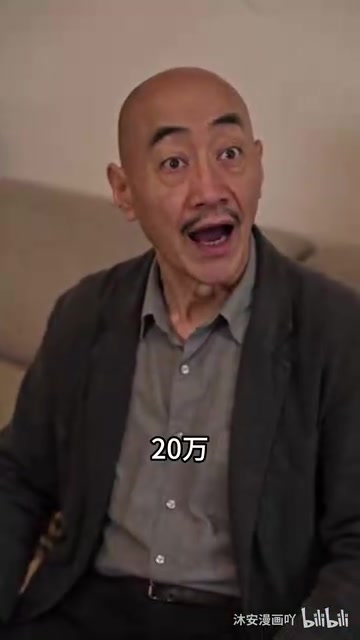
Liang Jing's request is relatively simple—she needs someone to play the patient so she can practice practical skills for the head nurse competition. Wu Youfu grits his teeth and acts as the "simulated patient," contributing plenty of laughs throughout, from pulse examination to CPR and artificial respiration. But it is precisely this seemingly absurd cooperation that allows Liang Jing to complete her practice.
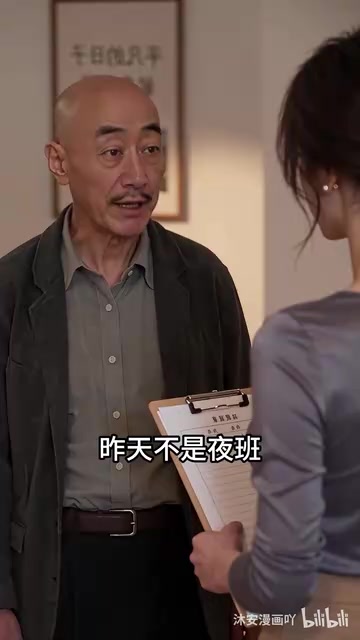
Chen Keke's storyline carries a stronger sense of realism. Her sudden announcement that she's moving out is rooted in entanglement with her family of origin: relatives keep demanding money from her and even threaten to harass Wu Youfu and the other tenants. Her choice to flee is essentially an attempt to protect those around her. Wu Youfu uses long-distance tracking to find her new residence, then gathers his old buddies to help at the scene of the conflict, ultimately allowing Keke to lower her guard and move back.
The "episodic drama" structure means each episode or story segment revolves around a relatively independent event, while the whole is connected by a main thread. This drama uses the three tenants' wishes as units, each resolving a specific predicament while advancing the protagonist's lifespan accumulation and emotional changes. This structure is convenient for fragmented viewing and suits the fast-paced narrative of short dramas, allowing each subplot to complete its arc within limited space.
Emotional Core: How Mutual Help Feeds Back Into Oneself
If you only look at the setup, this short drama seems like a "cheat ability" power-fantasy template. But what truly drives the plot is the emotional bond gradually built between Wu Youfu and his tenants. At first, he completes tasks to survive; later, he proactively intervenes in Keke's family dispute, which already exceeds the system's task requirements. The three tenants also shift from being helped to becoming supports in Wu Youfu's life—one manages food, one manages housing, one manages health—and the boundary between landlord and tenant blurs through day-after-day companionship.
The lifespan rewarded by the system is the explicit thread; the trust accumulated between people is the implicit one. When the fifth round of all three tenants' wishes is completed, the system additionally rewards one year of lifespan and a mysterious lottery draw, and Wu Youfu obtains invisibility. But more important than the skill is that he is no longer a lonely landlord. The drama explains the improvement of his liver cancer from terminal to mid-stage as a system reward, but the signal conveyed at the narrative level is: a life in which one is needed and trusted is itself a kind of vitality.
"Cheat ability" is a web fiction term referring to the protagonist's extraordinary power or special advantage, often used to break through realistic limits and drive the plot. The wish system in this drama is such a cheat, but the narrative doesn't stop at showing off abilities; instead, it makes the cheat a catalyst for character relationships. The stronger Wu Youfu's abilities become, the deeper his interactions with the tenants grow, and the cheat ultimately serves the emotional core rather than merely generating thrill points.
Conclusion
This Bilibili short drama uses the shell of system flow to tell a story about mutual help and kindness. The wish system is the hook, the tenants' wishes are the threads, and through completing tasks Wu Youfu rediscovers the center of gravity in his life. For viewers who enjoy system-flow and progression-oriented content, this "landlord and tenants" binding relationship offers a fresh narrative perspective.
One-line Summary
Bilibili short drama "Wish System" tells how landlord Wu Youfu exchanges fulfilling tenants' wishes for lifespan and regains vitality through mutual help.
Paragraph Summary
In the Bilibili short drama "Wish System," Wu Youfu, terminally ill with liver cancer, binds a wish system and must fulfill the wishes of three female tenants to earn lifespan rewards. As tasks progress, he unlocks abilities like mind-reading, long-distance tracking, and invisibility, and his condition improves from terminal to mid-stage. The three tenants face workplace competition, skill assessments, and escaping their family of origin, and Wu Youfu's involvement shifts from task-driven to proactive help. The series wraps a core of mutual help and kindness in a system-flow shell, showing the emotional bond of trust and mutual support built between landlord and tenants.
Related articles
GLM-5.4 Loop Transformer: 75B Parameters Deliver Trillion-Scale Reasoning
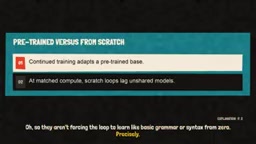
GLM-5.4 turns a 750B pretrained model into a Loop Transformer—28 layers looped twice, zero new parameters, AIME 25 up 11.3, outputs 14% shorter, reasoning moves into implicit depth.
Viral Griddle-Cake Stand Sparks Rent Doubling: Who Really Owns the Traffic?
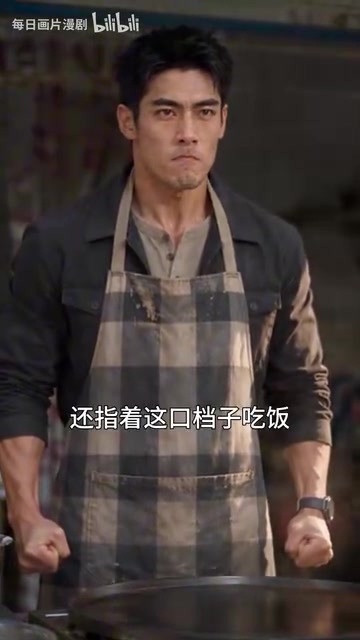
In a viral Bilibili video, griddle-cake vendor Lao Bai makes a whole street famous, then the landlord doubles rent to 200,000. This article examines the dispute over offline traffic ownership: where is the boundary between property rights and individual creativity?

First Day Abroad, My Demon Professor Is Actually My Landlord
Bilibili's radio-drama-style work "First Day Abroad, My Demon Professor Is Actually My Landlord" presents a study-abroad story of dual identities—cold professor and flirtatious landlord—sparking discussion with strong character contrast and romantic tension.