Viral Griddle-Cake Stand Sparks Rent Doubling: Who Really Owns the Traffic?
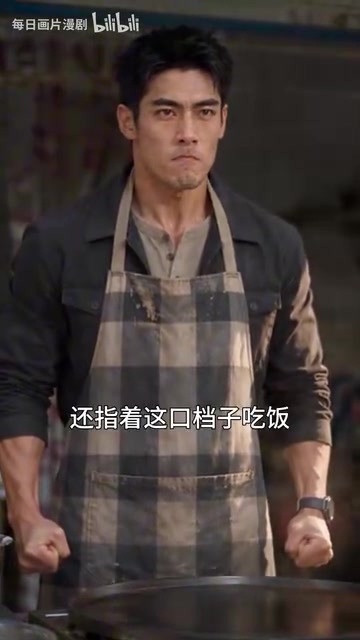
Griddle-cake vendor Lao Bai makes a street famous, but the landlord demands double rent, sparking conflict over traffic ownership and collective pressure.
The article tells the story of Bai Xianying, a griddle-cake vendor in a Bilibili short video who went viral for his eight years of hand speed and made an entire street famous. Landlord Boss Wang, invoking property rights, demands that the rent be doubled to 200,000 yuan a year. The conflict escalates from a business battle to smashed cakes and personal degradation, even involving Lao Bai's daughter. Neighbors initially speak up for him but, under the landlord's threat to "split the rent hike," turn to pressuring Lao Bai to sign. The article analyzes the difficult question of who owns offline traffic premiums: how to divide property-rights logic from the externality created by an individual, and notes that such disputes will become more common in the short-video era, as small businesspeople are often asked to sacrifice themselves in the name of collective interest.
The Traffic Miracle of a Griddle-Cake Street
In a viral short video on Bilibili, Lao Bai — Bai Xianying, a street vendor who has been selling griddle cakes for eight years — accidentally turned an entire street into a hotspot. On camera, there are no flashy marketing gimmicks, just a pair of hands that never slow down. As a customer in the video puts it, "I've been filming for a year and haven't seen it slow down for a single second." His hand speed became his signature — and the street's traffic gateway.
The changes brought by the traffic are visible. According to a customer in the video, a colleague came all the way from the east side of town just to buy a cake, and foot traffic on the street is noticeably higher than before. Lao Bai's response is simple: "It's all thanks to everyone's support." But this down-to-earth business philosophy soon collided with another side of reality.
The Landlord's Logic: The Land Is Mine, So the Traffic Belongs to Me
Landlord Boss Wang shows up and demands that next year's rent be doubled — jumping straight to 200,000 yuan a year. His reasoning is clear and forceful: I bought this street. You brought all these people here. You're feeding off my traffic, so you have to pay for it.
"You made so much money because of me, so you should give me a cut."
Even harsher is his assessment of Lao Bai — "you'll be a pancake-flipping pauper for the rest of your life." That line drags the discussion from a business negotiation down to personal degradation. Lao Bai doesn't talk back; he just says, "Go ahead and curse. Just leave me a way to survive when you're done."
From the landlord's standpoint, he holds the property rights and therefore the pricing power — "I can rent it out to someone else for 200,000 or even 300,000 anytime." But Lao Bai's retort stands just as firm: "The traffic on this street was built one cake at a time by me. How did it become your accomplishment alone?"

Property Rights are the legal rights granted to an owner to possess, use, enjoy the proceeds of, and dispose of property. In commercial leasing, the landlord owns the property, holds the right to collect rent on that basis, and may renegotiate rent after the contract expires. However, the exercise of property rights is not without limits: many jurisdictions impose statutory caps on rent increases (such as rent control) or require landlords to give notice before raising rent. Article 734 of China's Civil Code also stipulates that a lessee has a priority right to lease under equal conditions. The rationality of property-rights logic lies in protecting investment, but abusing a dominant market position may constitute an abuse of rights. In this case, the landlord's demand to double the rent on property-rights grounds is formally legal, yet it ignores where the traffic premium actually comes from — which may invite moral and business-ethics controversy.
Escalation: Smashed Cakes, Threats, and a Child's Presence
After negotiations break down, Boss Wang knocks a customer's griddle cake to the ground. Lao Bai blocks him on the spot: "Something made with so much hard work is precious and shouldn't be wasted." The reply is a jab: "You paupers only deserve to eat a few-yuan cake like this."
As he leaves, Boss Wang lays down an ultimatum: pay 200,000 on the spot, or pack up and get out tomorrow. Lao Bai wants to step out to finish making cakes for the customers in line, but he's blocked inside.

The thing that truly makes Lao Bai lose his temper is Boss Wang's remark in front of his daughter Niu Niu: "Your girl is so young — you planning to have her guard this stall her whole life and live off the northwest wind with you?" Lao Bai had put up with the rent hike, the insults, and the smashed cake, but this time he says, "I can't take it anymore."
Personality Rights are the rights enjoyed by civil subjects, including the rights to life, body, health, name, title, portrait, reputation, honor, and privacy. The landlord's derogatory "pauper" remarks may constitute an infringement of Lao Bai's right to reputation or personal dignity. Under Article 990 of the Civil Code, personality rights are protected by law, and no organization or individual may infringe upon them. In addition, the landlord's act of knocking a customer's griddle cake to the ground may constitute intentional destruction of another's property; although the amount is small, it is already a civil tort, and the customer may claim compensation for losses. These details show that the conflict has escalated from a business negotiation into an infringement of personality and property, and Lao Bai has the right to defend himself according to law rather than simply swallow his grievances.
Neighbors Pressure Him to Sign: "Sacrifice One Person" Under Collective Pressure
At first, the neighbors speak up for Lao Bai, pointing out that doubling the rent is "obviously bullying," and some note that "the business on our street all rides on Lao Bai's coattails." Boss Wang's counter is blunt: if you want to speak for him, then let's split this 200,000 among everyone — 20,000 more each.
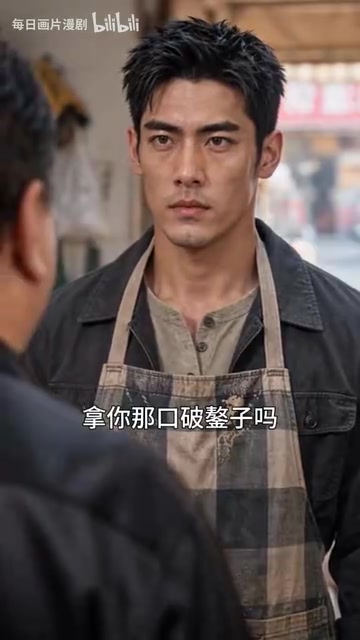
The wind shifts instantly. Someone says, "How can the trouble you stirred up drag all of us into it?" Someone advises Lao Bai, "Isn't it only natural to pay the landlord a bit more rent? Why are you being so stingy?" Another invokes "you've got elders and kids to support," telling him to "sacrifice yourself for everyone's sake." The final pressure boils down to one line: "Just hurry up and sign the paper."
This scene is the sharpest part of the whole video. It reveals not just a leasing dispute but the structural predicament of a traffic contributor who gets pushed out in the distribution of benefits: everyone shares when times are good, but when costs arrive, the first person asked to yield is usually the one who made the pie bigger in the first place.
Who Actually Creates the Traffic?
The core of this conflict is a question that's becoming ever more common in the short-video era: how should offline traffic ownership be defined?
The landlord's property-rights logic holds — the shop is indeed his, and raising the rent has room within the legal framework. But commercially, the source of the street's premium is not the location itself — the video's contrast is the neighboring street, which is "so deserted you could shoot birds there." The premium comes from the craft and reputation Lao Bai has accumulated over eight years of making cakes. To fully attribute this externality, created by an individual, to property income may let the landlord win in the short term, but in the long run it drains the source of the traffic. Swap in another tenant, and the line may not be there anymore.
Lao Bai's situation also has its real constraints. He's done the math: making 300 cakes a day, after ingredient costs, what's left in hand is limited. 200,000 a year isn't "expensive" to him — it's unattainable. In the video, he says that after saving for two more years, Niu Niu's tuition will be covered, and he wants to send her to learn painting.
What makes this story resonate is that it touches several sensitive points at once: the survival costs of small businesspeople, the unfair distribution of traffic dividends, and the drift of bystanders' positions under pressure. The video gives no ending, but the question has been thrown out — when a person's craft makes a whole street famous, how many times should he pay for that "fame"?
Externality is a fundamental concept in economics, referring to the effects of one economic agent's behavior on third parties that are not reflected through market prices. A positive externality is when Lao Bai's craft attracts foot traffic, benefiting all merchants on the street who cannot be charged for it; a negative externality is, for example, noise pollution. In leasing scenarios, the positive externality generated by a tenant's business is often partially internalized by the landlord through rent increases, but if the increase far exceeds what the tenant can bear, it may instead suppress the continued generation of that externality. Understanding this concept helps analyze traffic-ownership disputes: the landlord tries to fully convert the positive externality into rent while ignoring that its source is the tenant's sustained labor and accumulated reputation.
One-line Summary
Griddle-cake vendor Lao Bai put a whole street on the map, but the landlord demanded double the rent — sparking a conflict over traffic ownership and collective pressure.
Paragraph Summary
The article tells the story of Bai Xianying, a griddle-cake vendor in a Bilibili short video who went viral for his eight years of hand speed and made an entire street famous. Landlord Boss Wang, invoking property rights, demands that the rent be doubled to 200,000 yuan a year. The conflict escalates from a business battle to smashed cakes, personal degradation, and even involving Lao Bai's daughter. Neighbors initially speak up for him but, under the landlord's threat to "split the rent hike," turn to pressuring Lao Bai to sign. The article analyzes the difficult question of who owns offline traffic premiums: how to divide property-rights logic from the externality created by an individual, and notes that such disputes will become more common in the short-video era, as small businesspeople are often asked to sacrifice themselves in the name of collective interest.
Related articles
GLM-5.4 Loop Transformer: 75B Parameters Deliver Trillion-Scale Reasoning
GLM-5.4 turns a 750B pretrained model into a Loop Transformer—28 layers looped twice, zero new parameters, AIME 25 up 11.3, outputs 14% shorter, reasoning moves into implicit depth.
Landlord's Comeback: Terminal Liver Cancer Survivor Relies on Tenant Wish System to Stay Alive
A Bilibili short drama follows Wu Youfu, who after transmigrating is diagnosed with terminal liver cancer and binds a Wish System, fulfilling three female tenants' wishes to earn lifespan rewards and unlock mind-reading, invisibility, and other skills as his condition improves from terminal to mid-stage.

First Day Abroad, My Demon Professor Is Actually My Landlord
Bilibili's radio-drama-style work "First Day Abroad, My Demon Professor Is Actually My Landlord" presents a study-abroad story of dual identities—cold professor and flirtatious landlord—sparking discussion with strong character contrast and romantic tension.