Five Qwen3.8-27B Models Team Up to Match Fable 5? GVS5H Testing Framework Sparks Debate
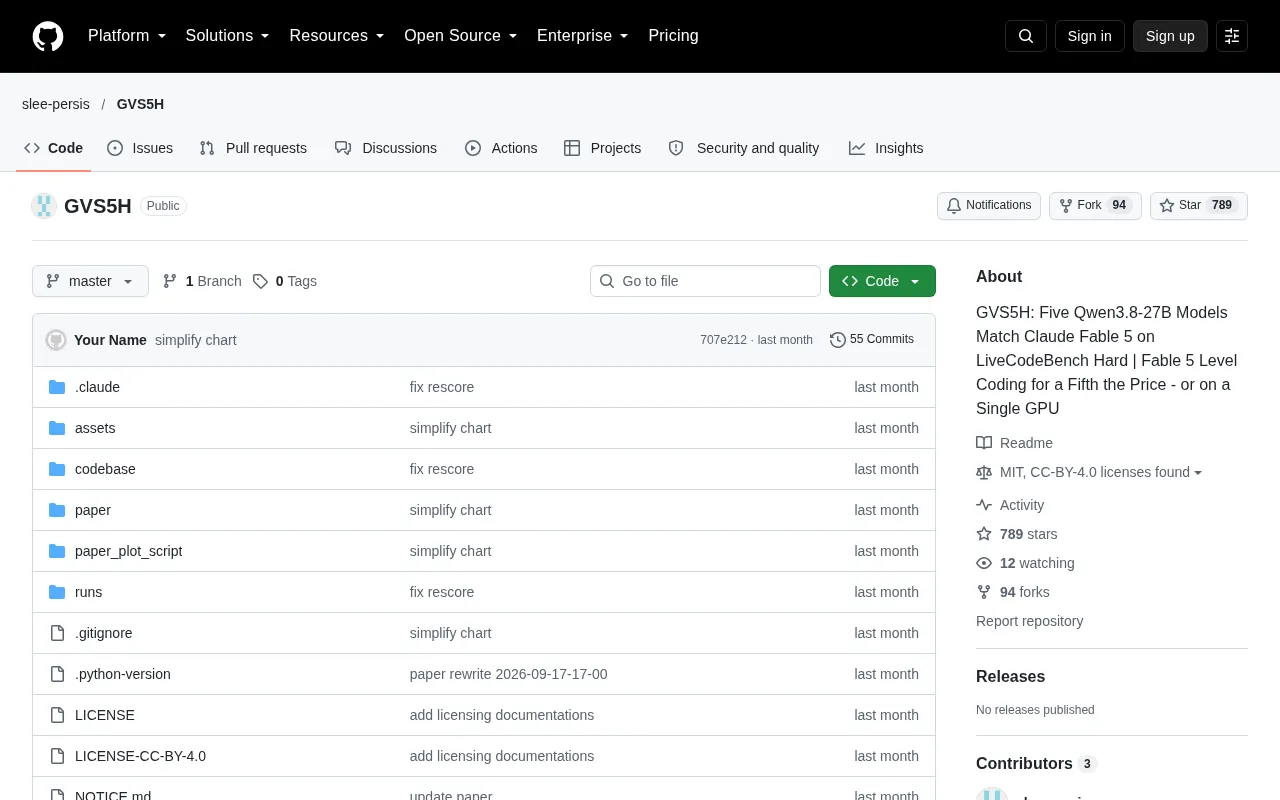
A detail-light leak raises dual questions about open-source small-model ensemble capability and evaluation credibility.
Using a brief Hacker News leak as a starting point, the article discusses the technical issues behind the claim that "five Qwen3.8-27B models match Fable 5 using the GVS5H Harness." The author notes that the most reasonable interpretation of the title is multi-model ensembling or multi-agent collaboration, which is engineering-feasible and cheaper than calling a closed-source flagship model, but ineffective against systematic errors. The more critical gaps are the unclear identity of the comparison baseline Fable 5 and the undisclosed configuration of the GVS5H Harness, making the conclusion unreproducible. Community disagreement centers on evidence quality and technical direction, which are not contradictory. The article concludes with three takeaways for developers and emphasizes treating the conclusion as a hypothesis until details are public.
Introduction: The Model Capability Debate Behind a Brief Leak
A post appeared on Hacker News with minimal information but plenty of discussion: "Five Qwen3.8-27B models match Fable 5 using the GVS5H Harness." The post received only 60 upvotes and 15 comments, but the densely packed terms in the title—Qwen3.8-27B, Fable 5, GVS5H Harness—happen to hit the two most sensitive topics in the current AI community: the capability ceiling of open-source small models, and whether evaluation benchmarks themselves are trustworthy.
Since the original post provides no technical details, this article does not intend to repeat an unverifiable conclusion. Instead, it uses this leak as a starting point to break down three issues worth attention: whether multi-model collaboration can truly close the gap between individual models, how reliable evaluation tools like GVS5H are, and why the community is both drawn to and skeptical of "matching" narratives.
Five Models for One: The Rationality of Ensemble Approaches
Taken literally, "five Qwen3.8-27B models match Fable 5" most directly suggests some kind of ensemble or multi-agent collaboration strategy: having multiple Qwen3.8 instances with roughly 27B parameters each produce results, then combining them into a final answer through voting, routing, or debate mechanisms.
This approach is not new in engineering. A 27B-level model can run on single-GPU or dual-GPU consumer hardware, and running five instances in parallel still costs far less than calling a closed-source flagship model. If majority voting can push accuracy close to that of a stronger model, it represents a realistic path for budget-constrained teams. The costs are equally obvious: inference overhead grows multiplicatively, latency rises, the fusion logic itself requires tuning, and ensembles typically help more with "knowledge-type" questions than "reasoning-type" questions—if all five models make the same systematic error, voting won't help.
It should be noted that the original post does not disclose the specific fusion method, so this can only be regarded as the most reasonable technical speculation about the title, not a confirmed fact.
Multi-Agent Debate is one of the more representative ensemble strategies: multiple model instances each provide answers and reasoning processes for the same question, then review and rebut each other, converging on a consensus answer after several rounds. Compared with simple majority voting, the advantage of debate mechanisms is that they can expose reasoning flaws in individual models, but the cost is that token consumption grows quadratically with the number of rounds. Another common approach is routing: training a small classifier to determine the question type and only distributing difficult questions to multiple instances, while simple questions are still handled by a single model, to control average costs. There is also self-consistency sampling, which involves sampling different reasoning paths from the same model multiple times and then voting—it does not require multiple independent models, but the upper limit of its benefit is constrained by the capability boundary of a single model. Understanding the differences between these mechanisms helps determine whether "five models" brings diversity gains or simply stacks compute.
What Is Fable 5: The Gray Area of Comparison Baselines
The name "Fable 5" is not common in mainstream public leaderboards, and the original post does not explain it. It could refer to a specific version of a closed-source model, an internal codename, or a community-built reference model. An unclear comparison target is the most typical information gap in this kind of viral headline.
This precisely exposes a common dilemma in current model evaluation: the phrase "matches model X" is highly shareable, but it only holds when both sides use exactly the same prompts, the same scoring criteria, and the same task set. Once the evaluator selects its own comparison samples, the transferability of the conclusion is compromised. Before sharing such conclusions, readers should at least ask: which tasks were matched? Under what conditions were they tested?
GVS5H Harness: The Credibility Problem of Evaluation Tools
The third keyword in the title, "GVS5H Harness," also lacks public information. Judging from its naming structure, it is an evaluation framework or test harness responsible for connecting models to a unified task pipeline and outputting comparable scores.
The role of evaluation frameworks in AI engineering is often underestimated. The same model can score very differently under different harnesses, with sources of variation including prompt templates, the number of few-shot examples, answer extraction rules, and whether tool calls are allowed. This means the qualifier "using the GVS5H Harness" is not an optional footnote but a precondition for the conclusion to hold. If the harness configuration is not public, external parties cannot reproduce it, and it therefore has no evidentiary value in a scientific sense.
The difference between a Harness and a Benchmark is worth clarifying: a benchmark refers to the task set and scoring criteria (such as MMLU, GSM8K), while a harness is the software framework that executes these tasks, responsible for loading questions, constructing prompts, calling model APIs, parsing outputs, and determining correctness. The same benchmark yields different scores under different harnesses, mainly due to several adjustable parameters: whether prompts are zero-shot or few-shot, whether the model is required to output chain-of-thought, whether answer extraction uses regular expressions or an LLM judge, how temperature and max tokens are set, and whether retries occur on timeout or parsing failure. Therefore, rigorous evaluation reports should disclose the harness name, version number, and complete configuration file; otherwise, "score X on a certain harness" is just an isolated claim that cannot be reviewed.
Two Voices in the Community
Judging from the atmosphere of the 15 comments (and Hacker News's usual style), feedback roughly falls into two camps. One camp is cautiously skeptical: lacking details, lacking reproduction steps, unclear comparison targets—such posts look more like clickbait. The other camp believes the direction itself is worth attention—small-parameter models approaching large-model capabilities through combination strategies is a key path to lowering the barrier to AI applications, and even if current evidence is weak, it is worth investing in verification.
The two voices are not contradictory. Skepticism targets the quality of evidence, while interest targets the technical direction. Healthy community discussion should accommodate both: neither rejecting a direction because its conclusion is unproven, nor relaxing verification standards because the direction is appealing.
The voting and commenting mechanisms of Hacker News themselves shape the form of discussion: the number of upvotes a post receives early on determines whether it reaches the front page, and the ordering of comments tends to favor highly controversial replies, so small samples like "60 upvotes, 15 comments" often amplify the sharpest opposing views rather than the most representative consensus. This also explains why such leaks lacking details easily produce polarized evaluations—when information is insufficient, readers can only judge based on overall trust in the information source rather than on the evidence itself.
Practical Implications for Developers
Setting aside the credibility of this leak itself, it at least suggests three actionable things. First, 27B-level open-source models have entered the practical range of "composable use," and teams doing cost optimization should include ensemble approaches as candidates rather than focusing only on single-model upgrades. Second, any evaluation conclusion must be tied to a specific harness configuration; when selecting models internally, teams should build reproducible evaluation pipelines rather than directly accepting external leaderboards. Third, when faced with "matching"-type news, developing the habit of asking about task sets and scoring configurations is more valuable than remembering the conclusion.
Conclusion
The information content of this Hacker News post is indeed thin, but it condenses the core tension in the current AI community: open-source model capabilities are rapidly approaching, while evaluation methods have not yet caught up—the gap between the two is a breeding ground for controversy. Until the configuration of the GVS5H Harness and the details of the comparison baseline are made public, "five Qwen3.8-27B match Fable 5" should be treated as a hypothesis awaiting verification, not an established fact.
Related articles
Ollama Local Deployment Guide: Run Open-Source LLMs with Zero Experience
Ollama local deployment tutorial: what Ollama is, why choose it, how to download, install, and run open-source LLMs, and use its API for custom development. Beginner-friendly.
n8n: The 187K-Star Open-Source Automation Powerhouse That Turns Repetitive Work into Workflows
n8n is a 187K-star open-source visual workflow automation engine with 400+ nodes, Webhook/schedule/polling triggers, self-hosting for data security, and AI Agent support. Here's a guide to its core concepts, use cases, and pitfalls.
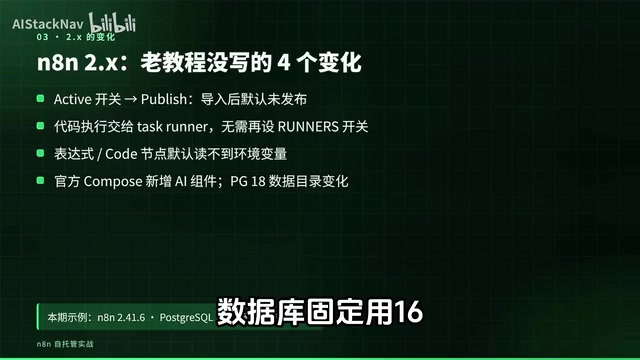
Self-Hosting n8n in Practice: Docker + PostgreSQL + Caddy Deployment Guide
A step-by-step guide to deploying a self-hosted n8n instance with Docker Compose, PostgreSQL, and Caddy automatic HTTPS, including env var pitfalls, Feishu alerting, and backup/upgrade/rollback tips.