Flipflop: A Persistent Tunnel File Sharing Tool Built on iroh

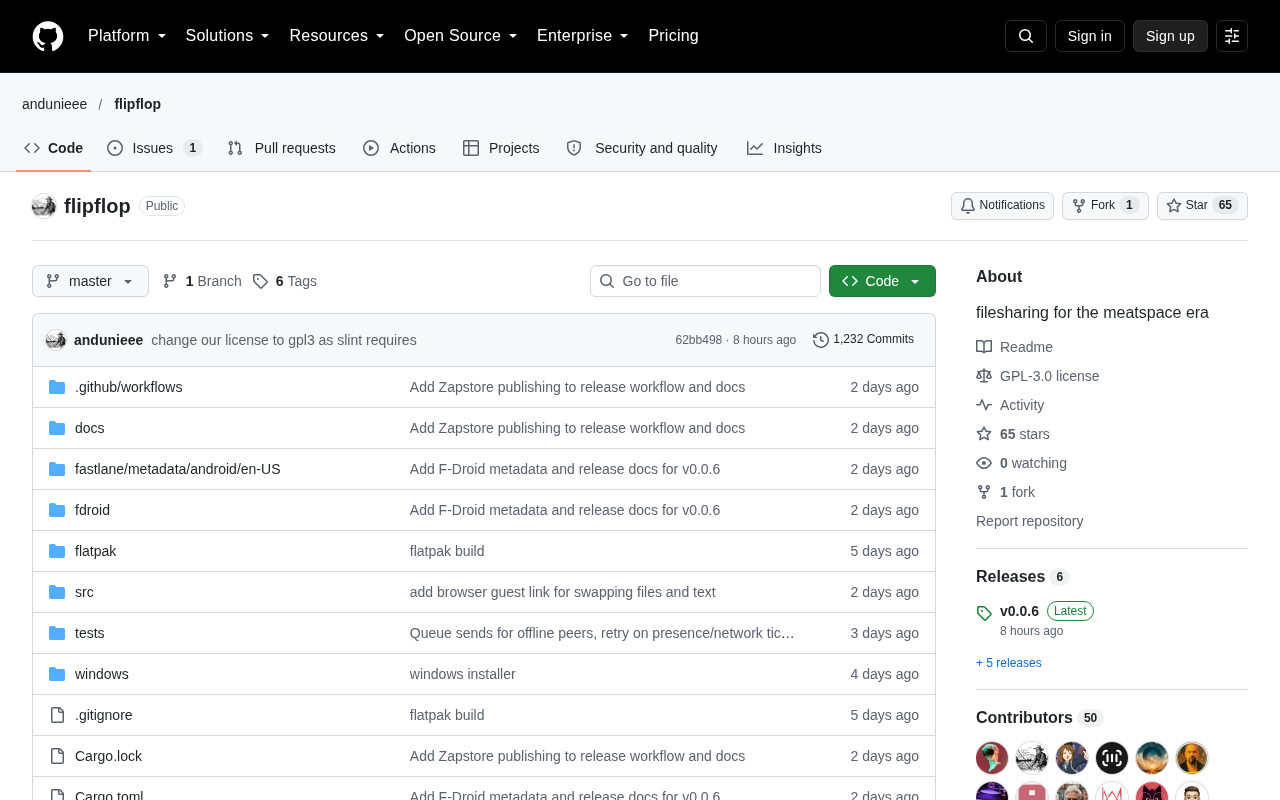
Flipflop is a persistent tunnel file sharing tool built on iroh, balancing cloud storage and P2P.
Flipflop is an open-source file sharing tool on Hacker News Show HN, built on iroh with a "persistent tunnel" approach. iroh is a QUIC-based P2P library in the Rust ecosystem using public key addressing, relays, and hole punching. Since connection info is bound to keys, network changes won't invalidate the tunnel, offering a lightweight path between cloud storage and complex P2P tools. It suits developers and small teams needing frequent device transfers, but requires addressability and its maturity is still unproven.
In the world of decentralized file sharing, a new open-source tool called Flipflop has appeared on the Show HN section of Hacker News. Built on iroh, it focuses on a "persistent tunnel" file sharing experience, attempting to find a more lightweight path between traditional centralized cloud storage and complex P2P solutions.
What Is Flipflop?
Flipflop is a file sharing tool that uses iroh to implement persistent tunnels. Simply put, it establishes a stable peer-to-peer channel between different devices, then transfers files directly over that channel. Unlike traditional temporary HTTP download links, this tunnel is "persistent" — once established, there's no need to renegotiate the connection for every transfer.
iroh itself is a QUIC-based peer-to-peer networking library that uses public key addressing instead of IP addresses. This means devices can switch network environments at any time, and as long as the identity key remains the same, the tunnel can be rebuilt and remain usable. Flipflop packages this capability into a concrete product aimed at file sharing.
Why "Persistent Tunnels" Are Worth Paying Attention To
Traditional file sharing typically follows two models. The first is centralized services: upload to a server, then generate a link to share. The advantage is simplicity and reliability; the downside is dependence on a third party, with privacy and availability both at their mercy. The second is P2P tools like BitTorrent or various direct-connect tools, but these have high configuration barriers — NAT traversal, port forwarding, and other issues deter ordinary users.
Flipflop's "persistent tunnel" approach sits between the two. According to its Show HN page, once the tunnel is established, subsequent file sends can reuse it directly without re-punching holes or exchanging full connection information each time. For users who need to frequently sync files across multiple devices, this persistence significantly reduces operational friction.
iroh's QUIC foundation also gives transfers encryption and flow control capabilities, ensuring both security and maintaining good throughput even in poor network conditions.
NAT Traversal and Hole Punching: Most home devices sit behind NAT without their own public IP, so external nodes cannot directly initiate connections to them. The idea behind hole punching is to have both communicating parties send probe packets to each other nearly simultaneously, thereby "punching" a temporary mapping entry in each side's NAT device so that subsequent data packets can flow directly. However, hole punching often fails in scenarios like symmetric NAT, in which case a relay server is needed to forward traffic as a fallback. iroh combines hole punching with relay fallback precisely to ensure reachability while maximizing direct connections.
QUIC and Flow Control: QUIC is a transport layer protocol running on top of UDP, with built-in TLS encryption, multiplexing, and flow control. Compared to traditional TCP, it reduces the round trips needed to establish a connection and is more resilient to packet loss — this is also the foundation for iroh maintaining throughput under poor network conditions.
What iroh Does Behind the Scenes
iroh is a relatively active P2P networking project in the Rust ecosystem in recent years. Its core design uses public keys as node identities, completing connection establishment through a combination of relays and hole punching. Compared to traditional P2P libraries, iroh encapsulates connection management, addressing, and encryption into a unified abstraction, so developers don't need to handle complex network state machines themselves.
By choosing iroh as its foundation, Flipflop directly reuses this capability set: identity as address, automatic hole punching, optional relay fallback. This also explains why it can be "persistent" — connection information is bound to keys rather than IPs, so network changes won't completely invalidate the tunnel.
Why public key addressing is key: Traditional networks identify nodes by IP address, and once the IP changes (switching Wi-Fi, roaming, carrier reassignment), the original address becomes invalid. iroh instead uses public keys as node identities, where the address is merely temporary information about "how to find me right now," while the identity itself remains unchanged. So when a device switches networks, it only needs to republish its reachable paths, and the peer can rebuild the connection using the public key. This is precisely the fundamental reason why Flipflop's "persistent tunnel" can survive network changes without completely failing, corresponding exactly to the article's statement that "connection information is bound to keys rather than IPs."
Use Cases and Limitations
In terms of positioning, Flipflop suits several types of users: developers who need to quickly transfer files between personal devices, small teams unwilling to put sensitive files on third-party servers, and tech enthusiasts wanting to experience the iroh ecosystem.
But its limitations should also be viewed objectively. A persistent tunnel means both ends need to maintain some degree of online status or addressability; if one side is offline for an extended period, the tunnel naturally cannot work. Additionally, as a new project on Show HN, its maturity, cross-platform support, and long-term maintenance still need time to prove. For ordinary users, the configuration and conceptual barriers remain higher than mature commercial cloud storage.
Some Thoughts on File Sharing Tools
Flipflop's emergence reflects a trend: P2P technology is moving from geek toy to more user-friendly product form. Once libraries like iroh absorb the underlying complexity, upper-layer tools can focus on experience design. The persistent tunnel angle is also specific enough — it doesn't try to solve all file sharing problems, but targets the niche need of "high-frequency, trusted, low-friction transfers between devices."
If Flipflop can continue to iterate and lower the barrier to use, it could become a practical example application in the iroh ecosystem, and may also inspire more tools built around persistent connections. For those following decentralized file sharing and the Rust P2P ecosystem, this project is worth keeping an eye on.
One-line Summary
Flipflop is a persistent tunnel file sharing tool built on iroh, seeking a balance between cloud storage and P2P.
Paragraph Summary
Flipflop is an open-source file sharing tool that appeared on Hacker News' Show HN section, built on iroh and focused on a "persistent tunnel" experience. iroh is a QUIC-based peer-to-peer networking library in the Rust ecosystem that uses public keys rather than IPs for addressing, combining relays and hole punching to establish connections. Because connection information is bound to keys, network environment changes won't completely invalidate the tunnel, allowing Flipflop to offer a more lightweight path between centralized cloud storage and complex P2P tools. It suits developers, small teams, and others needing high-frequency transfers between devices, but both ends must remain addressable, and as a new project its maturity and cross-platform support still need to be tested.
Related articles

Free Unlimited Claude Code Solution: Agnes AI + CC Switch Setup Guide
No paid subscription needed — pair the free AI platform Agnes AI with the open-source tool CC Switch to provide a backend for Claude Code, enabling unlimited free calls to text, image, and video models. This guide covers the full setup, test results, and usage boundaries.

A Complete Zero-Cost Guide to Getting Started with Claude Code for Beginners in China
A beginner's guide to Claude Code for users in China: two installation methods (command line and IDE plugin), full configuration steps for replacing the official API with the free domestic LongCat model, and a hands-on demo of building a small tool with natural language, plus tips.

When the NSA Gets Involved: The AI Supply Chain Crisis Behind Open-Source CVEs and API Key Hijacking
Multiple open-source projects disclosed severe CVEs in one day, PHP flaws alarmed the FBI, and Railway and OpenCode were breached with API keys stolen. This article breaks down the vulnerability window, AI-accelerated exploitation, and the AI supply chain crisis behind the API key black market, with a developer defense checklist.