Flock Contract Cancellation Woes: City Termination Requests Ignored

Multiple cities cancel Flock Safety contracts but face difficult exits; supplier non-response leaves cameras running.
Multiple cities have decided to terminate contracts with license plate recognition camera supplier Flock Safety, but the cancellation process is far from smooth. In Plymouth, Minnesota, after the city council voted to terminate in September, the termination request went unanswered for over a month, cameras remained throughout the city, and data collection may continue. This reveals invisible obstacles for public agencies exiting surveillance technology contracts: lack of enforceable constraints on equipment removal and data deletion after termination. The article notes that municipal procurement must specify removal deadlines, data deletion obligations, and breach remedies in contracts, otherwise the gap between "voting to terminate" and "actual termination" will strain both public resources and public trust.
Recently, multiple cities have announced the cancellation of their contracts with Flock Safety, but the process has been far from smooth. According to RSS sources, some cities found the path to termination unusually difficult after making the decision—supplier response was slow or entirely absent, causing services that should have ended to continue operating.
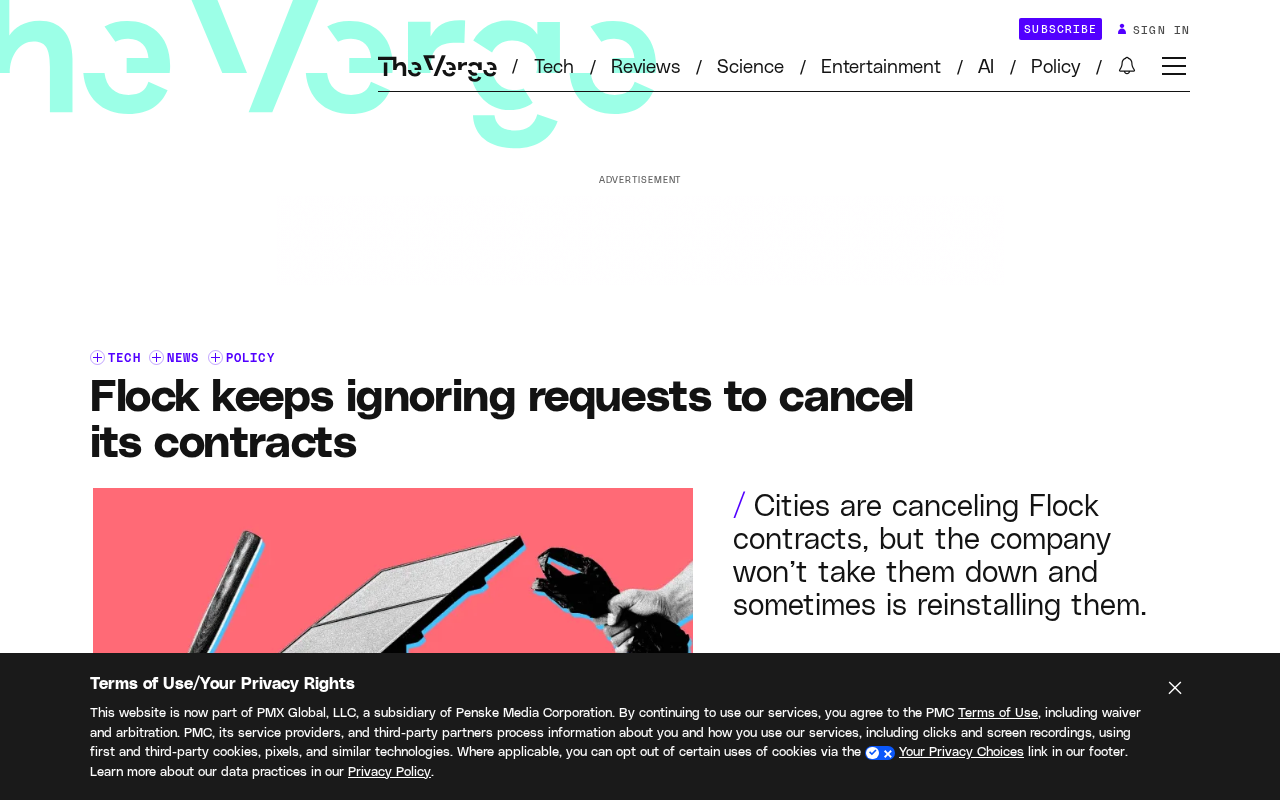
Termination Requests Fall on Deaf Ears
The city of Plymouth, Minnesota, provides a typical example. The city council voted in September to terminate its contract with Flock, but subsequent termination requests went unanswered by the supplier. For over a month, cameras remained standing throughout the city, and the actual execution of the contract termination was put on hold. This detail reveals a broader problem: when public agencies decide to exit surveillance technology contracts, the supplier's willingness to cooperate can become an invisible obstacle.
The report notes that while the number of cities canceling contracts is increasing, just as many are discovering how difficult termination can be in some cases. This "easy to enter, hard to exit" situation is testing the enforceability of municipal procurement contracts and the supplier's commitment to contractual obligations.
The Disconnect Between Technology Deployment and Contractual Obligations
Flock Safety is known for its license plate recognition cameras, typically deployed on city roads and community entrances. The failure to promptly remove cameras after contract termination means data collection activities may still be ongoing, even though municipal authorities have expressed a clear intent to terminate. For residents concerned about privacy and surveillance scope, this delay is not just a matter of administrative efficiency but involves substantive risks in data governance.
From a contract management perspective, a supplier's failure to respond to termination requests may stem from internal process delays, legal clause disputes, or an implicit expectation of renewal. Regardless of the reason, cities clearly expect a cleaner exit mechanism.
License Plate Recognition (LPR) cameras use optical character recognition technology to automatically read vehicle license plates and upload data such as plate numbers, timestamps, and geographic locations to the supplier's cloud system. Flock Safety's business model typically includes equipment leasing and data platform subscriptions, with cities paying for both hardware deployment and software services. This means that even if municipal authorities decide to terminate the contract, as long as the equipment is not removed and the cloud account is not closed, data collection and storage may continue under the original process. LPR data constitutes information that can identify individuals' movements and is subject to privacy regulations in many states, so data deletion and equipment power-off after contract termination require clear technical execution steps, not just a notification.
Implications for Municipal Procurement
Plymouth's experience is not an isolated case. As more cities reassess surveillance technology contracts, the clarity of termination clauses and the responsiveness of suppliers will become key considerations in procurement decisions. When signing contracts, municipal authorities may need to more explicitly stipulate post-termination equipment removal deadlines, data deletion obligations, and remedies for breach. Otherwise, the gap between "voting to terminate" and "actual termination" could put both public resources and public trust under strain.
Currently, Flock has not made a public response to the requests from the specific cities mentioned. As more cities join the wave of contract cancellations, how the supplier handles the termination surge will directly affect its credibility and market prospects in the public sector.
Termination clauses in municipal procurement contracts typically specify notice periods, remedies for breach, and transition arrangements, but many technology procurement contracts are vague about operational obligations after termination, such as physical removal, data migration and deletion, and cloud account cancellation. Government procurement departments often focus on price and service scope when signing contracts, lacking binding constraints on the technical details of exit mechanisms. Additionally, suppliers may view equipment removal and data deletion as extra costs, lacking economic incentives to cooperate proactively. In practice, cities can require contracts to include explicit removal deadlines, data deletion certificates (such as deletion audit logs), and penalty clauses for non-performance, thereby transforming "voting to terminate" into an enforceable contractual right.
Related articles

Running a Local LLM on a Laptop CPU: Ollama + Qwen3 Gives a Desktop Pet a Brain
An ordinary laptop without a GPU can run a local LLM: a Bilibili creator uses Ollama plus open-source Qwen3 8B on pure CPU to give an original desktop pet a local brain, with DeepSeekHarness handling plugin development and three rounds of debugging — 0 yuan, works offline, privacy stays on-device.

AgentScope 2.0 in Practice: A Guide to Enterprise-Level AI Agent Development in Java
AgentScope 2.0 is Alibaba's Java enterprise-grade distributed agent framework. This article explains why it suits server-side AI applications, contrasts client-side AI apps in permissions, state management, and concurrency, and outlines a practical learning path from environment setup to project integration.

GPT-6 Astra Directly Edits Weights to Fix Models? Full Analysis of the MIT Paper and Leaks
MIT paper shows GPT-6 Astra repairs small models by directly editing weights, raising math scores from 7.9% to 48.1%; OpenAI internal charts hint an unreleased model leads on BenchCAD 2.0; Fable 5.5 pure-code movies and the Claude WiFi radar incident analyzed.