Flow Engineering Valued at $750M: AI Agents Enter Hardware Design

Flow Engineering hits $750M valuation as Sequoia backs its AI-agent approach to hardware design.
Flow Engineering, a startup applying AI agents to hardware design, has closed a new funding round at a $750 million valuation, with investors including Valor, Atreides, and Sequoia Capital. Sequoia partner Roelof Botha joined as an angel investor and took a board seat, signaling strong conviction from top-tier institutional backers. Hardware design has long suffered from complex workflows, long iteration cycles, and steep expertise requirements — if AI agents can reliably operate in this domain, the potential to cut time-to-production and lower costs is substantial. Physical constraints, manufacturing processes, and reliability verification remain significant technical hurdles, but this round represents both a collective institutional endorsement of the "AI + vertical engineering" thesis and a clear signal of heightened market expectations for the company to deliver.
Flow Engineering Wins Backing from Top-Tier Investors
AI startup Flow Engineering has secured investment from several leading venture capital firms, reaching a valuation of $750 million. Participants in this round include Valor, Atreides, and the renowned firm Sequoia Capital.
Notably, Sequoia partner Roelof Botha not only joined as an angel investor but also took a seat on Flow Engineering's board of directors. This arrangement typically signals strong confidence in the company's long-term prospects and brings world-class resources and strategic guidance to the startup.
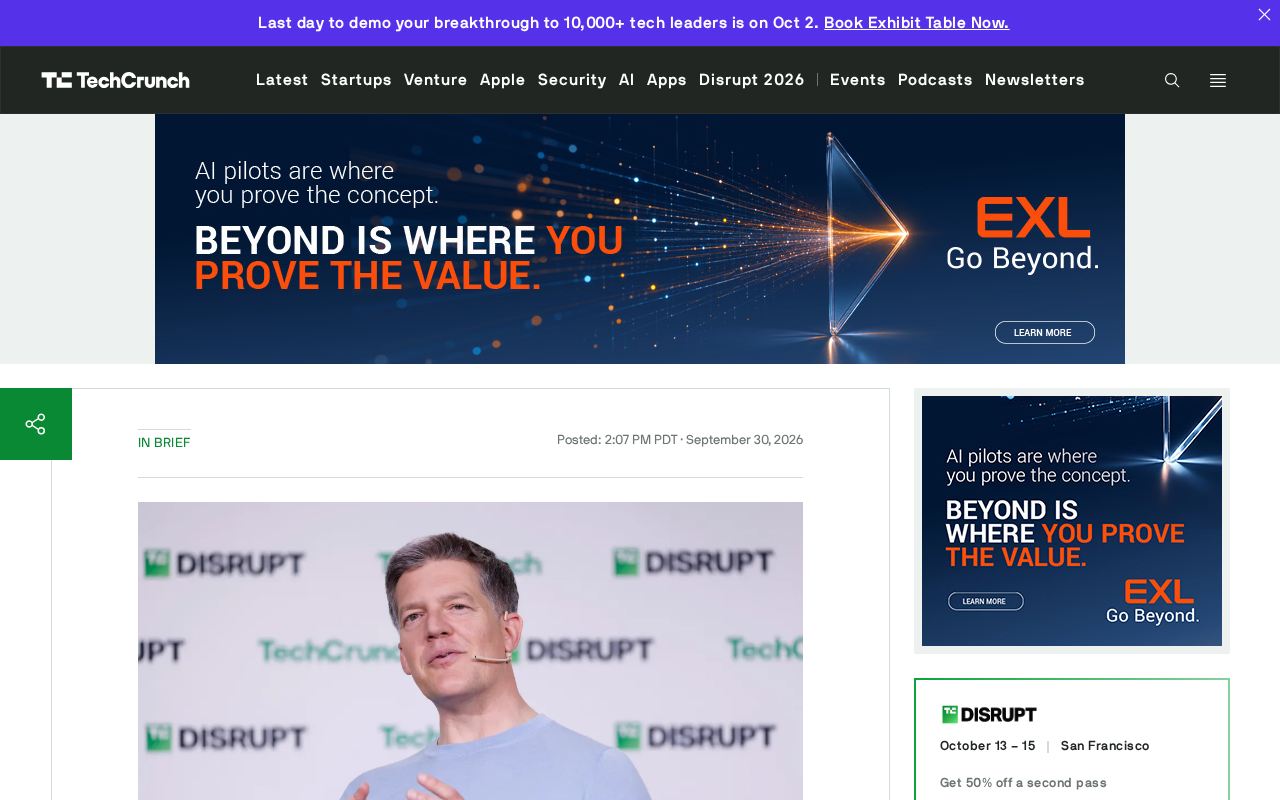
Roelof Botha leads Sequoia's U.S. fund and previously spearheaded early investments in YouTube, Square, and Instagram, making him one of the most consequential figures in Silicon Valley venture capital. It is relatively uncommon for a Sequoia partner to invest personally as an angel while simultaneously joining the board — angel rounds typically precede institutional rounds, and a partner's personal bet often signals exceptional conviction in the founding team, raising the likelihood of follow-on institutional capital. For startups, this kind of "super angel + institutional linkage" structure delivers not just funding, but access to Sequoia's ecosystem, recruiting resources, and industry credibility.
Bringing AI Agents to Hardware Design
Flow Engineering's core mission is to apply AI agents to the hardware design process. Compared to software development, hardware design has historically been burdened by complex workflows, long iteration cycles, steep expertise requirements, and relatively limited automation and intelligence.
Applying AI agents to hardware design means leveraging AI systems capable of autonomous planning, execution, and optimization to assist — or partially replace — traditional manual design steps. If this approach proves viable, it could dramatically shorten the time from concept to production and reduce design costs.
In recent years, AI agents have rapidly penetrated software programming, customer service, and data analysis. Hardware design, as a more specialized, experience-intensive, and high-value domain, is emerging as the next frontier for investment attention.
AI Agents are AI systems that can perceive their environment, autonomously formulate plans, and execute multi-step tasks continuously. Their fundamental distinction from traditional single-query AI lies in the "autonomous closed loop" — they can call external tools, read and write files, execute code, and dynamically adjust subsequent actions based on intermediate results. In a hardware design context, this means an AI agent could theoretically read design specification documents, automatically generate circuit schematics or HDL (Hardware Description Language) code, invoke simulation tools to verify timing and power consumption, and then iterate based on the results — all without requiring step-by-step human intervention. The EDA (Electronic Design Automation) industry already has extensive software tooling to assist designers, but these tools remain heavily dependent on engineers actively operating them. The potential value of AI agents lies in shifting the role of "tool operator" from human to AI, thereby dramatically compressing iteration cycles.
Why Investors Are Bullish on This Space
The $750 million valuation and the collective entry of top-tier institutions reflect the market's high expectations for the intersection of AI and hardware design.
Broadly speaking, AI agents are moving from general-purpose applications toward deep vertical industry use cases. Hardware design presents clear pain points, high professional barriers, and a substantial market size — exactly the criteria investors use to identify areas where "AI can create real value."
Roelof Botha personally joining the board is a particularly telling signal. As a key figure at Sequoia, his deep involvement typically indicates that the firm intends to support the company over the long term, rather than making a purely financial bet. This further reinforces the view that Flow Engineering has a distinctive edge in its technology or team.
Potential Industry Impact
If Flow Engineering can successfully integrate AI agents into real hardware design workflows, it could transform how the entire industry operates. Hardware engineers may shift from tedious manual design work toward higher-level decision-making and innovation, while AI handles the bulk of repetitive, optimizable design tasks.
That said, hardware design involves physical constraints, manufacturing processes, and reliability verification — a range of real-world factors that present significant technical challenges for AI agents seeking to deliver consistent and dependable outputs. This funding round provides the company with ample financial firepower, but the real test will be whether the product can deliver on its technical promises.
For practitioners focused on AI application deployment, Flow Engineering's progress is worth watching closely. It may well become an important benchmark for assessing the capability boundaries of AI agents in specialized engineering domains.
Related articles

Automate Job Search with AI Agents and Residential Proxies for Precise Matching
Build an AI Agent with MCP and residential proxies to bypass recruitment site anti-scraping and geo-restrictions, scrape thousands of DevOps jobs, then have Claude score and rank each against your resume. Includes proxy comparison experiments, project structure, and cost analysis—filtering only, no auto-submission.

The AI Task Assistant That Knows When to Back Off: A Cure for Activation Struggles
One Small Step is an AI assistant for task initiation struggles, using agentic decisions for guilt-free reminders, timely retreat, and cross-platform task management. The developer shares real test results on 13 tasks and architectural trade-offs.

FastAPI: A High-Performance Python Framework and a Production-Ready API Development Powerhouse
FastAPI is a high-performance web framework based on Python type hints, supporting async and automatic OpenAPI docs. With over 100k GitHub stars, this article analyzes its core strengths, production readiness, and selection advice.