Following a National Geographic Photographer Into Guizhou's Stunning Landscapes

A National Geographic photographer captures Guizhou's record-breaking bridges, ancient caves, and living cultural heritage.
This article follows National Geographic photographer Chris Burkhardt through Guizhou, spanning karst landscapes, feats of engineering, and minority ethnic cultures. From white-water rafting and the world's highest bridge to Buyi rice-paddy fish farming, snub-nosed monkey conservation on Fanjingshan, and the UNESCO-listed Dong Grand Choir, the journey reveals a mountain civilization that has developed extraordinary wisdom under extreme geographic conditions — where ancient traditions and modern engineering marvels coexist in a philosophy of life that is both ever-evolving and eternally unchanged.
National Geographic photographer Chris Burkhardt traveled to Guizhou to document a land that the organization has twice named one of the world's top travel destinations. From the world's highest bridge to Asia's longest cave system, from Dong Grand Choir to Buyi rice-paddy fish farming, the journey reveals a side of China that most foreign travelers have never seen.
Departing from Guiyang: A Provincial Capital on Karst Terrain
The journey begins in Guiyang, the capital of Guizhou Province. Home to more than six million people, the city sits on the Yunnan-Guizhou Plateau, surrounded by rolling hills and dramatic karst formations. Chris's first stop was an 8K panoramic dome cinema — no ordinary theater, but a full sensory-immersion experience. Audiences feel the swoops and sways of flying over Guizhou, and can even smell the mist from waterfalls and the fragrance of flowers.
This opening set the tone for the entire trip: Guizhou packs an extraordinary density of natural wonders into a single province — waterfalls, canyons, and jagged peaks alike. For a photographer whose career is built on documenting landscapes at the edge of the world, this was a rare creative treasure trove.
Gaoguohe River Rafting and the Everyday Magic of Zhenyuan Ancient Town
Leaving Guiyang, Chris headed deep into the mountains of eastern Guizhou to the Gaoguohe River. The water starts wide and calm before quickly narrowing into a series of fierce drops and rapids. He admitted that "one mistake and you'd be thrown out," and one particularly dramatic plunge sent him tumbling into the water — exactly the kind of thrill-meets-beauty you'd expect from a world-class adventure destination.
Drifting downstream, he arrived at Zhenyuan Ancient Town at sunset — a settlement with more than 2,200 years of history. Once a military stronghold, it has evolved into a multicultural hub connecting southwestern China with Southeast Asia. Local guide Mr. Fong, who grew up in Singapore before returning home, introduced Chris to Guizhou's signature dishes: sour beef hot pot made with fermented tomatoes and chilies, herb-grilled fish, and crispy tofu balls served with Guizhou chili sauce. The episode notes that fermented ingredients reflect the culinary wisdom of preserving food in Guizhou's humid, mountain-locked climate.
Huajiang Canyon Bridge: Extreme Photography on the World's Highest Bridge
One of the journey's defining moments was the newly completed Huajiang Canyon Bridge — a single span of 1,420 meters with a deck sitting 625 meters above the river valley, nearly twice the height of the Eiffel Tower, a world record. Engineer Cathy Liu explained that the bridge cuts a two-hour drive down to five minutes, and that it will become an extreme sports destination in the future.
The bridge's blue-green color palette was drawn from the Song Dynasty painting A Thousand Li of Rivers and Mountains, with azurite and malachite mineral pigments symbolizing a structure rooted in the land — harmonizing with nature rather than conquering it. To capture the ideal shot, Chris climbed the main tower — equivalent to 70 stories — then crawled out of a maintenance hatch and stood on the main cable more than 800 meters above the ground, the height of over 200 floors.
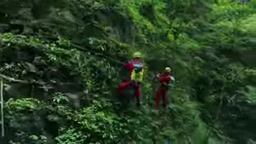
The episode offered staggering engineering figures: each main cable consists of 217 wire bundles, each bundle containing 91 steel alloy wires, with a total length enough to circle the Earth more than twice. At the top of the tower, world champion barista Peng Jinyang (Captain George), a Guizhou native, has opened a "cosmic café" over 800 meters in the sky. He compared his drive to become a champion to building a bridge — "one step at a time" — a pioneering spirit of building from nothing that Chris encountered repeatedly throughout his time in Guizhou.
The Huajiang Canyon Bridge uses a suspension bridge structure, whose core load-bearing element is the main cable, twisted from thousands of steel wires. Suspension bridges carry the vast majority of their load through the main cables, transferring the weight of the deck via vertical hangers to the cables, which are anchored at each end. This structural form can span enormous distances at relatively low self-weight, making it the preferred solution for ultra-long-span bridges. The bridge's 1,420-meter single span represents the cutting edge of Chinese mountain-canyon bridge engineering. Guizhou's rugged terrain and deeply incised river valleys make "bridge economy" a key strategy for opening transportation bottlenecks, driving poverty alleviation, and promoting regional development. Guizhou now hosts the world's largest concentration of ultra-high bridges.
Paragliding, Rice Paddies, and Wanfeng Forest
From the Huajiang Canyon Bridge, Chris moved to the area near Beipan River Bridge (locally known as Yapochi Bridge, standing 440 meters tall), where he collaborated with world-class paraglider Elaine Huang to photograph aerial acrobatics with the bridge as a backdrop. In just a few minutes of flight, pilot, athlete, and photographer had to coordinate with precision to catch a fleeting angle.

He then traveled to Wenfengling in Wanfeng Forest, where the Buyi people have lived in harmony with the land for generations. David — half-Irish, half-Swiss, raised in Guizhou after his linguist parents relocated there when he was an infant — showed Chris the practice of raising fish in rice paddies. The fish eat pests while naturally fertilizing the soil. The irrigation channels in the fields are even arranged in the pattern of the Taoist bagua, symbolizing the Daoist cosmological vision of harmony between humanity and nature.

Fanjingshan's Biodiversity and the Red Cloud Golden Summit
Next came Fanjingshan, a UNESCO World Natural Heritage Site that National Geographic has named one of its annual best travel destinations. National Geographic Explorer and wildlife photographer Xi brought Chris to explore this biodiversity sanctuary known as the "Earth's oasis." Xi had photographed rare species here 20 years ago, and on this return visit with field researcher Yang Wei, they retrieved data from infrared cameras revealing that the Guizhou snub-nosed monkey population is growing — proof that conservation efforts are working.
At over 2,300 meters of altitude, the Red Cloud Golden Summit is a major Buddhist pilgrimage site, with two temples at its peak — representing "the present" and "the future" — connected by a bridge. At sunset, Chris used a drone to capture the sun setting perfectly between the two temples within a sea of clouds, calling it "the best light I've seen in years."
The Guizhou snub-nosed monkey (Rhinopithecus brelichi) is one of the world's most endangered primates, found only in Fanjingshan, Guizhou, with an estimated wild population of 800 to 1,000 individuals. It belongs to the same genus as the golden snub-nosed monkey and the Yunnan snub-nosed monkey, but faces an extremely restricted habitat, a history of severe poaching, and habitat fragmentation, keeping it at "Endangered" status for many years. Fanjingshan was inscribed as a UNESCO World Natural Heritage Site in 2018, in part because it is the sole refuge of the Guizhou snub-nosed monkey. Thanks to strict anti-poaching enforcement, expanded protected areas, and community-based conservation programs, infrared camera monitoring data in recent years shows the population is steadily recovering — one of the rare success stories in China's conservation of large endangered mammals.
Shuanghe Cave and Dong Grand Choir: Guizhou Underground and in Song
In Asia's longest and the world's third-longest cave system, Shuanghe Cave (spanning more than 400 kilometers), deputy director of the Guizhou Institute of Mountain Resources Joe Wenlong guided Chris through a near-vertical 100-meter rappel. Inside, translucent glowing "mushroom" geological formations captivated the eye, and the key to unlocking the mystery of this dolomite cave's world-class scale turned out to be gypsum — which dramatically accelerates the erosion of dolomite.
The journey ended at Zhaoxing, one of China's largest Dong villages, where wooden houses, a winding stream, and five drum towers paint a picture of human life in harmony with its environment. Guide Fang Fang, who spent over a decade working in Beijing before returning home to promote her ethnic culture, helped Chris hand-dye a T-shirt using indigo plant dye. Even more extraordinary was the Dong Grand Choir — an a cappella polyphonic tradition inscribed on UNESCO's Intangible Cultural Heritage list in 2009. With no written script, the Dong people have passed down memory, history, and their connection to nature through song across generations.
The formation of dolomite caves differs slightly from limestone caves. Dolomite (primarily composed of calcium magnesium carbonate) is less chemically reactive than limestone, and erosion by carbonic acid in groundwater alone proceeds slowly — making ultra-long cave systems dominated by dolomite extremely rare worldwide. The key to Shuanghe Cave's extraordinary 400-plus-kilometer scale lies in the gypsum (calcium sulfate) found within. When gypsum dissolves in water, it releases sulfate ions that react with dolomite in a process called "sulfuric acid speleogenesis," dramatically accelerating erosion. The translucent, glowing "mushroom" structures inside the cave are secondary minerals — gypsum crystals that have slowly precipitated under specific temperature and humidity conditions. Their unique luminescent quality comes from the scattering of light by the fibrous crystal structures within, a geological wonder nearly impossible to replicate above ground.
Guizhou: A Place of Harmonious Coexistence
From mountains, forests, and rivers to villages and hamlets, Chris's lens captured nature at its most breathtaking — and the profound bond between people and their land. He reflected that wild adventure and subtle balance can coexist, interwoven like voices in a choir. This is a place where ancient wisdom and bold innovation move forward side by side — a rhythm of life that is constantly evolving, yet eternally unchanged.
The Dong Grand Choir (Kam Grand Choir) holds unique value in ethnomusicology because it is one of the very few folk vocal traditions in China — or indeed East Asia — with a mature polyphonic structure. Most traditional Han Chinese vocal music is based on unison or single-melody lines, while the Dong Grand Choir has multiple voices simultaneously singing different melodic lines that interweave to form a harmonic texture, all without a conductor or written score, passed down entirely through oral tradition and collective memory. Since the Dong language has no widely used writing system, the Grand Choir carries an entire tradition of historical narrative, seasonal and agricultural knowledge, wedding customs, and the relationship between humanity and nature. UNESCO inscribed it on the Representative List of the Intangible Cultural Heritage of Humanity in 2009, recognizing its irreplaceable role as a "living cultural memory." As urbanization accelerates and younger generations move away, the transmission of the Dong Grand Choir faces the real pressure of a disappearing generation of master singers — and Fang Fang's return home to promote her ethnic culture, as seen in the film, is a grassroots response to that very crisis.
Related articles

Perplexity Hybrid Compute Tested: Privacy Data Never Leaves the Mac
Perplexity Hybrid Compute tested: how PrivacyGate intercepts sensitive data, how local and cloud models divide work, model differences on 16GB vs 32GB Macs, and privacy protection in real scenarios like bank statements and medical records.
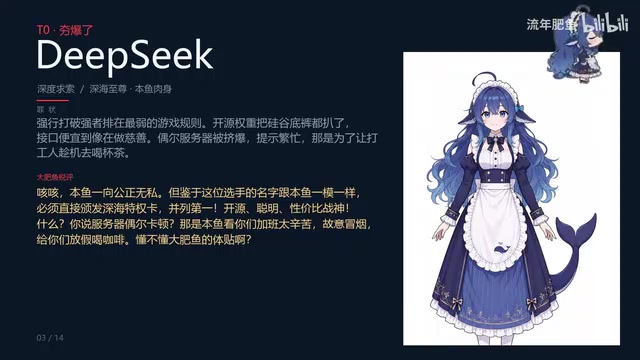
Big Fat Fish Roasts Mainstream LLMs at Home and Abroad: Doubao Takes the Crown, DeepSeek Tied for First
Bilibili creator Big Fat Fish roasts mainstream LLMs: Doubao tops for emotional value, DeepSeek ties first for open-source value, with ERNIE, Hailuo, Yuanbao, Kimi, Qwen, Kling, Claude, Gemini, and Grok each branded with a distinct persona.

How to Truly Test AI Agents Before Production? A Practical Testing and Monitoring Framework
BotGage founder Pramin Pradeep shares a three-step framework for testing AI Agents before production: Agent registration visibility, red teaming, and production observability — plus a real case cutting QA costs from $180K to $80K and an analysis of IT roles shifting to Agent supervisors.