Former Waymo CFO Joins Self-Driving Startup Wayve
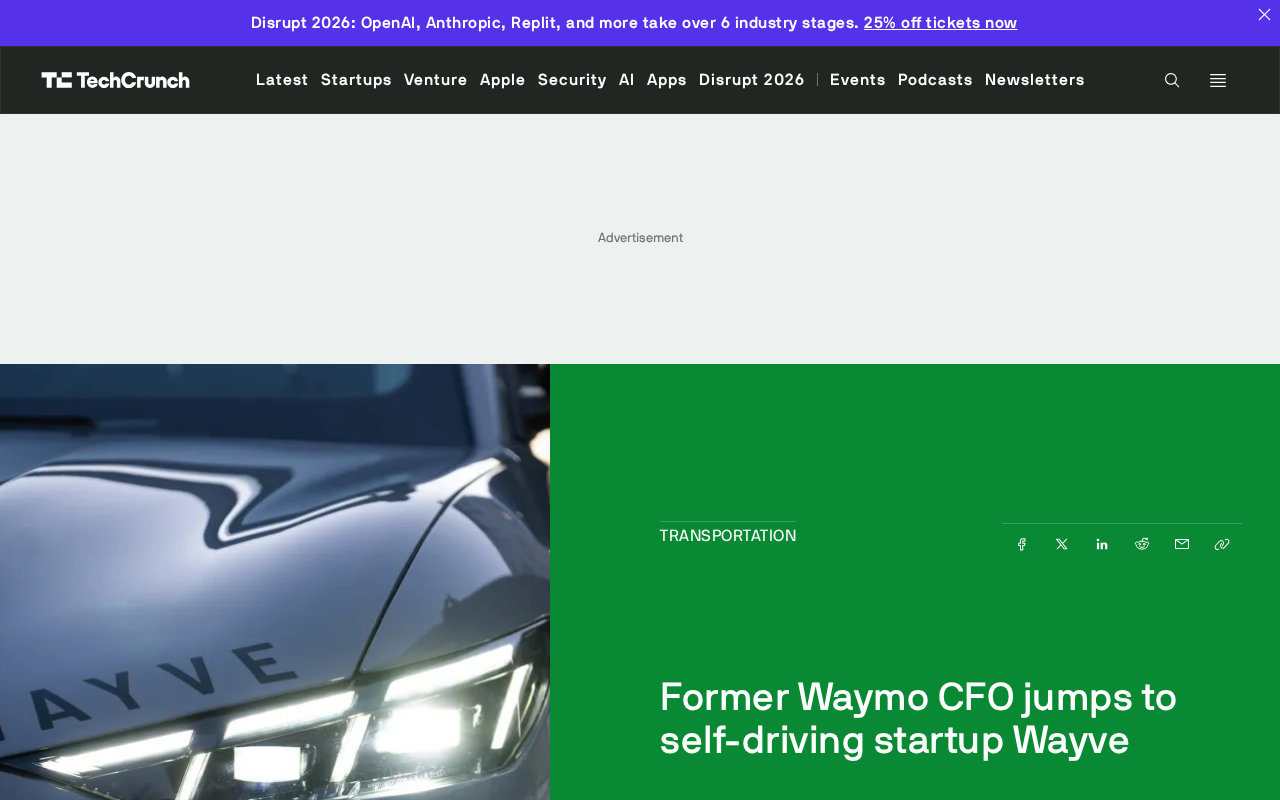
Former Waymo CFO Elisa de Martel joins end-to-end AI self-driving startup Wayve, based in Silicon Valley.
Former Waymo CFO Elisa de Martel has joined UK autonomous driving startup Wayve after leaving Waymo in January, and will be based in Silicon Valley. While Waymo is an Alphabet-backed industry leader, Wayve has distinguished itself with an end-to-end AI-driven approach and unicorn status in Europe. Senior finance executives typically make such moves ahead of major fundraising or capital market activity, signaling confidence in Wayve's trajectory. Her Silicon Valley base also underscores the UK company's strategic focus on US capital markets and the broader industry ecosystem.
Talent movement in the autonomous driving industry is once again drawing attention. According to reports, Elisa de Martel, who previously served as Chief Financial Officer (CFO) at Waymo — Alphabet's self-driving subsidiary — has recently joined autonomous driving startup Wayve. She departed Waymo in January and will be based in Silicon Valley in her new role.
A High-Profile Executive Move
What makes this transition particularly noteworthy is the stark contrast between the two companies. Waymo is a veteran leader in the autonomous driving space, backed by Alphabet's (Google's parent company) resources and technological depth, and already running commercial Robotaxi operations across multiple cities. Wayve, on the other hand, is a relatively young autonomous driving startup that has carved out a distinctive identity through its end-to-end AI and learning-based technical approach.
When a seasoned financial executive from an industry benchmark chooses to join a startup, it's widely interpreted as an indirect vote of confidence in the latter's prospects and funding potential. The CFO role goes far beyond financial statements — it sits at the center of capital operations, fundraising strategy, and commercialization planning. De Martel's arrival may signal that Wayve is preparing for the next phase of scaled expansion and capital deployment.
Wayve was founded in 2017 by Alexander Kendall and Amar Shah in Cambridge. Its core technical philosophy is to use end-to-end deep learning to map directly from raw sensor data to driving decisions, rather than the traditional modular "perception–prediction–planning" pipeline architecture. Proponents of this approach argue that modular systems suffer from cascading errors and an inability to enumerate all edge cases, while a unified neural network model can continuously improve itself through large-scale real-world driving data. In 2024, Wayve closed a $1.05 billion Series B round led by SoftBank, with participation from Microsoft and NVIDIA, vaulting it into the top tier of European autonomous driving unicorns. This funding backdrop provides critical context for the timing of de Martel's hire: after a major capital infusion, companies typically need to bring in finance leaders with capital markets experience to manage deployment pacing and lay the groundwork for a potential IPO or next funding round.
Why Silicon Valley?
Another detail worth noting is that de Martel will be based in Silicon Valley. Wayve originated in the UK and is one of Europe's most prominent autonomous driving companies. Positioning a key executive in Silicon Valley reflects the company's strategic emphasis on the US market and the global capital hub.
Silicon Valley is not only the most active region for global tech capital, but also one of the most concentrated hubs for autonomous driving supply chains, talent, and regulatory pilot programs. For an autonomous driving startup seeking global expansion, establishing a financial and strategic foothold in Silicon Valley helps close the distance to investment firms and partners, while enabling direct benchmarking against US-based competitors like Waymo and Cruise.
Industry Signals Behind Executive Mobility
The autonomous driving industry has experienced a cycle of capital exuberance followed by a return to rationality in recent years. The bidirectional flow of talent between established giants and startups is often a useful barometer of the industry's temperature.
The movement from a resource-rich incumbent like Waymo to a startup like Wayve — with its novel technical approach — suggests the market still holds high hopes for differentiated technology paths, such as end-to-end learning-driven autonomy. Senior finance executives typically make such moves at inflection points when a company is gearing up for a major funding round, scaling its commercial footprint, or preparing for capital market activity.
That said, given the limited public information available, the specific strategic priorities de Martel will lead and whether Wayve is initiating a new funding round remain to be disclosed. The real-world impact of this personnel change will need to be assessed alongside Wayve's subsequent business developments.
End-to-end autonomous driving has been one of the hottest paradigms discussed in the industry over the past two years. In contrast, traditional approaches decompose self-driving into independent subsystems — HD mapping, object detection, trajectory prediction, path planning — each maintained by specialized engineering teams. The end-to-end approach trains a single large neural network that takes raw perception data from cameras and LiDAR as input and directly outputs steering angles and throttle/brake commands. Tesla's FSD system is the most prominent commercial example of this approach. Wayve applies it within a licensing model for automakers at the L2+ assisted driving level, rather than operating its own Robotaxi fleet. This business model distinction — "technology supplier" versus "operator" — is the most fundamental strategic difference between Wayve and Waymo, and it directly shapes the financing structure and revenue narrative that a CFO would need to drive.
Summary
Elisa de Martel's transition from Waymo to Wayve is a microcosm of senior talent mobility in the autonomous driving sector. It reflects both the appeal that ambitious startups hold for top-tier financial and strategic talent, and the continued evolution of the industry's competitive landscape. For practitioners and investors tracking autonomous driving industry trends, executive moves of this kind are well worth following closely.
Related articles
Automattic Executives Signed Reciprocal Severance Agreements During Mullenweg's Brief Ouster
Automattic's CFO and General Counsel signed reciprocal severance agreements during Matt Mullenweg's brief ouster, covering one year's salary and accelerated equity vesting, raising corporate governance concerns.
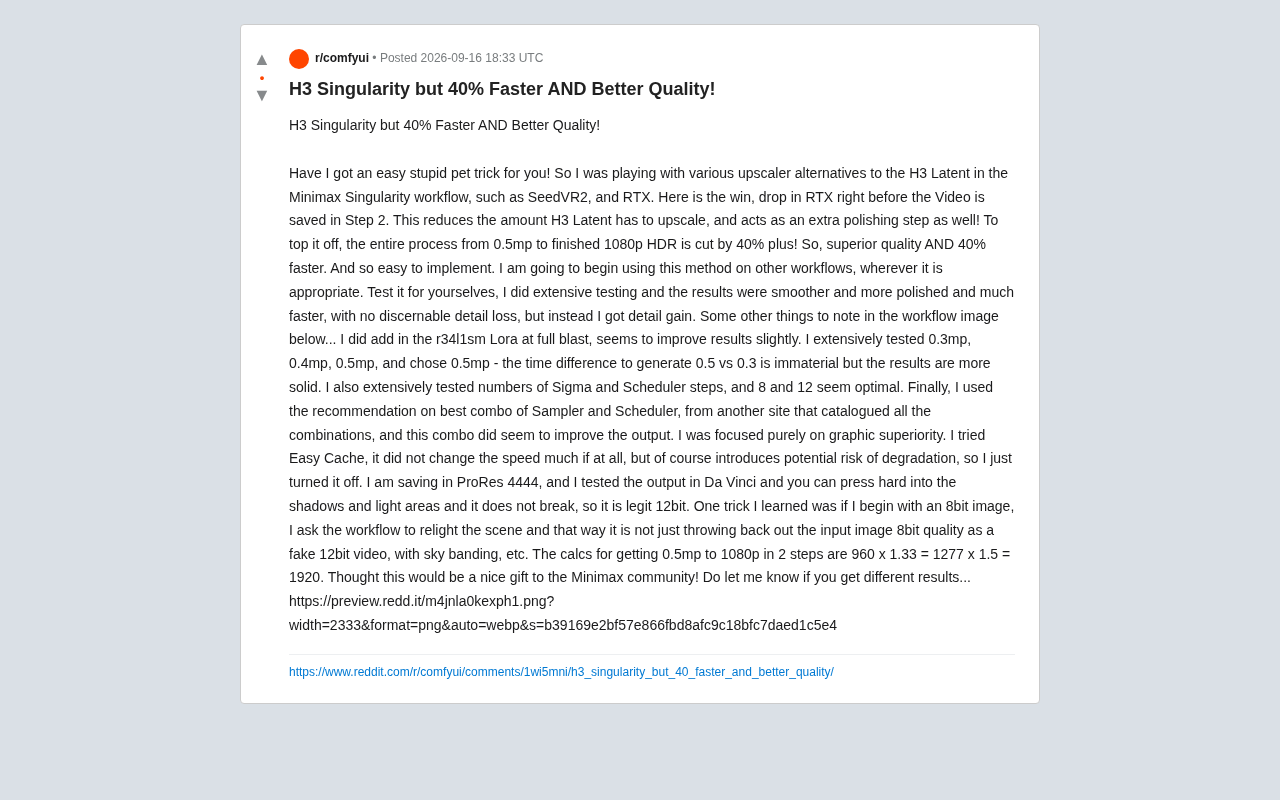
H3 Singularity Optimization: 40% Speed Boost With Better Image Quality
A Reddit user's Minimax Singularity workflow tip: insert an RTX upsampler before H3 Latent for 40%+ speed gains and better quality. Covers parameters, 12-bit output, and more.
Glyph: A Multi-Strategy Agent System for Automated Enterprise Data Catalog Annotation
Glyph is a multi-strategy LLM agent system for enterprise data catalogs that automates column description generation and sensitivity ontology tagging, grounding outputs in pipeline source code to improve accuracy.