Four Democrats Worth Watching: Breaking Down 2028 Communication Strategies

Four Democrats, four communication strategies — proving how you say it matters as much as what you say.
This article summarizes a political commentary video examining the distinct communication strategies of four Democrats: Jon Ossoff, Pete Buttigieg, Zohran Mamdani, and AOC. Ossoff leverages his documentary background to craft visually authoritative, social media-ready narratives. Buttigieg goes deep into red states for sincere, face-to-face conversations. Mamdani reframes divisive cultural issues as affordability concerns to avoid the opponent's rhetorical trap. AOC runs an influencer playbook, building emotional brand loyalty through highly personal content. The commentator's conclusion: there's no single right formula for political communication, but these four each demonstrate a different path to getting it right.
A political commentary video analyzing four Democratic politicians has sparked discussion. The content focuses on four figures considered "worth watching" in the Democratic Party, with the core topic being not their specific policy positions, but their distinctly different communication strategies and political messaging styles. The commentator argues that there is no single correct formula for political communication — but there are certainly many ways to do it badly — and these four individuals happen to demonstrate several paths to doing it well.
A note: The source material for this article comes from a political commentary video representing personal opinion, and is not the AI or tech content this platform typically covers. The following is a faithful summary of that original material.
Four Different Theories of Political Communication
The commentator's central argument is that these four Democrats differ significantly in both ideology and communication style, yet each demonstrates effective messaging in their own lane. There is no universal formula, but "there are many ways to do things well."
Jon Ossoff: The Documentary-Style Narrative Approach
The first figure highlighted is Senator Jon Ossoff. The commentator half-jokingly notes his "fitted shirts" and physical fitness, describing him as looking "like a Kennedy pre-brain worm."
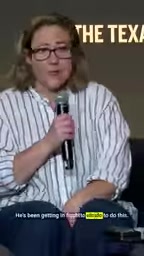
More importantly, Ossoff has a documentary filmmaking background. This gives him an intuitive grasp of visual language — shooting from below to project a more presidential presence, and a strong instinct for storytelling. His strategy involves systematically crafting narratives, editing them into social media-ready clips, and releasing content during relatively "quiet" windows like weekends. The commentator believes he has "a clear theory of how to communicate with people."
Before entering politics, Ossoff served as CEO of documentary production company Insight TWI, which produced investigative documentaries for outlets like the BBC and Al Jazeera. That experience gave him an intuitive understanding of how camera angles construct authority — for instance, low-angle shots make subjects appear more powerful and commanding, a well-established visual grammar in Hollywood and photojournalism. Bringing this professional knowledge into political communication allows him to "direct" his public image like a filmmaker, rather than relying solely on speechwriting. This kind of cross-disciplinary capability is rare among career politicians, and typically only appears when actors or media professionals make the transition into public office.
Pete Buttigieg: Sincere Conversations in Red States
The second figure is Pete Buttigieg, whose theory is entirely different from Ossoff's.
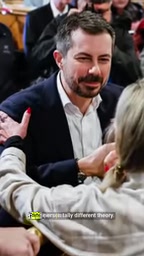
Buttigieg's approach is to proactively go into "red" states like Oklahoma and have genuine, friendly conversations with middle-aged voters who might find him "charming," patiently explaining why his policy ideas could improve their lives. This is a strategy centered on warm, direct interpersonal communication.
Issue Reframing and Personal Narrative
The other two figures represent more distinctly contemporary communication models — one rooted in clever issue reframing, the other in the social media "influencer" model.
Zohran Mamdani: Steering the Conversation Back to "Affordability"
The commentator openly acknowledges having significant policy disagreements with Mamdani, yet still admires his communication skills.
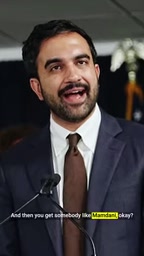
A telling example: when asked about a divisive topic like "transgender athletes in sports," Mamdani deftly steers the conversation back to "the cost of living in New York is too high." The commentator repeatedly praises this technique of reframing contentious cultural issues as questions of affordability and economic burden. He then flashes a bright smile, jumps into a swimming pool, and projects an easy, relatable image.
AOC: The Influencer Model for Policy Explanation
The fourth figure is AOC, who operates from an entirely different playbook — essentially an "influencer model."
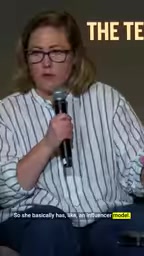
She holds up her phone and talks directly to her audience about policy, while also sharing deeply personal content — like discussing egg freezing. Through this highly personalized, direct-to-camera style, she has built a distinctive political brand.
The "influencer model" applied to political communication refers to borrowing the logic of social media content creators — using a strong personal style, high-frequency direct engagement, and selective glimpses into private life to forge an emotional connection with audiences around the person rather than the position. AOC is one of the earliest successful practitioners of this model in mainstream American politics: she has gone live on Instagram cooking dinner while explaining healthcare policy, simultaneously lowering the barrier to understanding complex issues and reinforcing an "she's one of us" sense of closeness through everyday settings. This stands in sharp contrast to traditional political PR logic (maintaining distance, projecting professional authority), but in an algorithm-driven attention economy, authenticity and personal charisma often cut through information noise more effectively than agenda-setting power alone.
No Single Right Answer — But Many Wrong Ones
The commentator's core conclusion is this: these four figures differ enormously across the ideological spectrum and in communication style, yet all demonstrate that political messaging can be done well in different ways.
- Ossoff relies on professional storytelling and visual production;
- Buttigieg relies on sincere, in-person conversations;
- Mamdani relies on the ability to reframe issues;
- AOC relies on personalized social media brand-building.
The value of this analysis lies in its observation that in today's political communication landscape, how you say it is often just as important as what you say. Setting the offensive agenda, translating abstract policy into tangible cost-of-living terms that voters can feel, and choosing the right media format — these together form a politician's competitive communication advantage.
Readers should note that all of the above reflects the subjective observations of a single commentator, and should not be taken as objective predictions about the political futures of these individuals. Independent judgment is encouraged.
Background Context
"Issue reframing" is a core concept in political communication theory, systematically articulated by linguist George Lakoff. The basic logic: the outcome of political debates often depends not on the quality of the arguments, but on which side successfully defines the "frame" — the conceptual map voters use to understand the issue. When Mamdani faces the "transgender athletes" topic — a wedge issue Republicans have long used to activate cultural anxiety — he refuses to engage on their terms and instead pivots to "cost of living," effectively declining to fight on the opponent's chosen terrain and switching to an economic and quality-of-life narrative where Democrats hold stronger ground. The challenge with this technique is that the pivot must feel natural rather than evasive; otherwise it risks being criticized as "dodging the question." That's why relaxed body language and emotional composure are essential to soften the transition.
Related articles

Amphibious Transforming Drone: Beyond 100x Power Savings, What Are the Real Needs?
Is the amphibious transforming drone just a gimmick? Starting from the 100x power difference of the M4 Morphobot, explore real application scenarios and thesis topic ideas, analyzing boundary conditions where pure drones and pure ground robots both fail.

Warhound Raises $200 Million: Genetically Engineered "War Dogs" Paired with Anduril Gear
Warhound raises $200M, backed by Ben Lamm and Palmer Luckey, to genetically engineer dogs for military and law enforcement use and equip them with Anduril gear. This article analyzes its technology direction, funding logic, and ethical controversy.

Claude API Comes to Google Cloud: IAM Integration and SDK Access Guide
Anthropic hosts the full Claude API on Google Cloud with IAM-controlled permissions and unified billing. This guide covers the Vertex AI and Anthropic-hosted entry points, IAM role configuration, and SDK access.