Free AI Shopify Assistant App: Exit-Intent Popups and Cart Upsells That Boost AOV by 38%

A free AI Shopify assistant plus exit-intent popups and cart upsells can raise AOV by about 38%.
The article shares a hands-on method for using a free AI Shopify assistant to raise AOV. It triggers a discount popup when mouse-out-of-window behavior signals exit intent, then layers urgency, upsells, a free shipping progress bar, and a gift threshold on the cart page. The creator claims a ~38% AOV increase, though the methodology isn't detailed. Free tools have limits in analytics, A/B testing, and segmentation—best for budget-constrained small sellers to start. Thresholds are best set at 1.2x–1.5x current AOV, and results vary by category, so self-testing is needed.
Anyone running a Shopify standalone store knows the drill: turning traffic into a first order is just the beginning—real profit comes from repeat purchases and higher average order value. But the reality is that most visitors leave before checkout. According to one YouTube creator's hands-on experience, he used a free AI Shopify assistant app, combined with exit-intent popups and cart upsell settings, to push average order value (AOV) up by about 38%. That number won't apply to everyone, but the combo he breaks down is worth a closer look.
The Core Mechanism: Striking the Moment a Customer Is "About to Leave"
The app's core logic isn't complicated—it monitors user mouse behavior, and when the cursor moves out of the browser window (signaling intent to leave), it immediately triggers a discount popup.
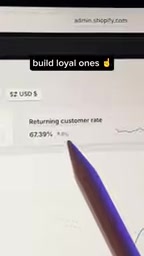
Timing is everything here. Traditional exit-intent popups often fire a few seconds after page load, interrupting users before they've even finished viewing the product—a poor experience. This tool only appears when the user is genuinely about to close the page, offering a limited-time discount to pull back attention that was already slipping away.
From a conversion psychology standpoint, "loss aversion" is being leveraged precisely here: the user had already decided not to buy, but suddenly an opportunity appears to "save money by ordering now," and the decision scale tips. The fact that a free app can achieve this does lower the trial-and-error cost for small and mid-sized sellers on tight budgets.
Exit Intent Popup is a retention technique based on user exit behavior. Its core principle is using JavaScript to monitor mouse movement trajectories—when the cursor moves upward and out of the top of the browser viewport, or when the user switches to another tab, the system determines exit intent and triggers a popup. This technique was first widely adopted by online travel and e-commerce platforms, and later trickled down into the small and mid-sized standalone store ecosystem.
Its advantage lies in precise timing control: unlike traditional load popups or scroll popups, exit-intent popups only appear when the user is genuinely about to leave, avoiding the experience damage caused by premature interruption. Research shows that the average conversion recovery rate for exit-intent popups is around 2%-5%, but with incentives like limited-time discounts or free shipping, some stores can achieve recovery rates above 8%.
One thing to note: mobile behavior signals differ from desktop—mobile devices have no mouse-out event, so they typically rely on back-button detection, rapid swipe-up gestures, or page dwell time as multi-dimensional signals. As a result, exit-intent tools built purely on desktop logic often perform poorly on mobile, which is an important consideration when evaluating any exit-intent popup tool.
The Cart Page Is the Real Battleground for Raising AOV
Exit-intent popups solve the "can we keep them" problem, while cart page optimization solves the "how much will they buy" problem. This creator layered four actions onto the cart stage:
- Urgency: Creating time or inventory pressure so users don't hesitate too long
- Multiple upsells: Recommending complementary products or upgraded versions to increase items per order
- Progress bar: Showing "spend X more to unlock free shipping/a gift," nudging order padding
- Small gifts: Setting a low gift threshold, leveraging the "extra gain" psychology to accelerate conversion
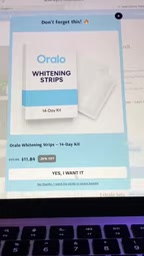
Individually, none of these actions is novel, but stacked together, he claims the combined effect pushed AOV up by about 38%. The specific source and methodology behind that number aren't detailed—it could also be short-term fluctuation—but the fact is that the optimization potential of the cart page is widely underestimated.

One easily overlooked detail: the progress bar and gift threshold amounts need to match your average order value. If the threshold is set too high, users will feel it's unattainable and give up; set it too low, and it won't drive order padding. A common recommendation is to set it between 1.2x and 1.5x your current AOV, so users feel they can "reach it with a slight stretch."
Upsell and Cross-sell are the two core methods for raising AOV, but their logic differs. Upselling recommends a higher-priced or upgraded version of the same product (e.g., suggesting the Pro version over the basic one), with the goal of increasing per-unit profit; cross-selling recommends complementary or related products (e.g., suggesting a tempered glass screen protector when buying a phone case), with the goal of increasing item count. On the cart page, the two strategies are often used in alternation.
The psychology behind the free shipping progress bar is the "goal gradient effect"—when users see they've already hit 70%-80% of the target amount, they feel a strong urge to complete it and actively add items to pad the order. This is why threshold setting is so critical: 1.2x to 1.5x the current AOV is the empirical sweet spot—it drives order padding without making users feel the target is out of reach and giving up.
The gift threshold leverages the combined effect of "free psychology" and "loss aversion": the user originally planned to buy just one item, but discovers that "buying a little more gets them a free gift," and the psychological discomfort of giving up the gift often outweighs the extra money spent. In practice, the gift should ideally be related to the main product's use case and cost-controlled, otherwise it eats into profit.
Limitations of Free Tools and Where They Fit
Free apps aren't a cure-all. These tools typically make trade-offs in feature depth, data analysis dimensions, and A/B testing capabilities. They suit small and mid-sized stores that are just starting out, have tight budgets, and don't yet have enough traffic to run paid tools. If your monthly order volume is already large, or you need more granular customer segmentation and automated marketing workflows, you may need to consider paid solutions.
Additionally, popup frequency and discount depth need to be controlled. If every visitor gets intercepted by a popup, brand perception suffers; if discounts are given out too freely, you train users to "wait for a sale before buying."

The creator also mentioned he found a lifetime 10% discount promo code for this app. Combined with its free-to-use nature, the customer acquisition strategy for this type of tool is clear—use free access plus discounts to rapidly build a user base.
A/B Testing is the standard method for validating strategy effectiveness in e-commerce optimization: randomly split traffic into two groups, one seeing the original version (control group) and the other seeing the modified version (experimental group), then compare conversion rates, AOV, and other metrics to determine whether the change is truly effective. Free tools typically don't support built-in A/B testing, meaning you can't determine whether the AOV increase comes from the popup, the upsell, or short-term fluctuation.
Customer Segmentation refers to dividing users into different groups based on purchase frequency, AOV, browsing behavior, and other dimensions, then targeting different marketing strategies to each group. For example, pushing membership benefits to high-frequency repeat buyers, and first-order discounts to one-time buyers. Paid tools like ReConvert and Zipify are more complete in this area, enabling dynamic recommendations based on purchase history and automated email/SMS follow-ups.
Moreover, popup frequency control is a common weakness of free tools. Ideally, the same user should not see the same popup repeatedly within a certain period (e.g., 7 or 30 days), otherwise it can cause annoyance or even uninstalls. Paid solutions generally offer frequency caps, audience exclusions, and other granular settings, while free versions often only offer a global on/off switch.
Who Is This Method For?
If your Shopify store meets the following conditions, this strategy is worth a day or two to set up and test:
- Moderate but not huge traffic: Tens to hundreds of visitors per day, high abandonment rate, need to squeeze more value from existing traffic
- Room to raise AOV: Products have complementary relationships, making upsells possible
- Haven't used any cart optimization tools yet: Start with free tools to validate results, then decide whether to upgrade
The key is still testing. The effectiveness of any tool or strategy is strongly correlated with category, customer base, and pricing. The 38% AOV increase is a reference anchor, not a promise. Run two weeks of data with a free tool first, see your abandonment recovery rate and AOV changes, then decide the next step.
One-line Summary
A free AI Shopify assistant combined with exit-intent popups and cart upsells can raise AOV by about 38%.
Paragraph Summary
The article shares a hands-on method for using a free AI Shopify assistant to raise AOV. The core mechanism triggers a discount popup when mouse-out-of-window behavior signals exit intent, using a limited-time offer to recapture attention just as the user is about to leave. The cart page layers four strategies—urgency, upsells, a free shipping progress bar, and a gift threshold—into a combined punch. The creator claims this method raised AOV by about 38%, though the specific methodology behind that figure isn't detailed. The article also notes that free tools have limitations in data analysis, A/B testing, and customer segmentation, making them suitable for budget-constrained small and mid-sized sellers getting started. Progress bar and gift thresholds are recommended at 1.2x to 1.5x current AOV, and results vary by category and customer base, requiring self-testing for validation.
Related articles

5 Practical Ways Real Estate Agents Can Use AI to Boost Efficiency (2026 Edition)
How can real estate agents use AI to boost efficiency? Based on a YouTube walkthrough, this breaks down five methods — ChatGPT for listing descriptions, Canva for marketing materials, forms for open house leads, Zapier for automated follow-up, and seller meeting prep — and flags risk boundaries like fair housing laws, photo authenticity, and price verification.

Grok Bot vs ChatGPT Agent: Which AI Agent Is More Powerful?
How does Grok Bot differ from ChatGPT Agent? This comparison examines how they work: Grok Bot has a cloud computer and runs persistently inside tools to execute multi-step tasks automatically; ChatGPT Agent operates web pages in a browser and is more mature at general tasks. Includes selection advice.

Walmart Agent Gateway: AI Shops for You Automatically—Why Is Amazon Going the Opposite Way?
Walmart's Agent Gateway lets ChatGPT, Gemini and other AI assistants access its product catalog to search, compare and add to cart, with spending limits and per-purchase approval. Amazon blocks external AI agents—two retail giants, opposite paths. Currently US-only, India may follow.