FreeLLMAPI: Unlocking Claude Code's 7.4B Token Pool for Free
FreeLLMAPI aggregates free tokens from multiple platforms via protocol-compatible routing, letting Claude Code run at zero cost, but with notable compliance and security risks.
The article explains how the GitHub project FreeLLMAPI works: it runs a local server compatible with the Claude API protocol, making Claude Code think it is talking to the official service while actually forwarding requests to a model pool aggregating free quotas from ChatGPT, Gemini, Grok, Kimi, Qwen, and others, claiming 7 billion tokens per month with automatic renewal. The author notes that this approach depends on each platform's free policies, has questionable sustainability, and carries risks including terms-of-service violations, data leakage through third-party relays, and instability from token rate limits. The conclusion is that it suits personal learning and non-critical experiments, should not handle sensitive code or be used in production, and that more prudent alternatives such as official free tiers and local open-source models are recommended.
Introduction
As AI coding assistants become increasingly widespread, Claude Code has won over developers with its powerful code generation capabilities. However, its cost also keeps many people at bay. Recently, a GitHub project called FreeLLMAPI has drawn attention on YouTube, claiming to let you use Claude Code for free and without limits, backed by a pool of 7 billion free AI tokens that automatically renews every month. How exactly is this achieved? This article takes a deep dive into its principles, potential risks, and applicable scenarios.
 Figure: The FreeLLMAPI project claims to offer 7 billion free tokens every month
Core Mechanism: API Routing's "Bait and Switch"
The clever part of FreeLLMAPI is that it runs a small local server that uses the same communication protocol as the Claude API. When Claude Code sends a request, it believes it is talking to Claude, but the request is actually routed to a pool of free models. This pool includes not only Claude's free quota but also the free tokens of mainstream models such as ChatGPT, Google Gemini, Grok, Kimi, Qwen, and more.
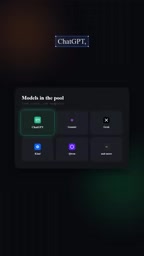 Figure: FreeLLMAPI aggregates free tokens from multiple models
According to the YouTube video, the project is called FreeLLMAPI, and the setup process takes only about two minutes. The video creator also encourages viewers to comment "Claude" to receive an installation link via private message. This convenience is undoubtedly very attractive to developers.
API Protocol and Compatibility Layer: So-called "protocol compatibility" means that FreeLLMAPI locally implements the same request/response format as the Anthropic Claude API (including endpoint paths, authentication headers, message body structure, streaming SSE event format, etc.). Claude Code only recognizes this interface convention and does not verify who is actually performing the inference on the backend. Therefore, as long as the local service returns data in the same format, the client cannot detect that the request has been forwarded. Such "compatibility layers" are nothing new in the industry; for example, the OpenAI interface format has become a de facto standard adopted by many open-source projects (such as vLLM and Ollama's OpenAI-compatible mode), allowing different models to be swapped in. The cost is that the compatibility layer must continuously track upstream API field changes; otherwise, once Claude Code upgrades its validation logic, routing will fail.
Multi-Model Token Pool: Sources and Sustainability
FreeLLMAPI claims that 7 billion free tokens are available every month and automatically renew each month. Where do these tokens come from? According to the video content, they come from the free quotas of major AI platforms, including ChatGPT, Google Gemini, Grok, Kimi, Qwen, and others. Each platform typically offers a certain amount of tokens to new users or on a free tier, and FreeLLMAPI appears to aggregate these quotas in some way.
 Figure: The project is named FreeLLM API
However, the sustainability of this aggregation is questionable. First, the free policies of major platforms may be adjusted at any time; second, heavy use of free quotas may violate the terms of service and lead to account bans. The video does not mention these risks, but as responsible developers, we need to remain vigilant.
Free Tier and Token Billing: Mainstream large-model platforms usually bill in units of "tokens," which are the smallest fragments of text processed by a model, roughly equivalent to 0.75 English words or 1–2 Chinese characters. Most vendors provide limited quotas to newly registered users or on free tiers, such as daily request limits, per-minute rate limits (RPM/TPM), or one-time grants. These quotas are generally tied to a single account and API key and explicitly prohibit resale, sharing, or automated aggregation. Therefore, the "7 billion token pool per month" is essentially an aggregate statistic of the free quotas of a large number of independent accounts, not a shared resource officially issued by the platforms; once risk controls are triggered (abnormal call volumes, multi-account association, IP clustering), the quota will quickly dry up or be banned, which is precisely the fundamental fragility of its sustainability.
Technical Implementation: Protocol Compatibility and Request Routing
The core technology of FreeLLMAPI is protocol compatibility. It emulates the Claude API interface so that Claude Code can communicate with it without any modification. When Claude Code sends a request, the FreeLLMAPI server receives it and, according to some strategy (such as polling or load balancing), forwards the request to different free model endpoints. This requires the server to handle API differences among different models and unify the return format.
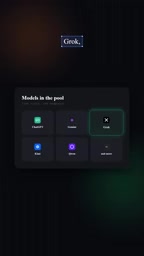 Figure: Schematic diagram of how FreeLLMAPI works
This "man-in-the-middle" architecture is not complicated, but it requires maintaining updates for each model API. If the API of a certain model changes, FreeLLMAPI needs to be adjusted accordingly. In addition, because free tokens usually have rate limits, high-concurrency requests may fail.
Risks and Compliance Considerations
Using FreeLLMAPI carries multiple risks. On the legal level, bypassing the paywall to use free quotas may violate the terms of service and may even constitute improper use. On the security level, routing requests to a third-party server means that your code and data may pass through an untrusted intermediary, creating a risk of leakage. On the stability level, the availability of the free token pool cannot be guaranteed and may be interrupted at any time.
The video does not mention these risks, but as members of the technical community, we should view such tools rationally. They can serve as a way to learn and experiment, but are not recommended for production environments or for handling sensitive code.
Man-in-the-Middle Attacks and Data Exposure Surface: Routing requests to third-party or self-built relay services changes the trust boundary of data. Under normal circumstances, code is sent only to the official API; but after passing through a routing layer, source code, prompts, and possibly accompanying keys and configuration files all flow through an intermediate server. If that server logs data or is compromised, it is equivalent to a supply chain leak. In addition, if the relay layer does not strictly validate responses, malicious content may be injected (such as returning code snippets with backdoors). In security practice, such scenarios should be treated as an "untrusted network": avoid transmitting confidential code, use isolated environments, and review returned results.
Applicable Scenarios and Recommendations
For individual developers, students, or teams with limited budgets, FreeLLMAPI can be a low-cost experimental tool for exploring Claude Code's features or generating code for non-critical tasks. But be sure to note: do not use it for commercial projects, do not input sensitive information, and be ready to switch back to official channels at any time.
In addition, paying attention to official free tiers and open-source alternatives (such as locally running Code Llama) may be more sustainable choices.
Local Open-Source Alternatives: Open-source code models such as Code Llama, DeepSeekAd-Coder, and Qwen-Coder can run locally or on private servers, providing OpenAI-like interfaces through tools such as Ollama and llama.cpp and working with Claude Code's compatible configuration. Their advantages are that data does not leave the internal network, there is no terms-of-service risk, and they can run offline; their disadvantages are hardware requirements (a 7B model requires about 8GB of VRAM, and larger models require more) and code capability that is usually weaker than top closed-source models. For developers with limited budgets who also care about compliance, this is a more prudent compromise than "aggregating free quotas."
Conclusion
Through a clever API routing mechanism, FreeLLMAPI aggregates free tokens from multiple models, providing Claude Code users with a zero-cost way to use it. Its technical approach is worth learning from, but the compliance and security risks behind it cannot be ignored. In today's world of increasingly abundant AI tools, only by using resources reasonably and following the rules can we go further.
One-line Summary
FreeLLMAPI aggregates free tokens from multiple platforms through protocol-compatible routing, enabling Claude Code to run at zero cost, but with significant compliance and security risks.
Paragraph Summary
The article analyzes the implementation principles of the GitHub project FreeLLMAPI: it runs a local server compatible with the Claude API protocol, making Claude Code believe it is talking to the official service, while requests are actually forwarded to a model pool that aggregates free quotas from platforms such as ChatGPT, Gemini, Grok, Kimi, and Qwen, claiming to provide 7 billion tokens per month with automatic renewal. The author points out that this solution relies on the free policies of each platform, its sustainability is questionable, and it carries multiple risks such as violating terms of service, data leakage through third-party relays, and instability caused by token rate limits. The conclusion is that it is suitable for individual learning and non-critical experiments, should not handle sensitive code or be used in production environments, and it is advisable to pay attention to more prudent alternatives such as official free tiers and local open-source models.
Related articles
Diving into PostgreSQL Internals: A Free, Open-Source Guide to Database Principles
*The Internals of PostgreSQL* is a free online book covering process architecture, storage layout, query processing, MVCC concurrency control, and WAL logging—ideal for DBAs and backend engineers who want to understand database internals.

Hinton Warns Again: We Might Be Better Off Without AI
Geoffrey Hinton's remark that we might be better off without AI sparks Hacker News debate. This article analyzes the two layers of meaning, the shift in tech community attitudes, and counterarguments questioning the "better off" baseline—plus what it means for AI practitioners.

Why The Legend of Zelda: Ocarina of Time Never Fades
Why is The Legend of Zelda: Ocarina of Time still a classic after all these years? This article analyzes its paradigm revolution from 2D to 3D, its relationship with Breath of the Wild, and why its design philosophy remains timeless.