Freesolo Flash: Deep Dive into the Full-Stack Platform for Enterprise Small Model Training

Freesolo Flash commoditizes reinforcement learning to help enterprises train specialized small language models.
Freesolo Flash is a full-stack platform that enables enterprise teams to train specialized small language models (SLMs) by commoditizing reinforcement learning. It addresses the gap between general-purpose LLM capabilities and enterprise product needs, offering solutions for cost, latency, and data sovereignty challenges. The platform packages complex RLHF workflows into an accessible product, positioning itself in the growing MLOps space focused on small models.
When Reinforcement Learning Becomes a "Commodity"
As the arms race in large language models intensifies, a counter-trend is quietly emerging — training small, specialized language models (Small Language Models, SLMs). Freesolo Flash, which recently launched on Product Hunt, is a prime example of this approach. Positioned as a "Full-Stack Platform for Training Small Language Models," it garnered 147 upvotes and 10 comments after launch, ranking 9th that day in the SaaS and AI categories.
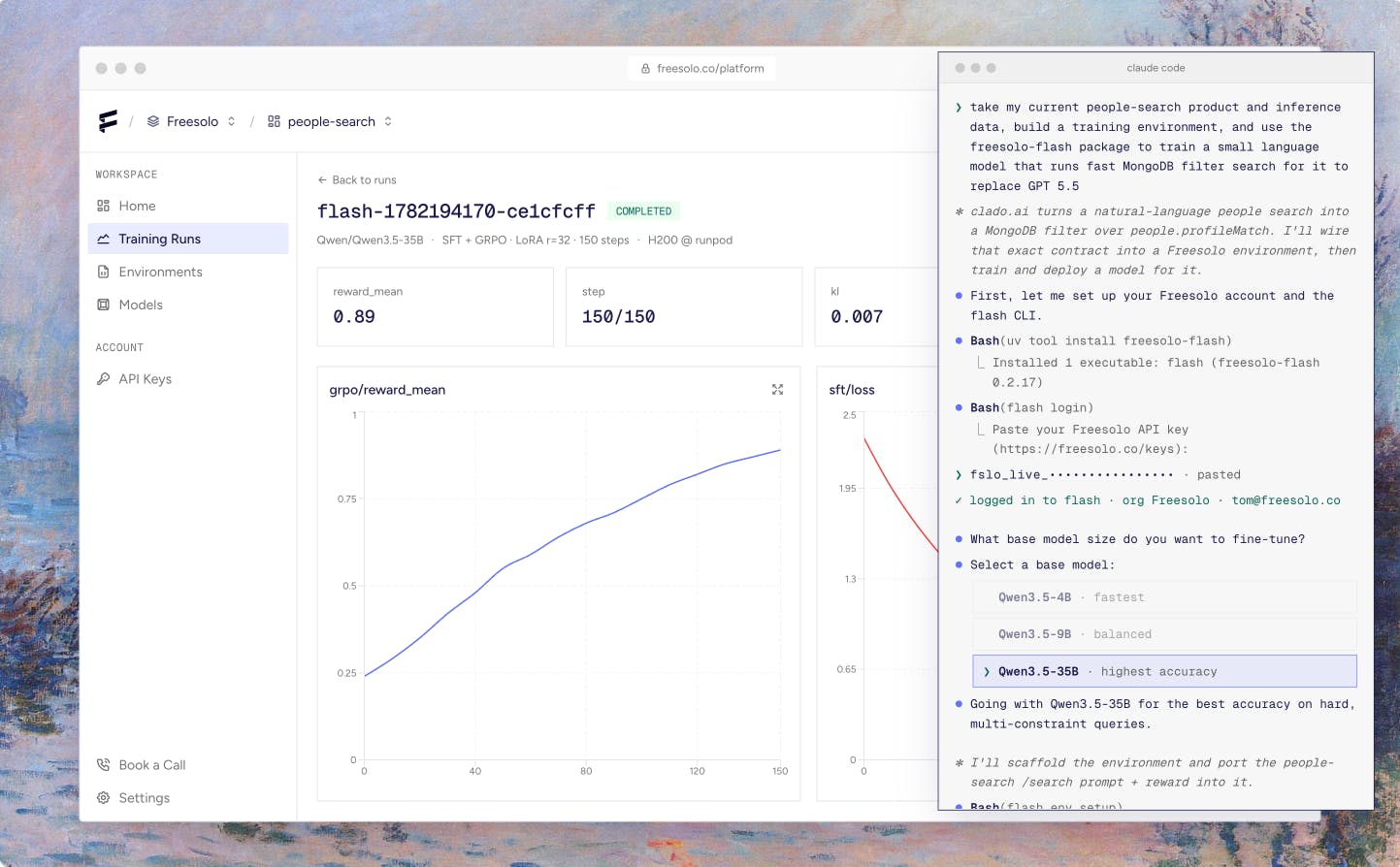
The Freesolo team's core proposition is ambitious: "Commoditize reinforcement learning so that any team can train a small, specialized model for their own tasks." Behind this statement lies a very real pain point in enterprise AI deployment.
It's worth explaining what reinforcement learning is and why it matters. Reinforcement learning is one of the three major paradigms of machine learning (alongside supervised learning and unsupervised learning). Its core concept draws from behavioral psychology's reward-punishment mechanism: an agent takes actions in an environment, continuously adjusting its strategy based on reward signals from the environment, ultimately learning to make optimal decisions for specific tasks. In the large language model space, reinforcement learning's most famous application is RLHF (Reinforcement Learning from Human Feedback) — training a reward model through human feedback, then using that reward model to guide policy optimization of the language model. OpenAI's ChatGPT achieved its leap from "being able to talk" to "talking like a human" precisely through this technique. However, the RLHF pipeline involves multiple highly complex components — reward model training, PPO (Proximal Policy Optimization) hyperparameter tuning, training stability control — typically requiring specialized algorithm teams and substantial computational resources. This is exactly why Freesolo aims to "commoditize" it.
It's worth adding that PPO is a policy gradient algorithm proposed by OpenAI in 2017. Its core innovation lies in "clipping" the objective function to limit the magnitude of policy updates, achieving a balance between training efficiency and stability. In the RLHF pipeline, PPO is responsible for updating the language model's parameters based on signals from the reward model, but requires maintaining a reference model simultaneously to prevent the policy from drifting too far (i.e., KL divergence constraint). Recently, methods like DeepSeek's GRPO (Group Relative Policy Optimization) and Meta's DPO (Direct Preference Optimization) have attempted to simplify this process — DPO even eliminates the reward model training step entirely, optimizing the policy directly from preference data. These technical advances provide algorithmic feasibility for the "commoditization" of reinforcement learning and serve as the technical prerequisite for platforms like Freesolo to exist.
The Gulf Between General-Purpose LLMs and Enterprise Product Needs
Over the past two years, enterprise approaches to integrating large models have been highly homogeneous: calling APIs from general-purpose LLMs like GPT and Claude, adapting to business scenarios through Prompt Engineering. This approach is quick to start and low-barrier, but soon reveals three structural problems.
General Model Capability ≠ Product Capability
Freesolo's official description contains a key statement: "Help enterprise teams turn generic model capability into AI features that belong in the product." This precisely identifies the contradiction — general-purpose LLMs excel at "doing a bit of everything," but enterprise products often need "doing one thing extremely well and reliably."
For high-frequency, vertical, fixed-format tasks (such as specific document classification, structured information extraction, customer service intent recognition), general-purpose LLMs are not only overkill but also suffer from high inference costs, latency, and uncontrollable outputs. A purpose-trained small model can often achieve better performance at lower cost in these scenarios.
The small language models discussed here typically refer to language models with parameters in the single-digit billions or less, forming a stark contrast with hundred-billion-parameter models like GPT-4. The SLM field has seen numerous representative works in recent years: Microsoft's Phi series (Phi-1 through Phi-3, ranging from 1.3B to 14B parameters), smaller variants of Meta's LLaMA series, Google's Gemma 2B/7B, and Alibaba's Qwen series smaller models. Through carefully curated high-quality training data, Knowledge Distillation, and architecture optimization, these models can achieve performance approaching or even exceeding larger models on specific tasks.
Knowledge Distillation is one of the key techniques for achieving high performance in small models. Its core concept was proposed by Hinton et al. in 2015: using the output distribution (soft labels) of a large "teacher model" to guide the training of a small "student model," enabling the student to learn not just correct answers but also the teacher model's confidence distribution across various answers. This transfer of "dark knowledge" allows small models to inherit some reasoning capabilities of large models. In the LLM domain, common forms of knowledge distillation include: using GPT-4 to generate high-quality training data for training small models (as in Alpaca and Vicuna's training approaches), having small models learn intermediate-layer representations from large models, and using Chain-of-Thought generated by large models to teach small models reasoning. Microsoft's Phi series success is largely attributed to its "textbook-quality" synthetic training data strategy — the core insight being that training data quality matters more than quantity, and carefully curated and synthesized small-scale datasets can train models that outperform larger models trained on massive low-quality data.
The core advantages of SLMs are: fast inference (can run on consumer-grade GPUs or even CPUs), low deployment costs, ability to run on edge devices, and ease of private deployment — making them particularly suited for enterprise scenarios that are latency-sensitive, have high data privacy requirements, and need high-frequency calls.
Cost, Latency, and Data Sovereignty Issues
Calling external LLM APIs means paying for every inference call, with data being transmitted to third parties. For enterprises handling sensitive data, this creates both a cost burden and compliance risk. Small models can be privately deployed, keeping data within enterprise boundaries while dramatically reducing per-inference costs and response times. This is the deeper motivation behind the growing enterprise interest in SLM training solutions.
Looking specifically at the cost structure of enterprise LLM API calls: per-token inference fees (GPT-4o costs approximately $2.5-5 per million input tokens), network transmission latency (typically 50-500ms additional latency), and hidden data compliance costs. Consider an enterprise processing 100,000 customer service requests daily, with each request consuming an average of 2,000 tokens — monthly API costs could reach tens of thousands of dollars. A purpose-trained 7B parameter small model deployed on a single A100 GPU could handle equivalent load, with monthly hardware costs (including cloud server rental) potentially only a few thousand dollars, and inference latency controllable to 10-50ms.
Furthermore, private deployment means data never leaves enterprise boundaries, eliminating the need for cross-border data transfer compliance reviews under regulations like GDPR and China's Data Security Law. The severity of data sovereignty issues lies in the rapidly tightening global regulatory environment: the EU's GDPR imposes strict restrictions on cross-border data transfers (following the Schrems II ruling, transferring data to the US requires additional safeguards), with violations penalized up to 4% of global annual revenue; China's Data Security Law and Personal Information Protection Law impose security assessment requirements for "important data" exports; while the US lacks a unified federal privacy law, sector-specific regulations like HIPAA (healthcare) and GLBA (finance) impose strict constraints on data processing. When enterprises send customer conversations, medical records, or financial data to third-party APIs, they face not just data breach risks but systemic compliance risks. This elevates privately deployed small models from a "cost optimization option" to a "compliance necessity."
Deconstructing Freesolo Flash's Full-Stack Platform Capabilities
Freesolo emphasizes being a "Full-Stack Platform" — a qualifier worth unpacking. Training a specialized small model traditionally requires a lengthy toolchain: data preparation and annotation, base model selection, fine-tuning or reinforcement learning training, evaluation, deployment, and monitoring. Any missing link can deter non-specialist teams.
Freesolo's market segment is actually a specialized direction within MLOps (Machine Learning Operations) platforms. The MLOps concept emerged around 2019-2020, with the core philosophy of bringing DevOps practices from software engineering into machine learning workflows to automate model management from experimentation to production. Players in this space include: Weights & Biases (experiment tracking), Hugging Face (model hosting and community), Anyscale (distributed training), Modal (serverless GPU), Together AI (model fine-tuning and inference), among others.
The MLOps market underwent rapid differentiation in 2023-2024. Early players like MLflow (open-source experiment management) and Kubeflow (K8s-based ML workflows) provided general infrastructure but offered limited support for LLM-era specific needs (such as GPU cluster scheduling, memory optimization for long-sequence training, multi-model collaborative training for RLHF). The new generation of LLM-focused platforms includes: Anyscale/Ray (distributed training framework), Modal (serverless GPU on-demand), Together AI and Fireworks AI (model fine-tuning + inference services), and Predibase/Ludwig (declarative fine-tuning). Freesolo's differentiation lies in narrowing its focus to the "small models + reinforcement learning" combination, attempting to provide a more vertical, out-of-the-box experience rather than general ML infrastructure. This focus strategy is common in SaaS — building product depth by serving specific use cases, then gradually expanding. The risk of this unique positioning lies in market education costs: enterprise clients need to first understand why reinforcement learning is superior to pure SFT before they'll pay for this differentiation.
Bringing Reinforcement Learning from the Lab into Product Teams
Freesolo Flash's differentiated positioning lies in its emphasis on "reinforcement learning." Compared to the more common Supervised Fine-Tuning (SFT), reinforcement learning (particularly RLHF/RLAIF based on human feedback or rule-based rewards) enables models to better align with specific task objectives. However, reinforcement learning has traditionally been an extremely high-barrier technology, requiring specialized algorithm engineers and extensive hyperparameter tuning experience.
It's important to understand the essential difference between SFT and reinforcement learning methods. The SFT approach is straightforward: prepare a batch of high-quality input-output pair data and have the model learn to imitate these demonstrations. SFT is simple, stable, and easy to implement, but has limitations — it can only teach models to "imitate correct answers," not "why certain answers are better than others." RLHF introduces the concept of preference ranking: scoring or ranking multiple model outputs, training a reward model to capture human preferences, then optimizing the language model's output policy through reinforcement learning. RLAIF (RL from AI Feedback) replaces human annotators with AI systems to provide feedback, reducing manual annotation costs.
Both academic research and industrial practice have shown that RLHF significantly improves over pure SFT across multiple dimensions. Anthropic's research demonstrates that RLHF-trained models show clear improvements in safety (refusing harmful requests), helpfulness (answer quality), and honesty (acknowledging uncertainty). Even more inspiring is the finding from the InstructGPT paper: a 1.3B model with RLHF even surpassed a 175B model without RLHF in user preference — a conclusion with profound implications for small model training, proving that alignment training can partially compensate for model scale gaps. However, RLHF also has known challenges: reward hacking (the model learns to deceive the reward model rather than genuinely improving quality), alignment tax (safety improvements may come at the cost of reduced general capabilities), and mode collapse (reduced output diversity). How to properly address these issues within a productized package is the technical capability Freesolo needs to demonstrate.
Compared to SFT, reinforcement learning methods better handle "alignment" problems — making models not only give correct answers but also follow specific style, format, safety constraints, and other fine-grained requirements. This is particularly critical for enterprise scenarios: a customer service model needs to not only answer correctly but also maintain appropriate tone, standardized formatting, and avoid leaking sensitive information.
What Freesolo aims to do is package this complex pipeline into a product that "any team can use." In their own words, commoditizing reinforcement learning. If this promise can truly be delivered, it means product managers and general engineers could train specialized models aligned with their business without assembling expensive machine learning teams.
Full-Stack Integration Lowers Enterprise Adoption Barriers
The "full-stack" concept essentially consolidates scattered tools into a single platform, reducing friction from teams switching between different tools. For enterprises, procuring an end-to-end small model training platform offers far more certainty than self-assembling open-source toolchains and recruiting scarce talent. This is also why Freesolo positions itself toward enterprise teams rather than individual developers.
Opportunities and Challenges in the Small Model Training Space
Riding the Industry Trend: From Big to Specialized
Freesolo Flash's emergence is not isolated. Industry attention to small models is rising rapidly — from Microsoft's Phi series to various open-source small models, "doing more specialized things with smaller models" has become a clear technical trajectory. Enterprises increasingly recognize that not all tasks require hundred-billion-parameter general-purpose LLMs; in many scenarios, "good enough, specialized, and affordable" is the optimal solution. Freesolo sits precisely in this demand gap.
Barriers to Productization
However, Freesolo faces equally real challenges. First, "enabling any team to train models" is an extremely high productization promise whose actual effectiveness depends heavily on platform maturity in data processing, training stability, and evaluation tools. Second, enterprise clients will be very rigorous in validating trained model performance — whether a specialized small model truly outperforms directly calling LLM APIs requires quantifiable evidence. Finally, this space has numerous competitors, and how to build a moat across data security, usability, and final performance will determine how far it can go.
Conclusion: A Pragmatic Shift in Enterprise AI
Freesolo Flash represents a pragmatic shift in enterprise AI deployment thinking: from "connecting to the most powerful general model" to "training the most suitable specialized model." Its attempt to productize reinforcement learning — a high-barrier technology — if successful, could significantly reduce the cost for enterprises to build differentiated AI features.
For teams frustrated by API bills and uncontrollable outputs, small model training platforms may be a new option worth serious evaluation. Of course, whether it's concept-first or genuinely practical still needs more real-world cases to validate. But at the very least, it raises the right question: Does your product really need a general-purpose large language model?
Related articles
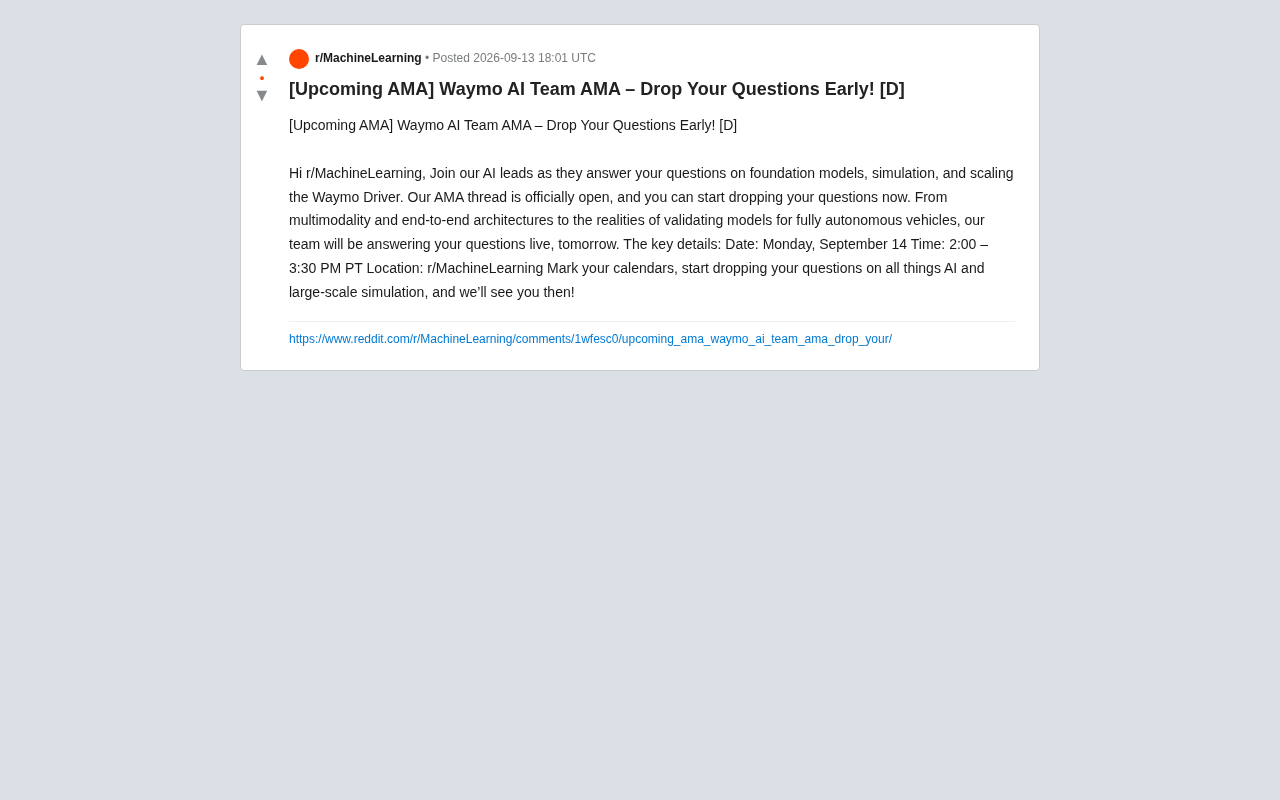
Waymo AI Team to Host AMA: Focusing on Foundation Models and Autonomous Driving Simulation
Waymo's AI technical leads are hosting an AMA on Reddit's r/MachineLearning, covering foundation models, large-scale simulation, multimodality, and end-to-end autonomous driving architectures.
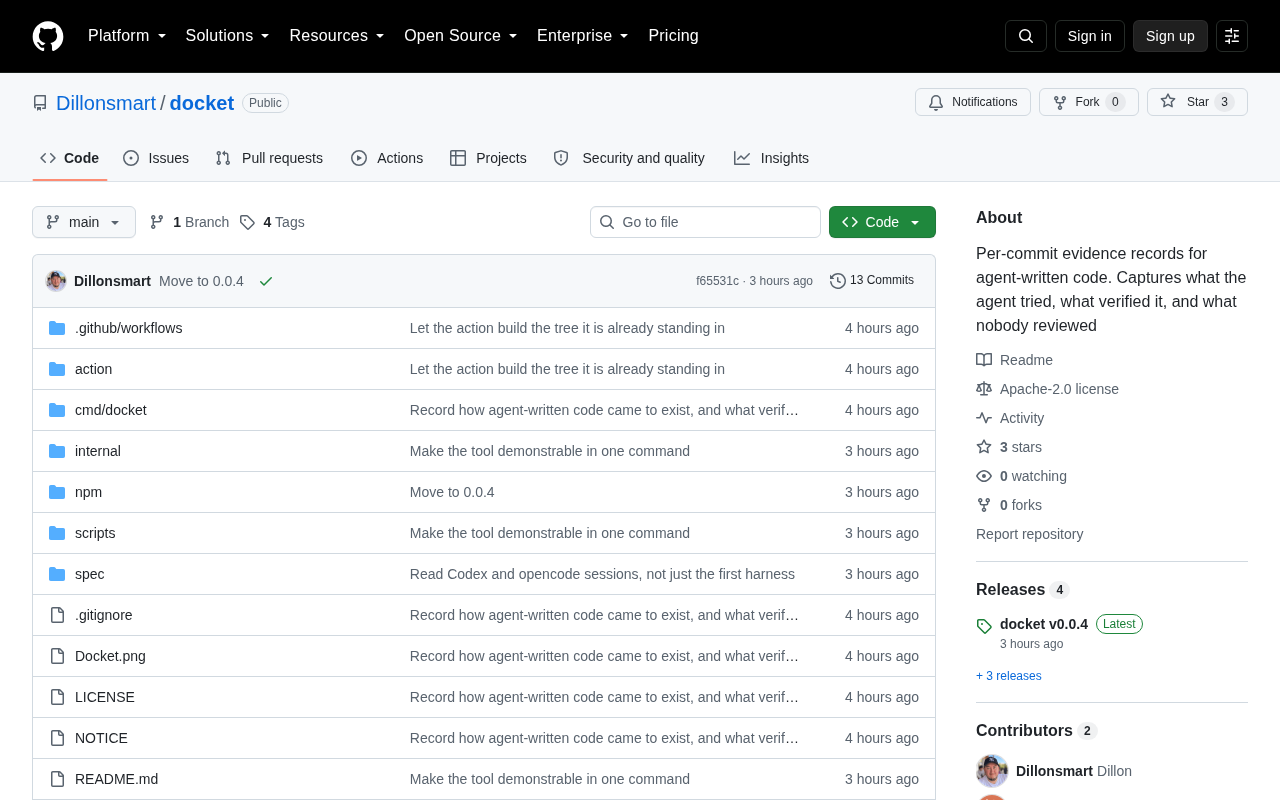
Docket: Building Per-Commit Evidence Trails for AI Agent-Generated Code
Docket builds per-commit evidence trails for AI agent-generated code, making every AI commit traceable, auditable, and verifiable — a pragmatic step in AI coding governance.
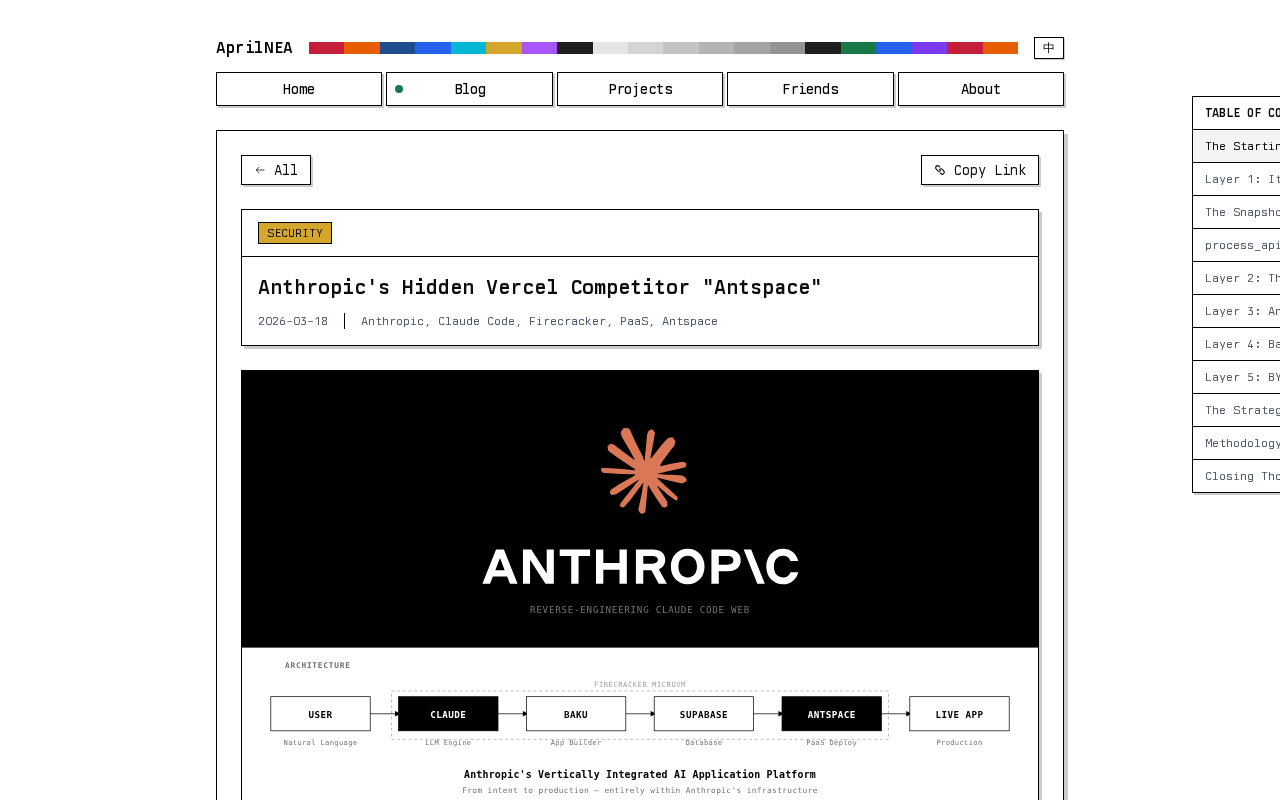
Reverse-Engineering Claude Web's Sandbox: Uncovering Anthropic's Hidden MicroVM
A reverse-engineering analysis of Claude Web's code sandbox reveals Anthropic's likely MicroVM architecture and internal "Antspace" environment, with insights for AI product security.