Reverse-Engineering Claude Web's Sandbox: Uncovering Anthropic's Hidden MicroVM
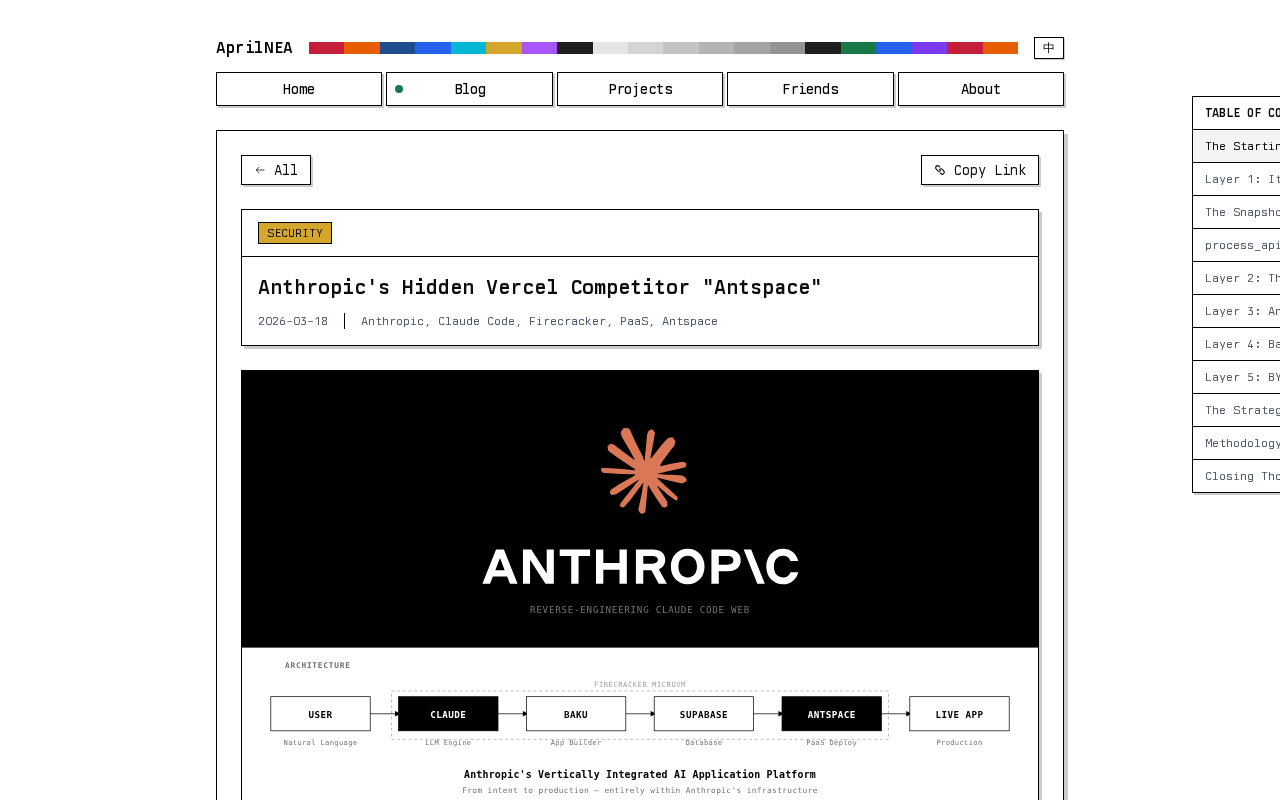
Reverse engineering reveals Claude Web uses a MicroVM sandbox (codenamed Antspace) to isolate user code execution.
A technical article circulating on Hacker News reverse-engineered Anthropic's Claude Web code execution sandbox, revealing an underlying MicroVM architecture and an internal runtime environment dubbed "Antspace." As AI products widely adopt Code Interpreter features, securely isolating untrusted user code has become a critical challenge. Unlike Docker containers that share the host kernel, MicroVMs like AWS Firecracker provide hardware-level isolation with fast startup times. The reverse-engineering methodology covers environment probing, network boundary testing, and fingerprint comparison. The article distills three core design principles for developers: strong isolation, short-lived environments, and defense in depth — arguing that MicroVM sandboxes will serve as the security foundation as AI agents gain broader execution privileges.
The Starting Point: Reverse-Engineering Claude Web's Code Sandbox
A technical article titled Reverse-Engineering Claude Web's MicroVM: Uncovering Anthropic's Hidden Antspace recently caught attention on Hacker News. At its core, the piece presents a reverse-engineering analysis of the code execution sandbox used by Anthropic's Claude Web, attempting to reveal the underlying MicroVM (micro virtual machine) architecture and an internal runtime environment reportedly codenamed "Antspace."
For developers who follow AI infrastructure security, this kind of reverse-engineering work carries real reference value. It touches on an increasingly important question: once large language models are given the ability to "execute code," how do service providers build secure, isolated runtime environments on the backend to prevent malicious code from escaping or abusing compute resources?
A note on sourcing: this article is based on the original Hacker News submission. At the time of writing, the post had garnered limited traction (4 points, 0 comments), so what follows is largely a contextual exploration of the technical themes involved, rather than a line-by-line recap of the original article's technical details.
Why AI Products Need MicroVM Sandboxes
As products like Claude and ChatGPT have rolled out Code Interpreter-style features, code submitted by users must be executed for real on the server side. This introduces a fundamental security challenge: you cannot trust any code that comes from user input.
Traditional containers like Docker offer process-level isolation, but they share the host kernel — meaning a kernel vulnerability could potentially be exploited to break out. MicroVM technology — with AWS's Firecracker as a prime example — provides near-VM-strength isolation while remaining lightweight and fast to boot. This makes it an excellent fit for scenarios that require "spinning up a short-lived, isolated environment for each code execution."
The mention of "MicroVM" in the article's title implies that Anthropic has adopted a similar architectural approach in Claude Web's code execution pipeline — using hardware-level virtualization boundaries to isolate untrusted user code.
"Antspace": Anthropic's Internal Codename
The article dubs the discovered runtime environment "Antspace" — most likely Anthropic's internal name for its sandbox or compute platform (a nod to the "Ant" in the company's name). The reverse engineer reportedly inferred the existence and partial structure of this hidden infrastructure by analyzing behaviors, environment variables, filesystem characteristics, and network fingerprints exposed when Claude Web executes code.
The methodology behind this kind of work typically involves:
Environment Probing
Running exploratory code inside the sandbox to read system information, process lists, kernel versions, and cgroup configurations — in order to determine whether the underlying layer is a container, a VM, or a MicroVM.
Network and Resource Boundary Testing
Attempting to initiate network connections, access metadata services, and test filesystem permissions to map out the isolation boundary and security policies of the environment.
Fingerprint Comparison
Matching observed characteristics against known open-source solutions (such as Firecracker or gVisor) to reverse-infer the technology stack the service provider is likely using.
The Value and Limits of Reverse-Engineering AI Infrastructure
This kind of research occupies a delicate position. On one hand, it advances the conversation around AI infrastructure transparency — users and enterprise customers have legitimate reasons to care about the isolation level under which their data and code are processed. On the other hand, probing deep into a commercial product's backend environment can also brush up against the limits of terms of service.
From a security research perspective, responsible reverse engineering can help surface potential sandbox escape risks, which in turn pushes vendors to strengthen their defenses. For Anthropic — a company that places heavy emphasis on AI safety — whether its sandbox design is sufficiently robust is itself a topic the community has good reason to scrutinize.
Takeaways for Developers
If you're building your own AI code execution product, the architectural thinking behind Claude Web's setup offers a few lessons worth borrowing:
- Prioritize strong isolation: When dealing with untrusted code, MicroVM-level isolation is far more reliable than containers alone.
- Short lifecycle environments: Spinning up a disposable environment for each execution — and destroying it immediately after — significantly reduces the risk of state contamination and lateral movement.
- Defense in depth: Beyond the virtualization boundary, you should layer on additional controls: network restrictions, resource quotas, syscall filtering, and more.
Closing Thoughts
This reverse-engineering piece opens a window into the underlying infrastructure of a major AI company. Even if the original Hacker News post didn't generate much discussion, the topic it points to — the secure isolation of code execution environments in large language models — is becoming increasingly critical. As AI agents are granted ever-broader execution privileges, "invisible foundations" like MicroVM sandboxes will directly determine the security floor of the entire system.
Related articles
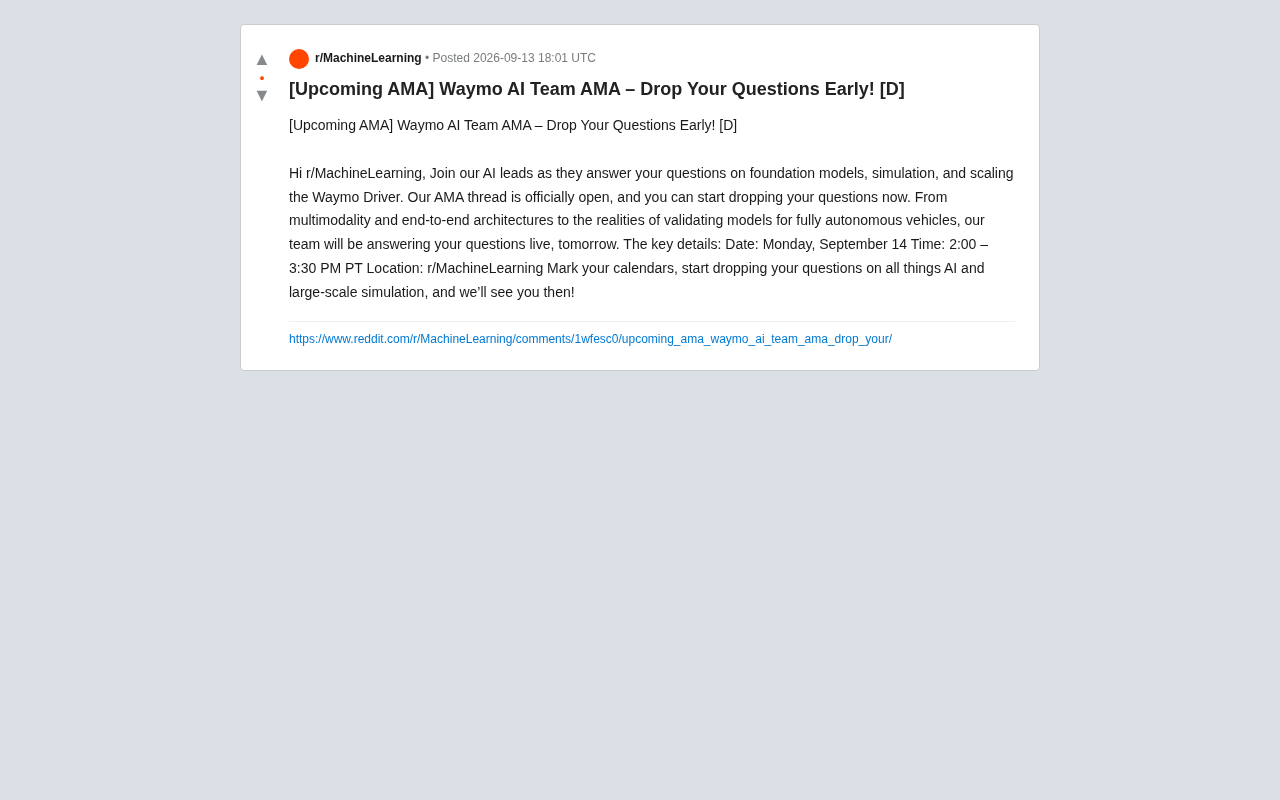
Waymo AI Team to Host AMA: Focusing on Foundation Models and Autonomous Driving Simulation
Waymo's AI technical leads are hosting an AMA on Reddit's r/MachineLearning, covering foundation models, large-scale simulation, multimodality, and end-to-end autonomous driving architectures.
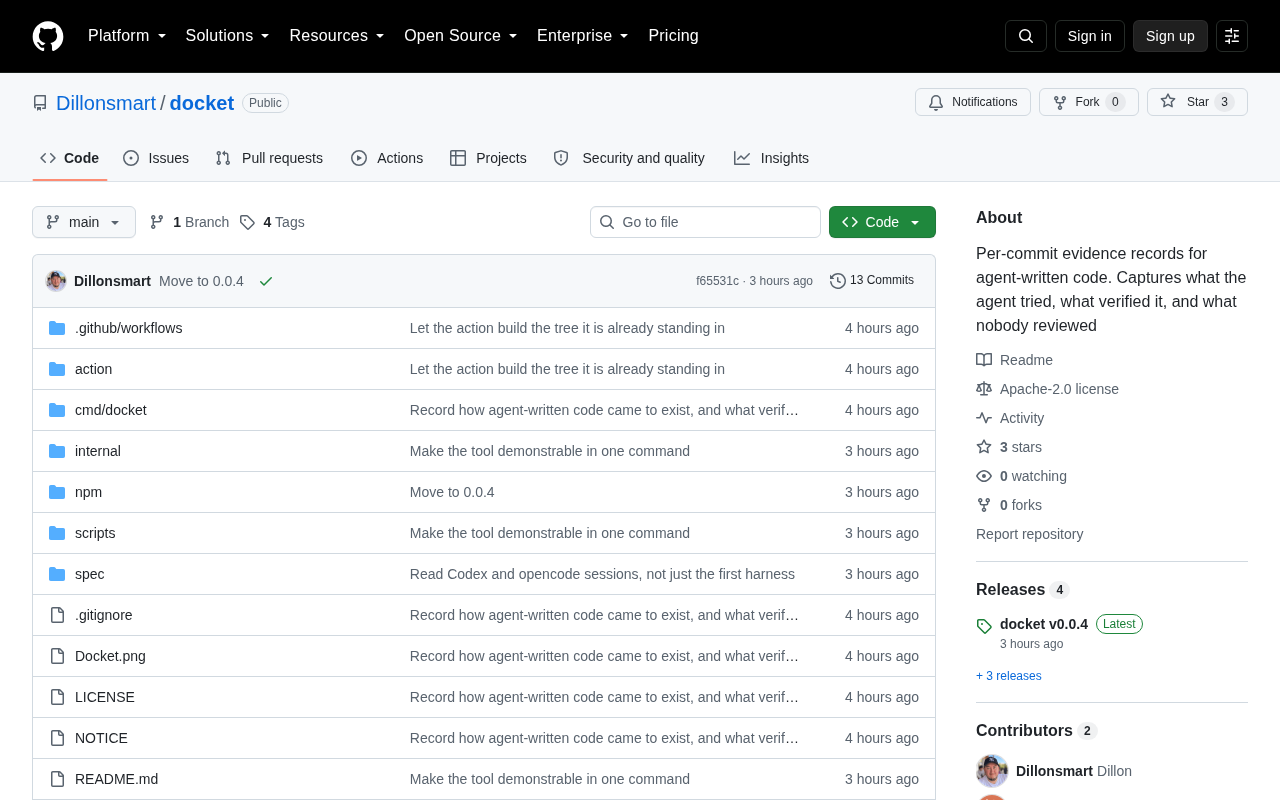
Docket: Building Per-Commit Evidence Trails for AI Agent-Generated Code
Docket builds per-commit evidence trails for AI agent-generated code, making every AI commit traceable, auditable, and verifiable — a pragmatic step in AI coding governance.
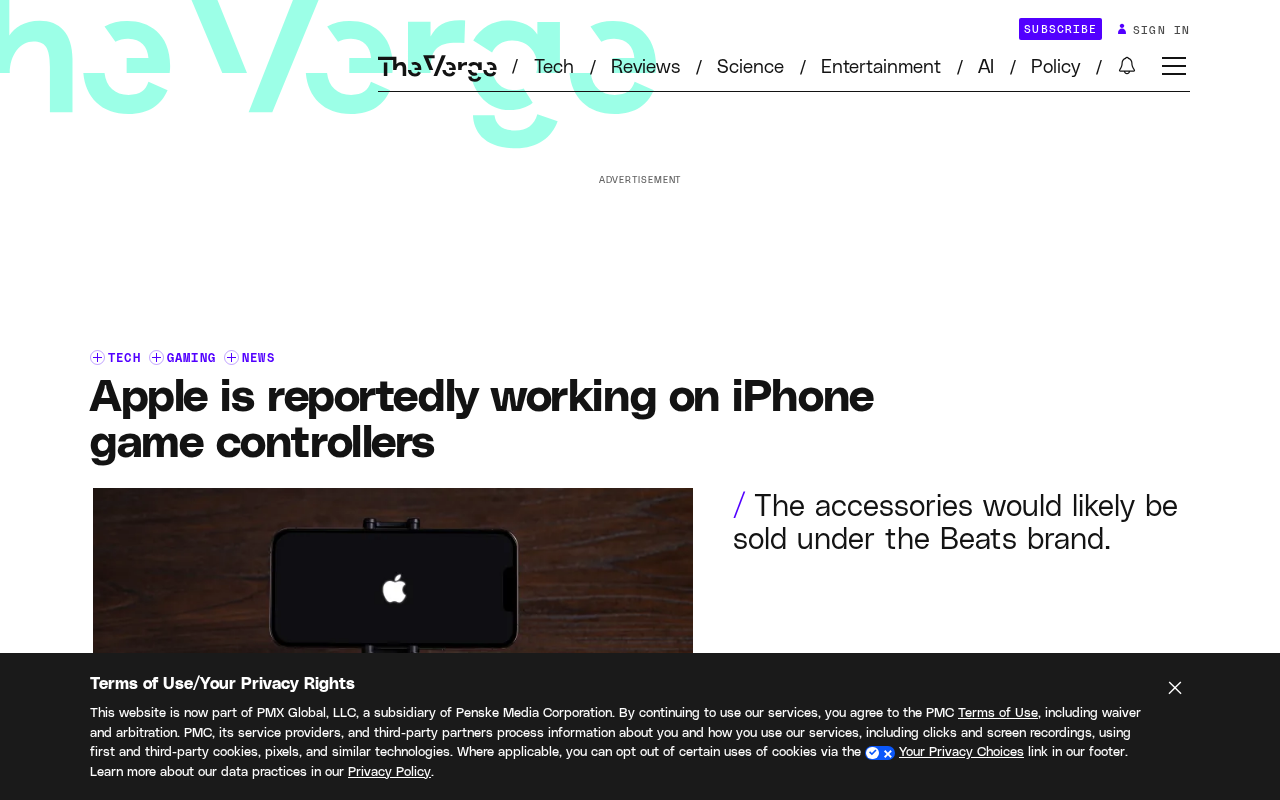
Apple Reportedly Working on Two iPhone Game Controllers Under the Beats Brand
Bloomberg's Mark Gurman reports Apple is developing two iPhone game controllers under the Beats brand. MacRumors found first-party device references in macOS 26.7 code.