From Demon to Family Member: The Hidden History of Human Hatred Toward Cats

Cats went from 'demonic outcasts' to 'fur babies' only in the last 30 years, driven by religious decline and rising prosperity.
This article traces a little-known history of the human-cat relationship: in the nineteenth century, cats were branded as dangerous outsiders and demonic incarnations, with calls to exterminate them across Europe and America. Two forces drove the change — the decline of religious influence removed cats' evil symbolism, while improving household incomes transformed cat ownership from a practical tool into an emotional choice. The idea of cats as true family members only emerged around the 1990s, a mere two to three decades ago, shaped by material prosperity and profound shifts in social values.
When Cats Were Publicly Despised
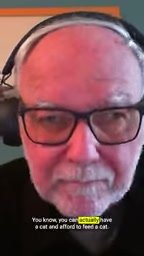
Today, social media is filled with heartwarming posts from devoted cat owners, but it's hard to imagine that at certain points in history, people openly called for "killing all cats." A Vox Explain It To Me podcast interview uncovers a little-known chapter in the history of the human-cat relationship — cats were not always the beloved companions we know today.
According to the interview, in the nineteenth century, the way conservatives talked about cats bore a striking resemblance to how some right-wing voices today talk about immigrants. Cats were framed as "outsiders" and "unwanted intruders." In the United States, France, and Germany alike, people publicly proclaimed, "We should kill all the cats." Cats were cast as antisocial, untrustworthy creatures with no value beyond catching mice and pests.

Even more extreme, the Church directly linked cats to the devil, declaring them to be demonic incarnations. This religious stigmatization burdened cats with a heavy symbolic weight for a substantial stretch of history.
The Church's campaign against cats had a specific historical turning point. In medieval Europe, Pope Gregory IX issued a papal bull in 1233 connecting black cats directly to Satanic worship. For centuries afterward, cats were systematically associated with witch trials. In narratives surrounding the Sabbath, cats were described as witches' familiars or demonic shapeshifters, triggering large-scale cat-killing campaigns across Europe. Ironically, historians believe these campaigns indirectly worsened the spread of the Black Death in the fourteenth century — the sharp decline in the cat population left plague-carrying rat numbers unchecked. This historical detail reveals a sobering truth: morally stigmatizing a species can produce real-world consequences far beyond what anyone anticipated.
Two Forces Behind the Shift in Attitudes
So what fundamentally changed the way humans viewed cats? The podcast's guest offered two intertwined explanations.
The first force was the decline of religious influence. As beliefs like "the devil is everywhere" and "the devil hides in cats" gradually faded, broader attitudes toward animals underwent a significant shift in the late nineteenth century. Only once cats were no longer demonized by religious discourse could they begin to be seen in a new light.

The second force was more pragmatic — improving economic conditions. The guest noted frankly that cat ownership is partly tied to people having more disposable income. While keeping a cat is far less expensive than raising a child, the costs of food and veterinary care are still very real. Only when ordinary households could afford these expenses did cat ownership become an emotional choice rather than a purely practical one.
From "Pest Control Tool" to "Family Member"
The transition of cats from marginal "outsider pets" to genuine "family members" is actually a remarkably recent development. According to the podcast guest, this shift began only around the 1990s — roughly the past twenty-five to thirty years.

In other words, the idea of treating pets as family is far younger than our intuitions suggest. Throughout most of human history, cats were regarded as functional beings — they guarded granaries and kept rat populations in check, rather than being held close as emotional companions. The true "familization" of cats is a product of modern material prosperity and shifting social values.
The field of Human-Animal Studies refers to the process of incorporating pets into the emotional structure of the family as "fictive kinship" or "petification." Research by sociologists such as Clinton Sanders suggests this shift is closely linked to the loosening of the nuclear family structure in post-industrial society, declining birth rates, and rising urban loneliness driven by urbanization. As social networks became more atomized, pets filled the void left by diminishing emotional connections. At the same time, the commercial ecosystem built around pets — pet food, veterinary services, and pet insurance — has economically reinforced and solidified the identity of "pets as family." The act of consumption itself continuously reaffirms an emotional relationship.
What This History Teaches Us
The shifting status of cats is, in a sense, a mirror reflecting the fluid nature of human social values. The retreat of religious authority, the lowering of economic barriers, and modern people's growing need for emotional companionship — all three combined to shape today's widespread consensus that "cats are family."
The journey from "demonic incarnation" to "fur baby" reminds us that many feelings and ideas we take for granted have specific historical and social origins. The everyday realities we consider self-evident are often the accidental products of their time.
Do you consider your pet a member of the family? This history might give you a new perspective on that lazily sprawled cat by your side. The full interview is available on the Explain It To Me podcast.
Related articles

uGAP: An AI Platform Unifying 100+ African Geospatial Datasets
uGAP is an African geospatial AI platform by a University of Cape Town team, unifying 120+ African datasets with a Python SDK for discovery, processing, and model training, already used in cyclone flood mapping.

Cursor Can Now Control Your Computer: AI Agents Can Drive Desktop Apps for Testing
Cursor adds desktop control: AI agents can drive desktop apps like the iOS Simulator to test their own features. We analyze the impact on dev workflows, possible technical approaches, and reliability concerns.

Vibecoding a Custom Inference Engine: High Hopes, Harsh Reality
A Reddit developer shares the real experience of vibecoding a custom inference engine: running GGUF Q4 models in the browser with WebGL2 and GLSL, only to fall into tokenizer debugging hell. This article analyzes the engineering challenges of browser-side LLM inference and why cloning llama.cpp is the more rational choice.