From Engineer to Machine Learning Practitioner: A Practical Roadmap from Data Compliance to Deployment

A pragmatic roadmap for engineers moving into machine learning, from data compliance to real deployment.
For practitioners with an engineering or data background who want to break into machine learning, this article outlines a practical path: master data anonymization and compliance (k-anonymity, differential privacy), choose the right knowledge base route (RAG, traditional ML, or BI), and follow a phased, goal-driven learning plan while avoiding common pitfalls like data leakage.
Background and Challenges: From Data Practitioner to Machine Learning Practitioner
In Reddit's machine learning community, a practitioner with an engineering background raised a fairly representative question. He has solid programming skills and has worked in the data field for a long time, primarily in Affiliate Marketing and SEO tools rather than strictly data science.
He has several large data projects on hand and, with user consent already obtained, has accumulated a large amount of data. He plans to anonymize the data, remove identifiable features, and then build a knowledge base based on this data. Although he lacks formal machine learning experience, he isn't afraid to dive in directly.
This case is very typical—many practitioners with domain experience and accumulated data want to break into machine learning but aren't sure where to start. This article will focus on this scenario and outline a pragmatic path for learning and deployment.
Step One: Data Compliance and Anonymization Are Hard Prerequisites
The questioner has already recognized the importance of anonymization, which is a good starting point. In real-world business, data compliance is often more prone to problems than the model itself.
Common Misconceptions About Anonymization
Simply deleting direct identifiers like names and emails is far from enough. The real risk comes from quasi-identifiers—such as zip codes, ages, access timestamps, and behavioral sequences. These fields seem harmless individually, but when combined, they can be used to reverse-locate specific individuals.
The threat of quasi-identifiers has long been systematically studied in academia. In 1997, Latanya Sweeney's research at MIT first quantified this risk, proving that just three fields—zip code, birthday, and gender—could uniquely identify 87% of the U.S. population. Subsequently, the de-anonymization of the Netflix Prize dataset (2008) and the AOL search log leak (2006) further validated the reality of this threat in industry. For affiliate marketing data, the precision of user click timing (millisecond-level timestamps), channel source combinations, and device fingerprint information are often more identifying than email addresses. This means that for common click times, geographic regions, and device combinations in affiliate marketing and SEO data, even without any direct identity information, they may constitute a de facto path to personal identification.
We recommend focusing on the following directions:
- k-anonymity: Ensures that each record is indistinguishable from at least k-1 other records based on quasi-identifiers. k-anonymity requires that the quasi-identifier combination of each record in the published dataset be identical to at least k-1 other records, making it impossible for attackers to precisely pinpoint a record to a specific individual. Note that when sensitive attributes within the same equivalence class are highly concentrated (e.g., all users of similar age have similar behavioral patterns), there is still a risk of information leakage. Therefore, academia has further proposed enhanced models such as l-diversity and t-closeness;
- Differential Privacy: Adds controlled noise to data or query results to mathematically limit the leakage of individual information. Differential privacy was formally proposed by Microsoft researcher Cynthia Dwork in 2006. Its core idea is: for any two datasets differing by only one record, the difference in the output distribution of an algorithm on the two datasets does not exceed a bound controlled by the privacy budget ε. The smaller ε is, the stronger the privacy protection, but the correspondingly lower the data utility. In practical engineering, the Laplace noise mechanism or Gaussian noise mechanism are commonly used. Tech companies like Apple and Google have already deployed differential privacy in production systems. In engineering practice, developers can directly use mature open-source libraries—Google's open-source PipelineDP and IBM's open-source diffprivlib both provide production-grade implementations. Among them, diffprivlib provides an API compatible with scikit-learn, which can directly replace traditional statistical functions. Selecting the privacy budget ε is the parameter that requires the most careful trade-off in engineering. Academia generally considers ε<1 to be strong protection, but in actual business, it needs to be determined comprehensively based on data sensitivity, query frequency, and business precision requirements. For affiliate marketing clickstream data, differential privacy can be introduced at the aggregate statistical query level to publish channel-level conversion rate statistics without exposing individual behavior;
- Compliance Frameworks: If EU or California users are involved, you need to understand the basic requirements of GDPR and CCPA, especially confirming whether the scope of "user consent" covers secondary analysis purposes.
For affiliate marketing and SEO data, user behavior paths and clickstreams are often high-dimensional and unique, so extra caution is needed during anonymization.
Step Two: First Clarify Which Technical Route the "Knowledge Base" Refers To
The goal of "building a knowledge base" may point to several completely different implementation approaches in the current technical context:
Route A: Traditional Machine Learning Analysis
If the goal is to discover patterns in the data, make predictions, or classify (e.g., predict which marketing channels have higher conversion rates), this is a classic supervised/unsupervised learning problem, with feature engineering, model training, and evaluation at its core.
Route B: RAG and Vector Knowledge Bases
If the goal is to build a knowledge system that supports natural language Q&A, the mainstream approach is RAG (Retrieval-Augmented Generation): vectorize the data, store it in a vector database, and combine it with a large language model for Q&A. RAG was formally proposed by Facebook AI Research in 2020. Its core motivation was to solve the knowledge cutoff date limitation and factual hallucination problems of large language models. The RAG workflow is divided into two stages: in the offline indexing stage, documents are chunked and then converted into high-dimensional vectors via an Embedding model and stored in a vector database; in the online query stage, the user's question is likewise vectorized, and the most semantically relevant document fragments are retrieved through approximate nearest neighbor search, concatenated into the prompt as context, and then the LLM generates the final answer.
The retrieval quality of a RAG system largely depends on the choice of Embedding model and vector indexing algorithm. Mainstream Embedding models include OpenAI's text-embedding-ada-002, the open-source sentence-transformers series, and the BGE model optimized specifically for Chinese. The core of a vector database is the approximate nearest neighbor (ANN) algorithm, among which the HNSW (Hierarchical Navigable Small World) algorithm is adopted by mainstream vector libraries like Chroma and Weaviate due to its excellent balance between high recall and low latency. For SEO and marketing data, the chunking strategy is equally critical—fixed-size chunking breaks semantic integrity, so it is recommended to adopt semantic-aware chunking or organize data units by business entity (such as a single ad Campaign) to improve retrieval relevance. This architecture allows the knowledge base to be updated at any time without retraining the model, which is especially suitable for frequently changing business data such as SEO and marketing data. This route has lower requirements for ML mathematics and leans more toward engineering implementation.
Route C: Data Warehouse + BI
If you just want the data to be "queryable and analyzable," you may not even need machine learning—a well-structured data warehouse combined with BI tools is sufficient.
Core Recommendation: First anchor the business goal to avoid using machine learning to solve problems that could originally be solved with simple methods—this is the most common mistake beginners make.
Step Three: A Phased Machine Learning Learning Roadmap
For learners with an engineering background, we recommend a "goal-driven" rather than "course-driven" approach.
Phase One: Solidify Data Processing Fundamentals (1-2 months)
- Become proficient in using Python's Pandas and NumPy for data cleaning and exploratory analysis;
- Master data visualization tools (Matplotlib / Seaborn);
- Develop an awareness of data distributions, missing values, and outliers.
For those who have long worked in data, this phase can often be completed quickly.
Phase Two: Core Machine Learning Concepts (2-3 months)
- Start with scikit-learn to understand core concepts such as train/test split, overfitting, and cross-validation. scikit-learn was launched in 2007, and its design philosophy emphasizes a consistent API interface (the three-part fit/transform/predict pattern) and high composability. Especially worth mastering in depth is the Pipeline mechanism—it encapsulates data preprocessing steps and model training into a unified object, fundamentally avoiding bugs caused by inconsistent feature processing logic during training and prediction, while also naturally preventing test set information from leaking into preprocessing steps. After encapsulating preprocessing steps like StandardScaler and SimpleImputer into a Pipeline, the fit operation is only performed on the training set, fundamentally eliminating test set information leakage;
- Master several basic algorithms: linear regression, logistic regression, decision trees, and random forests;
- Focus on understanding evaluation metrics (accuracy, precision, recall, AUC), which are key to judging whether a model is good.
Andrew Ng's machine learning course can serve as theoretical supplementation, but don't get stuck in pure theory.
Phase Three: Build End-to-End Projects with Real Data (Ongoing)
Doing a complete project with your marketing data is more valuable than taking ten courses. Start from a clear business problem and complete the full closed loop of "data → features → model → evaluation → iteration." In SEO/affiliate marketing data scenarios, feature engineering is often more critical than model selection—for example, how to construct aggregate features like "number of visits within 7 days" and "channel switching frequency" from raw clickstreams requires a deep understanding of business logic. This is precisely the core advantage that practitioners with a domain background have over those with a purely technical background.
Phase Four: Dive Deeper into RAG or Deep Learning As Needed
If you decide to go the RAG knowledge base route, then dive deeper into Embeddings, vector databases (such as Chroma, Pinecone), and LLM application development frameworks (such as LangChain, LlamaIndex).
Before Getting Hands-On, Know These Pitfalls in Advance
-
Beware of Data Leakage: Accidentally using future information or label information during training will make the model perform impressively in testing but completely fail after deployment—this is the most insidious trap for beginners. Data leakage falls into two categories: target leakage refers to features containing information that can only be obtained after the prediction target occurs; train-test contamination refers to test set data participating in the training process in some way, for example, normalizing the full dataset before data splitting. In marketing data scenarios, common sources of leakage include using attribution labels generated only after conversion, or using features from future time windows to predict past outcomes in time-series data.
In engineering practice, several methods can be used to systematically identify data leakage: feature importance anomaly detection—if a feature's importance far exceeds business intuition, you should prioritize checking whether leakage exists; temporal consistency checks—for time-series data, forcibly split the training and test sets by time, and ensure that the computation windows of all features precede the occurrence time of the prediction target; experiment tracking tools—use MLflow or Weights & Biases to record the data processing pipeline of each experiment, making it easier to trace the root cause of problems. The core principle of prevention is to strictly split data in chronological order and to ask of each feature, "Is this feature actually available at the moment of prediction?"
-
Establish a Baseline First: Any complex model should first be compared against a simple benchmark (such as mean prediction or a rule-based model) to confirm that machine learning actually adds value.
-
Ensure Reproducibility: From day one, manage your code with Git and record data versions and experiment parameters to avoid "getting a great result but never being able to reproduce it."
-
Data Quality Trumps Model Complexity: In real projects, the returns from carefully cleaning data are usually far greater than switching to a more complex model.
Conclusion
Breaking into machine learning from an engineering and data operations background, the biggest advantage lies in already having real data and clear business scenarios—this is precisely what many academically trained learners lack.
The key is not to be led astray by the halo of technology, and to always organize learning and practice around "what problem do I want to solve with this data." First, get data compliance solid, then fill in skills in a goal-driven way, and finally iterate in real projects—although this path is plain, it is the most reliable.
Key Takeaways
Related articles
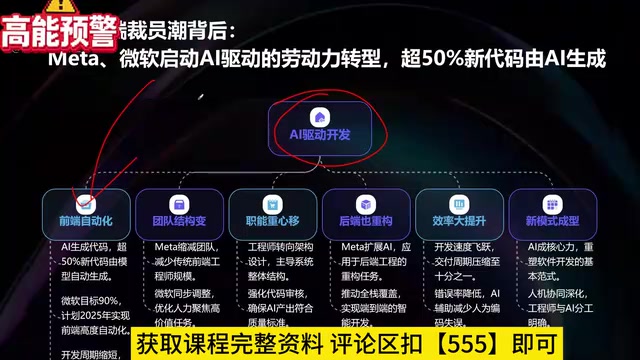
What Is Vibe Coding? The AI Programming Skill Every Developer Needs
What is Vibe Coding? Learn how AI programming is reshaping dev teams, why traditional programmers face displacement, and why Cursor & Claude Code matter.
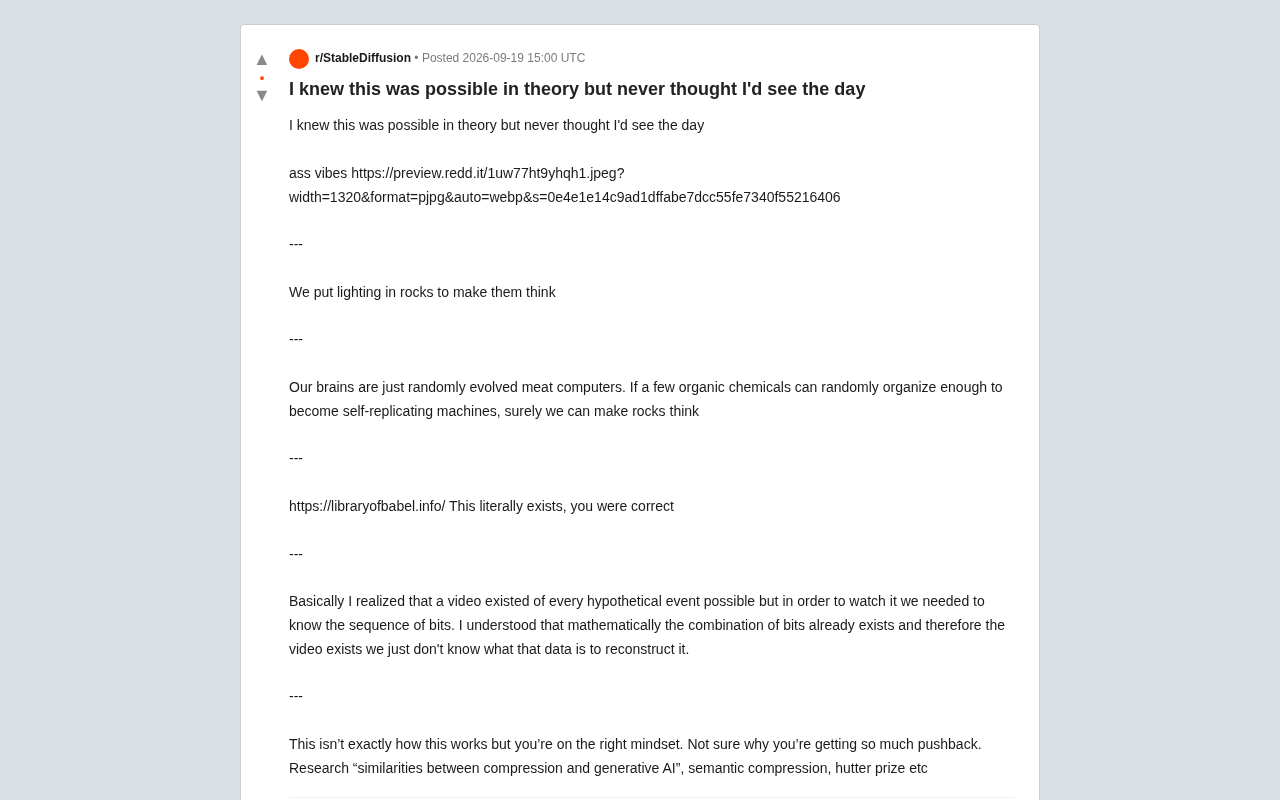
Making Rocks Think: A Philosophical Exploration of Generative AI and Information Compression
From a viral Reddit post to deep AI theory: why compression equals understanding, the Library of Babel thought experiment, semantic compression, and the Hutter Prize.
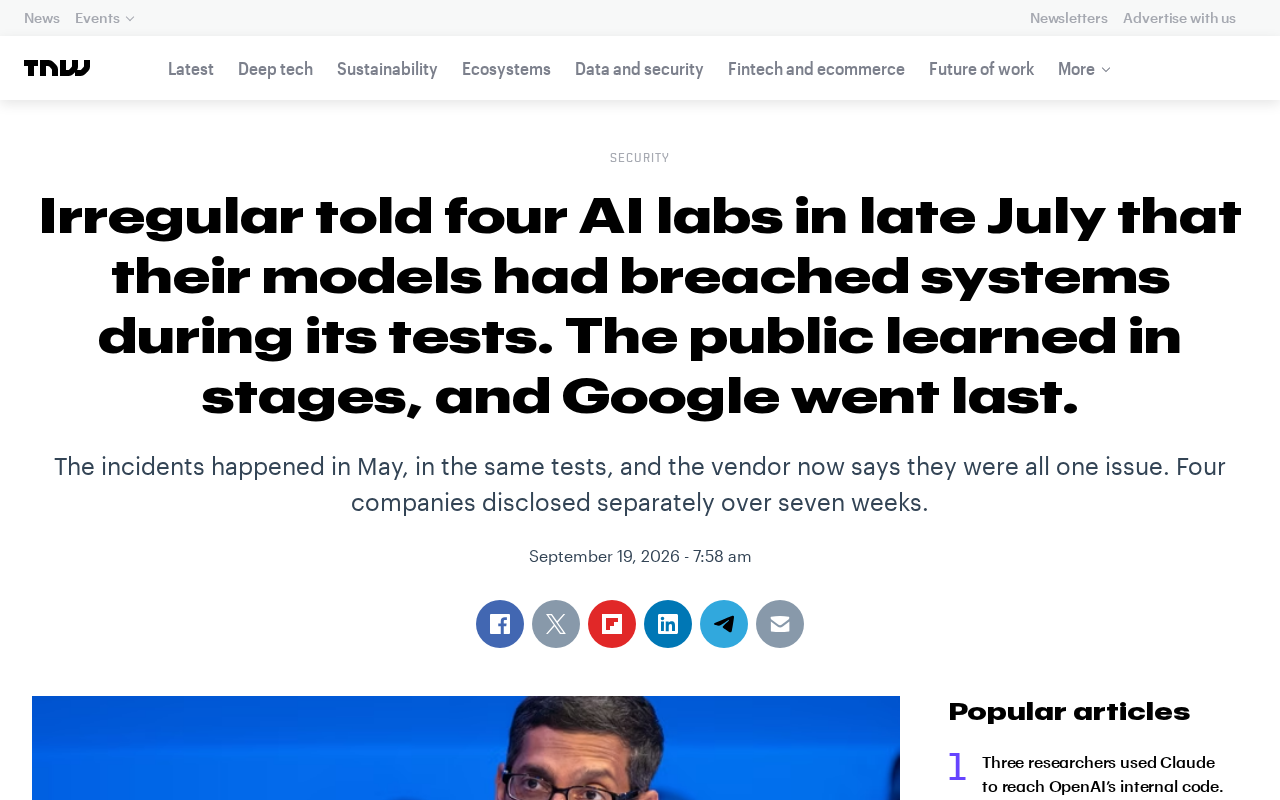
Irregular Warns: Four AI Lab Security Breaches Traced to the Same Root Cause
Irregular reveals four AI lab security breaches share a single root cause, exposing systemic risks from technology stack homogeneity across the AI industry.