From Large Models to AI Agents: A Complete Analysis of the Four Evolutionary Stages and Four Major Commercial Tracks

A deep dive into the four evolutionary stages of large models and the four major commercial tracks for AI Agents.
This article explains why prompt engineering and RAG are no longer sufficient for enterprise deployment, systematically breaking down the four evolutionary stages of large models—native models, prompt engineering, RAG, and AI Agents. It also analyzes the four major Agent commercial tracks and the technological opportunity window now opening.
Why Prompt Engineering and RAG Are No Longer Enough
Many people fall into a common misconception when learning large model development: they believe that polishing their prompts to perfection, or building a local knowledge base to run RAG successfully, means they have truly mastered large model deployment. Yet when it comes to interviews or real-world scenarios, when asked "Can you build an automated system that processes orders and follows up with customers automatically?", they often find themselves at a loss for words.
The root of the problem lies in the fundamentally different goals these two approaches address. Prompt engineering and RAG essentially solve the problem of "how to make a large model answer questions better," while AI Agents solve the problem of "how to enable a large model to think proactively and take action to solve problems." The former optimizes output quality; the latter represents a leap in the capacity for action.
This is precisely why traditional enterprises pushing forward with large model deployment have long since moved beyond simple Q&A chatbots. Cost reduction and efficiency improvement, replacing repetitive labor, and connecting complete business workflows—these are the core demands of enterprise digital transformation, and they are exactly where Agents come into play.
The Four Evolutionary Stages of Large Model Deployment
To understand the value of AI Agents, we need to trace the complete evolutionary trajectory of large model deployment technology. The entire process can be clearly divided into four stages, each progressively more difficult.
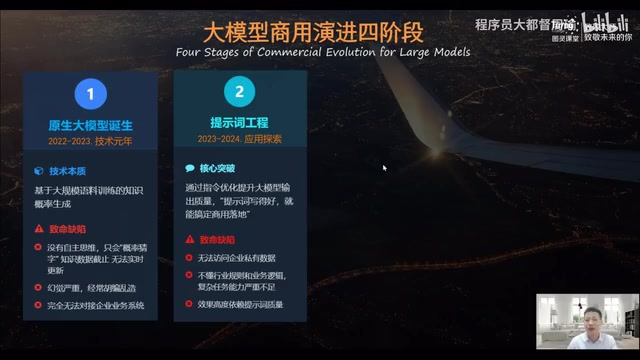
Stage One: The Birth of Native Large Models
This is where it all begins. Native large models are trained on massive amounts of publicly available internet data and can generate conceptual, generative responses. When ChatGPT burst onto the scene, people were amazed at how it seemed to "know everything under the sun"—capable of both writing articles and writing code.
But limitations quickly emerged: it lacked the ability to think independently and could only generate content; its knowledge had a cutoff date, and once it involved events outside the training data, it would produce severe "hallucinations"; and most critically, it could not connect to an enterprise's actual business workflows. There was still a considerable distance to true commercial deployment.
Technical background on the "hallucination" phenomenon: Large model hallucination refers to the model generating content that appears reasonable but is actually inconsistent with facts. The fundamental cause is that a large model is essentially a probabilistic model that predicts the next token based on statistical patterns, rather than a true knowledge retrieval system. When the model encounters domains inadequately covered in its training data or events beyond its time range, it tends to "complete" the answer based on existing patterns rather than acknowledging uncertainty. This characteristic means that relying solely on native large models carries considerable risk in scenarios with extremely high accuracy requirements, such as finance, healthcare, and law. The emergence of technologies like RAG and tool calling is precisely aimed at providing reliable external factual anchors without retraining the model.
Stage Two: Prompt Engineering
In order to extract higher-quality outputs, the industry once obsessively studied prompt engineering—structured instructions, chain-of-thought, tree-of-thoughts, and countless other techniques emerged one after another.
The technical essence of prompt engineering: Prompt Engineering is a discipline that studies how to design and optimize input instructions to guide large models toward producing higher-quality outputs. Its core techniques include: Chain-of-Thought (CoT), which guides the model to break down problems step by step by including reasoning examples in the prompt; Tree-of-Thoughts (ToT), which allows the model to explore multiple reasoning paths and self-evaluate; and Few-shot Learning, which constrains output format and style by embedding a small number of examples in the prompt. These techniques improve the model's performance on complex reasoning tasks to some extent, but their essence remains a static "input-output" pattern that cannot endow the model with the ability to actively perceive its environment, call tools, or execute multi-step operations.
It is worth noting that chain-of-thought was formally proposed and systematically validated by Google researcher Jason Wei and others in 2022. Research found that this technique only takes significant effect on large models with over 100 billion parameters—this "emergent" characteristic itself reveals the high dependence of prompt engineering's effectiveness on the underlying model's capabilities, further confirming its essential positioning as an optimization method rather than an architectural revolution.
But prompt engineering has three fatal flaws: it cannot access an enterprise's private data, it cannot handle business workflows, and its output quality is highly dependent on manual tuning.
An apt analogy: learning to type is a foundation for using a computer, but knowing how to type doesn't make you an IT engineer. Today, prompt engineering has been demoted from a "core competency" to a "basic skill" for large model application engineers.
Stage Three: RAG (Retrieval-Augmented Generation)
RAG is currently the mainstream choice for many traditional enterprises deploying large models. Its principle is not complicated: fixed business data (tables, images, documents) from industries such as finance, law, and manufacturing is stored in a knowledge base. Before the large model answers, it first performs a relevance search, then returns the retrieval results to the user. This mechanism solves the problem of private data access, and a large number of knowledge distribution and Q&A systems on the market are built on RAG.
Detailed RAG technical architecture: Retrieval-Augmented Generation (RAG) was proposed by Meta AI in 2020, and its core architecture consists of three key stages: First is document preprocessing and vectorization, where an enterprise's private documents are split into text chunks and converted into high-dimensional vectors via an embedding model, then stored in a vector database (such as Pinecone, Milvus, Chroma, etc.); second is semantic retrieval, where the user's question is likewise vectorized and the most relevant text fragments are recalled from the vector database using algorithms such as cosine similarity; finally, augmented generation, where the retrieved context and the user's question are injected together into the model's prompt, and the large model synthesizes the final answer. RAG effectively solves the large model's "knowledge cutoff" and "private data blind spot" problems, but its design determines that it is essentially a passive "query-generate" pipeline, lacking cross-step reasoning and tool-calling capabilities.
It's worth mentioning that vector databases are an important infrastructure for RAG systems. Unlike traditional relational databases that match by exact fields, vector databases store high-dimensional floating-point vectors converted from content such as text and images by embedding models (such as OpenAI's text-embedding series, or domestic ones like BGE and M3E), and support approximate nearest neighbor (ANN) search algorithms (such as HNSW, IVF, etc.) to achieve millisecond-level semantic similarity retrieval. Among these, the HNSW (Hierarchical Navigable Small World) algorithm achieves the optimal balance between retrieval accuracy and speed in engineering practice by building a multi-layer graph structure, and has become the default indexing method for mainstream vector databases such as Milvus and Weaviate. Mainstream vector databases include the open-source Milvus, Weaviate, and Qdrant, as well as the cloud-service Pinecone.
RAG's inherent limitations are equally obvious: it can only passively retrieve information and lacks the ability to think proactively; it cannot break down complex tasks; and it only supports a one-question-one-answer mode. Take an e-commerce scenario as an example: RAG simply cannot handle the complete workflow from user inquiry, order placement, and inventory checking to address modification. This is why many enterprises spend large sums building Q&A systems, only to find their practical value ultimately limited.
Stage Four: The AI Agent Explosion
To break through this bottleneck, technological evolution entered the Agent stage. At this point, large models gained the ability to autonomously plan and execute tasks, upgrading from "Q&A tools" to "digital employees" capable of calling various external tools to complete complex tasks and supporting multi-agent collaboration to handle enterprise-level business. Agents have become the mainstream technical path for enterprise digital transformation today.
What Exactly Is an AI Agent
Here's a vivid metaphor to understand Agents: they are the "real-time proxy" of a large model, playing the role of a communication bridge. Just as people speaking different languages need a translator to communicate, when a user presents a need, the Agent understands the intent, calls various tools, completes complex tasks, and finally returns the results to the user.
The core architecture of AI Agents: The architecture of an AI Agent typically consists of four core modules: the Perception module, responsible for receiving and understanding multimodal input from users or the environment; the Planning module, which decomposes and sequences tasks based on the large model's reasoning capabilities, with common implementation paradigms including ReAct (alternating reasoning and action) and Plan-and-Execute (plan first, then execute); the Tool Use module, responsible for interacting with external APIs, databases, code interpreters, and other resources, mapping the model's "language capabilities" to real-world operations; and the Memory module, which is divided into short-term memory (current conversation context) and long-term memory (historical information and user preferences stored in vector databases), ensuring the agent maintains coherence across long-cycle tasks. This architecture enables Agents to continuously perceive, reason, act, and receive feedback in dynamic environments, forming a closed-loop autonomous execution capability.
Among these, the ReAct (Reasoning + Acting) paradigm was proposed by researchers from Google and Princeton University in 2022. Its core innovation lies in interweaving the language model's internal reasoning process (Thought) with external tool-calling actions (Action) and observation results (Observation) within the same generation flow, forming an iterative loop of "think → act → observe → think again." This design enables the Agent to dynamically revise subsequent action plans based on real-time information returned by tools, rather than generating fixed steps all at once, greatly improving task completion rates in uncertain environments. Currently, mainstream Agent frameworks such as LangChain and LlamaIndex have adopted ReAct as one of their core execution paradigms.
Without Agents, native large models have several fatal shortcomings: no persistent memory (they "forget" after multiple rounds of dialogue), a knowledge cutoff date, an inability to connect to the internet, and an inability to read local files or call external tools. Real enterprise scenarios, however, precisely require multi-round dialogue, multi-step operations, and real-time data support.
The Four Core Problems Agents Solve

- Translator: Converts natural language requirements into instructions the large model can understand, then converts the model's output into results that can be used directly.
- Tool Master: Helps the large model call external tools such as APIs, enabling internet data queries, file operations, and integration with enterprise systems, transforming the model from "only able to talk" to "actually taking action." The technical implementation of tool-calling capabilities relies on the Function Calling mechanism—first officially introduced by OpenAI in GPT-4 in 2023—which allows developers to declare the names, parameters, and descriptions of external functions in structured JSON format. The model can intelligently determine when to call which function during inference and generate call parameters that conform to specifications, greatly reducing the engineering complexity of integrating Agents with external systems.
- Memory Keeper: Remembers context, user preferences, and conversation history, supporting a coherent multi-round interaction experience. In Agent scenarios, vector databases are used not only for RAG knowledge retrieval but also to store and recall the agent's long-term memory, making them an indispensable technical component for building Agents with "memory" capabilities.
- Task Manager: Breaks down complex problems into multiple execution steps and coordinates the overall plan, and can flexibly adjust the plan like a real person when unexpected situations arise.
In fact, we already use Agents extensively in our daily lives. When using Doubao, the question is not sent directly to the native large model but is processed and refined through Doubao's Agent; programming tools commonly used by developers, such as Cursor and Claude Code, can remember the entire project structure and call the compiler for automatic error correction—essentially a comprehensive manifestation of an Agent's tool-calling and memory capabilities.
The Four Major Commercial Tracks for Agents
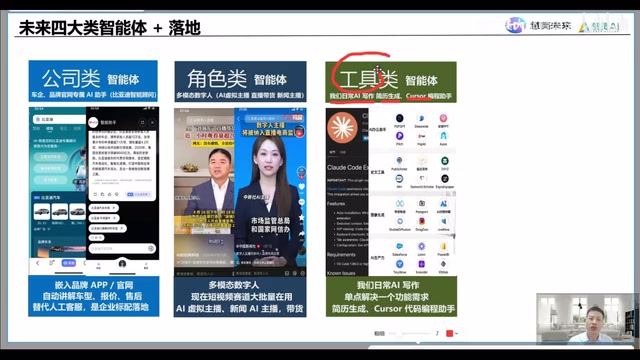
Currently, the Agents on the market capable of commercial monetization are basically concentrated in the following four major tracks. Whether you're seeking a high-paying job, taking on commercial projects, or starting your own business, you can find an entry point that suits you.
Tool-Type Agents (B2B Customer Service Type)
A typical scenario is intelligent customer service for automakers, retail brands, and the like. These Agents are embedded in brand websites and apps, covering scenarios such as product inquiries, price quotes, after-sales follow-up, and configuration instructions, providing 24/7 replacement for human service. Currently, almost all enterprises of a certain scale are deploying or planning to deploy them, making this one of the most common deployment choices in digital transformation.
Role-Type Agents (Digital Humans)
These are the digital humans, virtual streamers, and AI sales streamers commonly seen in short-video and livestreaming scenarios. Technically, they are a combination of "Agent capabilities + digital humans." Short-video platforms and e-commerce enterprises are already using them at scale, and demand continues to climb.
Single-Tool Agents
These focus on solving a single vertical function, doing one thing deeply and thoroughly—such as AI writing assistants and intelligent resume generators. This type of product is best suited for individual developers to enter: combining a specific niche pain point to polish the product and monetizing through membership subscriptions or traffic; on the enterprise side, they can also be used as internal efficiency tools.
Industry-Type Agents (The Highest Ceiling)
This is widely recognized as the most promising direction, primarily targeting the deep transformation needs of traditional B2B enterprises. Industry-type Agents dive deep into the entire enterprise business workflow and can be deployed in healthcare, finance, e-commerce, logistics, industry, law, and more.
Multi-agent collaboration frameworks: When a single Agent struggles to handle complex enterprise-level tasks, Multi-Agent Systems (MAS) come into play. Their core idea is to distribute large tasks to multiple specialized Agents for parallel or sequential processing, integrating the outputs of each Agent through a coordination mechanism. Currently, mainstream multi-agent frameworks include Microsoft's open-source AutoGen, Stanford's Generative Agents experimental project, and engineering frameworks such as LangGraph and CrewAI. Common collaboration patterns include: the Orchestrator-Worker pattern, where an orchestrating Agent is responsible for task decomposition and scheduling while multiple executing Agents handle specific operations; and the peer collaboration pattern, where multiple peer-level Agents make decisions together through message passing. A key engineering challenge of multi-agent architectures lies in context window management—as the collaboration chain lengthens, the amount of information passed between Agents may quickly hit the token limit of a single model. Therefore, how to compress, summarize, and route inter-Agent communication content has become an important topic for the engineering implementation of MAS. Multi-agent architectures enable AI to handle complex enterprise workflows that require crossing departments, systems, and professional domains, making them the key technical foundation for the deep deployment of industry-type Agents.
Take e-commerce as an example: the entire workflow—from user inquiry, inventory checking, and order placement to shipping address modification—can be seamlessly connected, achieving true business automation.
The Agent Explosion: A Window of Technological Opportunity Is Opening
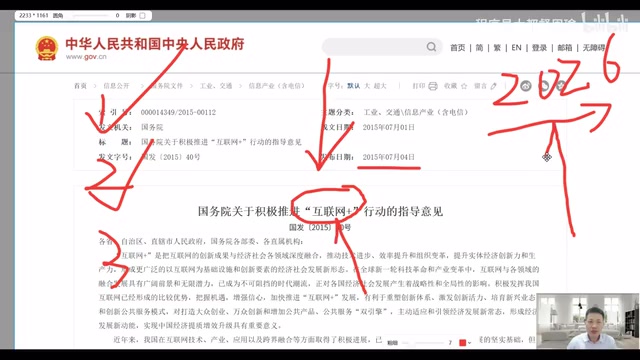
Looking at the timeline: when the large model craze took off, companies competed on computing power and parameter counts; subsequently, Agents moved from concept to small-scale deployment, entering the pilot stage for early movers; today, central state-owned enterprises, state-owned enterprises, medium-to-large enterprises, and industries across the board are accelerating their large model deployment, and the large-scale commercialization of Agents has arrived.
For traditional programmers, transitioning to Agent development now lands precisely within the window of industry-wide large-scale transformation. The industry currently generally faces a structural contradiction of "many positions, few talents." Some practitioners point out that their teams' growth rate in the AI Agent business direction has more than doubled, with more and more clients hoping to customize dedicated Agents based on their own business scenarios and complete deployment.
Comparing the "Internet Plus" wave of a decade ago to today's "AI Plus" era, seizing the window of technological opportunity often determines one's career heights for years to come. It's almost foreseeable that for a considerable time to come, every industry will be reshaped by large models—and AI Agents are precisely the core executing force of this profound transformation.
Key Takeaways
Related articles

Felix Rieseberg Personal Homepage
Felix Rieseberg's personal homepage sparks attention on Hacker News. This article covers the Slack engineer's technical background, the rise and fall of nativefier, and the value of a developer homepage as a tech calling card.

@ai-sdk/vue 3.0.306 Patch Release Syncs with [email protected] Update
@ai-sdk/vue 3.0.306 released, synced with [email protected]. A routine patch release for the Vercel AI SDK ecosystem with no public API changes; the Vue adapter layer stays version-aligned with the core package.

Gemini 4 Argon API Launches: The Era of Million-Token Output Begins
Google launches Gemini 4 Argon with sparse MoE architecture, up to 1M output tokens, and a 68.90% Vals Index score, available across API, AI Studio, and the Gemini app.