Frontier Labs' Expectations for AI: Reddit Buzz and Industry Trends Explained
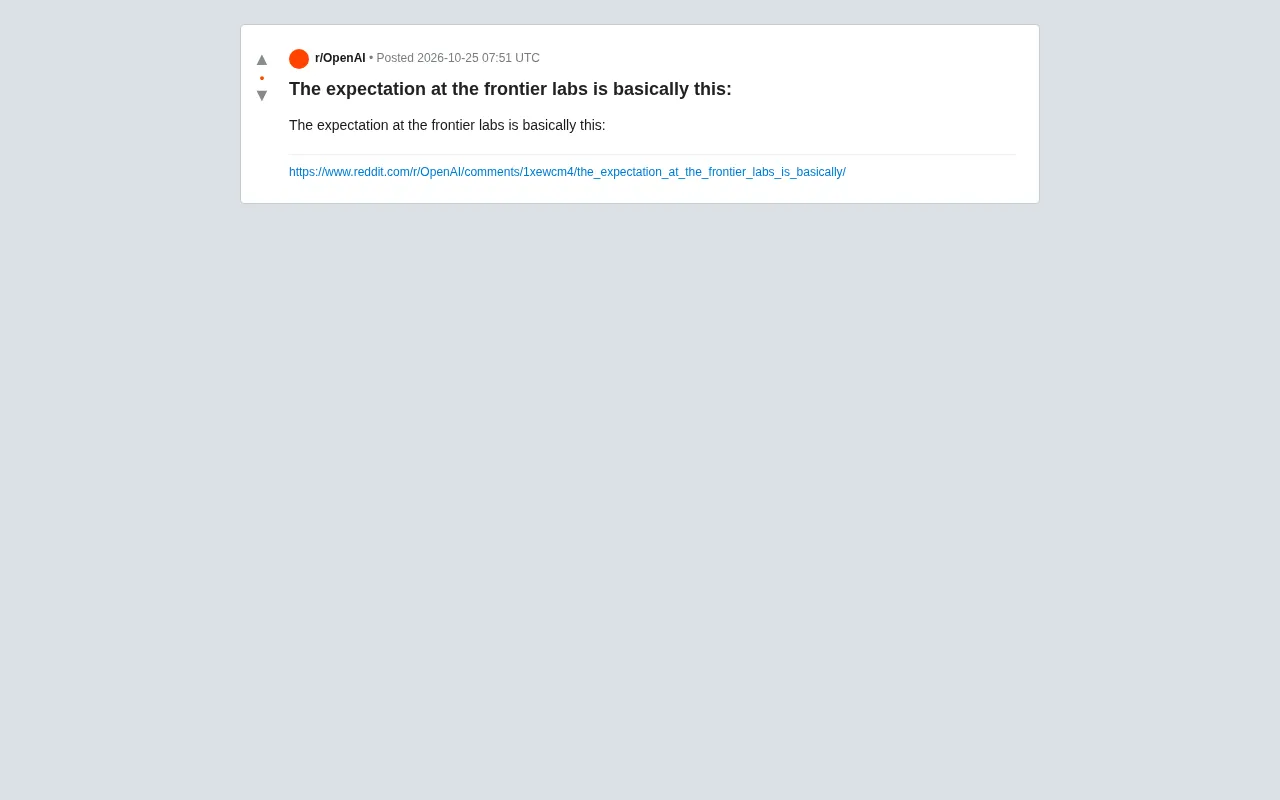
A one-sentence unfinished Reddit post reflects frontier AI labs' expectations on model efficiency, agents, and safety alignment.
A one-sentence post on Reddit sparked heated discussion, reflecting the industry's high sensitivity to frontier AI lab developments. Combining recent public signals, the article identifies three major directions for lab expectations: continued leaps in model scale and efficiency (such as MoE architectures and sparse activation), agents and autonomous task execution (autonomous planning, tool calling, multi-step tasks), and the urgency of safety and alignment (red team testing, pre-release safety evaluation). Community discussion shows that when information is incomplete, people infer lab intentions from job postings, technical blogs, and conference talks. The article also notes that expectation management has become a delicate balance in competition, and recommends that developers and enterprises plan ahead for agent tool calling and pay attention to cost changes from efficiency gains and security compliance requirements.
Introduction: A Discussion Sparked by an Unfinished Expectation
A post titled "The expectation at the frontier labs is basically this:" appeared on Reddit. The content was just that single sentence, yet it attracted a great deal of attention. This precisely shows that the expectations of frontier AI labs are themselves an industry bellwether, and any hint is worth digging into. Although the post did not give the specific expectation, by combining recent public developments we can sort out several directions that are repeatedly discussed.
Three Likely Directions for Frontier Lab Expectations
1. Continued Leaps in Model Scale and Efficiency
From the GPT series to Claude and Gemini, frontier labs generally expect the next generation of models to achieve significant improvements in reasoning ability, multimodal understanding, and long-context processing. At the same time, optimizing training efficiency (such as MoE architectures and sparse activation) is also seen as key in order to cope with computing cost pressures.
MoE (Mixture of Experts) architecture is a design that splits a model into multiple "expert" subnetworks, activating only a few of them in each forward pass, thereby keeping computational overhead relatively low even when the total number of parameters is very large. Unlike dense models, where every token passes through all parameters, MoE dynamically selects experts through a gating network (router), achieving sparse activation. This allows models to scale to the trillion-parameter level while actual inference cost is related only to the number of activated parameters. Frontier labs widely adopt MoE to balance capability and computing cost, but it also brings challenges such as load imbalance and training stability.
2. Agents and Autonomous Task Execution
Multiple labs have already listed "AI agents" as a focus for the next stage. Expectations include: models that can plan autonomously, call tools, complete multi-step tasks, and continuously learn in real environments. Discussions in the Reddit community often involve agent reliability, safety boundaries, and human-AI collaboration models.
Tool Use / Function Calling refers to a model outputting structured call requests during generation, which are executed by external systems and return results, after which the model continues reasoning based on the results. It is the foundational capability for agents to accomplish multi-step tasks, enabling models to access external resources such as search engines, databases, and code interpreters. Unlike simple text generation, tool calling requires the model to understand tool descriptions, select appropriate tools, construct correct parameters, and maintain state across multiple rounds of interaction. Current frontier models already support parallel calls and nested calls, but reliability, error recovery, and security remain research priorities.
3. The Urgency of Safety and Alignment
When releasing new models, frontier labs increasingly emphasize alignment research and red team testing. The expectation is that safety evaluation will iterate in sync with model capabilities and may even become a precondition for model release. This is not only a technical issue but also involves policy and ethics.
Red Team Testing is an adversarial evaluation method in which a dedicated team simulates malicious users or unexpected scenarios to try to induce the model to produce harmful output, leak sensitive information, or bypass safety restrictions. Red team testing differs from conventional benchmark testing in that it actively seeks vulnerabilities rather than measuring average performance. In frontier labs, red team testing usually covers risk dimensions such as bias, toxicity, jailbreak, and prompt injection, and its results are used to guide alignment fine-tuning and release decisions. As model capabilities increase, the automation and scaling of red team testing have also become research hotspots.
Insights from Community Discussion: Speculation and Consensus in an Information Vacuum
Because the original post did not elaborate, discussions in the Reddit comment section mainly revolved around the directions above. Some users pointed out that the "expectations" of frontier labs are often reflected in job postings, technical blogs, and conference talks. For example, one lab recently recruited a large number of "AI safety researchers" and "inference optimization engineers," hinting at a shift in resource allocation.
Another consensus is that intensifying competition among labs has made expectation management delicate—labs need to use vision to attract talent and investment while avoiding overpromising and triggering regulatory attention.
What It Means for Developers and Enterprises
For AI application developers, paying attention to frontier lab expectations helps with planning the technology stack in advance. For example, if agents become mainstream, tool calling and API orchestration capabilities will become more critical. Enterprises should pay attention to the cost reductions brought by improved model efficiency, as well as changes in security and compliance requirements.
Conclusion: Beyond Expectations, Within Action
Although the Reddit post is short, it reflects the industry's intense focus on frontier labs. When information is incomplete, rational inference based on public signals is more valuable than blind guessing. In the future, as more technical details are disclosed, these expectations will gradually be tested against reality.
Related articles
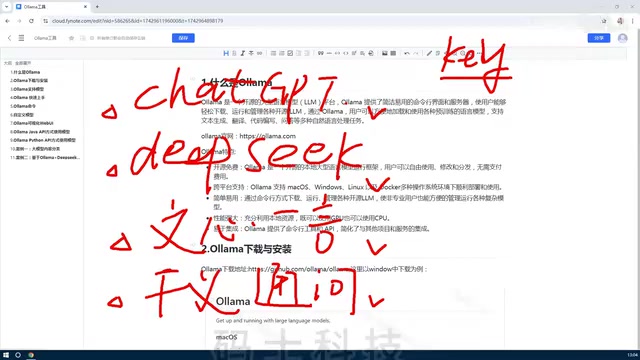
Ollama Local Deployment Guide: Run Open-Source LLMs with Zero Experience
Ollama local deployment tutorial: what Ollama is, why choose it, how to download, install, and run open-source LLMs, and use its API for custom development. Beginner-friendly.
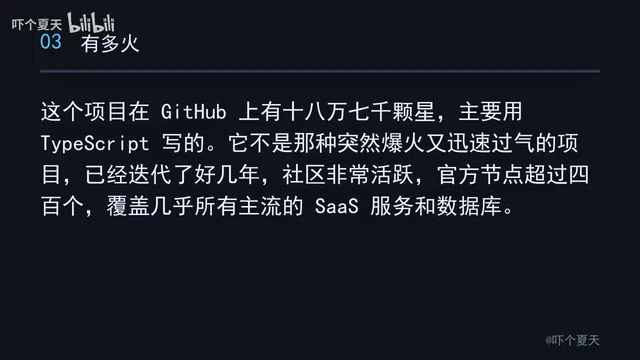
n8n: The 187K-Star Open-Source Automation Powerhouse That Turns Repetitive Work into Workflows
n8n is a 187K-star open-source visual workflow automation engine with 400+ nodes, Webhook/schedule/polling triggers, self-hosting for data security, and AI Agent support. Here's a guide to its core concepts, use cases, and pitfalls.
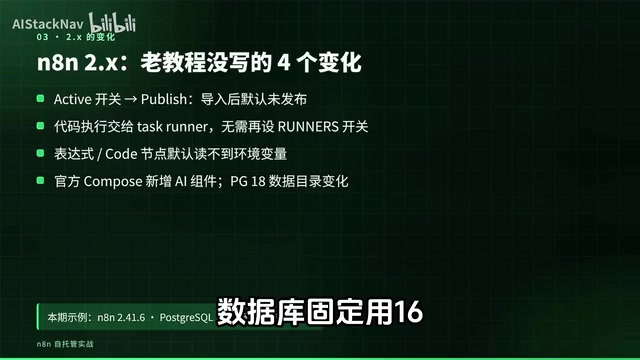
Self-Hosting n8n in Practice: Docker + PostgreSQL + Caddy Deployment Guide
A step-by-step guide to deploying a self-hosted n8n instance with Docker Compose, PostgreSQL, and Caddy automatic HTTPS, including env var pitfalls, Feishu alerting, and backup/upgrade/rollback tips.