Functionalizer: A New Framework for Lossless Subword Tokenization Decomposition
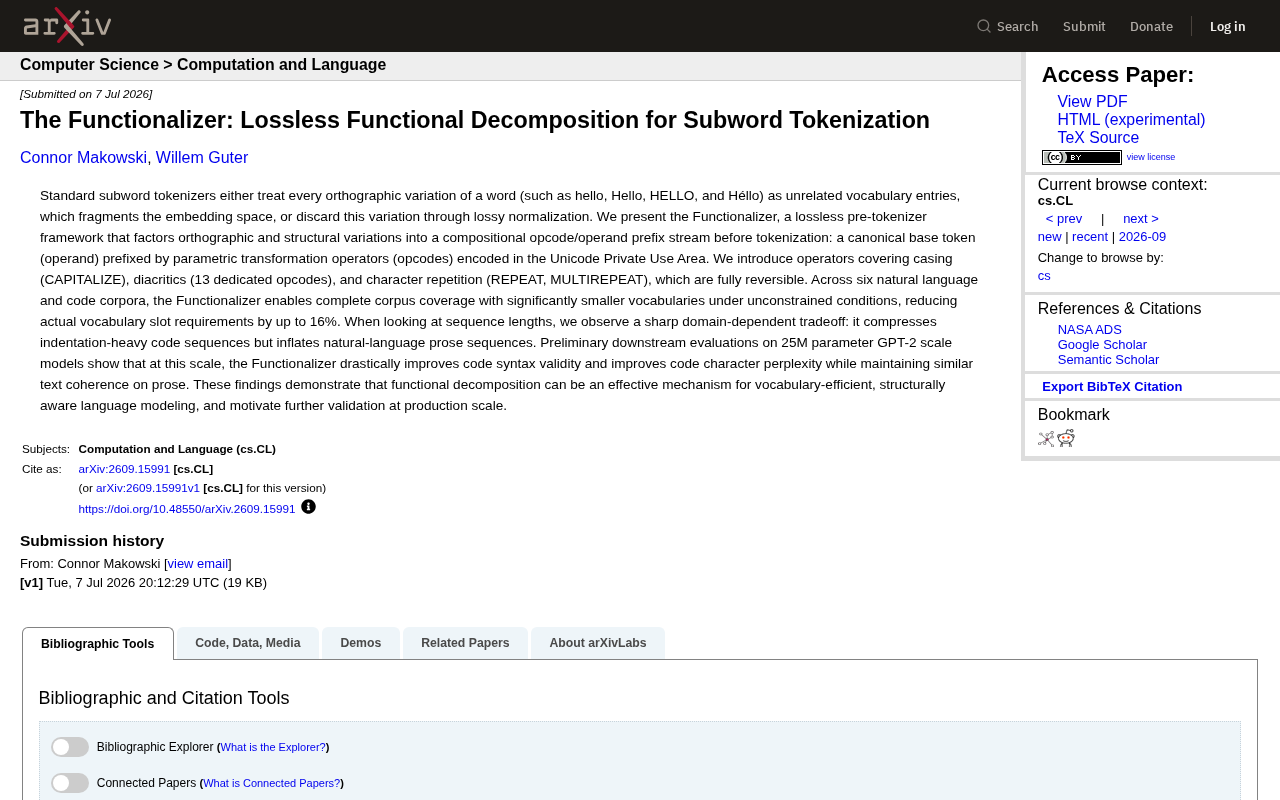
Functionalizer uses opcode+operand structure to losslessly decompose word-form variants, cutting vocabulary slots by up to 16% with strong code task gains.
Functionalizer is a lossless pre-tokenization framework that addresses vocabulary fragmentation in subword tokenizers. Rather than treating capitalized or accented word forms as separate vocabulary entries, it decomposes them into a transformation operator (opcode) plus a canonical base token (operand), with operators encoded in Unicode's Private Use Area. Tested on six corpora, it reduces vocabulary slot requirements by up to 16% and compresses code sequences, though natural language prose sequences get longer. On a 25M-parameter GPT-2-scale model, code syntax validity improved significantly while prose coherence remained stable. Production-scale validation is still needed.
The Old Problem with Tokenizers: Orthographic Variants Bloating Vocabularies
Mainstream subword tokenizers (such as BPE and WordPiece) have a well-known weakness when dealing with different written forms of the same word. For example, hello, Hello, HELLO, and Héllo are typically treated as completely unrelated, independent vocabulary entries. This leads to two direct problems: on one hand, the embedding space becomes artificially fragmented, scattering word forms that should share semantics across different vector representations; on the other hand, using lossy normalization to flatten case and diacritics discards information carried in the original text.
A new paper on arXiv titled "The Functionalizer: Lossless Functional Decomposition for Subword Tokenization" (arXiv:2609.15991v1) addresses exactly this pain point, proposing a lossless pre-tokenization framework.
BPE (Byte Pair Encoding) and WordPiece are the subword tokenization algorithms used by today's mainstream large language models (such as the GPT series and BERT). BPE starts at the character level and repeatedly merges the most frequently occurring adjacent symbol pairs in a corpus until the vocabulary reaches a preset size limit; WordPiece determines merge strategies by maximizing language model likelihood. Both can break down out-of-vocabulary words into known subword fragments, striking a balance between vocabulary size and sequence length. However, the merge rules in these algorithms are entirely driven by statistical frequency, with no awareness of linguistic structure — hello and Hello differ at the byte level and are treated as two independent merge starting points, ultimately occupying separate vocabulary slots. When vocabulary size is fixed (typically 30,000 to 100,000 entries), this redundancy directly crowds out the space available for the model to learn genuinely meaningful semantic units.
Functionalizer's Core Idea: Opcode + Operand
Functionalizer's design philosophy draws from the structure of computer instructions — decomposing a word into a combination of an "opcode" and an "operand." The approach works by factorizing orthographic and structural variations before the tokenization pipeline begins, converting them into a prefix stream of parameterized transformation operators.
The normalized base token acts as the operand, while the operator describing how to transform it (the opcode) is prepended as a prefix and encoded in Unicode's Private Use Area. This way, Hello can be represented as "capitalize operator + hello," and HELLO as "uppercase operator + hello" — multiple variants share the same base token hello, avoiding vocabulary inflation.
The paper introduces three classes of fully reversible operators:
- Case transformations: such as
CAPITALIZE - Diacritics: 13 dedicated opcodes covering various diacritics
- Character repetition:
REPEATandMULTIREPEAT, for handling repeated characters likesooo
The key is "losslessness" — all transformations are reversible and can precisely reconstruct the original text, unlike normalization which discards information.
The Unicode Private Use Area (PUA) is a range of code points in the Unicode standard reserved exclusively for application-defined use, with no officially assigned character meanings. There are three main ranges: U+E000–U+F8FF in the Basic Multilingual Plane (6,400 code points), plus Supplementary Private Use Areas A and B, providing over 130,000 freely assignable code points in total. Functionalizer's choice to encode transformation operators here is an elegant engineering decision: these code points never conflict with any natural language characters, so when they appear in a text stream they can be unambiguously identified as "control signals" rather than content characters. They can also be seamlessly embedded in standard Unicode strings without modifying the underlying byte-encoding infrastructure. The tokenizer only needs to recognize and specially handle these code points during preprocessing, making the approach minimally invasive to the downstream BPE/WordPiece pipeline.
Experimental Results: Smaller Vocabulary, But Trade-offs Vary by Domain
The research team tested their approach on six corpora spanning both natural language and code. The results reveal several distinct characteristics.
Significant Improvement in Vocabulary Utilization
Under unconstrained conditions, Functionalizer achieves full corpus coverage with a noticeably smaller vocabulary, reducing the required vocabulary slots by up to 16%. This validates the value of functional decomposition for vocabulary efficiency.
Domain-Dependent Trade-offs in Sequence Length
However, a clear domain-dependent trade-off emerged in sequence length: Functionalizer compresses indentation-heavy code sequences, but actually inflates natural language prose sequences. This means the approach is not a universal solution — its benefits are highly dependent on the application context.
Sequence length is a critical metric for Transformer-based models. The computational complexity of self-attention scales quadratically with sequence length, so longer sequences directly increase training and inference costs and reduce the amount of information the model can process within a fixed context window. The root cause of Functionalizer's sequence inflation on natural language is that word forms with capitalization or diacritics — previously merged into a single vocabulary entry — now need to be split into two tokens: an operator token plus a base token. For corpora with low variant word density (such as formal English prose), the overhead of the extra operators outweighs the savings from vocabulary reuse. Code text, on the other hand, contains abundant structural repetition — indentation whitespace, nested brackets, etc. — which are exactly the targets that REPEAT/MULTIREPEAT operators can compress efficiently, resulting in a net compression effect in the code domain.
Downstream Tasks: Clear Benefits for Code
The researchers also conducted preliminary downstream evaluations on a GPT-2-scale model with 25 million parameters. At this scale, Functionalizer demonstrated the following effects:
- Significantly improved code syntax validity: the syntactic correctness of generated code improved markedly
- Improved code character perplexity
- Prose coherence roughly on par: no significant regression on natural language
These results suggest that functional decomposition is especially effective for structurally rich, format-sensitive code text, while on natural language the primary outcome is "do no harm."
Significance and Outlook
Functionalizer's core contribution lies in demonstrating that functional decomposition can serve as a language modeling mechanism that balances both vocabulary efficiency and structural awareness. By restructuring orthographic variants from "independent vocabulary entries" into "base token + transformation operator" combinations, it preserves information losslessly while alleviating embedding space fragmentation.
That said, this work is still at the preliminary validation stage. The 25M parameter model is relatively small, and the paper explicitly notes that further validation at production scale is needed to confirm whether these findings hold up. The sequence length inflation on natural language is also a real trade-off that needs to be weighed.
For researchers focused on tokenization technology and model efficiency, Functionalizer offers a new direction worth watching: rather than choosing between the "lossy" option of normalization and the "bloated" option of preserving all variants, it may be worth trying to explicitly express variation in a structured way.
Related articles
AI Agent Earns $10K in One Week: 3 Key Upgrades Explained
A blogger shares how he earned $10K in a week with an AI Agent — not by adding more skills, but through verification, approval gates, and subagents to raise trust and enable true automation.
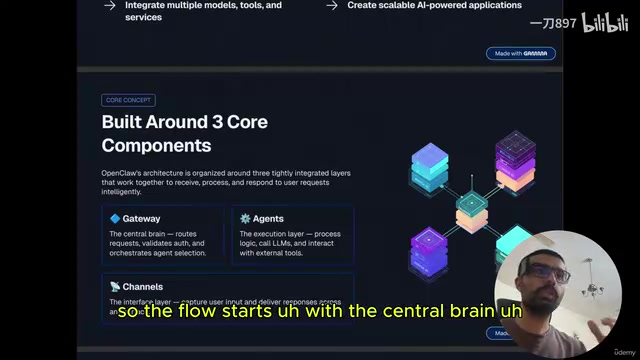
Getting Started with OpenClaw: Multi-Channel AI Agent Gateway and Automated Workflow Guide
OpenClaw is an open-source multi-channel AI agent gateway. This guide covers its three core components — gateway, agents, and channels — plus tool integration and memory mechanisms.
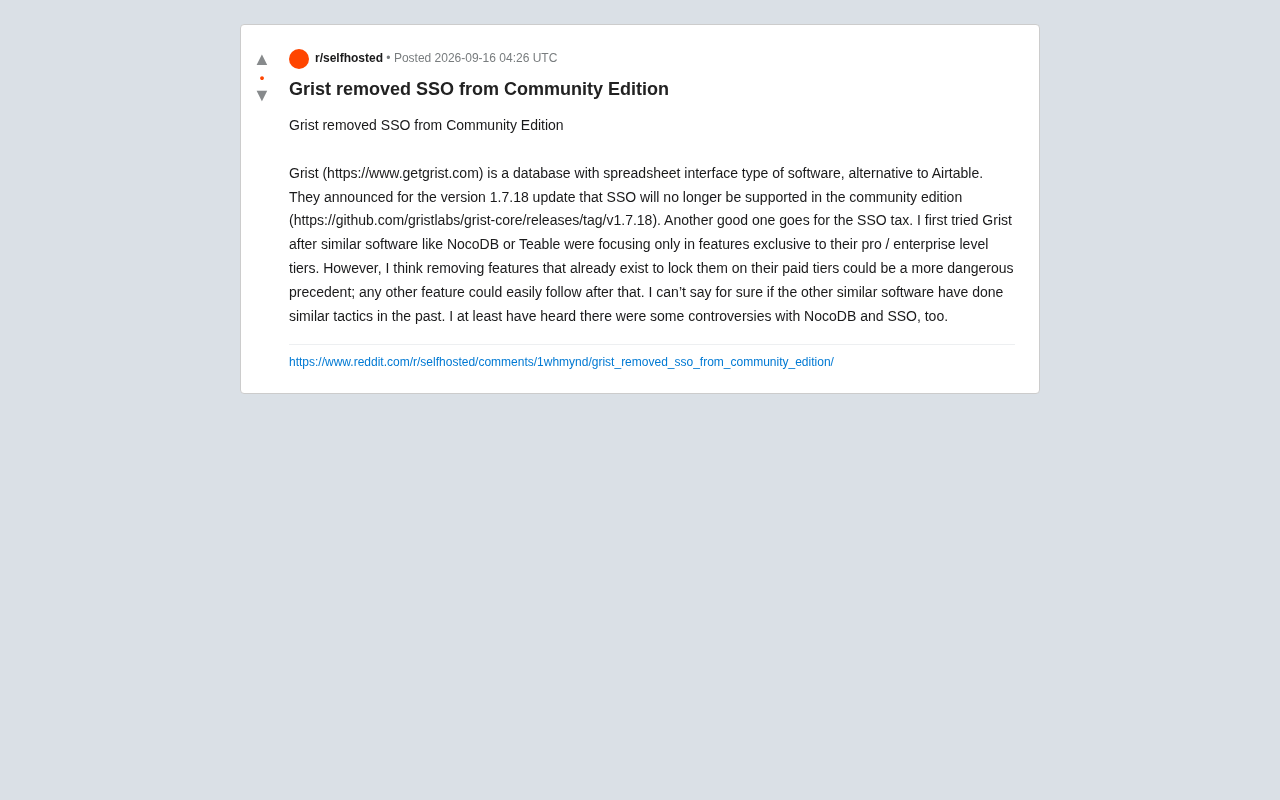
Grist Removes SSO from Community Edition: The 'SSO Tax' Debate Resurfaces
Grist v1.7.18 removed SSO from its Community Edition, locking it behind a paid tier and reigniting the 'SSO Tax' debate. We analyze the incident, open-source monetization tensions, and what it means for self-hosted users.