Grist Removes SSO from Community Edition: The 'SSO Tax' Debate Resurfaces
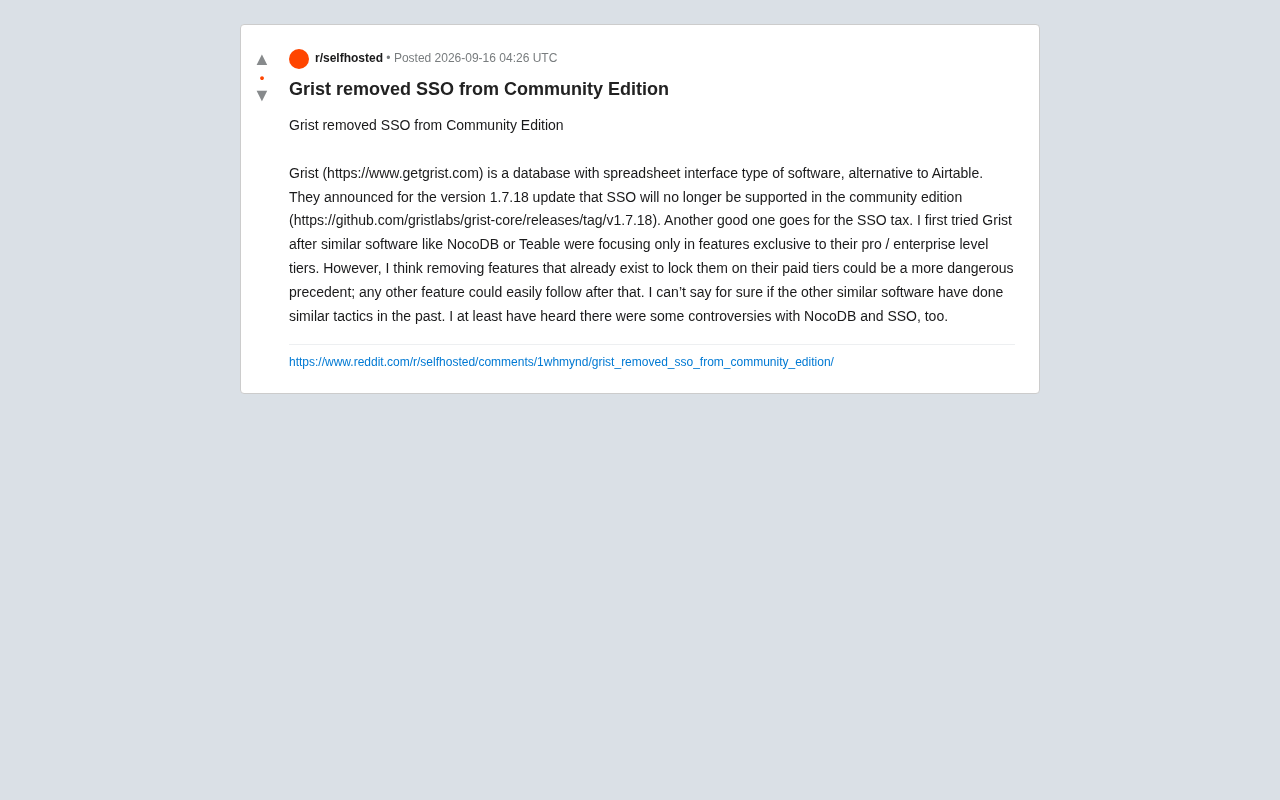
Grist removed SSO from its free Community Edition, sparking debate over the 'SSO Tax' and open-source monetization ethics.
Grist's v1.7.18 update stripped SSO from its Community Edition and moved it to a paid tier — a textbook example of the "SSO Tax," where security-critical features are placed behind expensive paywalls. The core controversy is the method: unlike competitors NocoDB and Teable, which never offered certain features in their free tiers, Grist took back a feature users already had. This "give-then-take" approach sets a dangerous precedent and erodes user trust. The episode highlights the enduring tension in open-source monetization, and serves as a reminder for self-hosted users to evaluate vendor incentives and prepare migration plans for critical features.
What Happened: Grist Community Edition Drops SSO Support
Grist is a software tool that combines a database with a spreadsheet interface, often regarded as an open-source alternative to Airtable. In its v1.7.18 update, Grist Labs announced that the Community Edition would no longer support Single Sign-On (SSO). The change is documented in the official release notes on GitHub.
For many users who rely on open-source solutions, this is no minor tweak. SSO is a critical feature in enterprise and team deployments — it lets users access multiple applications through a unified authentication system, improving both security and administrative efficiency. Removing a previously available feature from the free tier has sparked widespread discussion in the community.
What Is the "SSO Tax"?
The "SSO Tax" is a controversial phenomenon in the software industry. It refers to vendors placing SSO and other security-essential features behind a high-priced paywall, effectively forcing organizations that need them to upgrade to expensive enterprise tiers.
Critics argue that SSO is fundamentally a security feature — it should be treated as a baseline capability, not a premium upsell. Locking security functionality behind a paywall amounts to charging security-conscious organizations extra, which runs counter to the principle that security should be accessible to everyone. In recent years, dedicated websites and communities have emerged to track which vendors impose an "SSO Tax," and Grist's latest move has undoubtedly added a new entry to that list.
SSO implementations typically rely on standard protocols like SAML (Security Assertion Markup Language) or OIDC (OpenID Connect) to integrate with enterprise identity providers (IdPs) such as Okta, Azure AD, or Google Workspace. For organizations managing dozens or thousands of employee accounts, SSO isn't just a convenience — it's a fundamental requirement for security and compliance. It centralizes account lifecycle management: when an employee leaves, revoking their credentials in the IdP immediately cuts off access to all connected applications. Restricting SSO to paid enterprise tiers is, in effect, taxing the organizations that most need centralized security controls. Sites like sso.tax maintain public lists of SaaS vendors that charge for SSO, using community pressure to encourage better industry practices.
A More Dangerous Precedent: From "Never Offered" to "Taken Away"
What makes this incident particularly concerning is the nature of the change itself.
The original poster noted that they had initially turned to Grist precisely because competitors like NocoDB and Teable were reserving features exclusively for their paid or enterprise tiers — features that never existed in the free version to begin with.
Grist's approach is different. It took a feature that already existed in the Community Edition and moved it behind a paywall. This "give-then-take" model is seen as setting a far more dangerous precedent:
"Removing an existing feature and locking it to a paid tier could be a more dangerous precedent; any other feature could easily follow suit afterward."
Once this kind of commercial strategy is proven viable, users have no way of predicting which feature gets moved behind the paywall next. That uncertainty is a very real risk for teams relying on open-source tools for long-term deployments.
Not an Isolated Case: The Universal Struggle of Open-Source Monetization
The original poster also noted that NocoDB had previously sparked similar controversy around SSO. This reflects a broader trend: open-source database and low-code tools generally struggle to balance free community editions against paid commercial offerings as they scale.
From the vendor's perspective, the logic is straightforward — SSO is primarily used by enterprise customers, who also happen to have the highest willingness to pay. Using SSO as a monetization trigger is a direct path to revenue. But the cost is a loss of community trust. Open-source projects depend heavily on community contributions and word-of-mouth; once users feel they could be squeezed at any moment, the motivation to migrate to alternative solutions grows stronger.
It's worth noting that Grist itself is open source (grist-core), so the community can theoretically maintain a fork or adopt third-party solutions to fill the SSO gap — but this clearly raises the technical bar and maintenance burden for self-hosted users.
Open-source projects generally follow a few common monetization models. The Open Core model keeps core functionality open-source while charging for advanced features — this is the model Grist currently uses. The managed SaaS model charges for cloud-hosted versions without restricting the software's features. Dual Licensing offers community versions under strong copyleft licenses like GPL while requiring commercial licenses for business use. Each model has very different implications for the community. Open Core is the most controversial because as commercial pressure increases, vendors have a persistent incentive to migrate more features from the open layer to the paid tier. HashiCorp's relicensing of Terraform from MPL to BSL and Redis Labs' modification of the Redis license are both recent examples of open-source commercialization triggering community backlash — and Grist's adjustment sits squarely within the same structural tension.
Lessons for Users
This incident is a wake-up call for self-hosted and open-source tool users:
- Assess long-term dependency risk: When choosing an open-source tool, don't just look at current features — consider the vendor's monetization tendencies and track record.
- Pay attention to licenses and commitments: Understand the project's open-source license and the vendor's public commitments to community edition features, and gauge the likelihood that existing features could be removed.
- Keep a migration plan ready: For critical features like SSO, it's worth researching fallback options in advance (such as pairing a reverse proxy with external identity authentication).
Open-source monetization itself is not inherently wrong — vendors need revenue to sustain project development. But how to strike a balance between monetization and community trust remains a long-term challenge every open-source vendor must face. Grist's latest adjustment may be just another footnote in this ongoing struggle.
Related articles

Hierarchical RAG Architecture Research: How Independent Developers Can Break Into Academic Research
An indie developer on Reddit seeks IR professor guidance for hierarchical RAG research. This article explores the technical background and practical advice for independent AI researchers facing academic barriers.
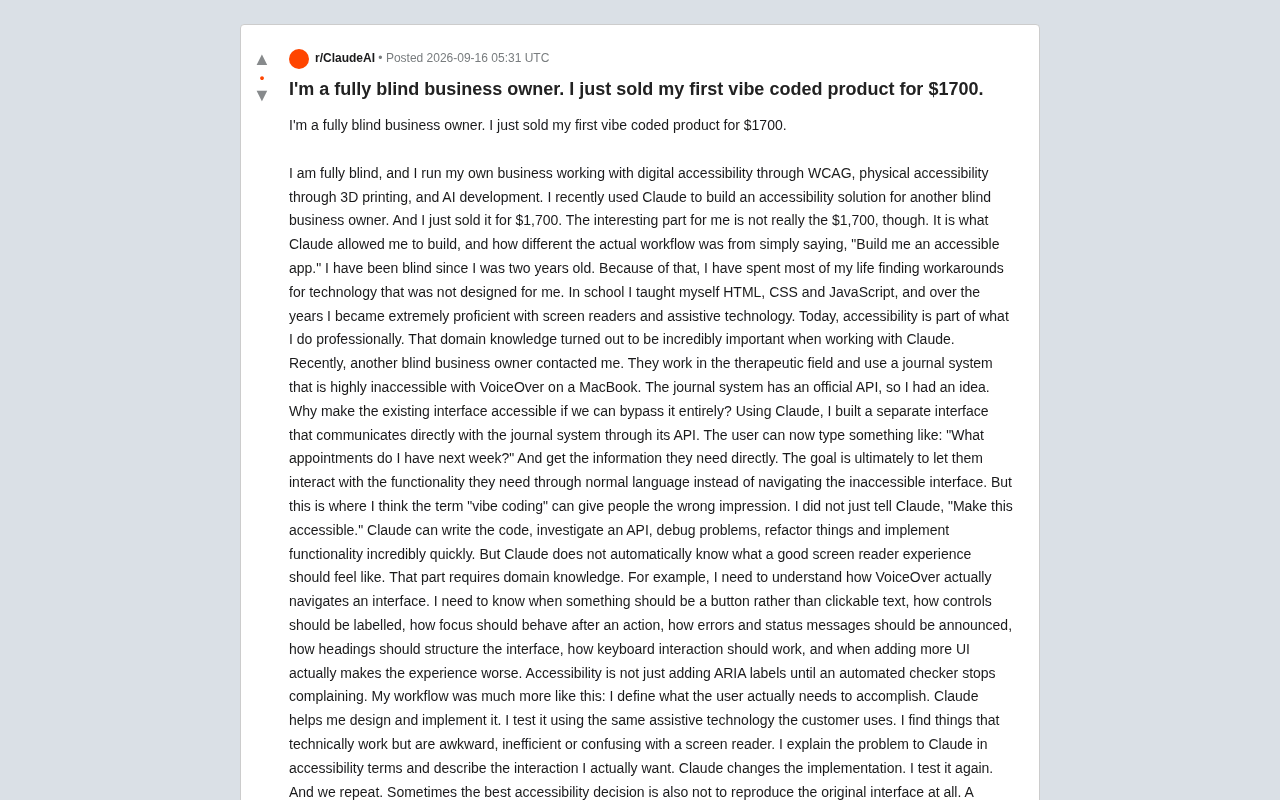
Blind Entrepreneur Uses Claude to Build Accessible Product, Sells It for $1,700
A blind entrepreneur used Claude to build an accessible tool for a blind client and sold it for $1,700 — revealing why domain knowledge, not just AI, makes products truly usable.
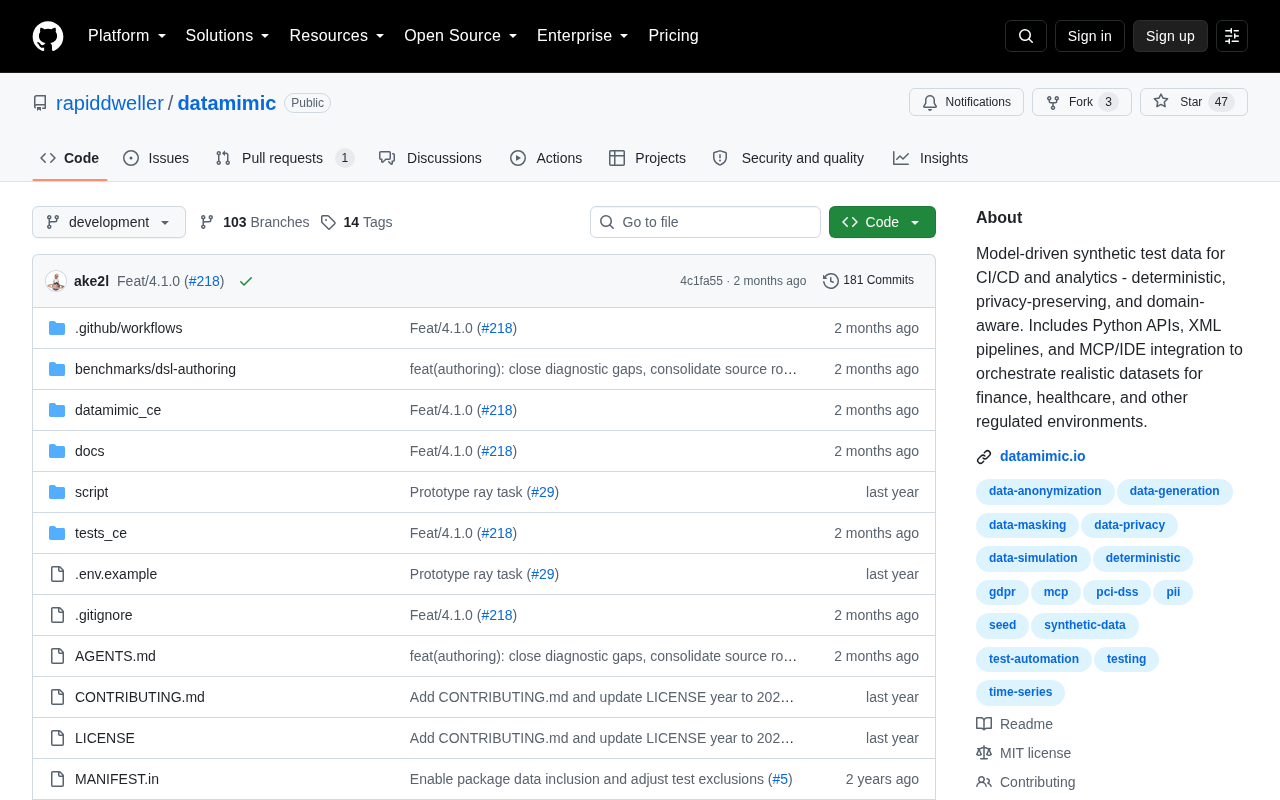
Datamimic: Giving AI Coding Assistants a Controlled Test Data World
Datamimic is an open-source tool arguing against letting AI coding agents fabricate test data. This article examines the reliability risks of AI-generated test data and the value of controlled test data for development quality.