Gartner Data Warning: 87% of Enterprises Lack AI Agent Governance — Who's in Control of Access Permissions?
Gartner data shows 87% of enterprises let unverified autonomous Agents access production systems, exposing a live attack surface.
Based on Gartner data, only 13% of organizations believe they have adequate AI Agent governance, while 87% of enterprises let autonomous Agents with unverified identity and unrestricted permissions access production APIs, customer data, and internal systems. The article analyzes three risk vectors—credential leakage, permission misconfiguration, and scope creep—and governance approaches including verifiable identity, least privilege, Policy as Code, and network isolation.
Core Warning: Gartner's latest data shows that only 13% of organizations believe they have adequate AI Agent governance capabilities, while the remaining 87% of enterprises are allowing autonomous Agents to access production APIs, customer data, and internal systems without verified identity or scoped permissions.
This Is Not a Process Maturity Issue — It's a Live Attack Surface Being Exposed
In the Reddit AI community, a discussion sparked widespread resonance: "Your AI Agents have access. But who's in control of them?" The poster cited Gartner data pointing out that 87% of enterprises are connecting autonomous Agents to production environments — APIs, customer data, internal systems — yet without verified identity, without scoped permissions, and without enforceable policies to constrain what the Agent can do next.
The poster's characterization is strikingly direct:
"This is not a process maturity gap. An unverified agent with broad system access is a live attack surface."
This statement deserves repeated reflection. In traditional security models, a subject with broad system access but no identity verification is itself a high-risk signal. But when that subject is an AI Agent, many teams tacitly accept its existence. The reason isn't hard to understand — Agents need to call tools, read data, and trigger workflows. To make them "usable," developers tend to prioritize granting broad permissions, leaving security restrictions for later.
Three Overlooked Risk Vectors
The poster listed several specific attack paths, each one highly practical:
Credential leakage. Agents typically hold API Keys, OAuth Tokens, or service account credentials. Once these credentials are leaked, attackers gain not only data read access but also the ability to perform all operations the Agent is authorized to execute.
Permission misconfiguration. During rapid iteration, Agent permission scopes are often over-granted. An Agent responsible for querying orders might simultaneously have database write permissions, simply because "it was convenient for debugging at the time."
Scope Creep. This is the most insidious one. Agent permissions gradually expand with feature iterations. Each expansion seems insignificant on its own, but cumulatively, they can give the Agent capabilities far beyond its initial design boundaries.
The common thread among these three paths: most organizations won't discover them immediately. Problems typically surface only when something fails downstream. The poster's exact words:
"Most organizations will not find out until something fails downstream."
Scope Creep is a classic concept in software engineering and security. It was first used in project management contexts to describe project requirements expanding without formal change control, causing final deliverables to far exceed the original scope definition. In Agent governance scenarios, Scope Creep refers to an Agent's permission set being continuously appended through feature iterations, where each addition often has a reasonable local justification (e.g., "this Agent should also be able to send notifications") but lacks a global permission review. Unlike a one-time erroneous authorization, the danger of Scope Creep lies precisely in its gradual and insidious nature: no single change appears to be a violation, but the cumulative result may be an Agent gaining capabilities far beyond its design intent. In traditional IAM, this is called "permission creep" or "permission accumulation," typically mitigated through periodic permission audits and Just-in-Time (JIT) access mechanisms. For AI Agents whose behavioral space is far larger than traditional applications, this cumulative effect is significantly amplified, requiring stricter permission lifecycle management than human users.
What to Do in Practice? Directions from the Community
At the end, the poster asked practitioners running multi-Agent systems: how do you actually handle this problem? Application-layer controls, network isolation, or something else?
From the discussion, several governance approaches worth noting can be summarized:
Establish verifiable identity for Agents. Treat Agents as subjects requiring independent identity, rather than simple scripts holding API Keys. Each Agent should have a clear identity that is traceable, auditable, and revocable.
Least privilege and scope limitation. Agent permissions should be precisely granted based on actual task requirements. Query-type Agents should not hold write permissions, and temporary tasks should not receive persistent credentials.
Policy as Code. Define Agent-allowed behaviors as executable policies, not suggestions in documentation. Policies need to take effect at runtime, not just be checked at deployment.
Network isolation was also mentioned — isolating the Agent's runtime environment from core systems at the network level to limit lateral movement possibilities.
Policy as Code refers to the practice of expressing access control, compliance requirements, and security rules as machine-readable code, incorporated into version control, automated testing, and CI/CD pipelines. In Agent governance scenarios, this means no longer relying on textual descriptions like "Agents should not access production databases" in documentation, but instead writing allowed/prohibited behaviors as rules that can be evaluated at runtime by policy engines (such as OPA, Cedar, etc.). Its core advantages are threefold: first, enforceability — policies are actually checked every time an Agent initiates an operation, not just formally passed at deployment; second, auditability — every policy modification has a version record, making it easy to trace "who relaxed what restriction and when"; third, testability — before policies go live, simulated requests can verify whether they meet expectations. For autonomous Agents whose behavioral paths are difficult to fully enumerate, Policy as Code is the key infrastructure that makes "least privilege" a reality rather than just a principle.
Structural Reasons Behind Governance Lag
Why is the 87% figure so high?
On one hand, the deployment speed of AI Agents far outpaces the security team's response speed. Business teams can connect Agents to production within weeks, while establishing a complete identity system, permission model, and audit trail often takes months.
On the other hand, the autonomy of Agents itself blurs traditional security boundaries. Traditional application behavior paths are enumerable, while the Agent's behavioral space is much larger — it may call any tool or access any authorized data source. This poses a fundamental challenge to permission design.
The poster's assessment is clear-eyed: this is not a problem that will be solved by waiting for processes to mature. An unverified Agent combined with broad system access is, right now, a live attack surface — it won't pause its existence just because the team is still "improving governance."
For teams currently running multi-Agent systems, this data set is a mirror: Does your Agent have an identity? Do permissions have boundaries? Are policies actually enforced at runtime? If the answers to these three questions aren't certain, you might be among the 87%.
Understanding the "87% governance gap" figure requires distinguishing the fundamental difference in security models between AI Agents and traditional automation scripts. Traditional application execution paths are deterministic and enumerable — security teams can exhaustively identify all possible system calls through code review and static analysis, thereby precisely designing permission boundaries. However, AI Agent behavioral paths are driven by model inference — given a goal and tool set, the Agent may combine call sequences that the designer never anticipated. This "unenumerable behavioral space" characteristic renders traditional whitelist-based permission design methods ineffective. The industry's current proposed countermeasures include: Capability Sandboxing — limiting the tools and data sources an Agent can reach to a minimal set; Runtime Policy Enforcement — performing dynamic authorization checks before each tool call; and Observability — logging all Agent behaviors in full to support post-hoc auditing and anomaly detection. These methods are still rapidly evolving and have not yet formed mature standard practices — this is precisely the deep technical reason behind governance lag.
One-line Summary
Gartner data shows 87% of enterprises let unverified autonomous Agents access production systems, exposing a live attack surface.
Paragraph Summary
Based on Gartner data, the article points out that only 13% of organizations believe they have adequate AI Agent governance capabilities, while the remaining 87% of enterprises are allowing autonomous Agents with unverified identity and unrestricted scope to access production APIs, customer data, and internal systems. The author emphasizes this is not a process maturity issue but a live attack surface that exists right now. The article specifically analyzes three major risk vectors — credential leakage, permission misconfiguration, and scope creep — whose common characteristic is being difficult to detect in time, often only exposed when downstream components fail. Governance directions summarized from community discussions include establishing verifiable identity for Agents, implementing least privilege, promoting Policy as Code, and network isolation. The author further dissects the structural reasons behind governance lag: Agent deployment speed far exceeds security team response capabilities, and Agent autonomy makes behavioral space difficult to enumerate, fundamentally challenging traditional security boundary design.
Related articles
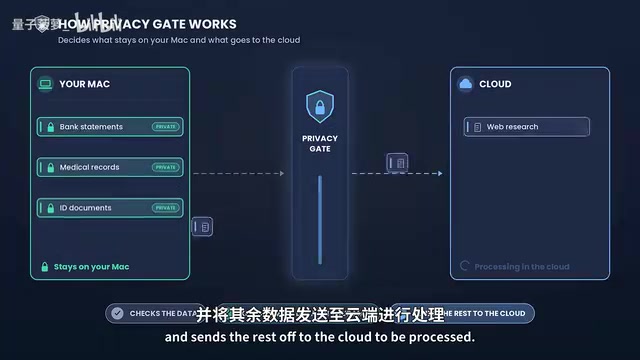
Perplexity Hybrid Compute Tested: Privacy Data Never Leaves the Mac
Perplexity Hybrid Compute tested: how PrivacyGate intercepts sensitive data, how local and cloud models divide work, model differences on 16GB vs 32GB Macs, and privacy protection in real scenarios like bank statements and medical records.

Big Fat Fish Roasts Mainstream LLMs at Home and Abroad: Doubao Takes the Crown, DeepSeek Tied for First
Bilibili creator Big Fat Fish roasts mainstream LLMs: Doubao tops for emotional value, DeepSeek ties first for open-source value, with ERNIE, Hailuo, Yuanbao, Kimi, Qwen, Kling, Claude, Gemini, and Grok each branded with a distinct persona.

How to Truly Test AI Agents Before Production? A Practical Testing and Monitoring Framework
BotGage founder Pramin Pradeep shares a three-step framework for testing AI Agents before production: Agent registration visibility, red teaming, and production observability — plus a real case cutting QA costs from $180K to $80K and an analysis of IT roles shifting to Agent supervisors.