GAUGE Study: When You Can't Trust LLM-as-a-Judge for Agent Evaluation
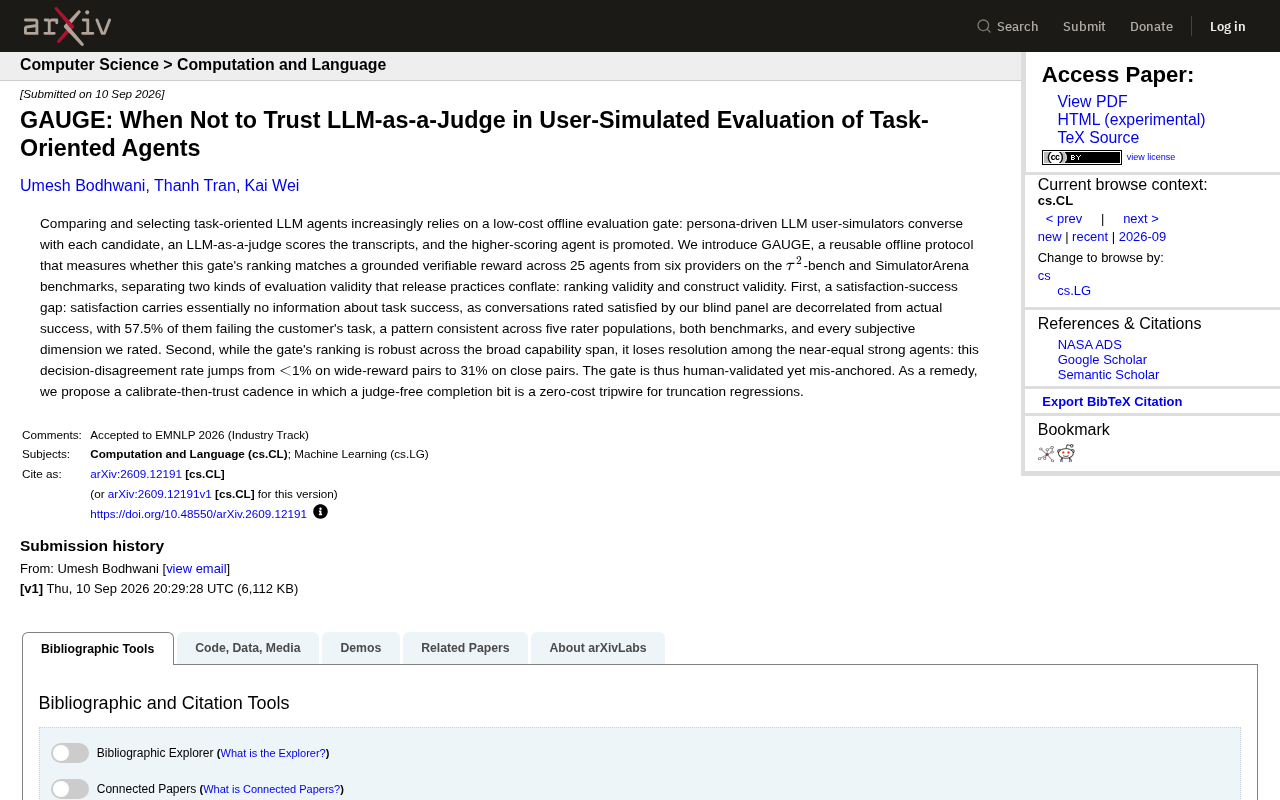
GAUGE finds LLM judge scores are decoupled from task success — 57.5% of satisfying conversations actually failed.
GAUGE is a reusable offline evaluation protocol covering 25 agents that tests whether the popular "LLM user simulator + LLM judge" pipeline reliably selects better agents. It uncovers two critical flaws: user satisfaction is nearly uncorrelated with task success (57.5% of satisfying conversations failed), and LLM judges become unreliable when comparing closely matched top models, with disagreement rates jumping from under 1% to 31%. The study proposes a "calibrate-then-trust" approach, recommending a zero-cost objective completion signal to catch truncation-related regressions that subjective scores tend to mask.
A Widely Relied-Upon Evaluation Threshold with a Blind Spot
Comparing and selecting task-oriented LLM agents increasingly depends on a low-cost offline evaluation pipeline: a persona-driven LLM user simulator converses with each candidate agent, then an "LLM-as-a-judge" scores the conversation logs, and the agent with the higher score advances. This approach has become popular because it's cheap, reusable, and requires no human involvement — essentially the default "gatekeeper" before model iteration releases.
But is this gatekeeper truly reliable? A new arXiv paper called GAUGE offers a sobering answer: it is "human-validated yet mis-anchored."
What GAUGE Is: A Reusable Offline Evaluation Protocol
GAUGE is a reusable offline evaluation protocol designed to test whether this "simulated conversation + LLM judge scoring" gatekeeper actually ranks agents in a way that aligns with a grounded, verifiable reward signal.
The study covers 25 agents from six providers and tests them on two benchmarks: τ²-bench and SimulatorArena. One of GAUGE's key contributions is distinguishing between two types of evaluation validity that the industry often conflates in deployment practice:
- Ranking validity: Does the evaluation correctly rank stronger agents higher?
- Construct validity: Does the metric being measured actually correspond to what we want to measure — i.e., task success?
Separating these two reveals the root of the problem.
τ²-bench is a benchmark specifically designed for evaluating task-oriented dialogue agents, built around verifiable ground truth — an objective standard for whether a conversation actually completed the user's task, rather than relying on subjective impressions. SimulatorArena is another LLM-simulated-user dialogue arena focused on comparing agents side-by-side under identical conditions. Together, they allow GAUGE to cover both "objectively answerable task" and "natural dialogue quality" evaluation scenarios, giving its findings stronger cross-domain generalizability. Notably, the verifiable reward signal in τ²-bench serves as the core reference for determining whether the gatekeeper is anchored to the right target — it's the objective ruler that reveals how far satisfaction scores have drifted.
Finding One: Satisfaction and Task Success Are Nearly Uncorrelated
GAUGE's most alarming finding is what it calls the "satisfaction-success gap."
The study shows that user satisfaction carries almost no information about whether a task was actually completed. Conversations rated as "satisfactory" by blind evaluation panels are decorrelated from actual task success — a striking 57.5% of those conversations did not actually complete the customer's task.
In other words, users (or simulated users) feeling like the conversation went well doesn't mean their problem was solved. This is a classic "felt good but got nothing done" illusion. More notably, this pattern holds consistently across five different scoring groups, two benchmarks, and all subjective evaluation dimensions, indicating it's not an accidental artifact of a specific judge or dataset — it's a systemic phenomenon.
For teams relying on satisfaction-based subjective scores to filter agents, this means they may have been making decisions based on a metric that is fundamentally decoupled from their actual goals.
This phenomenon is known in psychology and UX research as "experience-outcome decoupling," and it has a specific cause in human-AI dialogue: LLM-powered agents are universally fluent, polite, and empathetic in their language, making users feel "heard" and "well-treated" even when the task wasn't actually completed (e.g., a ticket wasn't properly submitted, or account information wasn't updated). This linguistic fluency is essentially a form of surface satisfaction "inflation" that systematically inflates satisfaction scores while remaining decoupled from actual business outcomes. For scenarios like customer service and process automation where "getting things done" is the core KPI, this bias is particularly damaging — high evaluation scores don't mean user problems are resolved, and may even mask serious functional defects.
Finding Two: Against Evenly Matched Top Models, the Gatekeeper "Loses Focus"
The second finding concerns the resolution of rankings. The good news is that the gatekeeper produces robust rankings when there are large capability gaps between agents — it judges clearly when the difference between strong and weak is obvious.
The problem arises among top-tier agents of similar capability. The study quantifies this using the "decision-disagreement rate":
- For pairs with large reward gaps, the disagreement rate is below 1%;
- But for closely matched pairs, the disagreement rate spikes to 31%.
This means that precisely when you most need the evaluation to distinguish between two strong candidate models and make a fine-grained choice, is exactly when this gatekeeper is least reliable. It can tell the A students from the failing students, but it can't tell which of two top students is better. Yet in practice, teams are often faced with exactly this kind of decision — choosing between approximately equal, high-performing agents.
The Fix: Calibrate Before You Trust
Faced with these limitations, GAUGE doesn't reject LLM-as-a-judge wholesale. Instead, it proposes a "calibrate-then-trust" approach.
One specific suggestion has clear engineering value: introduce a judge-free completion bit as a zero-cost "tripwire" specifically designed to catch performance regressions caused by conversation truncation. These issues are often masked by subjective scores, but an objective completion signal can serve as an early warning with almost no added cost.
The core logic of this approach is: subjective satisfaction signals can be retained, but they cannot serve as the sole or final anchor. They must be supplemented with verifiable, objective success signals for calibration — otherwise you risk being misled by conversations that felt pleasant but accomplished nothing.
The "completion bit" is a binary signal (0/1) that simply records whether a conversation was truncated or terminated before the task was completed — no subjective quality judgment involved. Conversation truncation is a common but hidden failure mode in task-oriented agents: an agent may terminate a conversation early due to context length limits, tool call timeouts, or process logic errors. User simulators and LLM judges often give these "unfinished" conversations moderate or even high scores because the first half of the conversation had no linguistic quality issues. Introducing a completion bit is equivalent to embedding a purely objective "circuit breaker" into the evaluation pipeline: once an abnormal rise in truncation rate is detected, an alert is triggered immediately without waiting for judge scores — preventing systemic regressions from being hidden behind subjective scores at minimal cost.
Implications for Practitioners
For teams building agent evaluation pipelines, GAUGE's conclusions offer several directly actionable takeaways:
- Don't equate user satisfaction with task success — the two can be severely decoupled.
- LLM judge rankings are reliable when capability gaps are large, but require caution when filtering top-tier candidates.
- Introduce objective, verifiable completion/success signals as a safety net — extremely low cost, yet capable of preventing serious regressions.
As task-oriented agents rapidly deploy in scenarios like customer service and process automation, the reliability of evaluation methods directly impacts deployment quality. GAUGE's value lies not in overturning existing practices, but in clearly defining the boundaries of when they can — and cannot — be trusted.
Related articles
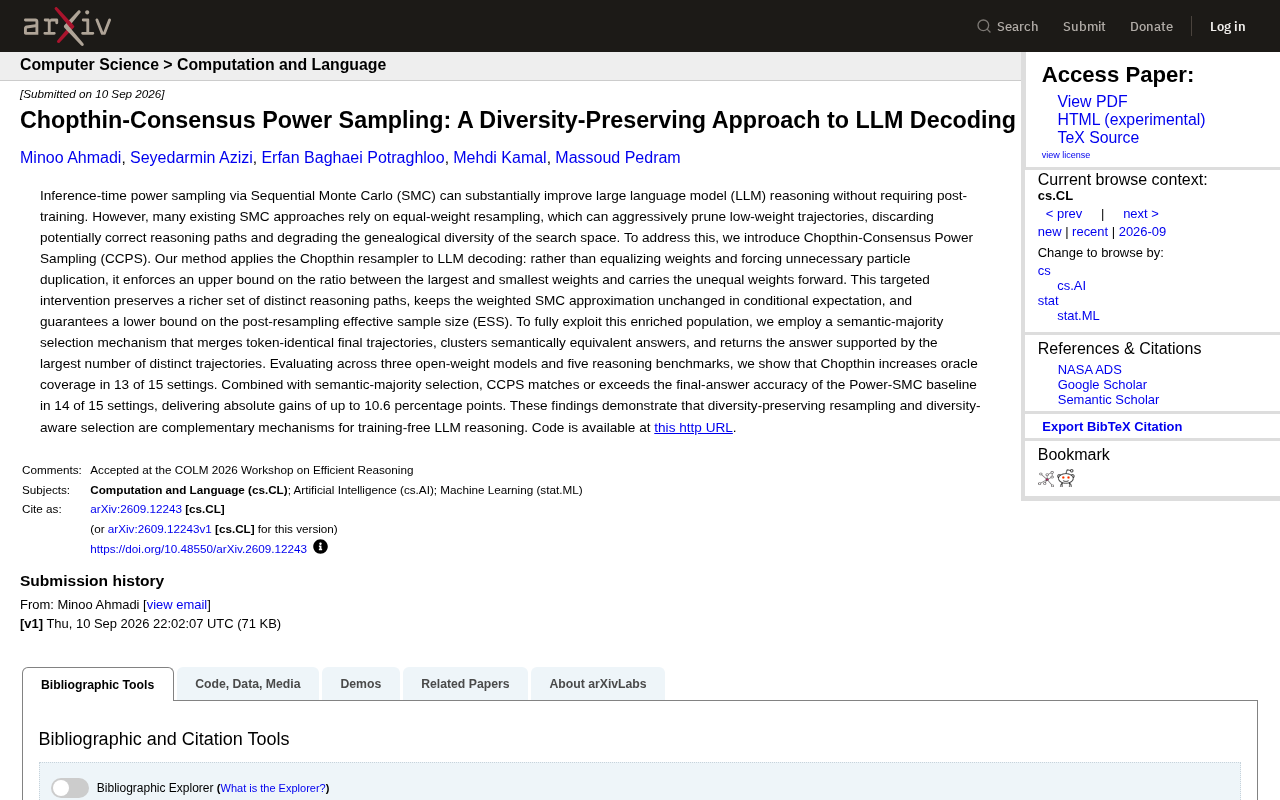
CCPS Sampling: Preserving Reasoning Diversity to Boost LLM Performance Without Fine-Tuning
A new arXiv paper proposes CCPS, which boosts LLM reasoning accuracy without any training by preserving reasoning diversity via Chopthin resampling and semantic majority selection — achieving up to 10.6pp absolute gains.

MIT Spinout Transforms Plastic Waste into High-Resilience Building Materials
MIT spinout Atlas Building Composites converts plastic waste into resilient structural components for buildings and infrastructure, pioneering a high-value recycling pathway.
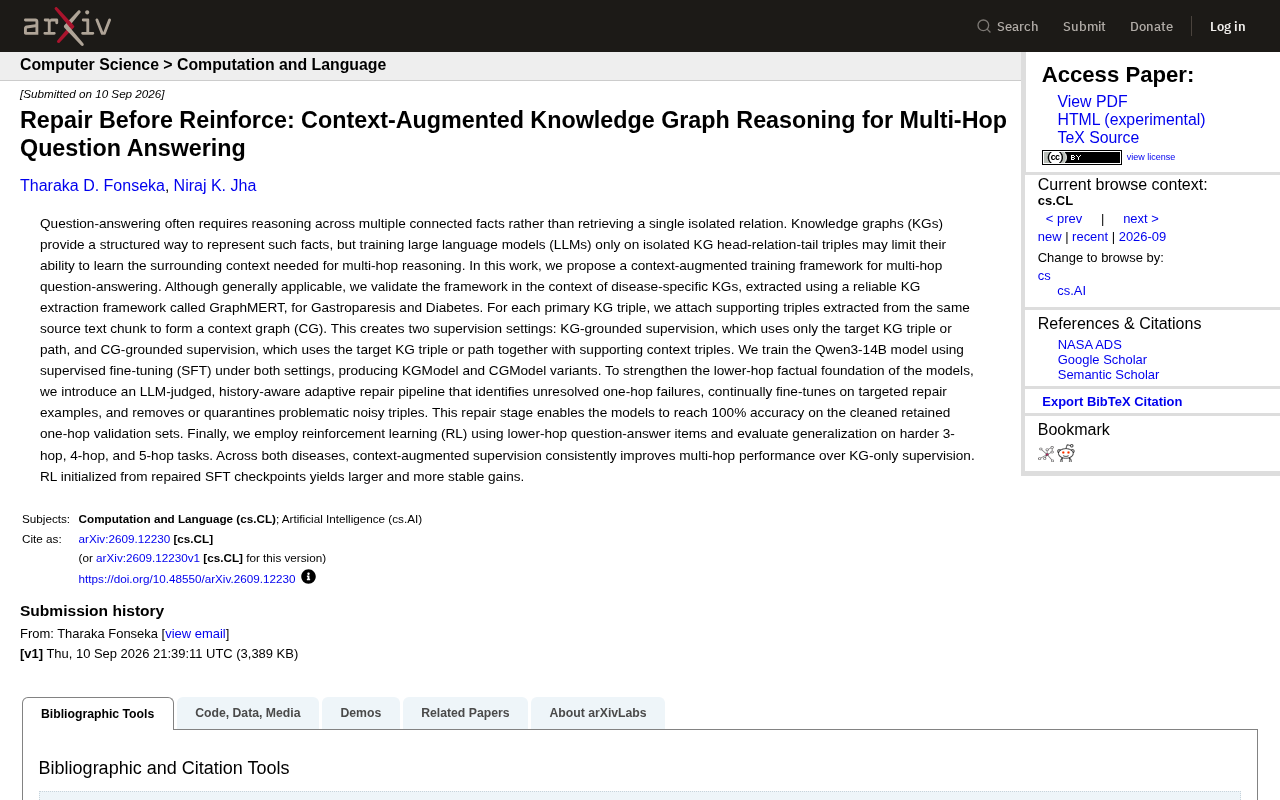
Repair Before Reinforce: Context-Augmented Knowledge Graph Reasoning Tackles Multi-Hop QA
New arXiv paper proposes a context-augmented KG reasoning framework using a "Repair Before Reinforce" strategy to improve LLM multi-hop QA. Validated on Gastroparesis and Diabetes KGs with Qwen3-14B, achieving 100% single-hop accuracy after repair.