Gemini 2.5 Flash Deprecation: A Practical Migration Guide for Image Understanding Models

A practical guide to migrating from Gemini 2.5 Flash to Lite alternatives for image understanding tasks.
With Gemini 2.5 Flash scheduled for deprecation in October 2026, developers must evaluate gemini-3.1-flash-lite and gemini-3.5-flash-lite as replacements. This guide covers migration evaluation methodology for image understanding tasks, including building domain-specific benchmarks, A/B testing strategies, output format compatibility checks, and implementing a model abstraction layer to reduce future migration costs.
Background: The Countdown to Gemini 2.5 Flash's Retirement
Recently, a developer on Reddit raised a highly representative migration challenge: their application's core functionality is image understanding and prediction output, currently running on the gemini-2.5-flash model. However, with Google officially announcing that gemini-2.5-flash will be deprecated on October 16, 2026, this developer faces the unavoidable pressure of migration.
The choices before them are two lighter alternatives: gemini-3.1-flash-lite and gemini-3.5-flash-lite. Due to pricing constraints, they cannot opt for higher-tier models and must weigh between these two Lite versions. The core question emerges: For the specific task of image understanding, which model is the optimal replacement for Gemini 2.5 Flash?

This question may seem simple, but it touches on a pain point shared by a large number of AI application developers today—model lifecycle management and migration strategy.
Why Model Deprecation Is an Inescapable Challenge for Developers
Version Anxiety Under Rapid Iteration
Large model providers iterate far faster than traditional software. Taking Google's Gemini series as an example, from 2.5 to 3.1 to 3.5, version updates often bring not only capability improvements but also the forced retirement of older versions. For developers who have deeply embedded models into production environments, this means periodic evaluation, testing, and migration are mandatory—otherwise applications may break due to API shutdown.
Google Cloud's model deprecation strategy follows a standardized process: first marking the model as deprecated, providing a clear sunset date, during which the API remains functional but no longer accepts new users, and ultimately shutting down the endpoint after the deadline. This mechanism stems from common practices in the cloud services industry—AWS, Azure, and similar platforms adopt similar strategies for their machine learning services. For developers, the key distinction lies between two phases: deprecated (still usable but not recommended) and retired (completely unavailable). The former provides a migration window; the latter represents a hard cutoff.
Deprecation notices are typically given well in advance (nearly a year in this case), but the real challenge is that the new model's behavioral characteristics, output format, cost structure, and even accuracy performance may all differ from the old model. Direct replacement is never as simple as "changing a model name."
The Cost-Capability Balance of Flash-Lite Versions
Here's a telling detail: the developer explicitly mentioned "pricing constraints." This reflects a universal phenomenon: in real business scenarios, model selection is often not about choosing the strongest option, but the one with the best cost-performance ratio.
The Flash-Lite series is Google's lightweight model line designed for high-throughput, low-latency, cost-sensitive scenarios. Compared to standard Flash versions, Lite versions further compress inference costs while maintaining fast response times, but the tradeoff may be reduced capability on certain complex tasks.
From a technical perspective, Flash-Lite's design philosophy stems from Knowledge Distillation and Pruning techniques—compressing large model knowledge into smaller parameter scales to retain core capabilities while dramatically reducing the computational resources needed for inference. For multimodal image understanding tasks, the model must simultaneously process image features from the Vision Encoder and text generation from the language model. Both computational components are compressed in Lite versions. The Vision Encoder is typically based on ViT (Vision Transformer) architecture, responsible for splitting images into patches and extracting semantic features. Lite versions may use fewer attention layers or smaller embedding dimensions, directly affecting the ability to capture fine-grained visual information.
For tasks like "image understanding + prediction output," whether precision is lost due to model lightweighting is exactly what needs to be verified.
Methodology for Migration Evaluation of Image Understanding Tasks
Don't Blindly Trust Version Numbers
Intuitively, 3.5-flash-lite has a higher version number and should seemingly outperform 3.1-flash-lite. But in practice, a higher version number does not necessarily mean better performance on a specific task. Vendors may make tradeoffs across different capability dimensions during version iterations—one version might strengthen text reasoning while showing no significant improvement in multimodal image recognition, or even regressing due to architectural changes.
Therefore, the correct approach is not making gut decisions based on version numbers, but running benchmarks with your own real datasets.
Building a Dedicated Evaluation Dataset
For image understanding scenarios, developers should follow these steps for migration verification:
- Extract representative samples: Select a batch of image samples from your production environment that cover typical scenarios and edge cases, with human-annotated "correct outputs" as reference.
- Parallel inference testing: Feed the same set of images into
gemini-2.5-flash(existing baseline),3.1-flash-lite, and3.5-flash-lite, collecting outputs from all three. - Multi-dimensional comparison: Score across four dimensions: accuracy, output stability, response latency, and per-call cost.
- Calculate overall cost-effectiveness: Convert precision loss and cost savings into comparable metrics to find the optimal choice within your business requirements.
Benchmarking image understanding tasks is more complex than pure text tasks because evaluation spans multiple layers: object recognition accuracy, spatial relationship understanding, text recognition (OCR) capability, chart interpretation, and high-level semantic reasoning. Commonly used multimodal evaluation benchmarks in the industry include MMMU (Massive Multi-discipline Multimodal Understanding), MMBench, and domain-specific evaluation sets. However, there's often a significant gap between general benchmarks and specific business scenarios—a model that performs excellently on academic evaluations doesn't necessarily handle the specific types of user-uploaded images in your product accurately. Therefore, building a Domain-Specific Evaluation Set is an essential step in migration verification that cannot be skipped.
Pay Attention to Output Format Compatibility
Beyond accuracy, output format consistency is equally critical. If existing code depends on specific structured outputs from gemini-2.5-flash (such as JSON fields or classification labels), new models may produce format deviations due to different training approaches. During migration, be sure to explicitly constrain output format in prompts and implement fault-tolerant parsing.
Notably, Google provides a Structured Output feature in the Gemini API (forcing models to return output conforming to a JSON Schema via the response_schema parameter), which somewhat alleviates format compatibility issues. However, different model versions vary in their ability to comply with complex Schemas—particularly for nested structures and enum value constraints, Lite versions may be more prone to non-compliant outputs than standard versions. This requires focused observation during testing.
Practical Migration Advice for Developers
Prioritize Small-Scale A/B Testing
Facing the "3.1 vs 3.5" dilemma in this case, the safest path is to start with small-scale A/B testing. Run a comparison with a few hundred to a thousand real images, and the data will provide more reliable answers than any theoretical speculation. If both models show similar accuracy, choose the cheaper one; if the accuracy gap is significant, you'll need to make tradeoffs within your cost budget.
Allow Ample Migration Buffer Time
Although the deprecation date is October 2026, it's not advisable to wait until the last minute. The benefits of early migration include: thorough testing in low-risk environments, discovering and fixing compatibility issues, and observing the new model's stability after deployment. Rushing to switch near the deadline is highly likely to cause production incidents.
From industry experience, model migration projects often take longer than expected. Beyond technical adaptation work, they involve regression testing, canary deployments, user feedback collection, and fixing edge cases discovered during migration. It's recommended to set an internal hard deadline at least 3-4 months before the deprecation date, leaving sufficient observation and rollback windows.
Build a Model Abstraction Layer to Reduce Future Migration Costs
From an architectural perspective, this migration is also an opportunity for reflection. If your application code has hardcoded model names and invocation logic, every model change will have cascading effects. Introducing a model abstraction layer (such as a unified LLM calling interface) allows future model switches to require only configuration changes, dramatically reducing migration costs. This is especially important for applications that rely long-term on third-party AI services.
The core concept of a Model Abstraction Layer is decoupling business logic from specific model invocation implementations. In practice, this typically involves defining a unified interface contract (including input format, output Schema, retry strategy, fallback logic), then switching underlying models through configuration files or Feature Flags. In the open-source community, projects like LiteLLM, LangChain's Model Provider abstraction, and OpenRouter all provide similar capabilities. More mature implementations also include request routing (automatically selecting models based on task type), cost monitoring, and automatic degradation mechanisms—when the preferred model experiences latency spikes or rising error rates, it automatically switches to a backup model to ensure service availability.
Conclusion
This Reddit developer's confusion is essentially a required course in AI application engineering. Models will continuously evolve and be replaced; deprecation is the norm, not the exception. Rather than fixating on the superficial choice of "3.1 or 3.5," it's better to establish a reusable evaluation and migration process: let real data speak, use abstraction layers for decoupling, and leverage ample buffer periods to reduce risk.
For multimodal tasks like image understanding, the final answer can only come from your own benchmarks—because no generic leaderboard can substitute for real data from your business scenario. In an era of rapidly evolving large models, the true moat developers need to build isn't deep dependency on any specific model, but rather a flexible system for model evaluation, switching, and operations that enables applications to gracefully handle every inevitable model transition.
Related articles
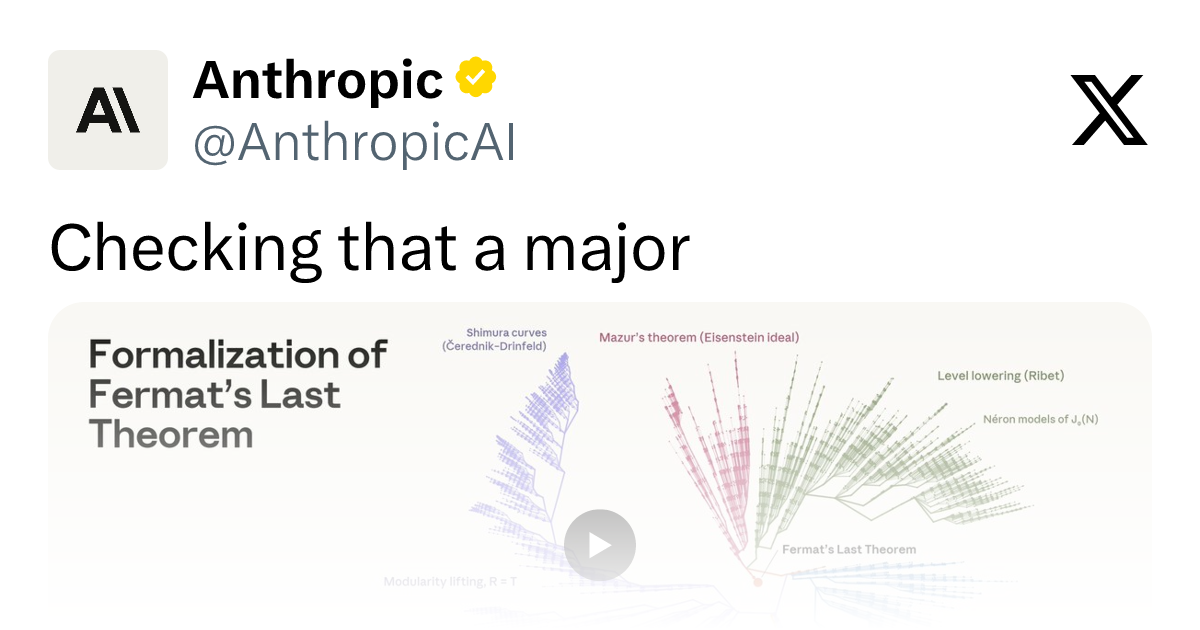
Claude Completes First Formal Proof of Fermat's Last Theorem: A Record-Breaking 13 Million Lines of Lean Code
Anthropic's Claude completes the first formal proof of Fermat's Last Theorem in over 13 million lines of Lean code — the largest ever — plus 29,000+ subsidiary theorems, opening new paths for AI-assisted math verification.

Microsoft Copilot Enters the NFL: How AI Is Supporting On-Field Decision-Making
Microsoft Copilot and Excel are entering NFL sidelines and booths, helping Seahawks analysts and coaches with real-time game decisions. Here's what it means for AI in pro sports.

Microsoft Copilot Goes Autopilot: From Assistant to Autonomous Long-Running Task Execution
Microsoft is evolving Copilot into autonomous Autopilots powered by Opal and Windows 365 cloud PCs, enabling end-to-end completion of long-running tasks without human intervention.