Gemini 3.1 Pro vs Opus 4.6 vs GPT-5.3 Codex: The Ultimate Showdown of Three Major AI Coding Models
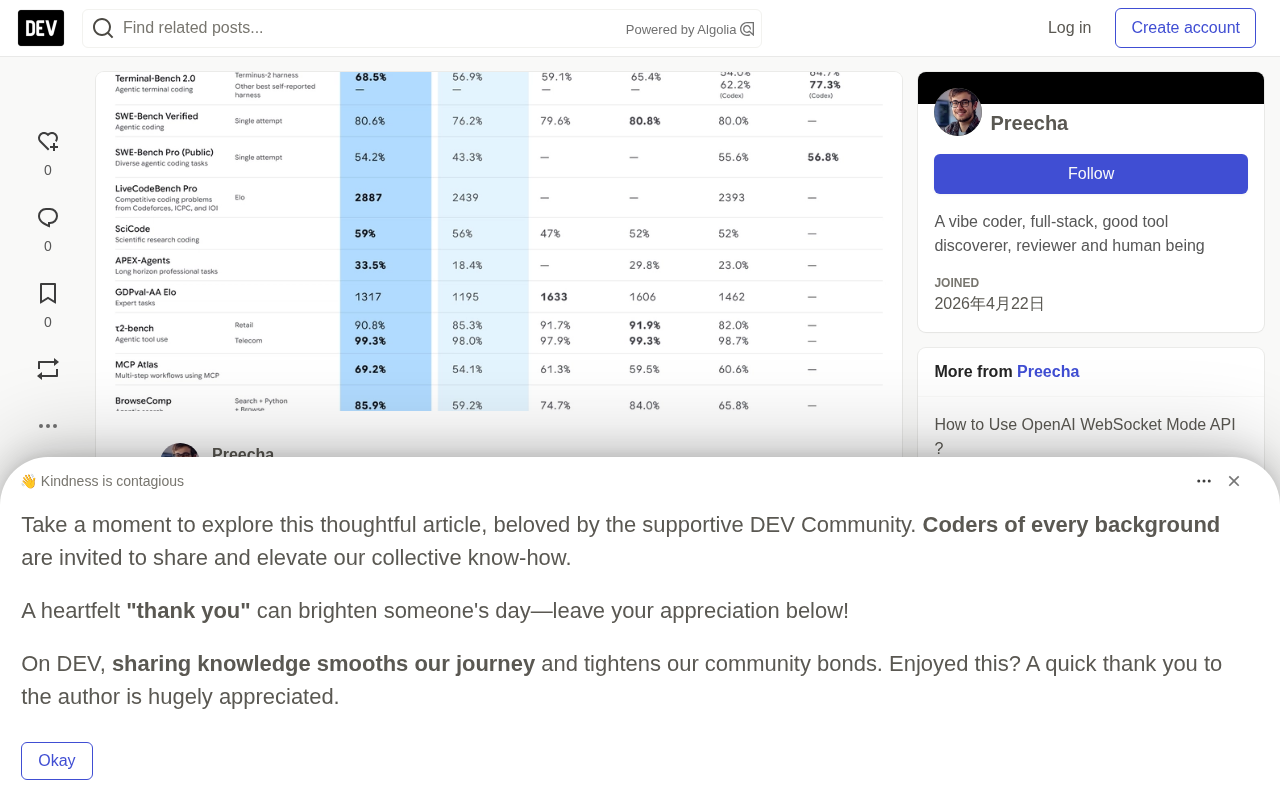
Three AI coding models launched in February 2026 each dominate reasoning, engineering, and terminal scenarios—choose based on real tests, not benchmarks.
In February 2026, Anthropic, OpenAI, and Google released Claude Opus 4.6, GPT-5.3 Codex, and Gemini 3.1 Pro within 15 days, each claiming the "strongest coding model" title. This article breaks them down across benchmarks, pricing, differentiating features, and real scenarios: Gemini 3.1 Pro leads ARC-AGI-2 (77.1%) and LiveCodeBench at $2/$12—about one-seventh of Claude's cost; Claude Opus 4.6 hits 80.8% on SWE-Bench Verified and transforms workflows with Agent Teams multi-agent collaboration; GPT-5.3 Codex dominates Terminal-Bench 2.0 at 77.3%, compressing feedback loops to seconds with interactive guidance and self-bootstrapping sandboxes. The article notes the three aren't competing on the same track, and professional developers are shifting to task-routed multi-model strategies—real selection should be based on actual test data from your own workload.
February 2026 saw a rare wave of densely packed releases in the AI coding model race. Within just 15 days, Anthropic, OpenAI, and Google launched Claude Opus 4.6, GPT-5.3 Codex, and Gemini 3.1 Pro respectively, each claiming the title of "most powerful coding model." But for developers, the real question isn't who's the strongest—it's which one to use in which scenario.
This article breaks down these three models across four dimensions: benchmark testing, pricing strategy, core features, and real-world use cases.
1. Core Positioning Differences Among the Three Models
These three models aren't competing on the same track—each occupies a different segment of the development workflow:
- Gemini 3.1 Pro: The price-performance king for reasoning and algorithmic tasks, scoring 77.1% on ARC-AGI-2 at just $2/$12 per million tokens—one-seventh the cost of Claude
- Claude Opus 4.6: The quality benchmark for real-world software engineering, reaching 80.8% on SWE-Bench Verified, with a unique Agent Teams feature supporting multi-agent collaboration
- GPT-5.3 Codex: The specialist for terminal workflows, scoring 77.3% on Terminal-Bench 2.0, with interactive guidance and 25% faster inference
Anthropic kicked things off on February 5 with Opus 4.6, OpenAI followed hours later with GPT-5.3 Codex, and Google entered on February 19 claiming "13 out of 16 benchmark wins." This relentless release cadence shows all three labs are chasing the same high-value audience—professional developers who need AI-assisted coding.
2. Benchmarks: No All-Around Champion
Reasoning: Gemini 3.1 Pro Leads by a Wide Margin
ARC-AGI-2 tests abstract reasoning ability—solving unseen logical patterns. Gemini 3.1 Pro's 77.1% marks a massive leap from Gemini 3 Pro's 31.1%, with Claude Opus 4.6 following at 68.8% and GPT-5.2 at 52.9% (GPT-5.3 Codex data not yet released).
In LiveCodeBench competitive programming evaluation, Gemini 3.1 Pro also tops the leaderboard with 2887 Elo. For algorithm competitions and scenarios requiring unfamiliar problem-solving approaches, Gemini's advantage is clear.
ARC-AGI-2 stands for Abstraction and Reasoning Corpus for Artificial General Intelligence, proposed by former Google researcher François Chollet. It's an evaluation set specifically designed to measure a model's "fluid intelligence." Its problems are typically transformation puzzles on colored grids, where each problem provides only a few examples and the model must infer the rules and apply them to new inputs. Unlike exam-style benchmarks that rely on massive text memorization, ARC-AGI problems don't exist in training corpora, making them closer to human reasoning when facing entirely new problems. The first-generation ARC-AGI was long considered large models' "Waterloo"—humans average around 85%, while mainstream models before 2024 generally scored below 5%. ARC-AGI-2 was released in 2025, further increasing combinatorial complexity and resistance to memorization. Scores above 70% mean the model has developed considerable generalized reasoning ability, which is why Gemini 3.1 Pro's 77.1% is so frequently cited.
Real-World Software Engineering: Claude Opus 4.6 Stands Alone
SWE-Bench tests whether models can resolve real GitHub Python repository issues—currently the evaluation closest to actual engineering tasks. Claude Opus 4.6 reaches 80.8% on the Verified subset, while GPT-5.3 Codex and Gemini 3.1 Pro score 56.8% and 54.2% respectively on the Pro Public subset.
Note that Verified and Pro Public are different evaluation subsets, so direct comparisons require caution. However, on the GDPval-AA benchmark measuring human preference, Claude Opus 4.6 achieves 1606 Elo, far exceeding Gemini 3.1 Pro's 1317 Elo, indicating Claude's output is more recognized for subjective quality.
SWE-Bench was proposed by a Princeton University team, with tasks sourced from real Python open-source repository issues and corresponding pull requests on GitHub. During evaluation, the model must locate problems within a complete codebase, modify multiple files, and make originally failing tests all pass—thus testing cross-file understanding, long-context localization, and real debugging capabilities. It has three commonly used subsets: Full contains all 2294 tasks but is costly; Verified features 500 tasks manually screened for clear descriptions and unique answers, and is most frequently cited; Pro Public emphasizes task difficulty and alignment with real engineering distributions. Because the three have different screening criteria, directly comparing scores across subsets often leads to distortion—this is the technical reason the article emphasizes "direct comparisons require caution." GDPval-AA, meanwhile, is a comparison leaderboard measuring human expert preference for model outputs.
Terminal Workflows: GPT-5.3 Codex's Exclusive Stage
Terminal-Bench 2.0 evaluates model performance in terminal environments, covering debugging, system administration, git operations, and build systems. GPT-5.3 Codex leads with 77.3%, Gemini 3.1 Pro at 68.5%, and Claude's data hasn't been widely published. This reflects OpenAI's targeted optimization for interactive terminal workflows.
Academic Knowledge: Gemini Leads Again
In GPQA Diamond graduate-level science Q&A, Gemini 3.1 Pro slightly edges out GPT-5.2's 92.4% and Claude Opus 4.6's 91.3% with 94.3%. While this isn't a coding-specific evaluation, it has reference value for scientific computing applications.
3. Pricing Comparison: The Cost Gap Can't Be Ignored
Pricing is an unavoidable factor when scaling AI model usage. Gemini 3.1 Pro's standard context pricing (under 200K tokens) is $2/million input tokens and $12/million output tokens, Claude Opus 4.6 is $5/$25, and GPT-5.3 Codex pricing hasn't been announced.
Taking a code review task as an example (3000 input tokens, 800 output tokens): Gemini costs about $0.016, Claude about $0.035. For large file refactoring (15000 input, 12000 output), Gemini is about $0.174, Claude about $0.375. The gap becomes even more pronounced with massive repository analysis—for a 500K input token scenario, Gemini costs about $2.05, Claude about $5.11.
But smart teams focus on the real metric: cost per successful task. If Claude completes a task correctly in one shot while Gemini needs three iterations, the latter's cost advantage disappears. Consider starting with Gemini for cost-sensitive scenarios while tracking task completion rates to calculate true cost-effectiveness.
4. Differentiating Features: Who Changes How You Work
Claude Opus 4.6's Agent Teams
This is the most paradigm-shifting feature among the three models. Agent Teams allows multiple Claude instances to collaborate in different roles (planner, executor, reviewer)—one agent writes code, another writes tests, and a third performs security review. One developer used this mechanism to deliver 93,000 lines of code including 44 pull requests in 5 days.
Additionally, Claude Opus 4.6 supports adaptive thinking mode, dynamically allocating thinking time when handling complex problems to reduce back-and-forth iterations.
GPT-5.3 Codex's Interactive Guidance
Codex supports real-time course correction during model execution, providing feedback without losing context. Its self-bootstrapping sandbox automatically creates isolated environments, tests its own code, and self-debugs, compressing feedback loops from minutes to seconds. The Deep Diffs feature not only shows what changed in the code but explains why—significantly improving code review and Git workflow efficiency.
The so-called "self-bootstrapping sandbox" refers to the model running its own generated code in a controlled isolated environment, observing execution results, reading error stacks, and revising the next round of output accordingly—forming a closed loop that doesn't depend on human intervention. In traditional mode, the model writes code, humans run it, humans report errors, and the model revises again—a round trip typically measured in minutes. The sandbox automates compilation, testing, and debugging, compressing the feedback cycle to seconds and enabling the model to iterate dozens of times within a single session. This mechanism is especially critical for terminal-operation tasks because shell commands, build scripts, and dependency installations are highly environment-dependent—only actual execution can expose problems. Deep Diffs extends the same philosophy to code review: it doesn't just provide diff text but generates structured change explanations to help reviewers understand "why this change was made."
Gemini 3.1 Pro's Multimodality and Ecosystem
A 1 million token standard context window means the entire codebase can be loaded at once. Multimodal capabilities cover processing of 900 images, 8.4 hours of audio, or 1 hour of video. Deep integration with the Google ecosystem enables enterprise deployment through Vertex AI, and it entered GitHub Copilot preview starting February 19.
Context window refers to the total number of tokens (including input and output) a model can process simultaneously in a single request. 1 million tokens is roughly equivalent to 700,000 to 800,000 English words, or about 30,000 lines of medium-density code—meaning an entire mid-sized project's source code can be fed to the model at once, eliminating engineering costs for retrieval augmentation and chunking. However, note that ultra-long context doesn't equal equivalent attention quality—the industry widely observes the "lost in the middle" phenomenon, where information located in the middle of context is more easily overlooked. Additionally, standard and extended context are often priced and rate-limited separately, with portions exceeding 200K tokens typically billed at higher unit prices—which is why the article repeatedly emphasizes the qualifier "standard context pricing."
5. Real-World Pain Points and Selection Strategy
Developer feedback reveals each model's limitations: Gemini occasionally outputs lengthy explanations when only code is needed, and output on subjective tasks isn't polished enough; Claude's cost becomes a bottleneck under high-frequency use, with 1M context still in beta and slower response times; Codex's API access isn't yet fully open, and missing pricing brings budget uncertainty.
In practice, more and more professional developers are adopting multi-model strategies: routing by task type (Gemini for algorithms, Claude for engineering, Codex for terminal operations), downgrading when costs accumulate, or using quality consensus mechanisms for critical code.
The best way to test these three models is through a unified API workspace for comparison. For example, configure three sets of endpoints with Apidog, manage API keys through environment variables, send identical prompts, and compare response times, token consumption, and output quality. Add post-processing scripts to automatically calculate costs, and you'll have selection criteria based on actual data.
6. Conclusion: From "Who's Strongest" to "Who Fits Best"
This February 2026 release wave marks a turning point—AI coding models have moved from single-dimension competition over "which is best" to refined selection of "which is most suitable for this specific task." Gemini 3.1 Pro is the cost-effectiveness champion for reasoning-intensive tasks, Claude Opus 4.6 is the quality benchmark for real engineering scenarios, and GPT-5.3 Codex is the specialist tool for terminal workflows.
Rather than fixating on picking a single "best," the pragmatic approach is combining them and leveraging each one's strengths in their respective domains. The final selection criteria should come from actual test data on your own workload, not marketing rhetoric or single benchmark scores.
Related articles

Amphibious Transforming Drone: Beyond 100x Power Savings, What Are the Real Needs?
Is the amphibious transforming drone just a gimmick? Starting from the 100x power difference of the M4 Morphobot, explore real application scenarios and thesis topic ideas, analyzing boundary conditions where pure drones and pure ground robots both fail.

Warhound Raises $200 Million: Genetically Engineered "War Dogs" Paired with Anduril Gear
Warhound raises $200M, backed by Ben Lamm and Palmer Luckey, to genetically engineer dogs for military and law enforcement use and equip them with Anduril gear. This article analyzes its technology direction, funding logic, and ethical controversy.

Claude API Comes to Google Cloud: IAM Integration and SDK Access Guide
Anthropic hosts the full Claude API on Google Cloud with IAM-controlled permissions and unified billing. This guide covers the Vertex AI and Anthropic-hosted entry points, IAM role configuration, and SDK access.