Gemini 3.6 Flash Hands-On: Upgrades in Both Quality and Token Efficiency

Gemini 3.6 Flash delivers user feedback-driven improvements in both output quality and token efficiency.
Google's Gemini 3.6 Flash iterates on 3.5 Flash based on real user feedback, targeting improvements in output quality and token consumption efficiency. The article analyzes Flash's strategic positioning in the lightweight model market against competitors like GPT-4o mini and Claude Haiku, explores the technical approaches behind the upgrade, and provides practical migration recommendations for developers.
Gemini 3.6 Flash: Iterated from User Feedback
Google's latest release, Gemini 3.6 Flash, is officially positioned as a direct upgrade over 3.5 Flash. According to information shared on Twitter, the core improvement direction for this generation is crystal clear—built directly on user feedback from 3.5 Flash. This means the new version isn't an experimental architectural exploration, but rather a pragmatic optimization targeting real-world pain points.
This type of user feedback-driven optimization typically involves further fine-tuning with RLHF (Reinforcement Learning from Human Feedback). Specifically, Google likely collected a large volume of good and bad examples annotated by users during real API calls, then trained reward models to guide improvements in generation behavior. In recent years, newer alignment techniques like DPO (Direct Preference Optimization) have also been widely applied in such iterations, and these methods have proven effective at reducing model hallucinations and improving instruction following.
For the Flash series, this iterative logic is quite representative. Flash is positioned as the "lightweight and fast" tier within the Gemini family, optimized for low latency, high throughput, and cost-sensitive scenarios. From a technical implementation perspective, the Flash series typically employs Knowledge Distillation—using a larger "teacher model" (such as Gemini Pro or Ultra) to train a smaller "student model," enabling it to retain as much of the large model's reasoning capability as possible despite significantly fewer parameters. Additionally, techniques like model Quantization and Sparse Attention for inference acceleration allow Flash models to be deployed on lower-cost hardware, supporting higher concurrent throughput.
Flash's target users tend to be developers and enterprises that need to make large-scale API calls, and these users typically focus on two dimensions: output quality and token consumption efficiency. These are precisely the two metrics this upgrade benchmarks against.

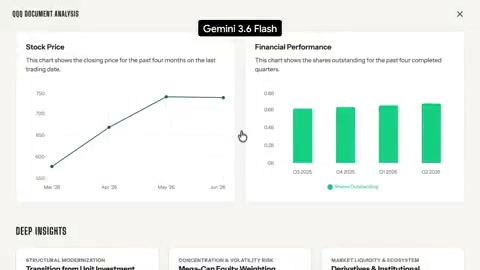
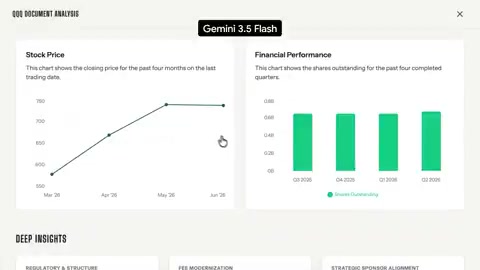
The Dual Battle of Quality and Token Usage
The official release specifically emphasized two comparison dimensions: quality and token usage. Together, these two metrics point to the most critical proposition in LLM commercialization—cost-effectiveness.
Why Token Efficiency Is So Critical
In real production environments, token consumption directly equals cost. Here it's important to understand the nature of tokens: tokens are the basic units by which large language models process text, and they don't simply correspond to individual characters or words. In English, one token roughly equals 4 characters or 0.75 words; in Chinese, a single character is typically encoded as 1-2 tokens. Major API providers all adopt per-token pricing, charging separately for input tokens and output tokens, with output token prices typically higher than input tokens.
For the same task, if a new model can complete it with fewer tokens, or deliver higher-quality answers within the same token budget, the cumulative cost difference for high-frequency applications becomes substantial. As a practical example, a customer service system processing 1 million requests per day that averages 500 tokens per request consumes 500 million tokens daily. Even at a rate of just a few dollars per million tokens, monthly costs can reach tens of thousands of dollars. Therefore, even a small improvement in token efficiency—as little as 10%—produces enormous cost leverage effects at scale.
In recent years, industry attention to model efficiency has been steadily rising. The era of purely pursuing parameter scale and benchmark scores is passing, replaced by fine-grained measurement of "value per token." Gemini 3.6 Flash's emphasis on token usage comparison aligns perfectly with this trend—it aims to prove that it's not only "smarter" but also "cheaper."
Directions for Quality Improvement
Given the Flash series' positioning, quality improvements likely manifest in reasoning coherence, instruction-following capability, and hallucination reduction. Model Hallucination refers to when large language models generate information that appears reasonable but is actually incorrect or fabricated—a problem that's particularly fatal in production environments. For example, in medical consultation, legal document generation, or financial analysis scenarios, hallucinations can lead to serious consequences.
Optimizing based on feedback from 3.5 Flash typically means Google collected numerous failure cases and user complaints from real-world scenarios and made targeted training adjustments. This "data-driven iteration" approach often delivers improvements more aligned with actual user needs than simply scaling up model size. From a technical pathway perspective, such optimizations may include: expanding high-quality alignment datasets, adjusting sampling strategies to reduce the probability of low-quality outputs, and conducting targeted reinforcement training for specific failure patterns.
The Strategic Significance of the Flash Series in Gemini's Product Matrix
Within the entire Gemini product matrix, Flash plays a pivotal bridging role. The Pro series targets complex tasks and high-quality demands, while Flash must push speed and cost to the extreme while maintaining "good enough" quality.
For Google, Flash's competitiveness directly determines whether it can compete head-on in the API market against OpenAI's lightweight GPT models, Anthropic's Claude Haiku, and other rivals. The current lightweight LLM market is fiercely competitive: OpenAI's GPT-4o mini has become the market benchmark with its extremely low pricing (input $0.15/million tokens, output $0.60/million tokens) and excellent performance; Anthropic's Claude 3.5 Haiku is renowned for outstanding instruction-following capability and safety; Meta's Llama series of open-source models is also capturing market share in self-deployment scenarios.
These lightweight models are becoming the workhorses of AI application deployment at scale—whether it's chatbots, content moderation, document summarization, or data extraction, the vast majority of requests don't require the full capabilities of a top-tier flagship model, but rather need a reliable option that's "fast, accurate, and economical." Industry estimates suggest that over 80% of production API calls use mid-to-low tier models, meaning the lightweight model market is actually far larger than the flagship model market. Whoever can establish an advantage in this lane controls the foundation of AI commercialization.
The Product Philosophy Behind Rapid Iteration
The version numbering from 3.5 to 3.6 itself reveals a "continuous small-step sprinting" product strategy. Compared to the expectations and pressure that come with major version numbers, minor point iterations are more easily accepted by users and better align with agile development principles in software engineering.
However, LLM version iteration shares similarities with but also has fundamental differences from traditional software agile development. Traditional software iteration primarily involves modifying code logic, while LLM iteration involves multiple dimensions including training data updates, alignment strategy adjustments, and inference pipeline optimization. Google's minor version iteration strategy is known in the industry as "Incremental Release," with advantages including: reducing the risk surface of each upgrade, facilitating A/B testing and gradual rollouts, and enabling more precise attribution of performance changes.
This approach also reflects the growing maturity of the MLOps (Machine Learning Operations) field—pipelines for continuous evaluation, continuous training, and continuous deployment are becoming standard practice for LLM service providers. It enables Google to rapidly translate user feedback into product improvements, shortening the cycle from problem discovery to solution delivery, forming a positive loop of "release → collect feedback → optimize → re-release."
Practical Impact and Migration Recommendations for Developers
For developers currently using the Gemini API, the 3.6 Flash upgrade is worth attention but should be approached rationally. The following evaluations are recommended before officially switching:
- Regression Testing: Compare output quality between old and new versions in your actual business scenarios, rather than relying solely on official benchmarks. Build test sets covering edge cases and historical failure cases, then conduct manual reviews or automated scoring of outputs.
- Cost Accounting: Track token consumption differences for the same tasks and calculate long-term cost changes. Note that input tokens and output tokens should be tracked separately, as model optimization may produce different effects in different directions—for example, more concise outputs but requiring more detailed prompts.
- Latency Monitoring: Verify whether the upgrade affects response speed, especially for real-time applications. Beyond average latency, P95 and P99 latency (the response time ceiling for 95% and 99% of requests respectively) are more critical for user experience-sensitive applications.
- Output Format Compatibility: New model versions may have subtle differences in JSON structured output, code generation formatting, etc. Verify that downstream parsing logic remains compatible.
Interestingly, the official information released so far is relatively limited, primarily presented as a comparison demo video, lacking detailed benchmark data and technical documentation. Therefore, the analysis in this article is based more on the Flash series' product logic and industry trends, and specific performance results still need verification from more complete official materials or independent third-party evaluations.
Conclusion
The release of Gemini 3.6 Flash reflects Google's pragmatic approach of "user feedback-driven iteration" in the lightweight model lane. As AI model competition intensifies, whoever can find the optimal balance between quality and cost will seize the initiative in large-scale commercial applications. For developers and enterprises focused on AI application deployment, every upgrade to the Flash series is worth continuous tracking—not only to access better tools, but also to gain insight into the broader industry trend shifting from "pursuing ultimate performance" to "pursuing ultimate efficiency."
Related articles
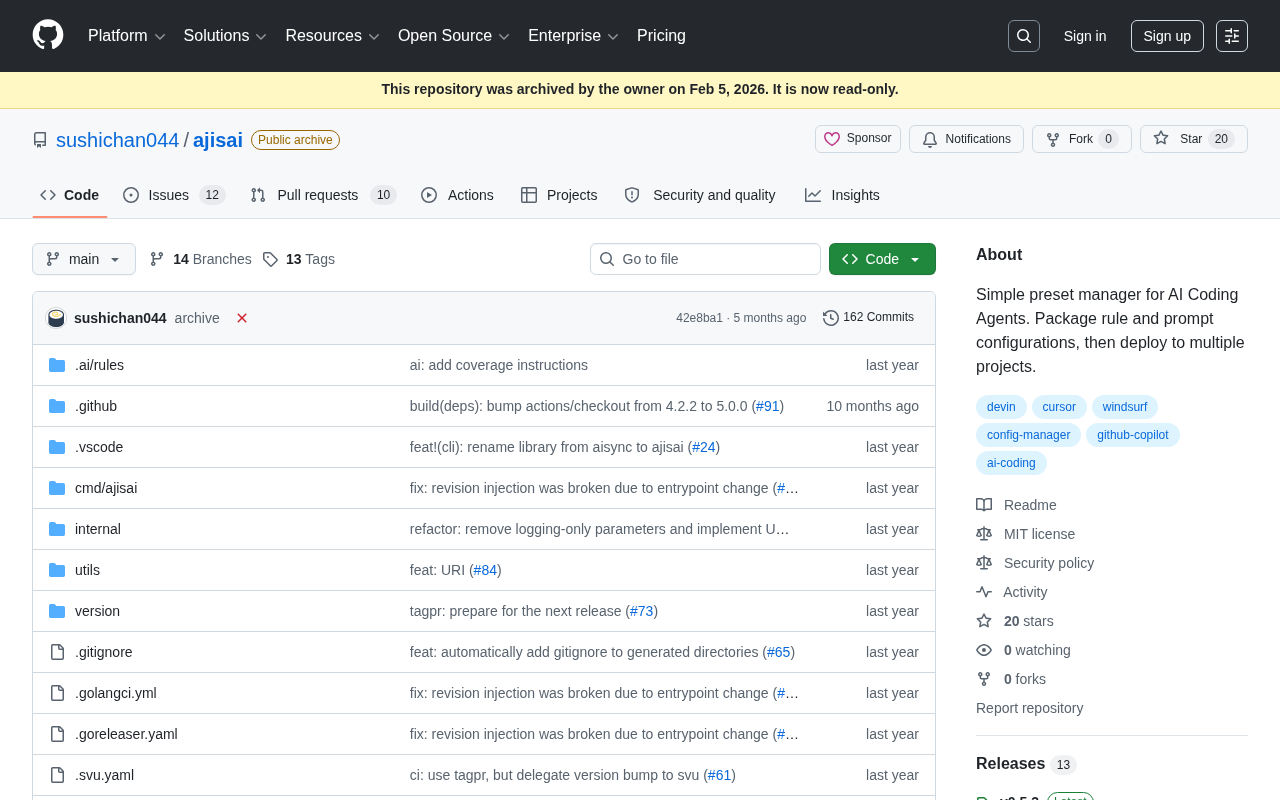
ajisai: A Preset Management Tool for Unifying Rules and Prompts Across AI Coding Assistants
ajisai is a Go-based preset manager for AI coding assistants like Cursor and Claude Code. Package rules and prompts once, deploy everywhere. Early-stage but promising.
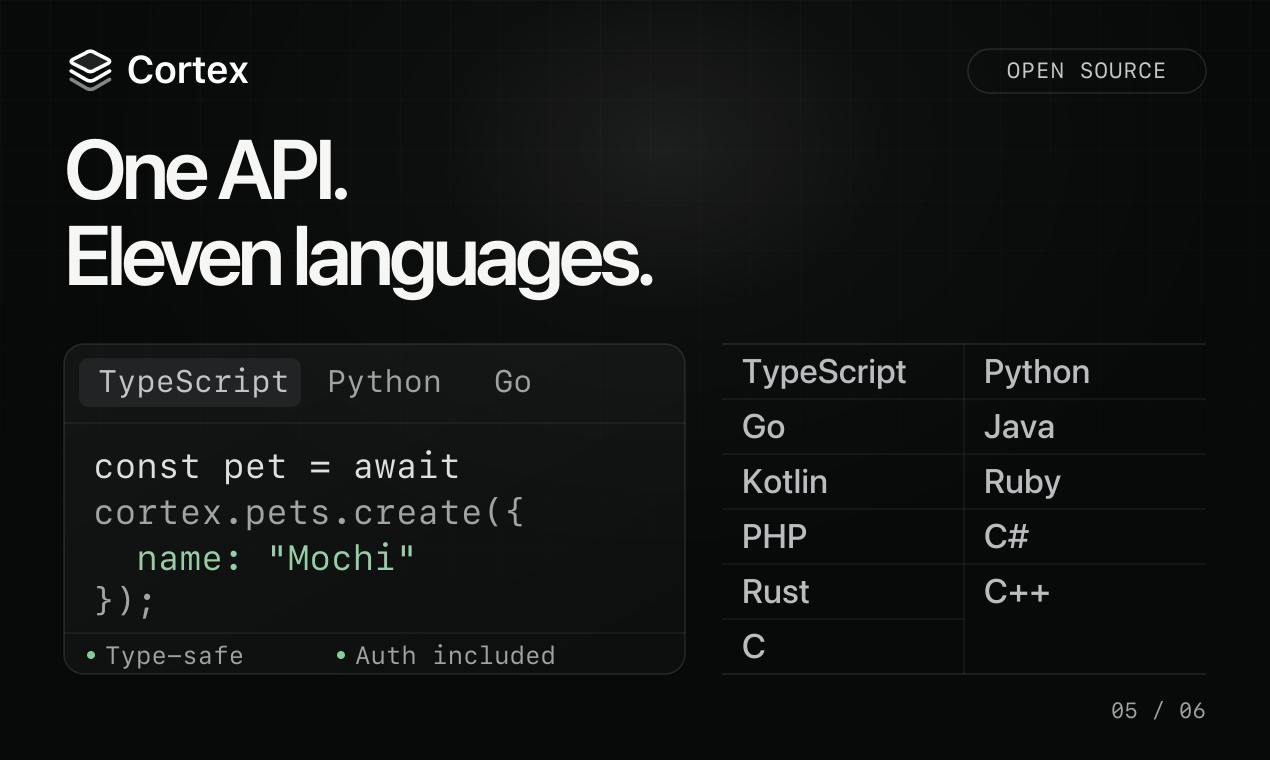
Cortex: Convert API Specs into Docs, SDKs, and MCP Servers in One Click
Cortex is an open-source tool that converts OpenAPI, GraphQL, gRPC and more into interactive docs, typed SDKs in 11 languages, and MCP servers for AI agents.

ABrush: An AI Studio Built for Digital Artists
ABrush is an AI studio for digital artists, ranked #4 on Product Hunt. It embeds leading AI models into existing workflows to remove repetitive tasks, speed up iteration, and keep artists in control.