Gemini 4 Argon In-Depth: Free or Paid? How Developers Can Get Started

Gemini 4 Argon excels at ultra-long context and complex engineering, but it isn't free, and first overall doesn't mean first in pure code.
Gemini 4 Argon is Google's most powerful frontier model, built for long-horizon, complex software engineering and enterprise tasks, with an ultra-long context window and three thinking levels as its core selling points. It offers no free quota—only a paid Pro subscription or pay-as-you-go API—and free-tier data is used for product improvement. API pricing spans promotional and standard phases with a notable increase at standard pricing, though batch inference offers steep discounts for repetitive tasks. It ranks first on the Vals AI composite index at 68.9%, but that index mixes finance, legal, and text tasks rather than pure coding; the terminal coding agent form is better suited to testing, and production should still rely on mature tools.
Title
Gemini 4 Argon In-Depth: Free or Paid? How Developers Can Get Started
Meta Description
Gemini 4 Argon is Google's most powerful frontier model, with ultra-long context and three thinking levels. This article examines whether it's free, the API pricing structure, real-world coding performance, and how indie developers and large-codebase teams should choose.
Article Content
Google's new-generation frontier model Gemini 4 Argon has sparked plenty of discussion since its release, but the three questions developers care about most remain unchanged: Is it free? How do I use it for coding? And how does it really compare with Claude and GPT? This article combines independent benchmark data with official pricing information to deliver an unfiltered verdict.
Positioning: Google's Most Powerful Frontier Model, Built for Long Context and Complex Engineering
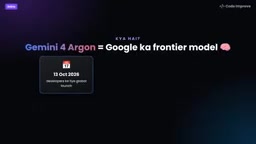
According to Google's official description, Gemini 4 Argon belongs to the Frontier tier—Google's largest and most capable class of models—targeting long-horizon, highly complex tasks: real software engineering, large-scale code migration, enterprise-grade workloads, and security-related code review.
Its standout capability is the ultra-long context window, which can swallow extremely large codebases or long documents in a single pass. By default, it can also produce a substantial number of tokens per output. On the input side it supports text, images, video, and PDF; output is currently text-only.
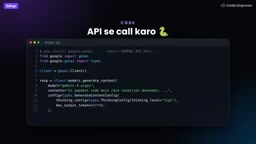
The model has three built-in thinking levels—low, medium, and high. Simple functions can use the low setting, while complex refactoring or cross-file reasoning is best handled at medium-to-high levels. One caveat: the model also consumes tokens during its "thinking" phase, so you must leave ample headroom when configuring the maximum output, or answers will easily get truncated.
Context window refers to the total number of tokens a model can receive in a single inference, including the input prompt and conversation history. Early models typically had windows of only a few thousand tokens, requiring chunking to process even a mid-sized file; frontier models have now expanded to hundreds of thousands or even millions, allowing an entire code repository, technical documentation, or a lengthy contract to fit into a single request. The larger the window, the better the model can establish cross-file and cross-chapter references on a global scale—which is the precondition for long-horizon engineering tasks (such as whole-repo migration or understanding legacy systems). But a large window doesn't equal effective utilization: models can still miss information in the middle of very long inputs, so in practice you should place key constraints at the beginning and end of the input and structure very long materials into segments.
Is It Free? The Answer Is a Clear No
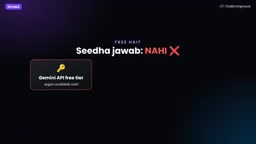
Many people's first reaction is: Doesn't the Gemini web version have a free entry point? But according to Google's official documentation, Argon is not available on the free tier, and the regular free version of Gemini can't access it either. To use it directly, you need a paid Pro subscription or the developer-oriented pay-as-you-go API.
Another entry point is Google's coding agent product (in desktop app and terminal CLI form), currently available to individual users on higher-tier subscription plans. In other words, the official channels don't leave much room for low-cost experimentation.
Worth flagging separately is the hidden cost of the free tier: data generated under free quotas is used by Google to improve its own products. In other words, you save money but pay with your data. For scenarios involving commercial code or sensitive information, this matters more than price itself.
Pay-as-you-go API and subscription are two different billing models. Subscriptions charge a fixed monthly fee in exchange for a certain quota or feature access; pay-as-you-go bills by actual token consumption, with input and output usually priced separately and output typically costing more than input. For developers, the advantage of pay-as-you-go is that cost is directly tied to usage, keeping spending controllable for small-scale experiments; the risk is the lack of a natural ceiling—once the thinking level is raised or you fall into a retry loop, the bill can balloon quickly. When integrating into production, you typically need to set daily budgets, per-request token limits, and alert thresholds at the gateway layer to lock down uncontrollable variables in advance.
Pricing Structure: A Big Gap Between Short-Term Promotional and Standard Pricing
The pay-as-you-go API pricing has two phases. During the promotional period, both input and output are at significantly lower prices; after the promotion ends, prices return to standard levels, with a considerable increase. This means that if you plan to rely on it for long-term batch tasks, your cost model should be based on standard pricing, not the current discounted rate.
One easily overlooked detail: the official batch inference offers an extremely high discount, well over 90% off. For scenarios requiring repeated runs over the same codebase, submitting through the batch channel can significantly dilute costs.
Another practical tip is to set a budget cap. The biggest fear with pay-as-you-go isn't a high unit price but losing control—especially once the thinking level is raised, per-request token consumption multiplies.
Real-World Performance: First on Independent Benchmarks, But the Edge Isn't Comprehensive
On the question of "Is it better than Claude and GPT?" independent benchmarks give a qualified answer. On the Vals AI composite index, Gemini 4 Argon took first place with a score of 68.9%. But you need to understand how that index is composed: it doesn't just test code—it also mixes in finance, legal, and text-based tasks. In other words, it's a general-capability ranking, not a pure coding ranking.
The practical implication for developers: if you're doing pure code generation or large-repo refactoring, Argon's long-context advantage is obvious; but if your workflow relies heavily on coding agents in the terminal, Claude is still considered more reliable by many developers in that area, and Argon's terminal agent form is better suited to testing and validation—production use still requires caution.
Vals AI is an organization that conducts independent evaluations of foundation models. Its index aggregates tasks from multiple domains (code, finance, legal, text understanding, etc.) by weight into a single score for cross-model comparison of general capability. The value of such composite rankings is broad coverage and a unified methodology; the limitation is that scores get diluted by task composition: a model clearly ahead on code may not pull away in the composite score if it's slightly weaker on finance or legal items, and vice versa. When reading such rankings, pay attention to sub-scores and task distribution rather than just the overall rank. For developers, a more reliable approach is to build a small evaluation set from real samples in your own business and cross-reference it with public rankings.
How to Choose: Three Different Paths for Three Types of Developers
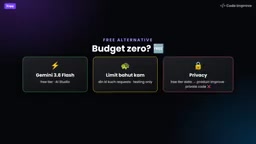
Indie developers or small teams: If you're only occasionally writing scripts or doing prototype validation, prioritize the pay-as-you-go API with a budget cap—don't jump straight into a high-tier subscription.
Teams maintaining large codebases: Argon's ultra-long context is the core selling point, suited to whole-repo understanding, cross-file migration, and legacy system modernization. Use the batch channel for repetitive tasks to keep costs down.
Teams needing terminal coding agents: At this stage, treat it as a supplementary option for testing, keep your production main path on tools you've already validated, and migrate once the official agent form matures.
Conclusion
Gemini 4 Argon is Google's most powerful model to date, with long context and complex engineering tasks as its home turf—but it isn't free, and standard pricing isn't cheap either. The composite first place on independent benchmarks is worth noting, but you should distinguish that it's a cross-domain composite score rather than a pure code score. For most developers, the more rational approach is to treat it as a specialized tool for ultra-long-context tasks rather than a wholesale replacement for your existing workflow.
Do you value long-context capability more, or the maturity of terminal agents? That determines whether Argon is worth adding to your toolbox right now.
One-line Summary
Gemini 4 Argon focuses on ultra-long context and complex engineering, but it isn't free, and first overall doesn't mean first in pure code.
Paragraph Summary
Gemini 4 Argon is Google's current most powerful frontier model, targeting long-horizon, highly complex software engineering and enterprise-grade tasks, with its core selling points being an ultra-long context window and three thinking levels (low, medium, high). It offers no free quota and is only available through a paid Pro subscription or the pay-as-you-go API, and free-tier data is used for product improvement. API pricing has two phases—promotional and standard—with a significant increase at standard pricing, but the batch inference channel offers steep discounts, making it suitable for diluting costs on repetitive tasks. It ranks first on the Vals AI composite index at 68.9%, but that index mixes finance, legal, and text tasks and isn't a pure coding ranking; the terminal coding agent form is currently better suited to testing, and production environments should still rely on mature tools.
Related articles

Running a Local LLM on a Laptop CPU: Ollama + Qwen3 Gives a Desktop Pet a Brain
An ordinary laptop without a GPU can run a local LLM: a Bilibili creator uses Ollama plus open-source Qwen3 8B on pure CPU to give an original desktop pet a local brain, with DeepSeekHarness handling plugin development and three rounds of debugging — 0 yuan, works offline, privacy stays on-device.

AgentScope 2.0 in Practice: A Guide to Enterprise-Level AI Agent Development in Java
AgentScope 2.0 is Alibaba's Java enterprise-grade distributed agent framework. This article explains why it suits server-side AI applications, contrasts client-side AI apps in permissions, state management, and concurrency, and outlines a practical learning path from environment setup to project integration.

GPT-6 Astra Directly Edits Weights to Fix Models? Full Analysis of the MIT Paper and Leaks
MIT paper shows GPT-6 Astra repairs small models by directly editing weights, raising math scores from 7.9% to 48.1%; OpenAI internal charts hint an unreleased model leads on BenchCAD 2.0; Fable 5.5 pure-code movies and the Claude WiFi radar incident analyzed.