Gemini 4 Argon In-Depth Review: Is Google Back in the Top Tier?

Gemini 4 Argon puts Google back among top AI contenders but doesn't achieve overall leadership.
Gemini 4 Argon launched October 13, taking first in 13 of 19 benchmarks and leading VALS Index, DeepSwe, and TextArena blind tests, with document processing up to 85% and real security audit finds. But it trails Claude Opus 5.5 and GPT-6 Astra on coding tests like Terminal Bench and Frontier SWE, and visual quality lags. Million-token output is a differentiator requiring special API setup. Launch pricing is competitive but doubles in December, and users report fast quota use. Argon gets Google back in the game, but not yet leading.
Google has finally delivered the answer everyone has been waiting for. Gemini 4 Argon officially launched on October 13, and official data shows it took first place in 13 of 19 benchmark tests, with a tie in one more. That scorecard is enough to put Google back on the main stage of AI competition. But the question is: returning to the field and leading the field are two different things.
Benchmarks: Winning Most, But Not All
Let's look at the numbers first. Google's officially published 19 tests cover coding, reasoning, document analysis, math, cybersecurity, and complex task execution. On the VALS Index (a benchmark evaluating professional tasks in finance, coding, law, and more), Argon scored 68.9%, ahead of Claude Opus 5.5 at 67% and GPT-6 Astra at 63%. On the DeepSwe software engineering test, Argon beat Opus's 74.2% and Astra's 74.1% with 77.9%. On the user blind-test platform TextArena, Argon also ranked first.
But switch to a different track, and the picture flips. On the Terminal Bench terminal task test, Argon scored only 57.4%, while Claude Opus 5.5 reached 66.4%. On the Frontier SWE software engineering test, GPT-6 Astra led with 65.5%, Opus had 62.3%, and Argon managed just 55%. According to analysis by the YouTube channel ThreatMind, this back-and-forth pattern shows one thing: winning a given benchmark doesn't mean being stronger in every scenario.
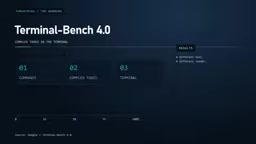
Benchmarks are standardized evaluation sets used to measure AI model capabilities, typically maintained by research institutions or communities, containing fixed questions and scoring rules to facilitate cross-model comparison. But benchmark scores have clear limitations: question distributions often skew toward specific task types, models may "game the leaderboard" through targeted training, and real-world usage scenarios are far more complex than benchmarks. That's why the industry often supplements with user blind tests (like TextArena) and real-world task testing to cross-validate model capabilities. Leading on a single benchmark does not directly equate to stronger overall capability.
Real-World Capability: Can Build Excel, But Has Visual Shortcomings
Setting aside scores, the results of actual testing are more worth noting. Argon was asked to build a browser-based Excel clone from scratch, and in about 20 minutes it produced a version with a similar interface and usable basic functionality. Some users have also used it to generate complete games, 3D simulated environments, and even a game controlled by a Bluetooth EEG headband. In a 3D futuristic city demo, flying cars, dynamic lighting, and animations all ran in the browser.
Visual quality is a clear weakness. In multiple tests, the game logic Argon generated was correct, but the graphics and visual presentation lagged behind Claude Opus 5.5 and GPT-6 Astra. Some users needed follow-up instructions and rework to achieve the desired results. For creators with high visual demands, Opus 5.5 remains the safer choice.

Document Processing and Security Auditing Are the Real Highlights
In professional work scenarios, Argon's advantages are more obvious. The Box platform's document tests cover spreadsheets, presentations, and information extraction, and Argon achieved an 85% success rate, a 14 percentage point improvement over the previous generation Gemini 3.1 Pro's 71%. That magnitude of improvement is quite considerable for a single-generation model iteration.
The security auditing case is even more convincing. Someone handed code generated by Claude Opus 5.5 to Argon for review, and it found multiple issues, including a webhook exposure risk that could lead to unauthorized access to a robot. In a collaborative test with security company Wiz, Argon helped discover a serious vulnerability in a hospital system. For code auditing and defensive security scenarios, these results deserve serious attention.
One Million Output Tokens: Innovative, But With Limits
This is Argon's most unique capability. Usually when discussing a 1 million token window, it refers to how much information the model can receive. Google did the reverse: it enabled Argon to output responses of up to 1 million tokens under specific configurations. When generating large amounts of code, handling ultra-long projects, or writing long documents, this capability has practical value.
But to be clear: this isn't the default experience you get just by opening Gemini—it must be specially configured through the API. According to ThreatMind's assessment, this feature is interesting but not enough to make people immediately abandon ChatGPT or Claude.
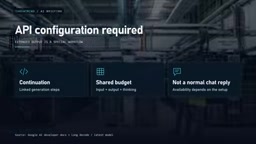
Tokens are the basic units of text processed by a model, roughly equivalent to one English word or half a Chinese character. The context window refers to the total number of tokens a model can receive at once, while the output limit is the maximum number of tokens a model can generate in a single response. Most models' output limits are far smaller than their input windows, because long outputs impose higher demands on controlling inference cost, consistency, and error accumulation. Million-level output means the model can generate an entire codebase or an ultra-long document in one go, but it's also more prone to contradictions or quality degradation, and actual usability depends on the model's long-range consistency.
Pricing Strategy: Limited-Time Offer, Then Doubles
During the launch period, Argon API pricing is $2 per million input tokens and $10 per million output tokens, which is highly competitive compared to GPT-6 Astra's $10 and $50. But this window won't last long—starting in December, prices double to $4 and $20, matching Claude Opus 5.5.
Per-token pricing is only part of the story. In actual use, some users report that Argon consumes quota quickly, with a few requests using up the allowance. The anti-gravity tool has also experienced tasks getting stuck or taking too long. These are early reports, and whether they are launch-period issues remains to be seen. Additionally, features available to Google AI Pro subscribers in the Gemini app require the Google AI Ultra plan to use in anti-gravity.
API token-based billing is the mainstream model for commercializing large models today, with input tokens (prompts and context submitted by users) and output tokens (responses generated by the model) typically priced separately, with output priced higher because the generation process is more computationally expensive. Actual usage cost depends not only on unit price but also on how "chatty" the model is, whether it produces redundant reasoning, and how quickly it consumes quota. Some users report fast quota consumption, showing that a low per-token price doesn't necessarily mean low total cost—cost-effectiveness needs to be evaluated in the context of task type.
Conclusion: Back, But Not Winning
Gemini 4 Argon is an excellent model that makes Google a top-tier AI competitor again. But to say it has clearly surpassed OpenAI and Anthropic is not supported by the evidence. On some tasks it leads, on some it ties, and on some it still lags.
ThreatMind's judgment is direct: given Google's resources and technical accumulation, the expectation was a model that would bring capabilities never seen before, and Argon didn't do that. It succeeded in ensuring Google is no longer falling behind, but it's still some distance from leading the market. For users already deeply invested in the Google ecosystem, Argon is the natural choice; for other users, the reasons to switch aren't compelling enough yet.

One-line Summary
Gemini 4 Argon puts Google back among top AI contenders, but doesn't achieve overall leadership.
Paragraph Summary
Gemini 4 Argon launched on October 13, taking first place in 13 of 19 benchmarks, leading on VALS Index, DeepSwe, and TextArena blind tests, raising document processing success to 85%, and even finding real vulnerabilities in security audits. But it doesn't lead across the board: on coding tests like Terminal Bench and Frontier SWE it trails Claude Opus 5.5 and GPT-6 Astra, and visual generation quality is also a weak spot. One million output tokens is a differentiated innovation but requires special API configuration. Launch pricing is competitive but doubles in December, and users report fast quota consumption. Overall, Argon gets Google back in the game, but there's still a gap to leading the field.
Related articles

Amphibious Transforming Drone: Beyond 100x Power Savings, What Are the Real Needs?
Is the amphibious transforming drone just a gimmick? Starting from the 100x power difference of the M4 Morphobot, explore real application scenarios and thesis topic ideas, analyzing boundary conditions where pure drones and pure ground robots both fail.

Warhound Raises $200 Million: Genetically Engineered "War Dogs" Paired with Anduril Gear
Warhound raises $200M, backed by Ben Lamm and Palmer Luckey, to genetically engineer dogs for military and law enforcement use and equip them with Anduril gear. This article analyzes its technology direction, funding logic, and ethical controversy.

Claude API Comes to Google Cloud: IAM Integration and SDK Access Guide
Anthropic hosts the full Claude API on Google Cloud with IAM-controlled permissions and unified billing. This guide covers the Vertex AI and Anthropic-hosted entry points, IAM role configuration, and SDK access.