Gemini 4 Carbon Leaked, RSI Rumors Swirl, and Multi-Lab Race Heats Up: The Latest Wave of AI Industry Intel

A dense wave of AI rumors and real releases: Gemini 4 Carbon, RSI speculation, Claude multi-agent workflows, and AI-assisted reverse engineering.
In a single day, AI rumors and new model releases hit simultaneously. Google reportedly has a Gemini 4 checkpoint codenamed Carbon in internal testing, benchmarked against Claude Opus 5.5, even as the public Argon release hasn't shipped. Speculation about all three major labs approaching recursive self-improvement (RSI) ran rampant but remains unverified. On the concrete side, Qwen Image 2.1 Turbo generates 2K images in 8 denoising steps and is open-sourced; Claude's multi-agent workflow found 66 of 70 planted bugs in a 116K-line codebase, far outperforming single-agent runs; and AI tools like Claude Code are enabling developers to tackle ambitious reverse engineering projects like RTX drivers for macOS and PS5 emulation on PC.
In the span of a single day, a wave of internal model rumors broke simultaneously across Google, Anthropic, and OpenAI. From a new Gemini 4 checkpoint codenamed Carbon, to speculation that major labs may be approaching recursive self-improvement (RSI), to impressive results from open-source image models and AI-assisted reverse engineering — most of these reports remain unverified, but taken together they paint a fascinating picture of where the industry stands. Here's a rational breakdown of what's being claimed and what to make of it.
Gemini 4 Carbon: A Stronger Version Already in Internal Testing Before Argon Even Ships
According to a Business Insider report, Google is internally testing a new Gemini 4 checkpoint codenamed Carbon, with its coding capabilities being compared to Claude Opus 5.5. A Google employee who reportedly tested the model said "Carbon feels like Opus 5.5 for coding," though they acknowledged that more testing was needed before drawing firm conclusions.
What's particularly interesting is the cadence of iteration. Three internal codenames have been circulating: Argon, Barium, and Carbon. The upcoming public release, Argon, is reportedly based on an earlier Barium-B checkpoint, while Carbon is a newer version already integrated into Google's internal coding tools. In other words, Google may be preparing to release Argon publicly while simultaneously testing a more capable version behind closed doors.
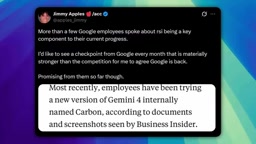
There's a familiar concern worth flagging here: Google has historically struggled with slow release cadences and public versions that feel like a step down from internal ones. If Argon takes a long time to reach users, competitors may have already caught up by the time it launches. Sitting on a powerful internal model without deploying it quickly erodes its strategic value. As of now, no independent benchmarks confirm Carbon's performance relative to Opus 5.5 — everything remains at the level of internal reports.
RSI Rumors: Are All Three Major Labs Approaching a Tipping Point?
What really ignited the discussion was the talk of recursive self-improvement (RSI). The Business Insider report noted that multiple Google employees had privately discussed whether RSI may have played a role in the company's recent AI progress. One Google researcher even quoted the article on X and pointedly asked: "Have you heard of recursive self-improvement?"
One piece of supporting evidence cited is the rapid progress of the Gemini Flash series — with claims that its capabilities jumped from roughly GPT-5 level to significantly higher within just a few months. It's worth emphasizing: rapid iteration alone does not prove RSI has been achieved. This is speculative dot-connecting. That said, if labs are genuinely using their own AI models to assist with research, training, and improving the next generation of models, that would help explain why iteration cycles have accelerated so dramatically.
The same narrative has emerged around OpenAI and Anthropic. There are rumors that Anthropic kicked off a new pretraining run about a week ago — and that the target isn't the upcoming Claude Fable 5.5, but something larger, possibly a next-generation model like Opus 6 or Fable 6, aimed at matching OpenAI's rumored next model, Bell. As for Bell (which may have a separate internal codename), insiders have suggested it's the model behind OpenAI's recent mathematics research breakthroughs, with hints that RSI played a role.
Put it all together and you get a sweeping speculation: OpenAI, Anthropic, and Google may all be approaching RSI simultaneously. If even part of this is true, the pace of AI advancement could accelerate sharply. This might also explain why major labs have been calling more frequently for the industry to "slow down" — while simultaneously shipping more capable models every month. That contradiction itself underscores the point: all of these claims remain unverified speculation and should be treated with considerable caution.
Background: What Is Recursive Self-Improvement?
Recursive self-improvement (RSI) is a central concept in AI safety research. It refers to an AI system's ability to autonomously modify or optimize its own algorithms, architecture, or training pipeline — producing successively more capable versions without direct intervention from human engineers. Once this process forms a positive feedback loop, it could theoretically drive exponential capability gains. Many researchers consider RSI a key threshold on the path to an "intelligence explosion" — a scenario where AI capabilities surge so rapidly that they outpace human understanding and control.
Currently, mainstream labs routinely use AI to assist with research tasks such as auto-generating code, drafting papers, and designing experiments. This is sometimes called "weak RSI" or "AI-assisted research" and is fundamentally different from fully autonomous recursive self-improvement. True RSI would require a model to understand and optimize its own weights, training objectives, and even hardware configuration. No public evidence exists that any system has reached this level. This is precisely why the rumors discussed in this article deserve especially careful scrutiny.
New Models: Qwen Image 2.1 Turbo, Decision One, and a Free Option
Setting aside the rumors, this cycle also brought several concrete new model releases worth paying attention to.
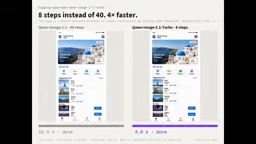
Qwen Image 2.1 Turbo is an accelerated version of Alibaba's Qwen Image 2.1, generating images in just 8 denoising steps compared to roughly 40 in the original — an approximately 80% reduction in sampling steps, while reportedly maintaining comparable image quality. Built on a 7-billion-parameter architecture, it can generate detailed 2K images from text prompts and supports natural language image editing: adding accessories, swapping backgrounds, and changing scenes can all be done through descriptions. Model weights are available on Hugging Face with diffusers support for local deployment, and an official hosted API is also available.
Microsoft Decision One is a fast decision-making model from Microsoft, described as a potential alternative to Jev. Unlike traditional large language models focused on text generation, it's optimized for structured decision tasks — rapidly evaluating information and determining the best course of action. Microsoft claims it outperforms traditional LLMs on both response latency and decision quality, and has been internally tested in scenarios including incident response, quality control, and scientific discovery.
There's also a free model worth noting: Solar Masonry E4, from Korean lab Upstage AI. It's a 35-billion-parameter MoE model that activates only around 3 billion parameters per inference, making it computationally efficient. It supports a 524K context window, reportedly reaches 208 tokens/s, and scores 24 on the Artificial Analysis Intelligence Index — the highest score in its active-parameter class, just one point behind NVIDIA's Nemotron 3 Ultra. It's primarily designed for document parsing and processing, and is currently available to try for free in Cline.
Background: How Does 8-Step Denoising Work?
The "8-step denoising" technique used in Qwen Image 2.1 Turbo falls within the active research area of accelerated inference for diffusion models. Standard diffusion model image generation requires dozens to hundreds of iterative denoising steps over random noise, each calling the neural network for a forward pass — computationally expensive. Researchers have developed several acceleration approaches: improved ODE solvers (such as DDIM and DPM-Solver) that complete the same denoising trajectory in fewer steps, and newer training paradigms like Consistency Models and Flow Matching that directly learn shortcut mappings from noise to image. Reducing steps from 40 to 8 cuts inference computation by roughly 80%, significantly lowering the hardware requirements for local deployment and the cost of API calls while maintaining image quality — a key trend driving the practical adoption of open-source image generation models.
Coding Tool Updates: Codex, Claude Multi-Agent Workflows, and Free Devin Access
The coding tooling space also saw a flurry of updates.
As part of OpenAI's "28 releases in 28 days" commitment, Codex introduced Composer Predictions — a beta feature for desktop Codex Pro users that predicts the next prompt based on conversation history, project context, and user habits. It was reportedly one of the most popular features during internal testing and doesn't consume any quota. On Windows, a new sandbox mode based on Microsoft Execution Container (MXC) brings faster startup, stronger network restrictions, and more granular file access controls, though it requires a compatible Windows 11 device.
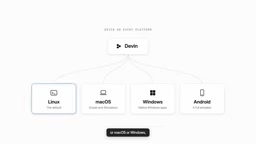
Devin announced that it can now be accessed through existing ChatGPT Go/Plus/Pro subscriptions, drawing directly from GPT model quota without requiring a separate OpenAI API billing setup. Strictly speaking this isn't "completely free" — you're still spending quota you've paid for — so the framing is a bit misleading. But for developers who already use multiple AI coding tools, the convenience is real.
The most impressive announcement was Anthropic's Claude Managed Agents dynamic workflows (now in public beta), which introduces multi-agent orchestration. In Anthropic's internal tests, they planted 70 bugs across a codebase of over 116,000 lines of code: a single agent found 14, 15, and 27 bugs across three separate runs, while the multi-agent workflow consistently found 66 out of 70 across all three runs. A single run can reportedly orchestrate up to 1,000 agents, suggesting significant potential for complex coding tasks — though how it will coordinate with rate limits remains to be seen. Opus 5.5 Fast Mode has also launched, running at approximately 285 TPS while consuming only twice the usage quota.
Background: Multi-Agent Orchestration
The multi-agent orchestration architecture used by Claude Managed Agents differs fundamentally from traditional single-turn conversational AI. In single-agent mode, the model processes tasks sequentially within a limited context window — when faced with massive codebases, it can easily miss things or suffer from "attention dilution." Multi-agent architecture decomposes tasks and distributes them in parallel across multiple independent agent instances, each focusing on a specific subset of the codebase or a specific class of problem, with a coordination layer aggregating the results. This "divide and conquer" strategy can theoretically cover a much larger search space, but it also introduces new challenges: inter-agent communication overhead, duplicate work, mechanisms for resolving conflicting findings, and coordination with API rate limits — which is exactly why the article specifically noted that "how it will coordinate with rate limits remains to be seen." Orchestrating up to 1,000 agents in a single run has meaningful practical value for large-scale code auditing and security vulnerability scanning.
AI-Assisted Reverse Engineering: RTX on macOS, PS5 on PC
Two experimental projects best illustrate how AI is changing what individual developers can accomplish.
Developer NullMoth released an experimental open-source NVIDIA driver for Intel-based Macs and Hackintosh systems, reportedly enabling modern RTX graphics cards to function on macOS Sequoia with support for desktop-class Metal 3 applications. The approach involves porting NVIDIA's open-source GPU kernel modules to macOS, building a Metal compatibility layer using Mesa's NVK Vulkan driver, and translating Apple's Metal shaders into instructions NVIDIA GPUs can understand. AI tools including Claude Code reportedly handled a substantial portion of the debugging and development work. A note of caution: this is an experimental project targeting Intel-based systems, CUDA compatibility is unverified, and it does not mean RTX cards will work plug-and-play on M-series MacBooks.
The other project is AnyPS5, which attempts to bring PS5 system software and games to PC by leveraging the fact that the PS5 runs on an x86-64 architecture, translating its system libraries and graphics instructions. A circulating demo reportedly shows PS5 system software running on PC through emulation — not yet full game playback. AI coding tools played a major role in this project as well. This is still a long way from "full PS5 emulation" or "modern PS5 games being playable," but the fact that AI enabled individual developers to tackle engineering challenges that previously required years of specialized expertise and huge teams is itself deeply significant.

A few ecosystem notes also deserve mention: Chinese companies including miHoYo, Xiaomi, and Meituan — not traditionally AI-first companies — are all investing in proprietary large models. miHoYo is reportedly aiming to join the ranks of top AI research labs within a few years, with "AI-driven game NPCs" seen as a key opportunity. Meanwhile, Anthropic's expanded Claude startup program ran into trouble when an influx of bad-faith applications — people registering cheap $10 domains to pose as startups — caused application volume to surge 21x in 48 hours. Anthropic subsequently revoked access for some already-approved users, potentially caught genuine startups in the crossfire.
A Rational Take: High Information Density, Low Verification
What all of this week's news has in common is extremely high information density paired with extremely low verifiability. Carbon's performance, RSI progress, and the various labs' new training runs are almost entirely based on internal rumors and social media speculation, with no independent benchmarks or official confirmation. By contrast, the things that are actually real and deployable — Qwen Image 2.1 Turbo, Decision One, Claude's multi-agent workflows, and those two AI-assisted reverse engineering projects — are what ordinary developers can go test and use right now. Staying curious about the rumors is fine, but grounding your judgments in reproducible facts is the more reliable approach.
Related articles

uGAP: An AI Platform Unifying 100+ African Geospatial Datasets
uGAP is an African geospatial AI platform by a University of Cape Town team, unifying 120+ African datasets with a Python SDK for discovery, processing, and model training, already used in cyclone flood mapping.

Cursor Can Now Control Your Computer: AI Agents Can Drive Desktop Apps for Testing
Cursor adds desktop control: AI agents can drive desktop apps like the iOS Simulator to test their own features. We analyze the impact on dev workflows, possible technical approaches, and reliability concerns.

Vibecoding a Custom Inference Engine: High Hopes, Harsh Reality
A Reddit developer shares the real experience of vibecoding a custom inference engine: running GGUF Q4 models in the browser with WebGL2 and GLSL, only to fall into tokenizer debugging hell. This article analyzes the engineering challenges of browser-side LLM inference and why cloning llama.cpp is the more rational choice.