Gemini 4 Hydrogen Coding Hands-On: Smaller, Stronger, and Cheaper
Gemini 4's smallest model Hydrogen beats its own flagship Argon with low quota usage and low price.
Based on a hands-on test with 33 high-difficulty prompts, this article evaluates Hydrogen, the newest and smallest Gemini 4 model. Usable on the $5 Plus plan, it breaks into the top ten at the High tier and reportedly outperforms the recently released Argon, while running all 33 prompts consumed only 15% of the weekly quota versus Argon's eight. The article also covers API costs, Google's subscription-subsidy strategy, and why the X High tier isn't recommended yet.
Google has added another member to the Gemini 4 family—Hydrogen. Following Carbon and Argon, this model with a name that sounds like a chemical element has become what many reviewers see as "the one that changes the market landscape." A creator who has long produced model comparisons on YouTube ran a complete test of it using his usual 33 high-difficulty prompts, and the conclusion: Hydrogen not only broke into the top ten on that leaderboard, but was also remarkably restrained in subscription quota consumption.
Where Hydrogen Sits in the Gemini 4 Family
To understand what Hydrogen means, you first need to see how Google positions its three models. Carbon is only available on high-priced enterprise plans, so ordinary developers basically can't touch it; Argon generated enormous buzz at launch but only landed mid-pack on this creator's leaderboard; the earlier Gemini 3.8 Flash is no longer the focus of discussion.
Hydrogen is the smallest of the three and has the lowest price barrier—it's included not only in the Pro plan he uses, but even in the $5/month Plus plan. By conventional logic, it should have been the successor to 3.8 Flash, but in Google's official benchmarks it's directly compared against Sonnet and Terra, a clear sign of bigger ambitions. More importantly, according to data from the Artificial Intelligence Index, Hydrogen's score even surpasses that of the recently released Argon.
Artificial Intelligence Index usually refers to an industry composite benchmark or index system used to compare large model capabilities across the board (similar to aggregator rankings like LMArena and Artificial Analysis). Such indices weight and aggregate scores from multiple public benchmarks (reasoning, code, math, instruction following, etc.), then combine them with human blind-test preference rankings to produce a comprehensive ranking comparable across vendors. Its value lies in bypassing the bias of vendor self-reported data, but it has limitations: different benchmark weighting settings affect rankings, and leaderboards often lag behind actual model release cadence. Therefore, the statement in this article that "Hydrogen's score surpasses Argon" should be understood as comprehensive performance under a specific evaluation methodology, not as a definitive verdict on absolute capability.
Antigravity plan is Google's AI subscription/development environment system for developers, calculating usage quota on two rolling windows: weekly and five-hour. The weekly quota refers to the total allowance consumable within a full week, while the five-hour limit is a short-term throttling mechanism; once used up, you must wait for the window to reset. Gemini-series models share the same quota pool in this system, while independently billed models like Carbon and Argon are deducted separately—this is precisely the institutional reason Hydrogen's consumption appears "restrained."
Subscription Quota: Argon Runs Out After Eight Prompts, Hydrogen Drops Only 15%
This creator particularly emphasizes that he "doesn't hype models"—he only looks at numbers. And the first thing that surprised him about Hydrogen wasn't the score, but the usage.
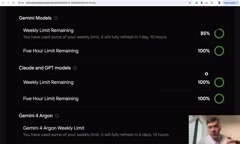
He tested Argon on the $20/month Antigravity plan: just 8 high-intensity prompts exhausted the entire week's quota. Hydrogen, however, is grouped into the Gemini model quota pool and consumes very slowly. At the start of the test his weekly quota was 85%; after running 33 prompts and letting it sit overnight, the five-hour limit had reset and the weekly quota still had 70% remaining—in other words, the entire test consumed only 15% of the weekly quota.
Hydrogen is also the first model in the Gemini 4 series to support the latest project templates and the X High reasoning tier. During testing the five-hour limit continued to refresh normally, and the quota never hit zero. In his words, this is the first model from Google in a long time that is "genuinely economical."
Leaderboard Results: High Tier Breaks into the Top Ten
After refreshing the leaderboard, Hydrogen's High tier entered the top ten, and its time performance was close to frontier-model levels. The creator admits that when he saw the results he repeatedly checked the logs, suspecting a small statistical error, but the overall conclusion holds.
Dropping the tier from High to Medium roughly doubles the speed, but scores across all projects drop noticeably. Medium-tier Hydrogen is roughly on par with Argon's High tier, at a much lower price. This creates a rather awkward situation: Google's newly released flagship has been matched or even surpassed by its own smaller, cheaper model.
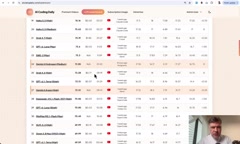
This is not an isolated case. Google officially acknowledges that Hydrogen surpasses Argon at the default thinking level; a developer posted results showing Hydrogen High beating Argon High on Cursor bench; and a Google DeepMind researcher publicly stated he was "glad Hydrogen could surpass Argon." Multiple sources cross-corroborate the same judgment: Google seems to have achieved some kind of breakthrough internally over the past few weeks.
Another piece of evidence comes from Antigravity's newly launched Orchestrator feature—it allows users to switch models, and the official documentation mentions only two names: Carbon is responsible for formulating the architecture plan, then hands off to Hydrogen. Argon no longer appears in this combination.
Reasoning tiers (High / Medium / X High) are a "thinking budget" switch offered by large models, essentially controlling the token cap and iteration count for the model's internal reasoning before generating an answer. The higher the tier, the more the model tends to unfold multi-step reasoning, self-checking, and backtracking, thus scoring higher on difficult math, code, and long-chain logic problems—but latency and cost rise accordingly. The Medium tier typically compresses the reasoning budget by about half, nearly doubling speed, at the cost of a higher probability of giving up mid-task or skipping steps on complex problems. X High pushes the budget to the extreme, but the returns often diminish due to "overthinking"—consistent with the observation in this article that X High did not surpass High and nearly doubled the time.
Cursor bench is an evaluation set built around Cursor editor usage scenarios, focusing on real development tasks such as code completion, multi-file edits, and tool calls—closer to engineering practice than general benchmarks. Developers often use it to cross-verify vendor-published scores, so the claim that "Hydrogen High beats Argon High" has independent reference value.
API Pricing Is the Real Watershed
If you don't use it within Antigravity and don't have a Google AI subscription, going through the API is a different set of books. Hydrogen can be called in tools like Cursor and OpenCode, but official API pricing isn't much lower than Carbon and Argon—Carbon and Argon are priced the same and are at "introductory pricing" that will be raised later. By then Hydrogen's relative advantage will widen, but it still won't be an order-of-magnitude bargain.
The creator's hands-on test is more telling: after topping up $10 on OpenCode Zen, he ran only the three most complex prompts on the leaderboard, taking about 40 minutes total, and the bill was left with very little balance. In other words, under the API route, the cost per high-difficulty prompt is quite substantial.
The logic behind this isn't new: Google is steering users into its own ecosystem. After subscribing to Antigravity, models from strong to weak are all available, and users may no longer need other vendors' models. Grok is cheaper in Cursor than via API, Anthropic and OpenAI models burn through quota quickly in Cursor—everyone is using subscription subsidies to buy ecosystem retention.
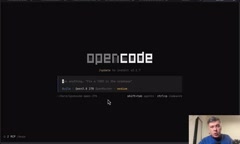
The creator also ran a side-by-side experiment: the same prompt, calling the same open-source model through Heapsy and OpenCode Go respectively—the Heapsy version had already finished code generation, testing, and migration, while OpenCode Go was still thinking; comparing another model against OpenRouter, Heapsy took less time and consumed fewer tokens, while the automated test results were completely identical—both failed the same two tests. This shows that the model hosting provider's impact on the development experience can sometimes be no less than that of the model itself.
Orchestrator is a multi-model collaboration mechanism: a "planning model" is responsible for decomposing tasks and formulating architecture and technical plans, then handing off concrete implementation steps to an "execution model." This division of labor is based on differences in models' capabilities for long-horizon planning versus code implementation—planning requires stronger global reasoning, while execution values speed and cost more. The official documentation listing only Carbon for architecture and Hydrogen for execution amounts to a product design that implicitly acknowledges the two models' complementary capabilities, and indirectly shows that Argon no longer has a place in this combination.
OpenCode Zen / Heapsy / OpenRouter are third-party model hosting and routing services. They layer different inference scheduling, context management, and caching strategies on top of the same model, so even with identical underlying weights, actual speed, token consumption, and task completion can differ noticeably. The phenomenon in this article—the same model performing differently on Heapsy versus OpenCode Go while automated test results remain identical—precisely shows that engineering optimization at the hosting layer affects the development experience but does not change the model's capability ceiling.
X High Tier: Not Worth Waiting For Yet
He only mentions X High at the end of the video, because running the full set of 33 prompts at this tier takes several hours. Available data shows that X High does not surpass the High tier, with some project scores even lower, yet it takes nearly twice as long and consumes more subscription quota. Until the numbers are complete, his advice is clear: High tier is enough for Hydrogen.
Summary
Hydrogen's arrival lets Google regain ground from the joke that it "couldn't produce a good model after 3.1 Pro." It's smaller, cheaper, and its quota lasts longer, yet its scores beat its own larger Argon. For developers, the most practical question becomes: is it worth spending $5 or $20 to enter Google's subscription ecosystem for this model?
One-line Summary
Gemini 4's smallest model Hydrogen beats its own flagship Argon with low quota usage and low price.
Paragraph Summary
Based on a model-comparison creator's hands-on test with 33 high-difficulty prompts, this article evaluates Hydrogen, the newest member of Google's Gemini 4 family. Hydrogen is the smallest and lowest-barrier of the three models, usable on the $5 Plus plan, yet it breaks into the top ten at the High tier on that leaderboard, with multiple sources indicating its performance exceeds the recently released Argon. More striking is subscription quota consumption: running all 33 prompts used only 15% of the weekly quota, whereas Argon exhausted the entire week's quota with just eight prompts. The article also notes that API-route costs remain substantial, that Google's real strategy is using subscription subsidies to buy ecosystem retention, and that the X High tier doesn't surpass High and doubles the time, so it's not recommended for now.
Related articles

OpenAI to Shut Down Agent Builder and Two Other Services on November 30, Developers Must Migrate Urgently
OpenAI will shut down Agent Builder, the evals dashboard, and reusable prompts on November 30; evals is already read-only. Here's the scope, OpenAI's migration paths (Agent SDK, PromptFu, your own code), and what developers should export and rebuild this week.

RankSpot: A Pay-Per-Use SEO & AI Search Execution Layer That Lets Agents Write, Publish, and Build Backlinks for You
RankSpot is an SEO & AI search execution layer for AI Agents. Connect via MCP to Claude or ChatGPT to write, publish & build backlinks. Pay-per-use, $3/article.

Appxiom: Giving AI Coding Assistants Production Context
Appxiom gives AI coding agents production context—crashes, jank, memory leaks, failed network calls—across Android, iOS, Flutter, KMP, and Web, ranking bugs by Goal Friction Impact.