Gemini 4 Hydrogen Hands-On: The Best Flash Model Yet? 3D Generation Impresses

Gemini 4 Hydrogen hands-on: impressive 3D printing and game generation, strong value.
Based on a YouTube creator's full end-to-end test, this article breaks down Google's newly released Gemini 4 Hydrogen (successor to Gemini 3.8 Flash). Priced at $1.50 input / $7.50 output per million tokens, it sits between Terra and Sonnet and adds an "extra high" reasoning tier, performing strongly on SWE-bench-class benchmarks. Tests covered a browser OS, skateboarding game, robotic arm, subway FPS, Blender+Godot pool party game, 3D printing, and a C++ game with no training data. The biggest highlight: converting an apartment floor plan into a support-free printable STL with astonishing dimensional accuracy; the subway FPS with rocket launcher and environmental destruction became the most fun result. All tests enabled Swarm and the highest reasoning tier, consuming only 4% of the weekly quota.
Gemini 4 Hydrogen Hands-On: The Best Flash Model Yet? 3D Generation Impresses
Google's newly released Gemini 4 Hydrogen (the successor to Gemini 3.8 Flash) delivered surprisingly strong 3D modeling and game generation capabilities in hands-on testing. This article breaks down the real-world performance of this "Flash-class" model—pricing, benchmarks, practical tasks, and quota consumption—based on a full end-to-end test by a YouTube creator.
Pricing and Positioning: Between Terra and Sonnet
According to Google DeepMind's announcement, Hydrogen is adapted from the Gemini Carbon architecture and shares Carbon's data type support and context window. Unlike Carbon, Hydrogen has no limited-time discount pricing; it's fixed at $1.50 per million input tokens and $7.50 per million output tokens. For comparison: GPT Subscribe 6.1 Terra costs $1 input / $5 output; Sonnet 5.5 costs $2 input / $10 output. Hydrogen slots right between the two.
The tester noted that Hydrogen's benchmark competitors are Sonnet and Terra—not the higher-tier Opus or Soul—so its positioning is clear: balancing cost-effectiveness and speed at the Flash level.
Benchmarks and Reasoning Modes: A New "Extra High" Tier
Hydrogen supports a new "extra high reasoning effort" tier (reportedly developed specifically for Carbon). The tester cautioned that choosing a reasoning tier on a Flash model requires care: he accidentally used the highest tier in a robotic arm test, causing the task to take about an hour with extremely slow movements.
As a detail, Hydrogen performs strongly on SWE-bench-class benchmarks, even "sweeping" Sonnet 5.5 and GPT Subscribe 6.1 Terra, while remaining competitive on several other benchmarks.
SWE-bench is one of the mainstream benchmarks for evaluating large models' coding abilities today. Its full name is Software Engineering Benchmark, and its task format asks the model to locate and fix GitHub issues in real open-source repositories, with the final judgment based on whether the patch passes the repository's existing test suite. It emphasizes an end-to-end engineering loop rather than single-file code completion, so it places high demands on a model's code retrieval, cross-file reasoning, and test comprehension. When the article says Hydrogen "sweeps" Sonnet 5.5 and GPT Subscribe 6.1 Terra, it refers to pass-rate comparisons on this type of software engineering benchmark. Note that the SWE-bench subsets (such as the Verified version) and run configurations reported by different vendors are not entirely consistent, so care should be taken when making cross-model comparisons to check whether the evaluation methodology is unified.
Hands-On Testing: From Browser OS to 3D Printing
Browser OS: A Cleaner UI
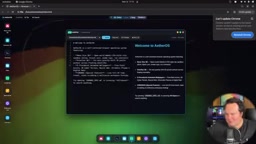
Without Swarm enabled, the browser OS generated by Hydrogen presents a synthwave aesthetic, with an interface cleaner than recent Gemini models, featuring an FPS counter and a sandbox that can run JavaScript. The built-in "Neon Vice 3D" mini-game lets you enter buildings; although the frame rate drops noticeably, it's generally acceptable. A special feature is automatic snapshots: the model continuously saves checkpoints during testing, recoverable with one click.
Swarm is a feature toggle that appears repeatedly in this article and can be understood as a multi-agent parallel collaboration or task decomposition mode: instead of generating step by step in a single thread, the model dispatches multiple subtasks or sub-agents in parallel and then aggregates results through the main flow. This also explains why it's labeled "quota-intensive"—parallel branches significantly amplify token consumption. The tester enabled Swarm and ran the highest reasoning tier in most tasks, effectively stacking two resource-consumption mechanisms at once: the reasoning tier lengthens the chain of thought, while Swarm horizontally expands the number of calls. Understanding this is essential to properly interpreting the weight of the later conclusion that "all tests consumed only 4% of the weekly quota."
Skateboarding Game and Robotic Arm
With Swarm enabled, the C++ skateboarding game outperforms previous Flash models in character modeling and camera movement, but the absence of pedestrian collisions breaks immersion. The robotic arm test, at the highest reasoning tier, succeeded in grabbing and moving a vehicle but took too long; the infographic subsequently requested was of good quality.
Subway FPS: A Rocket Launcher Brings a Qualitative Change
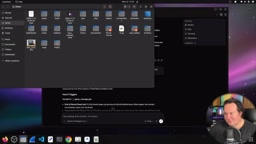
After adopting a commenter's suggestion to add a rocket launcher and allow environmental destruction, the subway FPS became the tester's "most fun" result recently. Zombie models are no longer simple blocks, walls can be destroyed, the train can move along the entire route, and sound effects change with materials. The tester called it "the most enjoyable experience."
Blender + Godot Pool Party Game
The first generation already reached an acceptable level, and adding a "transform into 2.5D cartoon fighting after losing" logic improved stylistic consistency. However, the tester criticized the building textures as "ugly and incoherent"; after a third iteration the modern feel increased, but physics remained poor.
3D Printing: Seinfeld Apartment Model
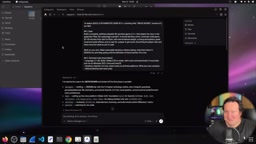
This was the biggest highlight of the test. Hydrogen converted a floor plan of Jerry's apartment into a printable STL file, automatically drawing bounding boxes, performing isometric calibration, and rendering verification in Blender. No supports were needed for printing; cabinet angles were carefully designed, and archways and chair tapers all accounted for printability. The tester printed at the worst quality (0.24mm layer height), and the result had "astonishing dimensional accuracy," far surpassing previous attempts to reproduce it with Three.js.
STL is the most common neutral file format in 3D printing. It only describes the triangular mesh geometry of an object's surface and carries no color, material, or modeling history, so almost all slicing software can read it. So-called "printability" hinges on the mesh being a watertight manifold—that is, the surface has no holes, no self-intersections, and consistent normal directions; otherwise the slicer cannot determine inside from outside. The "no supports needed" mentioned in the article relies on overhang angle control—typically overhangs beyond about 45 degrees require support structures, and if the model carefully designs cabinet angles and chair tapers within this threshold, support material and post-processing cleanup can be avoided. The tester still achieved high dimensional accuracy when printing at a 0.24mm layer height, indicating that the model left margin in tolerances and wall thickness design.
Random Test: A C++ Game with No Training Data
The tester asked Hydrogen to create a 3D game in pure C++ (without Raylib) based on a renamed corporate scandal wiki page. The model produced a documentary-style game called "Above Board," including mechanics for filling out apology letters and taking photos, but the voice assets failed completely, and the overall result was "boring but interesting."
Consumption and Cost-Effectiveness: Still Manageable Under Swarm
Except for the browser OS, all tests enabled Swarm (preview version, labeled quota-intensive) and ran at the highest reasoning tier. The tester used the Ultra plan ($200/month), and weekly usage dropped from 84% to 80%—meaning all tests consumed only four percentage points. He rated it "pretty good" but admitted it was subjective.
Conclusion: A Flash-Level 3D Breakthrough
Hydrogen clearly surpasses same-tier models in 3D modeling and printability, and the fun factor of the subway FPS is also impressive. The skateboarding game improved but did not reach Sonnet 5.5's level, and the robotic arm was too slow at the highest reasoning tier. Overall, as the successor to Gemini 3.8 Flash, Hydrogen performed "exceptionally well," setting a new benchmark especially on 3D transfer tasks.
One-line Summary
Gemini 4 Hydrogen hands-on: impressive 3D printing and game generation, strong cost-effectiveness.
Paragraph Summary
Based on a full end-to-end test by a YouTube creator, this article breaks down Google's newly released Gemini 4 Hydrogen (the successor to Gemini 3.8 Flash). The model is priced at $1.50 input / $7.50 output per million tokens, sitting between Terra and Sonnet, and adds an "extra high" reasoning tier, performing strongly on SWE-bench-class benchmarks. Hands-on tests covered a browser OS, a skateboarding game, a robotic arm, a subway FPS, a Blender+Godot pool party game, 3D printing, and a C++ game with no training data. The biggest highlight was converting an apartment floor plan into a support-free printable STL with astonishing dimensional accuracy; the subway FPS, with its rocket launcher and environmental destruction, became the most fun result. All tests enabled Swarm and the highest reasoning tier, consuming only 4% of the weekly quota.
Related articles

OpenAI to Shut Down Agent Builder and Two Other Services on November 30, Developers Must Migrate Urgently
OpenAI will shut down Agent Builder, the evals dashboard, and reusable prompts on November 30; evals is already read-only. Here's the scope, OpenAI's migration paths (Agent SDK, PromptFu, your own code), and what developers should export and rebuild this week.

RankSpot: A Pay-Per-Use SEO & AI Search Execution Layer That Lets Agents Write, Publish, and Build Backlinks for You
RankSpot is an SEO & AI search execution layer for AI Agents. Connect via MCP to Claude or ChatGPT to write, publish & build backlinks. Pay-per-use, $3/article.

Appxiom: Giving AI Coding Assistants Production Context
Appxiom gives AI coding agents production context—crashes, jank, memory leaks, failed network calls—across Android, iOS, Flutter, KMP, and Web, ranking bugs by Goal Friction Impact.