Gemini 4 Hydrogen Lands on Antigravity: A New AI Powerhouse for Code Maintenance
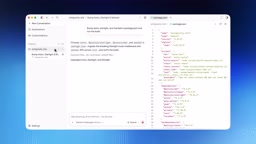
Google releases Gemini 4 Hydrogen, a fast, reliable model for code maintenance and agent execution.
Google released Gemini 4 Hydrogen and integrated it into the Antigravity platform as a fast, reliable "daily driver" for coding and agent execution, focused on code maintenance. It can audit dependency drift, update packages, refactor breaking changes, and get builds passing in minutes, generate alt text for all site images in one pass, and work alongside Gemini 4 Carbon orchestration as the execution layer. It is available now, though parameter count, pricing, and available regions remain undisclosed.
Google recently released the Gemini 4 Hydrogen model and announced its integration into the Google Antigravity platform, positioning it as the daily workhorse for "fast, reliable coding and agent execution." The company describes it as a "daily driver," emphasizing its steady performance in code maintenance, dependency upgrades, and routine coding tasks.
Core Positioning: Built for Code Maintenance
The launch of Gemini 4 Hydrogen targets a long-standing pain point for developers. As codebases grow over months, redundancy and bloat are almost inevitable—refactoring and optimization are necessary, but ongoing maintenance is both repetitive and time-consuming, seriously eating into the energy available for new feature development. According to the official announcement, Hydrogen delivers "reliable refactoring and clean execution across codebases" and is well suited to library version upgrades.
This scenario is not just talk. Take a website built with Astro: dependency drift means package versions need frequent updates, and version upgrades often come with breaking syntax or deprecated APIs. In the past, developers had to manually comb through changelogs and rewrite import statements; now they can simply apply Hydrogen to the codebase, and it will audit version drift, update packages, and refactor breaking changes—getting the build to pass within minutes.

Dependency drift refers to the gradual divergence between the dependency versions declared by a project and those actually installed per the lockfile, or between those and the latest upstream releases. Over time, different developers and different CI environments may end up installing different versions of the same package, leading to the classic "works locally, fails in production" problem. Sources of drift include transitive dependencies being upgraded indirectly, lockfiles being ignored, and major versions going untracked for long periods. The usual remedies are running audit tools regularly, enabling dependency bots to open automated PRs, and enforcing lockfile consistency checks in CI. Hydrogen's claim to "audit version drift" essentially collapses this series of manual processes into a single model-driven batch operation.
Multimodal Capabilities: From Performance Optimization to Accessibility
Hydrogen's speed and multimodal understanding also apply to site-level performance improvements and accessibility compliance. In the official demo, Hydrogen can inspect every image across all pages and blog posts in one pass, generating accurate alt text in a single traversal. This solves the enormous manual labeling workload involved in accessibility overhauls.
Alt text (alternative text) is the alt attribute of the HTML img tag, read aloud by screen readers and displayed when an image fails to load. The WCAG accessibility guidelines have clear requirements for it: decorative images should have empty alt text, while informative images should describe the content they convey rather than their appearance. Writing alt text by hand for every image across a site is a classic high-effort, low-reuse task that is easy to skip or phone in. The key difficulty in getting a multimodal model to "look at an image and write a description" lies in distinguishing decorative from informative images, controlling the level of detail, and avoiding simply restating visible text in the image. Generating alt text in a single pass means the model must understand page context in batches rather than processing each image in isolation—which is precisely the value of multimodal batch processing over calling an API image by image.
Agent Execution in Concert with Gemini 4 Carbon
Hydrogen does not exist in isolation. The official announcement makes clear that it can serve as a fast, reliable model working alongside agent orchestration through Gemini 4 Carbon. This means that in complex engineering tasks, Hydrogen can handle the concrete execution layer while Carbon handles high-level orchestration, forming a division of labor.

Agent orchestration refers to an architecture in which a high-level model breaks down tasks, plans steps, dispatches subtasks, and aggregates results, while several execution models or tools carry out the concrete actions. The orchestration layer focuses on "what to do, in what order, and how to fall back on failure," while the execution layer focuses on "getting this step right." The benefit of this layering is controllable cost and latency: high-frequency, structured execution steps go to faster, cheaper models, and the orchestration model is invoked only when complex reasoning is needed. The trade-off is that the interfaces between layers must be clear; otherwise the orchestration layer's intent gets distorted at the execution layer, and errors amplify along the call chain. That is why an execution model's reliability is often more critical than its absolute capability.
Availability and Outlook
Users can start using Gemini 4 Hydrogen and Google Antigravity today. Note, however, that the source material does not disclose key information such as the model's parameter count, pricing, or available regions, so real-world results remain to be verified by developers. If Hydrogen can reliably deliver "minute-level" build fixes in real projects, it could become a practical tool for code maintenance—rather than yet another model that dazzles in demos but struggles in practice.
Related articles

OMLX 0.7.1 Integrates Splash: Major Speedup for MLX Model Inference on Mac
OMLX 0.7.1 adds Splash as an external engine, letting standard MLX models (Qwen 3.6 35B) match Splash custom setups at 92.8 tokens/s. Setup, D-Flash2 requirements, and M1/M2 compatibility explained.

Running Uncensored AI Locally on Your Phone: LFM3 Hands-On Test and Guide
Learn how to run Liquid AI's LFM3 1.7B uncensored model locally on iPhone and Android—no GPU or network needed. Includes On Device LLM and Layla steps, speed tests, and privacy benefits.

Claude Launches Collaborative Sheets and Whiteboards, Taking On Microsoft and Google Directly
Anthropic rolls out beta Claude Sheets and Whiteboards to paid users, enabling one-prompt spreadsheets with formulas and turning verbal plans into collaborative boards—taking on Microsoft and Google directly.