Gemini 4 Hydrogen Long-Term Test: Official 2.5x Speed, 3D Printing Is the Biggest Surprise

Gemini 4 Hydrogen long test: 3D printing exceeds expectations, high-intensity testing uses only 4% weekly quota.
A Bilibili UP host ran a full long-term test of Google's new Flash series member Gemini 4 Hydrogen, covering 3D modeling, game generation, and robotic arm control. Priced at $5.5/$7 per million tokens and positioned between GPT 6.1 Terra and Sunnet 5.5, it supports the same data types and context window as Carbon. Measured speed generally matches the official 2.5x claim, though the robotic arm task slowed noticeably due to mistakenly selecting ultra-high reasoning mode. The biggest highlight was generating a directly printable STL file from a holiday process photo, with high Blender reconstruction precision and no support structures needed for slicing. The entire high-intensity test consumed only about 4% of the weekly quota.
Pricing Positioning and Model Role
Let's start with the price. Hydrogen is priced at $5.5 per million tokens for input and $7 per million tokens for output. For comparison: GPT 6.1 Terra costs $1 input / $5 output, and Sunnet 5.5 costs $6 input / $10 output. Hydrogen sits right between Terra and Sunnet 5.5, placing it in the mid-range of the Flash series.
In terms of positioning, it is compared with Sunnet and Terra rather than the higher-tier OPS or Soul series. On technical specs, it supports the same data types as Carbon and can accept almost all data formats, with a matching context window. The knowledge cutoff shows the latest update as November 2026, though the UP host is uncertain about this and says it needs further confirmation.
Speed Performance and Quota Consumption
A core variable in this test is the Smart Group feature — the Carbon version had previously proven that this feature delivers a huge improvement in output quality. The UP host kept the group feature enabled almost the entire time on Hydrogen and ran it in the new ultra-high reasoning mode.
On speed, the official claim is 2.5x faster. In testing, tasks like the browser OS, subway FPS, and skateboard game responded quickly, with no noticeable slowdown even in ultra-high reasoning mode. The robotic arm test was the exception: because extra high mode was mistakenly selected and smart solving mode was not enabled, the whole task took nearly an hour, and every switch was extremely slow. The UP host speculates that speed would be much better without the highest performance mode.
On quota, the UP host uses the $200/month Super plan, with a weekly quota of about 200 units. A screenshot before testing showed a value of 84, and after all tests were run, about 4 weekly units were consumed in total. In other words, this high-intensity test covering 3D modeling, game generation, and robotic arm control only used up 4% of the weekly quota.

Smart Group feature (similar to a multi-agent collaboration mechanism) refers to the model automatically splitting tasks during inference, scheduling multiple submodules or multiple samplings in parallel, and then integrating and filtering the results. It usually improves output quality on complex tasks but consumes extra inference resources. The "ultra-high reasoning mode" mentioned in the article corresponds to a higher test-time compute investment — the model performs longer internal thinking or multiple rounds of verification before giving an answer, which is slower but more stable in quality. When the two are combined, simple tasks are almost unaffected, while tasks like the robotic arm that require continuous decision-making and multi-step switching are significantly slowed down, consistent with the observations in the article.
Weekly quota is a common usage metering method for subscription-based AI services, reset at fixed intervals and usually converted into request counts, token amounts, or compute credits. Consumption varies enormously by task; long context, multi-turn tool calls, and high reasoning modes all multiply consumption. Therefore, the "4% weekly quota" figure needs to be understood in light of task type: it shows that quota efficiency is quite impressive on batch tasks of medium complexity without extreme reasoning, but it does not mean this ratio can be maintained in all scenarios.
3D Printing: The Unexpected Biggest Highlight
The standout part of this test was having the model generate a printable STL file from a photo of a holiday process. The UP host originally expected the model might just crudely replicate the outline, but Hydrogen completed a high-quality 3D reconstruction in Blender, calibrated to about 100mm × 100mm with a height of about 5 inches, and the slicing software did not indicate any need for support structures — meaning the design of the overhanging parts itself took printability into account.
After actually printing with blue filament, the UP host commented: "There were no support structures at all when printing, the slicing software didn't say any settings were needed — this thing is really good, really well made." Compared with the painful experience of doing similar recreations with 3JS in the past, the quality of the Blender output this time was clearly higher. The UP host even said this might be the 3D printing test result with the highest dimensional fidelity he has ever seen.
One detail: when handling the chair shape, the model tapered the detail from the ball down gradually, showing that it has some understanding of geometric structure rather than just surface fitting.
STL files are the most universal data format in 3D printing, approximating an object's surface geometry through a large number of triangular facets, and almost all slicing software and 3D printers can read them. The "slicing software" mentioned in the article is responsible for cutting the STL model into two-dimensional contours at a set layer thickness, planning print paths, and generating support structures. The model being able to output an STL that requires no supports shows that its 3D reconstruction result already meets printing process constraints in terms of overhang angles and structural self-support — this is more difficult than simply generating a model that "looks like" the object.
Blender is an open-source 3D creation suite covering the full pipeline of modeling, sculpting, animation, and rendering. Completing the reconstruction in Blender means the model must not only understand the object geometry in the photo but also master Blender's operation logic and scene organization, which is a capability for invoking professional software toolchains. The "3JS" compared in the article refers to Three.js, a JavaScript 3D library for the web that focuses more on real-time rendering than fine modeling, hence the inherent gap in output quality compared with the Blender route.
Games and Creative Tasks: Highlights and Shortcomings
In the browser OS test, Hydrogen generated a synthwave-style interface that the UP host considered cleaner than the UI of some Gemini models, with a working dynamic background and frame rate display. However, the frame rate dropped noticeably, which the UP host speculates was due to resource usage on an old laptop.
The subway FPS test was the most interesting playable result of this session. The UP host adopted comment suggestions and added rocket launchers and destructible environments; zombie models were no longer simple blocks, bullet holes and falling wall plaster effects were on point, and train handles swayed. Details like different materials producing different sounds were also praised.
The skateboard game and party fighting game were mediocre. The skateboard model looked stylish and the water splash effects were good, but inconsistent pedestrian models broke immersion. The party fighting game's 2.5D cartoon-style conversion was done fairly well for a Flash model, but the textures and building aesthetics were criticized by the UP host as "like randomly cobbled-together assets," only reaching a more unified modern style after the third redo.

Random Stress Test: C++ Game and Wikipedia Rewrite
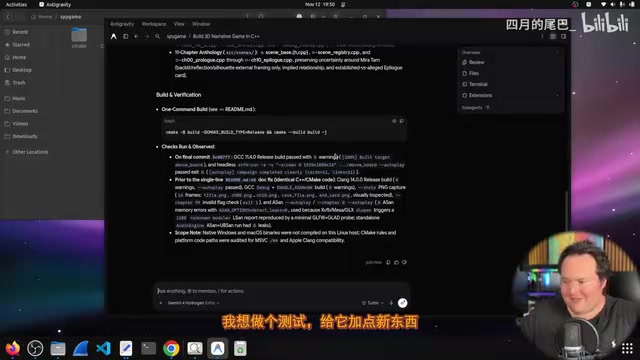
The UP host designed a test that never appeared in the training data: using a Wikipedia page about a major company scandal as source material, the model was asked to rewrite it into a C++ 3D game that uses no related dependencies. The model's UI and public visual effects were good, and it also generated voice assets, but the audio resources were actually unusable, and some chapter content failed completely. The UP host described this game with extra cinematic effects as having "a very fake plot, decent music and scenes," overall rather boring, but as a random test that never appeared in the training data, the model being able to run through the process already demonstrates a certain generalization ability.
The test that never appeared in the training data is a common approach for evaluating model generalization: if task elements cannot be directly retrieved from memory, the model must genuinely perform composition and reasoning. The article's requirement to rewrite a Wikipedia page into a C++ 3D game without using related dependencies examines multiple abilities at once: long-text understanding, code generation, graphics programming, and asset organization.
The phrase "without using any related dependencies" means that no ready-made game engine or graphics library can be called; the model must implement low-level logic such as the rendering loop, input handling, and scene updates itself, which is clearly more difficult than framework-based generation. C++ itself lacks managed memory and high-level abstraction and has stricter requirements for code correctness, so partial chapter failures and unavailable audio assets are typical manifestations in this kind of high-difficulty random test.
Conclusion: A Pragmatic Choice Worth Replacing 3.8 Flash
Overall, Gemini 4 Hydrogen delivered better-than-expected performance in speed, quota efficiency, and 3D spatial understanding. The 4% weekly quota consumption is quite friendly for users on the $200/month plan, and output quality with the group feature enabled is stable. The shortcomings are concentrated in consistency of UI aesthetics, refinement of details such as pedestrian models, and speed fluctuations on some tasks in ultra-high reasoning mode.
The UP host's final judgment: this is definitely a model for replacing Gemini 3.8 Flash. If you care about 3D printing workflows or cost-effective everyday task handling, Hydrogen is worth adding to your test list.
Related articles

Google Releases Gemini 4 Hydrogen: Speed and Code Generation as Core Selling Points
Google releases Gemini 4 Hydrogen, emphasizing speed and first-time code accuracy; agents can pay bills and open Google Ads accounts; Baidu launches model trading platform Ciyuansuo, Alibaba upgrades its 714 flagship, and the 27B-parameter open-source robotics model Prince GE opens for commercial use.

Programmer Career Guide in the AI Era: Transition Paths and Embodied AI Opportunities
How should programmers transition in the AI era? Based on a Bilibili career planning livestream, this article analyzes the risks of not embracing AI, the Web Coding to FDE transition path, the data bottleneck in embodied AI, and the impact of LLMs on research roles, offering actionable job-seeking and learning sequences for campus and experienced hires.
Pi Agent's Minimalist Design Philosophy: Why Fewer Features Makes It More Popular
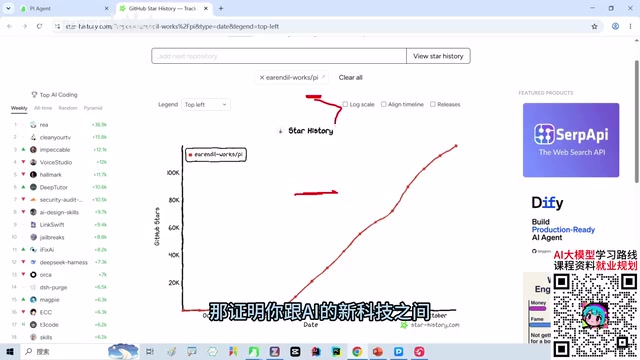
Pi Agent's minimalist-core-plus-plugin design contrasts with the feature-bloated Codex and Claude Code. We analyze its design philosophy and star growth.