Pi Agent's Minimalist Design Philosophy: Why Fewer Features Makes It More Popular
Pi Agent's minimalist-core-plus-plugin approach differentiates it in a market of feature-bloated AI coding tools.
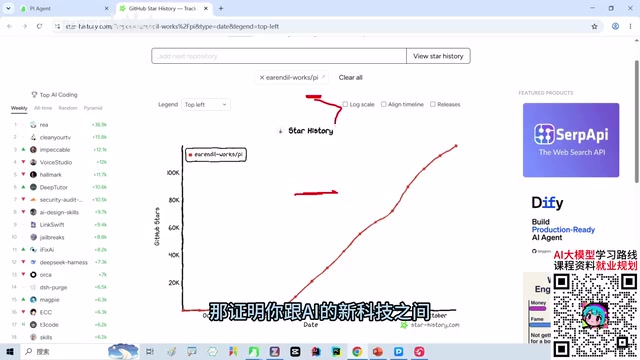
The article analyzes open-source project Pi Agent's rise and design. Unlike Codex and Claude Code's all-in-one approach, Pi Agent subtracts: a lightweight core handles basics like tool calling and file I/O, with other features added via plugins. Its GitHub stars grew from thousands to nearly 70,000, exploding in 2026 and still accelerating.
In the fiercely competitive landscape of AI coding tools, an open-source project called Pi Agent is winning over developers with a completely different approach. In contrast to products like Codex and Claude Code that pursue all-encompassing feature sets, Pi Agent chooses to subtract—pairing a minimalist core with a highly extensible plugin mechanism that lets developers customize as needed. This "less is more" design philosophy may well reveal another direction for the evolution of AI Agents.
The Rise of Pi Agent as Seen Through Its Star Curve
According to data from the GitHub star history site (Stars History), Pi Agent's popularity has followed a steady and continuous growth curve. Based on analysis from a tutorial by a Bilibili creator, the project saw a clear explosive growth in 2026, with its star count climbing from several thousand all the way to nearly 70,000, and it is still in an accelerating upward phase today.
This growth is not a single viral spike followed by a decline, but rather a complete cycle of early accumulation, initial traction, sustained rise, and further acceleration. For an AI Agent tool, this means it is being incorporated into more and more developers' daily toolchains, rather than merely remaining at the novelty stage.
Feature-Rich Doesn't Mean Right for Everyone
The AI coding tools market has already formed a competitive landscape with multiple strong players. Codex, Claude Code, Cursor, and others compete with one another, each striving to integrate more capabilities: tool calling, MCP, Skills, orchestrator/sub-agents, task planning, permission management, sandbox environments... These features are genuinely useful, but the higher the degree of integration, the heavier the burden on the context window.
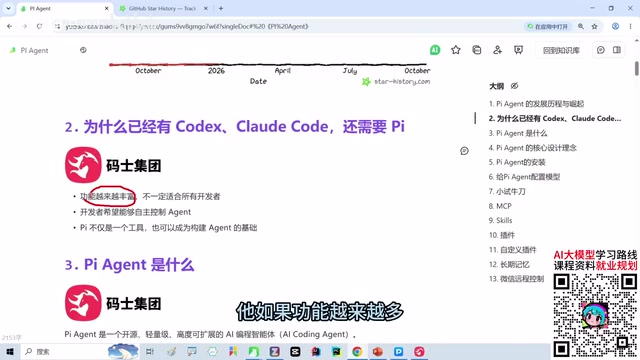
The direct consequence of context bloat is slower request speed and reduced interaction efficiency. For many developers, everyday needs are actually quite simple: call a large model, read files, modify code, execute commands. A lightweight, responsive Agent is often more practical than a bloated "all-rounder."
Minimalist Core, Extend on Demand
Pi Agent's design philosophy is built precisely around this pain point. It provides a core that is simple enough and stable and reliable, making basic capabilities like tool calling, file reading and writing, and command execution solid, while all other capabilities are added on demand through a plugin mechanism. This pattern is nothing new in software engineering—it is essentially a "core + extensions" architecture, similar to the plugin ecosystem of an editor.
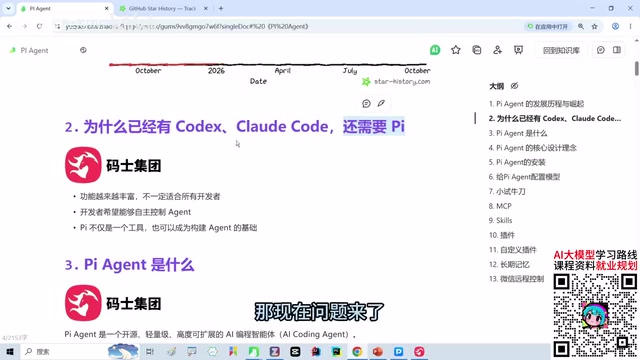
Minimalism does not mean weak functionality. Pi Agent moves complex logic out of the core and into the external extension layer, maintaining the core's lightness and stability while gaining nearly unlimited functional extensibility through community and developer-defined plugins. For scenarios that require quick onboarding and flexible customization, this trade-off is clearly quite appealing.
MCP (Model Context Protocol) is an open protocol proposed by Anthropic in late 2024, aimed at establishing a standardized way for AI models to connect with external data sources and tools. It is akin to what the USB-C interface is to hardware peripherals, allowing different tools and data sources to be invoked by AI in a unified way. With MCP, an Agent can dynamically discover and connect to new services at runtime without hardcoding integration logic into the core code. For minimalist-core projects like Pi Agent, the significance of MCP is especially prominent: it means the plugin ecosystem doesn't have to reinvent the wheel, but instead follows a unified protocol to access external capabilities. However, MCP itself also introduces context overhead—the description of each available tool consumes tokens, which is a concrete manifestation of the tension between feature integration and response speed.
The orchestrator/sub-agent architecture is a common task-decomposition pattern in complex AI coding tools: an orchestrator is responsible for planning and scheduling, dispatching subtasks to multiple specialized sub-agents, each with its own independent context window. This design can improve the handling of complex tasks, but the cost is increased coordination overhead, greater debugging difficulty, and the need to aggregate sub-agent results back into the main context, further adding to the context burden. Pi Agent does not build in such multi-layer orchestration; instead, it lets developers implement the orchestration logic they need through plugins, thereby leaving the decision of whether to introduce complexity to the user rather than imposing it by default.
The Return of Developer Control
Mature commercial products often mean fixed usage rules and extension methods. When using tools like Codex, developers must follow the product's preset interaction logic and extension interfaces, or they may not get the best experience. Pi Agent, by contrast, emphasizes developers' autonomous control over the Agent: they can write their own plugins, define tools, and handle events and workflows without relying on the product vendor's preset capabilities.
This open stance makes Pi Agent not just a tool, but also a foundation for building custom Agents. For teams with specific business needs, this means they can build agents tailored to their own processes on top of a unified core, without having to accommodate the design constraints of general-purpose products.
A sandbox environment is an isolation mechanism used by AI coding tools when executing code, designed to limit the Agent's file system access scope and network calls, preventing accidental operations or malicious code from affecting the host machine. Commercial products typically build in sandbox policies to ensure security, but their rules are preset by the vendor and are not easy for developers to adjust according to business needs. Pi Agent delegates such security boundaries to the plugin layer and to developers themselves for configuration, offering greater flexibility but also requiring users to have the corresponding security awareness. The same applies to permission management—fine-grained permission control reduces risk but adds configuration complexity, which is precisely the other side of the minimalist approach that users need to weigh.
Implications for AI Agent Development
Pi Agent's rise offers a thought-provoking sample: in a period of rapid iteration of AI capabilities, piling on features is not necessarily the only solution. When context cost, response speed, and customization flexibility become real pain points for developers, a stable, lightweight, and extensible core can instead form a differentiated advantage. Of course, the minimalist approach also means more work is left to users and places certain demands on developers' technical abilities. The balance between feature richness and lightweight flexibility will remain a long-term challenge in the evolution of AI coding tools.
One-line Summary
Pi Agent's minimalist-core-plus-plugin-extension approach gives it a differentiated advantage in a market of feature-bloated AI coding tools.
Paragraph Summary
The article analyzes the rise of the open-source project Pi Agent and its design philosophy. Unlike products such as Codex and Claude Code that pursue all-encompassing features, Pi Agent chooses to subtract: a stable, lightweight core handles basic capabilities like tool calling, file reading and writing, and command execution, while other features are extended on demand through a plugin mechanism. Its GitHub star count has climbed from several thousand to nearly 70,000, with explosive growth in 2026 that is still accelerating. The article points out that the more features are integrated, the heavier the context window burden and the slower the request speed, while many developers' everyday needs are actually quite simple—making lightweight Agents more practical. Pi Agent emphasizes developers' autonomous control over the Agent and can serve as a foundation for building custom agents, but it also places higher demands on users' technical abilities.
Related articles
Google Releases Gemini 4 Hydrogen: Speed and Code Generation as Core Selling Points
Google releases Gemini 4 Hydrogen, emphasizing speed and first-time code accuracy; agents can pay bills and open Google Ads accounts; Baidu launches model trading platform Ciyuansuo, Alibaba upgrades its 714 flagship, and the 27B-parameter open-source robotics model Prince GE opens for commercial use.
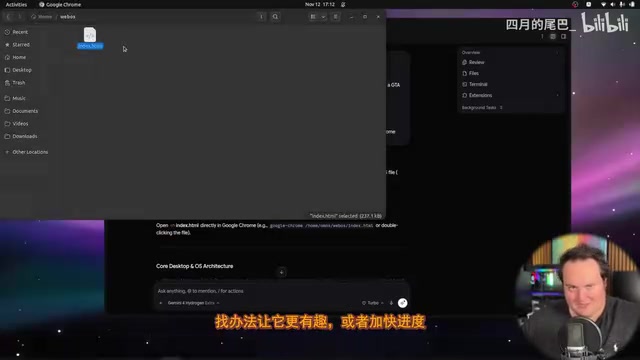
Gemini 4 Hydrogen Long-Term Test: Official 2.5x Speed, 3D Printing Is the Biggest Surprise
Full long-term test of Gemini 4 Hydrogen: priced at $5.5/$7 per million tokens, officially 2.5x faster, stunning 3D-printed STL quality with no supports needed, and only 4% weekly quota used.
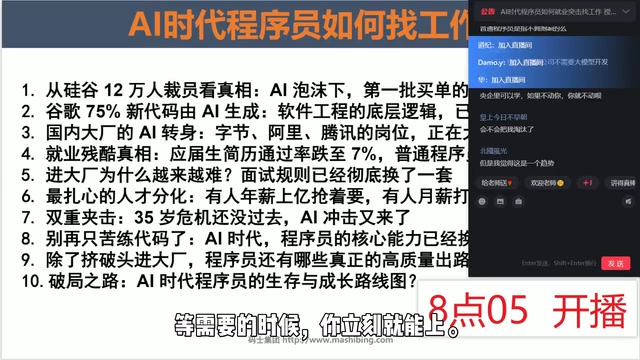
Programmer Career Guide in the AI Era: Transition Paths and Embodied AI Opportunities
How should programmers transition in the AI era? Based on a Bilibili career planning livestream, this article analyzes the risks of not embracing AI, the Web Coding to FDE transition path, the data bottleneck in embodied AI, and the impact of LLMs on research roles, offering actionable job-seeking and learning sequences for campus and experienced hires.