Google Releases Gemini 4 Hydrogen: Speed and Code Generation as Core Selling Points

Google releases Gemini 4 Hydrogen, agents extend to payments and ad placement, Baidu builds a model trading platform, Alibaba upgrades its flagship and open-sources a robotics model.
This AI daily roundup covers several large model developments: Google releases Gemini 4 Hydrogen, emphasizing inference speed and first-time code accuracy while claiming to convert natural language directly into runnable interactive code; an agent product expands to paying on users' behalf and opening Google Ads accounts for ad placement; Baidu launches the Ciyuansuo model trading platform with admission testing, monitoring, and credit profiles, exceeding 700 billion daily token calls; Alibaba announces its 714 flagship with upgrades in knowledge, multimodal coding, and agent capabilities; the 27B-parameter world-action model Prince GE opens under Apache 2.0 for commercial use; and Doubao Work integrates multiple third-party models into one entrance. Three parallel threads emerge: model capabilities, agent execution boundaries, and platform aggregation.
AI daily news roundups have always won on information density, and today's vertical-screen quick update is similarly packed with developments from across the large model world. From Google's new model to platform moves by Baidu and Alibaba, and on to open-source robotics models, these threads together reveal several key directions in today's AI competition.
Google Gemini 4 Hydrogen: Emphasizing "Getting It Right the First Time"
Google has officially released the Gemini 4 Hydrogen model, positioned to cover everyday coding, agent task execution, and general-purpose scenarios. The two keywords highlighted by the official announcement are "speed" and "the ability to get it right the first time"—the former pointing to inference efficiency, the latter directly targeting the most painful problem in code generation: rework.
More noteworthy is its claim to convert natural language directly into runnable interactive code. If this capability holds up reliably in real-world scenarios, it means the pipeline from requirement description to prototype output will be dramatically compressed, potentially disrupting low-code platforms and front-end development workflows.
Judging from the naming, "Hydrogen" continues Google's habit of naming models after elements, but the source material did not disclose specific specifications such as parameter count or context length. Actual capability will still need to be verified through third-party evaluations.
Agents Start "Spending Money Themselves": Automated Payments and Ad Placement
Another main thread today is the expansion of the boundaries of agent capabilities. One agent product can now complete payments on behalf of users—users describe their needs in plain language, the system calculates a budget, and after the user confirms the total, payment is completed through Link and Visa. The same product can also directly open a Google Ads account within the platform and run ads on the user's behalf.

The significance of this step is that agents have crossed from "giving advice" to "executing transactions." The three-stage design of budget calculation, user confirmation, and payment channel preserves a human checkpoint, but once operations requiring continuous optimization like ad placement are handed to agents, marketers' roles will shift more toward goal-setting and result review. The risks are equally obvious: payment authorization boundaries and fallback mechanisms for runaway ad budgets are questions that must be answered before deployment.
The relationship between Link and Visa: Link is a quick payment product launched by Stripe. Once users save their card information, they can check out at merchants that support Link without re-entering card numbers; Visa, meanwhile, is the card network responsible for transaction clearing and authorization. An agent calling on these two means it is not building its own wallet but reusing existing card payment infrastructure—merchants still see a normal card transaction, which also means authorization scope, refunds, and chargeback liability remain between the cardholder and the merchant, not the agent provider. Understanding this is essential to judging whether "an agent paying for you" is a genuinely new product form or simply automated wrapping of existing payment flows.
Trading Agent Competitions and Model Trading Platforms
Around trading scenarios, Koozer and MumuSG jointly held an AI trading agent competition. Approved registrants receive a free one-month Pro subscription, 1,500 credits, and can use Mumu's MCP for paper trading, with prizes exceeding S$8,500. Such competitions are essentially using real trading environments to screen agents for strategy stability.
Baidu, meanwhile, has launched a large model trading platform called "Ciyuansuo," positioned similarly to a trading exchange: providing admission testing, continuous monitoring, and credit profiles for various models. Baidu AI Cloud disclosed that the platform's daily average token calls have exceeded 700 billion. Treating models as tradable assets and building a credit system is a signal that platform providers are shifting from "selling compute" to "selling trust."

MCP (Model Context Protocol): MCP is an open protocol that lets models/agents connect to external tools and data sources in a standardized way, analogous to a "USB interface for AI applications." Service providers package capabilities such as trading interfaces, market data, and account queries into MCP servers, and the agent side only needs to connect according to the protocol without writing separate adapter code for each platform. "Using Mumu's MCP for paper trading" in the text means participating agents gain capabilities like placing orders and checking positions through this protocol. The spread of MCP lowers the cost for agents to connect to real business systems, but it also brings permission boundary issues to the forefront: which tools an agent can call and how call frequency and amount limits are constrained all need to be designed outside the protocol.
Alibaba Qwen Flagship Upgrade and Open-Source Robotics Model
Alibaba has officially announced its 714 flagship large model, with upgrades in three dimensions: knowledge understanding, multimodal coding, and agent capabilities. Jinweipai has already integrated the preview version, and Qwen Chile can also use Qwen 4 Max Preview.

On the open-source side, a 27-billion-parameter world-action model called Prince GE is worth noting. It can simultaneously predict video and actions, is released under the Apache 2.0 license for commercial use, and once weights are open, it can run and be fine-tuned on proprietary hardware, directly used to control real robots. Joint modeling of video prediction and action prediction has been an important technical route for robotics foundation models in recent years, and open-source commercial availability lowers the barrier to entry for hardware manufacturers.
World-Action Model: The core of such models is to jointly train "predicting future visual frames" and "predicting corresponding actions" under the same objective. Traditional robot policy models mostly map observations directly to actions, lacking modeling of consequences; joint prediction of video and actions is equivalent to letting the model first learn "if I move this way, what will the world look like," then using that predictive capability for decision-making. The benefits are higher sample efficiency, greater stability on long-horizon tasks, and easier transfer across different embodiments. The cost is that training requires large amounts of action-annotated video data, and inference compute overhead is also greater. Opening weights under the Apache 2.0 license means hardware manufacturers can directly fine-tune and deploy on their own devices, but they still need to independently assess the patent and trademark clauses in the license before commercial use.
Competition Among Large Model Aggregation Entrances
Doubao Work today integrated multiple models—QBK 3.1 Pro, GLM 5.3, DeepSeekAd V4.1 Flash, and others can all be called from the same entrance, along with a limited-time special offer. The value of an aggregation entrance lies in reducing users' selection and switching costs, but for model providers, it also means competing head-to-head on cost-effectiveness on the same stage.
Models, tools, and viewpoints advancing in parallel—see you tomorrow.
One-line Summary
Google releases Gemini 4 Hydrogen, agents extend to payments and ad placement, Baidu builds a model trading platform, Alibaba upgrades its flagship and open-sources a robotics model.
Paragraph Summary
This AI daily roundup collects several large model developments: Google releases Gemini 4 Hydrogen, emphasizing inference speed and getting code right the first time, and claiming it can convert natural language directly into runnable interactive code; an agent product expands to paying on users' behalf and opening Google Ads accounts to run ads, turning agents from advisors into transaction executors; Baidu launches the "Ciyuansuo" large model trading platform offering admission testing, continuous monitoring, and credit profiles, with daily average token calls exceeding 700 billion; Alibaba announces its 714 flagship model with upgrades in knowledge understanding, multimodal coding, and agent capabilities; on the open-source side, the 27-billion-parameter world-action model Prince GE appears, released under Apache 2.0 for commercial use; and Doubao Work integrates multiple third-party models into a unified calling entrance. Overall, three parallel main threads emerge: model capabilities, agent execution boundaries, and platform-based aggregation.
Related articles

Gemini 4 Hydrogen Long-Term Test: Official 2.5x Speed, 3D Printing Is the Biggest Surprise
Full long-term test of Gemini 4 Hydrogen: priced at $5.5/$7 per million tokens, officially 2.5x faster, stunning 3D-printed STL quality with no supports needed, and only 4% weekly quota used.
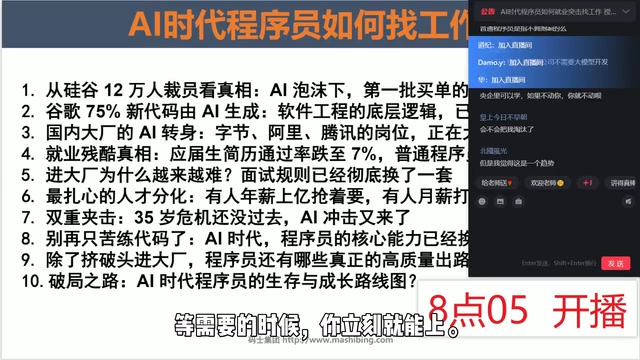
Programmer Career Guide in the AI Era: Transition Paths and Embodied AI Opportunities
How should programmers transition in the AI era? Based on a Bilibili career planning livestream, this article analyzes the risks of not embracing AI, the Web Coding to FDE transition path, the data bottleneck in embodied AI, and the impact of LLMs on research roles, offering actionable job-seeking and learning sequences for campus and experienced hires.
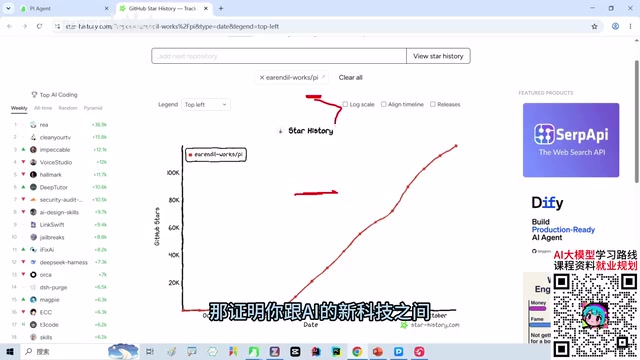
Pi Agent's Minimalist Design Philosophy: Why Fewer Features Makes It More Popular
Pi Agent's minimalist-core-plus-plugin design contrasts with the feature-bloated Codex and Claude Code. We analyze its design philosophy and star growth.