Gemini 4 Hydrogen Released: 2.5x Faster, Now Integrated Across Google Search
Google releases Gemini 4 Hydrogen, featuring 2.5x speed, million-token context, and adjustable thinking levels.
Google has launched Gemini 4 Hydrogen, a new member of the Gemini 4 family positioned as a "fast execution engine" for coding, agentic tasks, and everyday productivity. Google claims it is 2.5x faster than the previous generation, with terminal coding benchmark scores jumping from 18.2 to 57; on the Intelligence Index leaderboard it scores 51 at default and 54 at the highest setting, though these figures are vendor-provided and not yet independently verified. The model supports 1M token input and output, multimodal coverage of text, tables, charts, audio, and video, and four thinking depth levels—low, medium, high, and ultra-high, with high as default—letting developers pay for reasoning based on task difficulty. Access channels include the developer API, developer platform, mobile app, and Google Search for users worldwide. Deep long-chain reasoning remains with the family's flagship models, with Hydrogen forming a fast-slow division of labor within a matrix strategy.
Google has released Gemini 4 Hydrogen, a new member of the Gemini 4 family positioned as the family's "fast execution engine," focused on coding, agentic tasks, and everyday productivity. Its core selling point is being fast and efficient.
Speed: Officially Claimed 2.5x Faster, Partially Corroborated by Third-Party Leaderboards
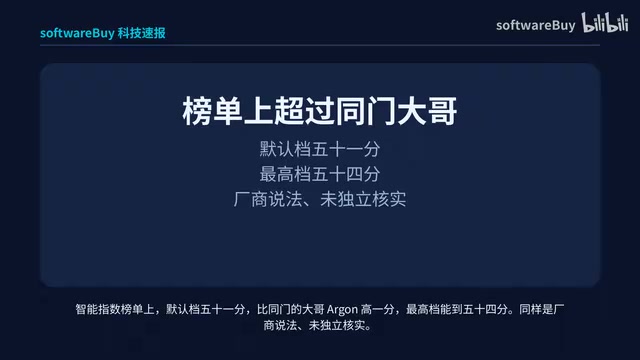
According to Google's official claims, Gemini 4 Hydrogen is 2.5x faster than the previous generation; on the terminal coding benchmark it scores 57 points versus 18.2 for the previous generation—a remarkably wide gap.
That said, this is vendor-provided data. On the Intelligence Index leaderboard, Hydrogen scores 51 points at its default setting—1 point higher than its "big brother" in the same family—and reaches 54 points at its highest setting. Note that these figures also come from the vendor and have not yet been independently verified.
From a product logic standpoint, Hydrogen isn't chasing the absolute performance ceiling; it's finding a more practical balance between response speed and cost. For applications that need to call the model at high frequency, this trade-off is often more valuable than simply piling on parameters.
Intelligence Index leaderboard (Artificial Intelligence Index) is one of the third-party evaluation systems commonly used in the industry to compare the overall capabilities of large models. It typically aggregates multiple standardized benchmarks (such as MMLU, GSM8K, HumanEval, etc.) into a weighted total score, covering dimensions like knowledge Q&A, mathematical reasoning, and code generation. Vendors often cite scores from this leaderboard when releasing new models to demonstrate their capabilities, but different institutions use different question versions, prompt templates, and scoring rules, so scores are not strictly comparable. The article specifically notes that Hydrogen's 51 and 54 points "also come from the vendor" precisely because such numbers, without third-party reproduction, can only serve as reference rather than definitive conclusion.
Context and Multimodality: Million-Level Throughput, Long-Document Friendly
In terms of context window, Hydrogen supports 1 million tokens of input, with output also reaching up to 1 million tokens. This means long documents, large codebases, and complex multi-turn conversations can all be fed in at once.
Multimodal input covers text, tables, charts, audio, and video, making it capable of handling long documents, analyzing reports, and understanding audio and video content.
Context window refers to the maximum total number of tokens a model can "remember" and factor into computation in a single call, while output length limit is the maximum number of tokens the model can generate at once—the two are often conflated. Hydrogen's claim of 1 million tokens each for input and output means it can theoretically read in an entire large codebase or hundreds of pages of documents at once, then generate output of comparable scale. Note that a long context does not mean attention is equally effective at every position; the industry widely recognizes a "lost in the middle" phenomenon—information located in the middle of the context is more easily overlooked. Therefore, in practice, placing key instructions at the beginning or end and summarizing overly long inputs in segments is often more reliable than simply filling the window.
Adjustable Thinking Levels: Pay for Task Difficulty
Hydrogen offers four thinking depth levels: low, medium, high, and ultra-high, with high as the default. The harder the task, the higher the level; simple tasks use lower levels—pay only for the depth you need. This is what most distinguishes it from its "big brothers."
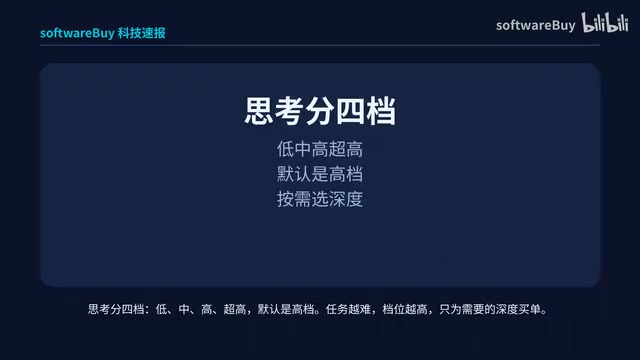
This tiered design essentially turns "reasoning budget" into an adjustable dial. For developers, levels can be dynamically selected based on task complexity, allowing finer trade-offs between latency and quality.
Thinking levels correspond to the allocation strategy of test-time compute. "Thinking" refers to the model generating an internal reasoning chain before giving a final answer; the higher the level, the more reasoning steps and token budget allowed, generally improving answer quality but also increasing latency and cost. Lower levels approximate direct answering, suitable for deterministic tasks like classification, extraction, and format conversion; ultra-high levels suit multi-step math, complex debugging, and long-chain planning. For cost-sensitive developers, the practical value of this adjustable dial is that the same model can be deployed across different pipelines from customer service Q&A to code refactoring, without paying a premium for deep reasoning on simple requests.
Access Channels: Full Coverage Across Search, API, Developer Platform, and Mobile App
Hydrogen's deployment channels are extensive:
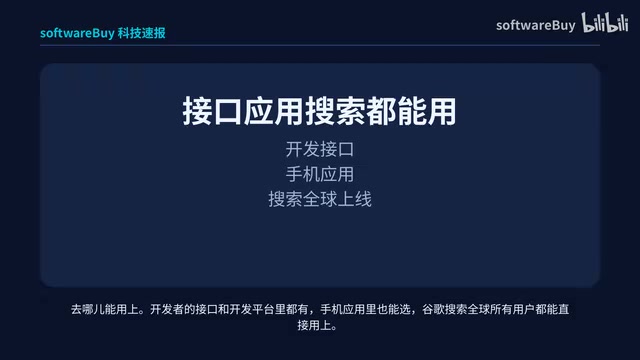
- Available via both the developer API and developer platform
- Selectable within the mobile app
- Directly available to all users worldwide through Google Search
Integration into search is particularly noteworthy—it means ordinary users can access Gemini 4's capabilities directly in search without any technical background.
Family Division of Labor: Fast Execution and Deep Reasoning Each Play Their Role
One point needs to be made clear: deep long-chain reasoning is still handled by the family's two "big brothers"; Hydrogen's role is the fast execution engine. The models can be used in combination—complex reasoning tasks go to the big brothers, high-frequency low-latency execution goes to Hydrogen.
This "fast-slow division of labor" model matrix strategy is becoming standard practice among large-model vendors: no longer expecting one model to handle every scenario, but breaking down by task type so each model excels within its own cost-performance range.
For developers, choosing Hydrogen means accepting the premise that "it's not responsible for the hardest reasoning" in exchange for advantages in speed and cost. Whether this trade-off is worth it depends on the specific business scenario.
This article is based on information from Bilibili creator SoftwareBuy Tech Express Episode 18; some data are vendor claims and have not been independently verified.
Model matrix (also called model family tiering) is the mainstream product strategy among large-model vendors today: releasing multiple models under the same generation of technology with different parameter scales, reasoning depths, and pricing, selected either by an upper-layer router or manually by developers. A common companion practice is model routing—applications automatically dispatch simple requests to lightweight models and escalate complex requests to flagship models based on request complexity, latency budget, and cost ceilings. The engineering benefit of this architecture is a significant reduction in overall average cost while retaining the ability to handle difficult problems; the cost is the need for additional decision logic and consistent output format conventions, otherwise multi-model collaboration tends to fragment across interfaces and prompts.
One-line Summary
Google releases Gemini 4 Hydrogen, featuring 2.5x speed, million-token context, and adjustable thinking levels.
Paragraph Summary
Google has launched Gemini 4 Hydrogen, a new member of the Gemini 4 family positioned as a "fast execution engine," focused on coding, agentic tasks, and everyday productivity. Google claims it is 2.5x faster than the previous generation, with terminal coding benchmark scores jumping from 18.2 to 57; on the Intelligence Index leaderboard it scores 51 at default and 54 at the highest setting, though these figures are vendor-provided and not yet independently verified. The model supports 1 million tokens of input and output, multimodal coverage of text, tables, charts, audio, and video, and four thinking depth levels—low, medium, high, and ultra-high, with high as default—letting developers pay for reasoning based on task difficulty. Access channels include the developer API, developer platform, mobile app, and Google Search for users worldwide. Deep long-chain reasoning remains with the family's flagship models, with Hydrogen forming a fast-slow division of labor within a matrix strategy.
Related articles

OMLX 0.7.1 Integrates Splash: Major Speedup for MLX Model Inference on Mac
OMLX 0.7.1 adds Splash as an external engine, letting standard MLX models (Qwen 3.6 35B) match Splash custom setups at 92.8 tokens/s. Setup, D-Flash2 requirements, and M1/M2 compatibility explained.

Running Uncensored AI Locally on Your Phone: LFM3 Hands-On Test and Guide
Learn how to run Liquid AI's LFM3 1.7B uncensored model locally on iPhone and Android—no GPU or network needed. Includes On Device LLM and Layla steps, speed tests, and privacy benefits.

Claude Launches Collaborative Sheets and Whiteboards, Taking On Microsoft and Google Directly
Anthropic rolls out beta Claude Sheets and Whiteboards to paid users, enabling one-prompt spreadsheets with formulas and turning verbal plans into collaborative boards—taking on Microsoft and Google directly.