Gemini 4 Hydrogen Released: A Major Upgrade for Agent Workflows and the Hidden Compliance Line

Gemini 4 Hydrogen takes the lead, but cost, account, and compliance constraints remain firm.
Google releases Gemini 4 Hydrogen, officially positioned as the daily workhorse for Agentic Workflows. Anti-Gravity has replaced Gemini 3.8 Flash with it; the price is higher but users generally see significant improvement. However, weekly quotas drain fast and complex tasks still fall back to older models, so it's better suited for low-risk drafting and validation first. Meanwhile, GLM's new model shows only community reverse-engineered internal testing signals, Cloud account policy shows loosened entry alongside tightened existing accounts, DeepSeek updates quota prompts and application interfaces, and an Unemployment Labs report claims six models carry Blackwell architecture digital fingerprints but cannot prove violations. Overall, generational change is accelerating, yet quota, account stability, and compliance evidence remain constraints for model selection.
Gemini 4 Hydrogen: The Default Workhorse for Agent Workflows Gets Rearranged
Positioning and Price Changes
Google has officially launched Gemini 4 Hydrogen, positioning it as the daily workhorse for Agentic Workflows. Community screenshots show that Anti-Gravity has already replaced Gemini 3.8 Flash with it. The price is higher than Flash, but many users consider the improvement significant, with discussion centered on benchmarks, speed, and prompt-testing. Switching the daily workhorse from Flash to Hydrogen means the default model for Agent workflows has been rearranged.
Agentic Workflow refers to an automated workflow driven by large models that can autonomously plan steps, call tools, and complete multi-step tasks, as opposed to single-turn Q&A "chat-style" usage. These scenarios place higher demands on instruction following, long-context retention, and tool-calling stability, so the choice of "daily workhorse" model directly affects task success rates and costs.
Flash-tier positioning typically refers to a vendor's product line tier aimed at high concurrency, low latency, and low unit price—weaker than flagship models but with high cost-effectiveness. Moving the daily workhorse from Flash to Hydrogen essentially raises the default tier overall, at the cost of higher per-call costs and quota consumption, with the benefit of improved first-pass success rates on complex tasks.
Boundaries in Practical Use
Multiple users report that Hydrogen's weekly quota drains faster than expected, with some attributing it to second-guessing. After the 4H release, 3.8 Flash's speed position has noticeably slowed. Some users have also handed complex engineering tasks to it, going through validation failures, boot errors, and automatic restarts across four rounds, ultimately still needing to call back 6.1 for the finish.
The new model shows clear progress on demo-style tasks, but Flash-tier positioning doesn't mean it can deliver independently. A safer approach is to first put Hydrogen into low-risk drafting and validation stages, run a fixed set of tasks in a test project, record speed, quota, and failure points, then decide whether to switch to production.
GLM New Model: Community Reverse-Engineered Internal Testing Signals
Signals of a new GLM model have emerged on the domestic side. Pingbench maintainer AI Cooking stated they have obtained permission to access the GLM internal testing model, and someone de-blurred the Gaussian blur in a screenshot to recover the GLM Name message. This remains community reverse-engineering inference; the official model number and release date have not been announced.
If true, the next generation of the domestic open-source line has entered the internal testing window. But the evidence only goes as far as developer hints—put it on the watch list for now, follow official accounts and model pages, and don't adjust production selections based on it before an official announcement.
Cloud Account Policy: Loosened Entry and Tightened Existing Accounts Coexist
Two contrasting signals appeared for Cloud today. Some users say CVP personal applications now only require KYC, no longer requiring KY or its certification; but on the other hand, three-year-old accounts are still being retroactively hit with Porto verification, and some are instantly banned after passport verification, then restored only after appeal. Do Add application results also vary—two Ultra accounts only got one reset card, while one Profile got three.

Loosened entry and tightened existing accounts can happen simultaneously; a single experience isn't enough to judge overall policy. Before applying, confirm your organization and subscription duration, keep payment records, and if you encounter verification, go through official appeals and refunds first—don't buy verification services.
DeepSeek: Filling in the Application Layer and Usage Boundaries
The quota increase prompt main script and styles have both been updated, and the community speculates this is to compress chat quotas and curb reverse-proxy abuse. On the same day, the API documentation updated the full-suite application interfaces, and the community also discovered that the Chief Demo conversation resources have been open-sourced.
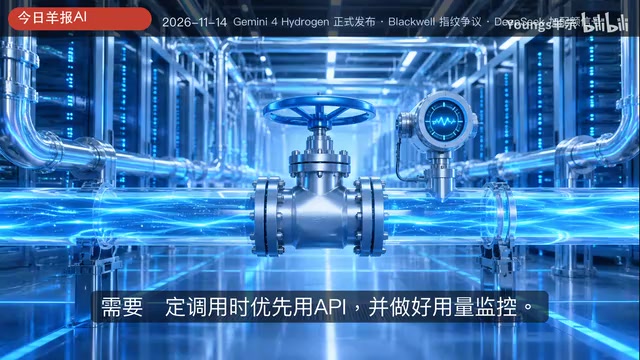
Beyond models, DeepSeekAd is simultaneously filling in the application layer and usage boundaries. If quotas take effect, the default expectation of unlimited web chat will be rewritten. First watch whether quotas actually materialize, then decide whether to build your own frontend or use official APIs; when you need stable calls, prioritize the API and set up usage monitoring.
Blackwell Hardware Fingerprints: Keep Technical Evidence and Compliance Conclusions Separate
There's a hardware-testing story that needs careful relaying. On November 12, Unemployment Labs published an analysis tracing public weights at the first level, claiming that six recent models from DeepSeek, Moonshot AI, Minimax, and Ant Group carry digital fingerprints matching NVIDIA's Blackwell architecture. The report also states it cannot locate chip positions or prove export rules were violated.
The export control discussion has moved from policy statements into technical matrices. Having fingerprints doesn't equal a violation; before reaching such conclusions, find the original report and verify sample methods and limitations. When enterprises evaluate supply chains, record technical evidence and compliance judgments separately.
The Basic Logic of Export Controls
Export controls are government restrictions on cross-border exports and transfers of specific technologies, chips, or equipment—like requiring a permit for high-performance equipment to leave the country, along with verifying destination and end use. They affect AI compute supply, model training, and enterprise procurement. The restriction lists in the news are worth continuous attention; understanding this rule is what lets you distinguish technical evidence from policy conclusions.
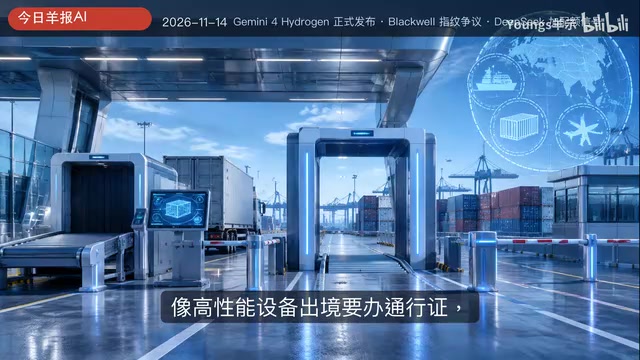
Start by mapping out your compute and equipment sources, check usage and regional restrictions item by item, and when cross-border procurement is needed, keep compliance documents and consult professional advice—don't treat a single fingerprint as a violation conclusion.
Hardware fingerprints in this context refer to characteristic traces left in model weights or inference behavior that can be associated with specific chip architectures (such as NVIDIA Blackwell), inferred from factors that may include numerical precision, operator implementations, or compiled artifacts. It's a statistical "matching signal," not a chip serial number, which is why the report itself acknowledges it cannot locate physical positions.
Public weights refer to model parameters released publicly, downloadable and locally deployable, which allows researchers to directly analyze weight-level features. The distinction to make is: fingerprint matching only indicates "possibly used a certain class of hardware for training or inference"—between that and "violating export controls" lie factual determinations about end use, region, and timing, and the two cannot substitute for each other.
The Same Throughline: Accelerating Generational Change, Constraints Unrelaxed
Today's stories all point in the same direction: models are still iterating rapidly, but cost, account, and compliance constraints haven't diminished at all. Google has switched its daily workhorse, GLM is awaiting an official announcement, DeepSeek is filling in the application layer, Cloud is loosening entry while tightening existing accounts, and hardware fingerprints are pushing export controls to the technical level. For developers and enterprises, selection isn't just about benchmarks—quota, account stability, and compliance evidence must all factor into the evaluation.
One-line Summary
Gemini 4 Hydrogen takes the lead, but cost, account, and compliance constraints remain firm.
Paragraph Summary
Google has released Gemini 4 Hydrogen, officially positioned as the daily workhorse for Agentic Workflows. The community tool Anti-Gravity has already replaced Gemini 3.8 Flash with it; the price is higher but users generally consider the improvement significant. However, weekly quotas drain quickly and complex tasks still require falling back to older models, making it better suited for low-risk drafting and validation first. Meanwhile, the new GLM model only shows community reverse-engineered internal testing signals, Cloud account policy shows loosened entry coexisting with tightened existing accounts, DeepSeek has updated quota prompts and application interfaces, and an Unemployment Labs report claims six models carry Blackwell architecture digital fingerprints but cannot prove violations. Overall, generational change is accelerating, while quota, account stability, and compliance evidence remain constraints that must factor into model selection.
Related articles

OMLX 0.7.1 Integrates Splash: Major Speedup for MLX Model Inference on Mac
OMLX 0.7.1 adds Splash as an external engine, letting standard MLX models (Qwen 3.6 35B) match Splash custom setups at 92.8 tokens/s. Setup, D-Flash2 requirements, and M1/M2 compatibility explained.

Running Uncensored AI Locally on Your Phone: LFM3 Hands-On Test and Guide
Learn how to run Liquid AI's LFM3 1.7B uncensored model locally on iPhone and Android—no GPU or network needed. Includes On Device LLM and Layla steps, speed tests, and privacy benefits.

Claude Launches Collaborative Sheets and Whiteboards, Taking On Microsoft and Google Directly
Anthropic rolls out beta Claude Sheets and Whiteboards to paid users, enabling one-prompt spreadsheets with formulas and turning verbal plans into collaborative boards—taking on Microsoft and Google directly.