Gemini 4 Hydrogen Review: The Cost-Effective Alternative That Outperforms Its Class and Replaces Argon
Gemini 4 Hydrogen delivers beyond-class performance with its lightweight positioning, but quota and stability remain weak points.
Google released three models in three days; the final Gemini 4 Hydrogen, though positioned as lightweight, is considered capable of replacing 3.8 Flash and even Gemini 4 Argon. Its pricing is about twice that of 3.8 Flash, close to Carbon, with quota calculated as twice the price, which users generally find tight. Hands-on experience is fast, stable, and speaks plainly, suitable for daily tasks, but deep reasoning and global perspective are limited by its Flash genes, and it inherits lingering issues like zero caching and TPS fluctuations due to compute strain. The accompanying Orchestrator mode lets Carbon and Hydrogen automatically divide work, officially saving 24% of quota; Swim mode suits parallelizable tasks. The Carbon+Hydrogen combination gives the Gemini family the second spot in the model world, but quota and stability remain unsolved challenges.
Google released three models in three consecutive days, and Gemini 4 Hydrogen, the third and final one to debut, is officially positioned as a lightweight contender. But according to the launch analysis video from YouTube channel DPGem9, this model's actual performance goes far beyond "lightweight"—it not only takes over the spot of 3.8 Flash, but has even made many users consider replacing their flagship Gemini 4 Argon.
Pricing and Quota: A Middle Path, but Quota Remains Tight
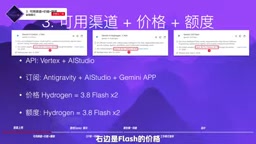
Hydrogen launched without continuing Flash's half-price promotion, arriving directly at full price. From the price comparison bar chart compiled by DPGem9, Hydrogen's pricing is roughly twice that of 3.8 Flash, while also close to Carbon's price, placing it overall in the middle tier.
Quota is likewise calculated as twice the price, which many users find tight. The channel states outright in the video that "the quota really isn't quite enough," and speculates that Google is confident enough in this model's performance that it didn't use a launch half-price promotion. As for whether there will be compensatory activities later, all we can do is wait and see.
"Quota" here refers to the usage allowance calculated by tokens or request count in API or subscription services. Different models typically have quotas converted proportionally to price due to differing inference costs: the higher the price, the fewer tokens available for the same amount of money. The article says "quota is calculated as twice the price," meaning Hydrogen's unit usage cost is about twice that of 3.8 Flash, so the usable amount is halved for the same budget. Launch half-price is a common promotional strategy vendors use, temporarily lowering prices to attract users to try new models; Hydrogen did not adopt this strategy, suggesting Google may believe its performance justifies full price, or intends to control initial load. Tight quotas directly affect daily use for developers and heavy users, and are one of the most concentrated pain points in community feedback.
First Impressions: Fast, Stable, Speaks Plainly
DPGem9's initial assessment of Hydrogen is "a good daily work helper," and recommends prioritizing hi or xhi thinking intensity for daily use—characterized by being fast, stable, capable of handling routine tasks, and "speaking plainly." In testing, first-token latency and TPS performance were normal; the abnormal cache metrics were due to the long test duration, not a problem with the model itself.
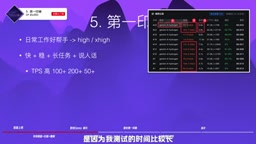
However, within the same account and time period, TPS dropped from over 100 to over 50, which the channel speculates is due to compute strain. This also confirms that Hydrogen perfectly inherits the Gemini 4 family's "advancing while ailing" characteristics—issues like zero caching still exist, and stability still needs optimization.
TPS (Tokens Per Second) is a core metric for measuring large model output speed, referring to the number of tokens the model generates per second (a token is the basic unit of text processed by the model, roughly equivalent to a word or a Chinese character). The higher the TPS, the shorter the user's wait for a complete response. Time to First Token (TTFT) measures the time from sending a request to receiving the first token, directly affecting the "responsiveness" of interaction. Together they determine the user experience: low TTFT makes it feel like "instant reply," high TPS makes long responses complete faster. The article mentions TPS dropping from over 100 to over 50, meaning output speed is halved, which is noticeable in long-text generation tasks. TPS fluctuations are usually related to backend compute load and concurrent request volume, not changes in the model's inherent capability.
Capability Boundaries: Can Replace Argon, but Don't Expect Deep Reasoning
According to feedback summarized from the channel's audience group, Hydrogen's strengths are concentrated at the experience level: very fast, excellent first-token and latency performance, and satisfying output speed. Many believe it can be tried as a primary model, replacing Sonnet, Terra, and even Argon; compared to 3.8 Flash it's a qualitative leap—it doesn't cut corners on work, is obedient, and willing to understand tasks.
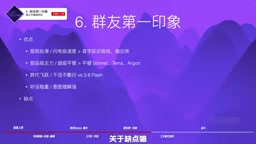
The weaknesses are equally clear. As a model positioned at the Flash level, it is limited in deep reasoning and global perspective, weakened in 3D and graphics, and prone to hallucinations in text details. These are all within expectations—after all, its genes are Flash, not Pro or Ultra.
Working Modes: Orchestrator Is the Key to Saving Quota
Google has introduced the Orchestrator working mode alongside Hydrogen, allowing Carbon and Hydrogen to automatically switch within the same conversation: Carbon handles thinking, clearing, and fallback checks, while Hydrogen serves as cheap labor to get work done quickly. According to official claims, this mode can save 24% of quota.
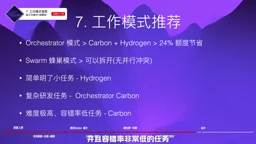
There is also the Swim slot mode, suitable for tasks that can be split apart and have no parallel conflicts, collaborating like little bees. The channel's usage recommendations are clear: for daily small tasks, use Hydrogen with hi/xhi; for complex R&D tasks, use Orchestrator's Carbon mode (note: not Argon mode—the performance gap between the two is too large); for ultra-difficult tasks with extremely low fault tolerance, run Carbon throughout.
Orchestrator mode is a multi-model collaboration architecture: a scheduling layer automatically routes requests to different models based on task phase. Typically, a more capable, higher-cost model (like Carbon) handles planning, reasoning, and result validation, while a lightweight model (like Hydrogen) executes specific generation or simple operations. This "brain + hands" division of labor reduces overall cost while ensuring quality, because the bulk of token consumption occurs on the cheaper model. The official claim of saving 24% of quota is essentially replacing single-model end-to-end operation with task decomposition and model tiering. Swim slot mode is another parallel strategy: distributing independently splittable subtasks into different "lanes" for simultaneous execution, suitable for tasks with no dependencies, which can shorten total time but is not applicable to scenarios requiring strict ordering or shared state.
Conclusion: Has the Gemini 4 Era Officially Arrived?
Hydrogen's significance lies in simultaneously replacing both 3.8 Flash and Gemini 4 Argon, and the Carbon + Hydrogen combination has given Google's Gemini family the second spot in the model world. The channel even offers a bigger judgment: the Gemini 4 era has officially arrived.
There are also many remaining issues: insufficient quota, compute strain, questionable stability, and flexibility problems like no swap-save and unexpected stops are particularly prominent on Carbon. At the end of the video, a correction is made—Google One Ultra does not have a monthly payment option, but if annual payment appears in the future, it's advised to be cautious. As for where OpenAI's new model is, the channel host doesn't give an answer, leaving the question to the audience.
One-line Summary
Gemini 4 Hydrogen delivers beyond-class performance with its lightweight positioning, but quota and stability remain weak points.
Paragraph Summary
Google released three models in three days; the final Gemini 4 Hydrogen, though positioned as lightweight, is considered capable of replacing 3.8 Flash and even Gemini 4 Argon. Its pricing is about twice that of 3.8 Flash, close to Carbon, with quota calculated as twice the price, which users generally find tight. Hands-on experience is fast, stable, and speaks plainly, suitable for daily tasks, but deep reasoning and global perspective are limited by its Flash genes, and it inherits lingering issues like zero caching and TPS fluctuations due to compute strain. The accompanying Orchestrator mode lets Carbon and Hydrogen automatically divide work, officially saving 24% of quota; Swim mode suits parallelizable tasks. The Carbon+Hydrogen combination gives the Gemini family the second spot in the model world, but quota and stability remain unsolved challenges.
Related articles

OpenAI to Shut Down Agent Builder and Two Other Services on November 30, Developers Must Migrate Urgently
OpenAI will shut down Agent Builder, the evals dashboard, and reusable prompts on November 30; evals is already read-only. Here's the scope, OpenAI's migration paths (Agent SDK, PromptFu, your own code), and what developers should export and rebuild this week.

RankSpot: A Pay-Per-Use SEO & AI Search Execution Layer That Lets Agents Write, Publish, and Build Backlinks for You
RankSpot is an SEO & AI search execution layer for AI Agents. Connect via MCP to Claude or ChatGPT to write, publish & build backlinks. Pay-per-use, $3/article.

Appxiom: Giving AI Coding Assistants Production Context
Appxiom gives AI coding agents production context—crashes, jank, memory leaks, failed network calls—across Android, iOS, Flutter, KMP, and Web, ranking bugs by Goal Friction Impact.